04-10-2026
Latvia’s pro-Ukraine governing coalition won 35 per cent of the vote in a parliamentary election, and lawmakers were expected to begin negotiations to form a new government. The four-party coalition is led by Prime Minister Andris Kulbergs, of the centrist United List party, which had previously been in opposition. The coalition took office after a political crisis in May brought down the previous government. That crisis centered on the handling of stray drones suspected of coming from Ukraine, while the coalition had also faced pressure over other issues.
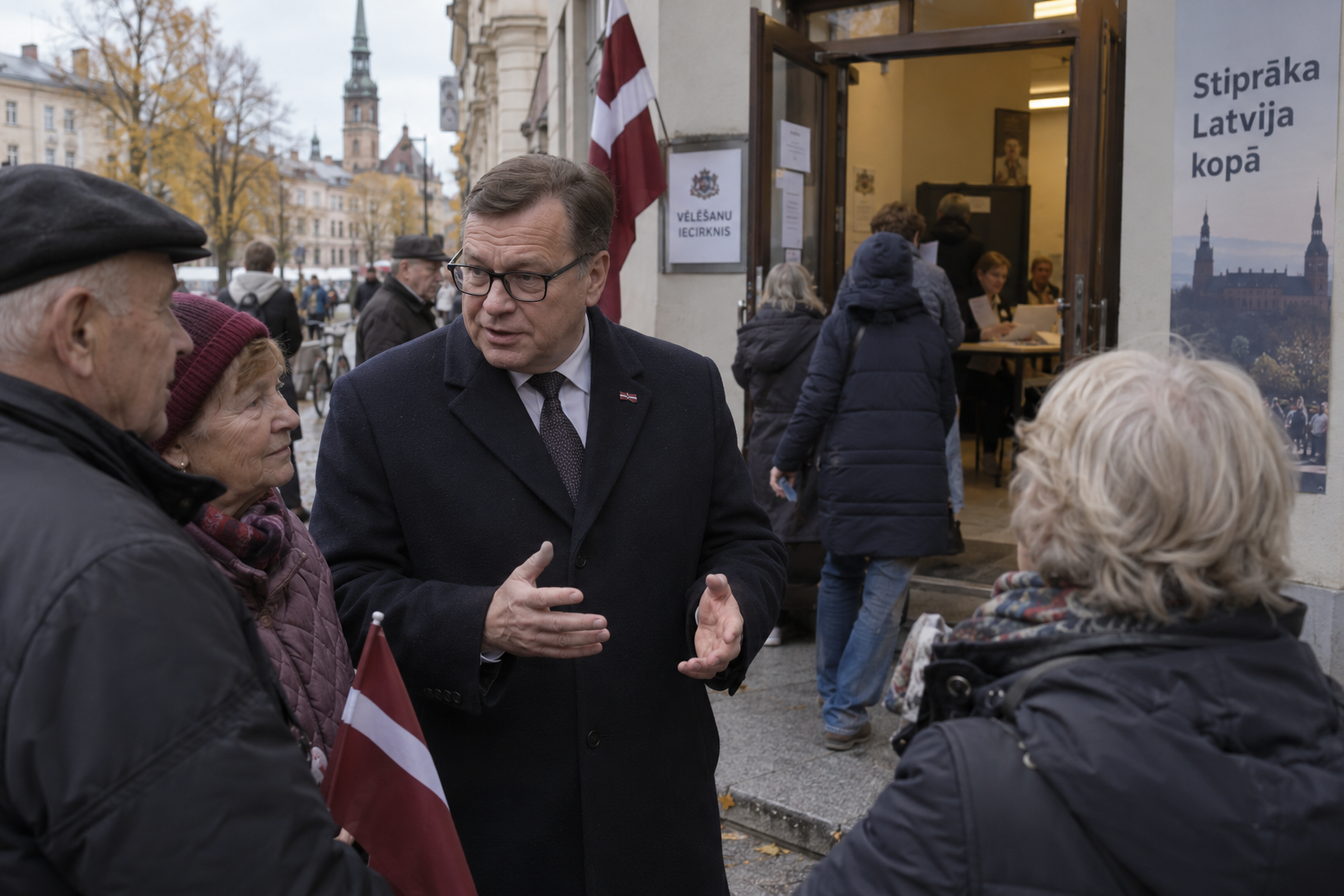
The election took place as Latvia contends with concern about possible Russian aggression. The small Baltic republic is on NATO’s eastern flank, borders Russia and Belarus, and—like its neighbours Lithuania and Estonia—strongly supports Ukraine in its fight against Russia’s invasion. More than 51 per cent of eligible voters participated. Nearly 1.56 million people in a country of more than 1.8 million were entitled to elect 100 members of the Saeima, Latvia’s single-chamber parliament, for four-year terms.
The United List is expected to win 42 seats. Because Latvia’s political landscape is fragmented and parties must receive at least five per cent of the vote to enter parliament, a multiparty coalition will be necessary to govern. The result therefore sets the stage for negotiations over the composition of the next government rather than guaranteeing that the current coalition will govern unchanged.
Entities: Andris Kulbergs, Latvia, Saeima, United List, NATO • Tone: analytical • Sentiment: neutral • Intent: inform
04-10-2026
Latvian Prime Minister Andris Kulbergs appeared likely to remain in office after his centrist United List won 35.3% of the vote in the parliamentary election. With 97% of ballots counted, the party had secured 42 of the Saeima’s 100 seats—described in the article as the biggest parliamentary election victory since Latvia regained independence from the Soviet Union in 1991. Political scientist Roberts Kits said United List could potentially form a parliamentary majority with either the nationalist National Alliance or the left-leaning Progressives.
Kulbergs, a 47-year-old businessman and amateur rally driver, took power in May after the previous coalition collapsed over its handling of incidents involving stray Ukrainian military drones. The exit poll placed populist Latvia First second, with 11.3% of the vote, nearly twice its share in 2022. The party had sought support among Latvia’s substantial ethnic Russian minority. Kulbergs ruled out working with pro-Russian parties, specifically rejecting a coalition with Latvia First.
The election contested all 100 seats, with 14 parties competing under a proportional system. Its central issues included rising living costs and national security. Latvia’s proximity to Russia and Belarus, and Russia’s invasion of Ukraine, contribute to widespread security concerns. Latvia is a NATO and European Union member and one of Kyiv’s closest supporters; it has legally committed to spending at least 5% of GDP on defense. That commitment leaves less room for other public spending.
Voters also face high prices, low wages, a sluggish economy, pressure on the health system, emigration, and an ageing population. Populist parties have used economic discontent to argue for a less confrontational approach to Moscow and against fully severing economic ties with Russia. However, the article reports that no party proposed a major change to Latvia’s EU- and NATO-aligned foreign policy. German Eurofighter jets were deployed to protect Latvian airspace during the election at Riga’s request.
Entities: Andris Kulbergs, Roberts Kits, Latvia, Riga, Kyiv • Tone: analytical • Sentiment: neutral • Intent: inform
04-10-2026
Latvia’s centre-right United List party, led by Prime Minister Andris Kulbergs, won the parliamentary election, taking 35.4% of the vote and 42 of the parliament’s 100 seats. With more than 99.9% of votes counted, the result represented a record number of seats for a party in Latvia’s post-independence history. Kulbergs, who became prime minister in May, said the result exceeded expectations and showed voters wanted change, including economic growth and a better future for children.
The outcome suggests Latvia will maintain its pro-European and pro-Ukrainian direction, but Kulbergs’ current coalition is unlikely to continue in its existing form. One coalition partner appeared likely to lose its seats, while other members performed less well than anticipated. Populist parties also made strong gains, with voting patterns among the Russian-speaking minority—about a third of Latvia’s population—seen as one factor.
Security was a central campaign issue. Latvia, a NATO and European Union member since 2004, regards Russia as its main security threat and has increased defence spending following Russia’s invasion of Ukraine. Most parties expected to enter parliament support substantial military spending and continued assistance to Kyiv. The Sovereign Power party, which opposed aid to Ukraine and further defence-spending increases, appeared set to finish third; other major parties have ruled out governing with it, and critics describe it as pro-Russian.
Latvia First, a conservative party led by a property magnate often compared to Donald Trump, was on track for second place. The campaign also focused on rising living costs, low wages, pressure on healthcare, and population decline. The results reflect a political landscape in which security concerns remain prominent even as economic anxieties and populist support shape voters’ choices.
Entities: Andris Kulbergs, United List, Latvia, Riga, NATO • Tone: analytical • Sentiment: neutral • Intent: inform
04-10-2026
Latvia’s parliamentary election produced a strong result for Prime Minister Andris Kulbergs’s pro-Ukraine political bloc, which won 35 per cent of the vote. The United List party is expected to secure 42 seats, but Latvia’s fragmented political landscape means that no party can govern alone and coalition negotiations are needed. Lawmakers planned to begin those talks on Sunday. Parties must receive at least 5 per cent of the vote to enter parliament. Turnout exceeded 51 per cent, with nearly 1.56 million people eligible to elect all 100 members of the Saeima for a four-year term. The result is presented against the backdrop of Russia’s war and concerns about security: Kulbergs pledged to maintain a hard line toward Moscow and is expected to form a pro-Ukrainian coalition. A businessman and amateur rally driver, the 47-year-old became prime minister in May after the previous coalition collapsed over its handling of military drones that entered Latvian airspace undetected. Officials said the drones were Ukrainian but blamed Russia for causing them to stray from their flight paths. The report describes an electoral win and the coalition-building process, while underscoring how the drone incidents and regional tensions have shaped Latvia’s political debate.
Entities: Andris Kulbergs, Latvia, Russia, Ukraine, The United List • Tone: analytical • Sentiment: neutral • Intent: inform
04-10-2026
Latvian Prime Minister Andris Kulbergs is positioned to remain in office and form a pro-Ukraine coalition after his centrist United List won the country’s biggest parliamentary election victory since Latvia regained independence in 1991. With 97% of ballots counted, the party had 35.3% of the vote, corresponding to 42 of the 100 parliamentary seats. It appeared able to reach a majority with either the nationalist National Alliance or the liberal Progressives.
Kulbergs, a businessman and amateur rally driver, became prime minister in May after the previous coalition collapsed over its handling of incidents involving Ukrainian military drones that entered Latvian airspace undetected. During the campaign, he emphasized improving governance, cutting red tape and reducing public spending, while promising continued support for Ukraine, a firm stance toward Russia, expanded anti-drone capabilities and defence spending at 5% of GDP. Political scientist Roberts Kits said voters had responded to Kulbergs’s image as a practical, action-oriented leader, while cautioning that expectations were high and it remained uncertain whether he had the team to deliver.
United List’s closest competitors were the populist Latvia First, with 13.1%, and the pro-Russian Sovereign Power, with 11.7%. National Alliance received 8.9%. Although pro-Russian parties gained representation, Kits said they were likely to remain excluded from policymaking. Their campaign called for ending aid to Ukraine and prioritizing cost-of-living concerns, particularly among Russian speakers.
Turnout was 51.8%, down from 59.4% in 2022. Latvia’s Russian-speaking minority is divided: some oppose Russia’s war in Ukraine, while others resent domestic policies they consider discriminatory and limiting their influence in public life. The election took place in a country of 1.9 million people bordering Russia and Belarus and allied with the EU and NATO.
Entities: Andris Kulbergs, Roberts Kits, Latvia, Riga, United List • Tone: analytical • Sentiment: neutral • Intent: inform