06-09-2026
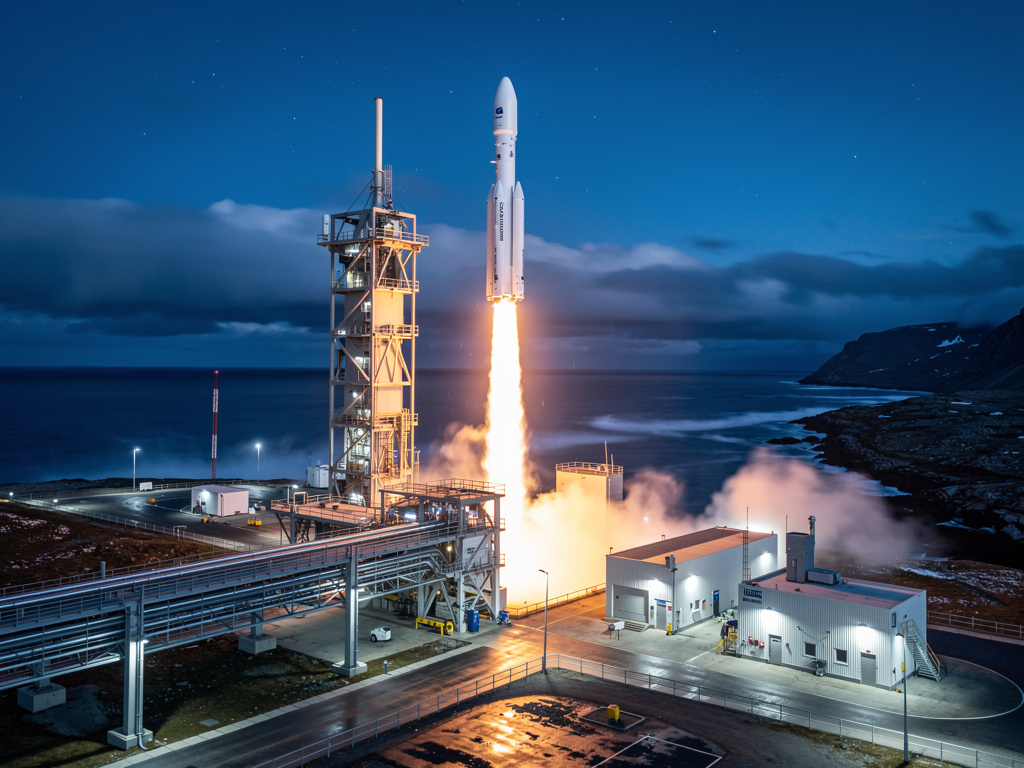
Germany’s Isar Aerospace has successfully launched its 28-metre, two-stage Spectrum rocket into orbit from Andøya Spaceport in northern Norway, marking the first time a privately developed rocket has reached orbit from continental Europe, according to the company. The launch is being presented as a significant step for Europe’s effort to develop an independent and more competitive space-launch industry.
The mission, named “Onward and Upward”, experienced a loss of video transmission approximately 10 minutes after launch when the rocket exceeded the connection’s maximum range. German officials nevertheless described the flight as a milestone demonstrating the country’s technological capabilities. Norwegian Trade and Industry Minister Cecilie Myrseth said the launch would improve European access to space and strengthen regional security.
The flight followed months of delays linked to technical and safety issues. It was Isar Aerospace’s second launch; its first Spectrum rocket failed 18 months earlier, plunging into the sea and exploding shortly after liftoff. Once production is fully established, Spectrum rockets are intended to carry civilian and military satellites weighing up to about one tonne into low-Earth orbit. Isar says its facility near Munich could eventually produce more than 30 rockets annually.
The launch comes as European governments seek alternatives to reliance on foreign launch providers, particularly the United States and Elon Musk’s SpaceX. Concerns about transatlantic relations and Europe’s dependence on American capabilities have intensified amid declining European trust in the NATO alliance. Germany has announced a €35 billion investment in space capacity by 2030, while Isar recently secured approximately €200 million from the European Space Agency for new rockets and expanded infrastructure. The company is also developing a second launch site in Canada. Norway, Sweden and Britain are competing to establish Europe as a more autonomous space power.
Entities: Isar Aerospace, Spectrum rocket, Andøya Spaceport, Norway, Germany • Tone: analytical • Sentiment: positive • Intent: inform
06-09-2026
German start-up Isar Aerospace has successfully launched its Spectrum rocket into orbit from the Andøya spaceport in Arctic Norway, marking what the company describes as the first time a privately developed rocket has reached space from Europe. The 28-metre rocket lifted off at 10:12pm local time on September 5, 2026, and carried five satellites, which were successfully deployed in orbit. The rocket reached an altitude of 100km in less than four minutes.
The launch represents a significant milestone for Europe as it seeks to develop independent satellite-launching capabilities. Europe has become heavily reliant on US-based SpaceX for satellite launches after ending cooperation with Russia’s Soyuz program. The region has also experienced setbacks, including the failed 2023 launch attempt by Virgin Orbit, backed by British billionaire Richard Branson. According to Isar Aerospace, the United States launched 198 rockets in the previous year, compared with only eight from Europe.
Isar Aerospace’s latest achievement follows an unsuccessful first test flight in March 2022, when its rocket exploded shortly after takeoff, and several postponements of the second launch. The company aims to expand its manufacturing capacity to as many as 40 launch vehicles annually.
Europe is supporting a new generation of commercial launch companies intended to make satellite deployment cheaper and strengthen the continent’s strategic autonomy in space. In August, Isar Aerospace signed a $230m contract with the European Space Agency to accelerate vehicle development and expand launch infrastructure. ESA official Géraldine Naja said the agreement would begin the European Launcher Challenge and encourage competition among European providers. German Chancellor Friedrich Merz has also highlighted concerns about Europe’s dependence on the United States, including for access to space.
Entities: Isar Aerospace, Spectrum rocket, Andøya spaceport, Arctic Norway, European satellite-launch independence • Tone: analytical • Sentiment: neutral • Intent: inform
06-09-2026
German space company Isar Aerospace has successfully launched its Spectrum rocket into orbit from the Andøya spaceport in Norway, marking the first time a privately developed rocket has reached orbit from continental Europe. The achievement follows an unsuccessful launch attempt 18 months earlier and represents a significant milestone for Germany’s emerging commercial space industry.
Spectrum is designed to carry small and medium-sized payloads into low Earth orbit. On its qualification mission and first payload-carrying flight, the rocket transported five small satellites and an in-flight technological experiment. Isar Aerospace said the launch could help Europe develop the ability to conduct satellite missions from its own territory, reducing reliance on launch providers elsewhere. Britain and Sweden are among the countries that have expressed interest in the expanding commercial space market.
The launch received political support in Germany. Research, Technology and Space Ministerial representatives described it as evidence of the country’s technical expertise and innovative strength. Chancellor Friedrich Merz visited Isar’s launch site in March, underscoring the strategic importance of European space autonomy amid changing global relations. Isar is also developing a second launch site in Canada.
Despite Europe having conducted only eight rocket launches last year compared with 198 in the United States, Isar aims to produce approximately 40 rockets annually. The company has already secured orders through 2028, although Spectrum is not yet ready for mass production. Its rockets are intended to carry both civilian and military satellites. Isar faces competition from major space companies including Elon Musk’s SpaceX and ArianeGroup. The European Space Agency recently provided Isar with €200 million to support rocket development, testing, and launch infrastructure.
Entities: Isar Aerospace, Spectrum rocket, Andøya spaceport, Norway, Germany • Tone: analytical • Sentiment: positive • Intent: inform
06-09-2026
German aerospace company Isar Aerospace has achieved its first successful orbital launch, placing its Spectrum rocket and six commercial and educational payloads into low Earth orbit from the Andøya spaceport in Norway. The 5 September 2026 mission, named "Onward and Upward," represents the first time a European company has reached orbit using its own launcher and marks the first milestone in the European Space Agency’s European Launcher Challenge.
The achievement came on Spectrum’s second flight. During its 2025 debut, the rocket cleared the launch pad for only about 30 seconds before crashing into the sea. The 28-metre-tall rocket is powered by ten engines and is designed to carry payloads weighing up to 1,000 kilograms to low Earth orbit. This mission carried several CubeSats and an experiment intended to test new space technologies while giving European students practical experience.
ESA Director General Josef Aschbacher called the launch historic and said it represented an important step toward a more diverse and autonomous European space sector. The agency supported Isar Aerospace through its Boost! programme and Business Incubation Centre. The company also won the first Microlauncher Competition organised by the German Space Agency, which selected the mission’s payloads.
Isar Aerospace was chosen in 2025 to participate in the European Launcher Challenge, whose competitors must achieve an orbital launch before 2027. ESA officials congratulated the company and expressed expectations for further launches from Andøya. The success comes amid rapid growth in Europe’s microlauncher sector. Spanish company PLD Space has also secured contracts under the challenge, including a €158.9 million ESA contract to increase the launch rate of its MIURA 5 rocket. These efforts aim to reduce Europe’s dependence on foreign launch providers.
Entities: Isar Aerospace, Spectrum rocket, Germany, Andøya spaceport, Norway • Tone: analytical • Sentiment: positive • Intent: inform
06-09-2026
German start-up Isar Aerospace has launched its uncrewed Spectrum rocket from the Andøya Spaceport in Arctic Norway, marking what the article describes as the first commercial flight to reach orbit from continental Europe. The launch represents a significant step toward establishing an independent European satellite-launch capability and allowing customers to send satellites into orbit from European territory.
The Spectrum rocket was designed to carry small and medium-sized payloads. According to Isar Aerospace, its inaugural mission carried five small satellites and an in-flight technological experiment. The company intends to develop a commercial satellite-launch service, positioning itself within a rapidly expanding global market for space missions.
Isar characterized the achievement as a milestone in European spaceflight, posting, “We’re in orbit! And just made European history.” Norway’s Minister of Industry and Commerce, Cecilie Myrseth, also called the launch a breakthrough for the European launch industry. She said that the ability to launch satellites from Andøya would strengthen Norwegian and European security during a period of international instability.
The launch also has broader geopolitical significance. German Chancellor Friedrich Merz visited Isar’s launch site in March, reflecting European efforts to build greater strategic and technological autonomy. The article links those efforts to changes in the global order and uncertainty surrounding the United States under President Donald Trump. Several European countries are seeking a role in the growing satellite-launch market, and the successful mission brings the continent closer to offering regular commercial orbital launches from its own soil.
Entities: Isar Aerospace, Spectrum rocket, Andøya Spaceport, Norway, Continental Europe • Tone: analytical • Sentiment: positive • Intent: inform
06-09-2026
German start-up Isar Aerospace has launched its Spectrum rocket into orbit from Andøya Spaceport in Arctic Norway, marking the first commercial orbital flight from continental Europe. The Sept 5 mission is viewed as a major development for Europe’s space industry because it gives the region greater access to space from its own territory and supports efforts to build strategic autonomy and strengthen security.
The uncrewed Spectrum rocket carried five small satellites and a technological experiment. The flight served both as the rocket’s qualification mission and its first mission carrying payloads. It followed Isar’s initial launch in March 2025, when a rocket exploded shortly after take-off. Although that mission failed to reach orbit, the company considered it valuable because it generated data for further development.
European officials welcomed the latest launch. Norway’s Minister of Industry and Commerce Cecilie Myrseth said that the ability to launch satellites from Andøya would improve Norwegian and European security. German Chancellor Friedrich Merz had also visited the launch site in March, reflecting wider European concerns about dependence on foreign launch providers as the geopolitical relationship with the United States changes under President Donald Trump.
Isar is competing in an increasingly important global satellite-launch market dominated by companies such as Elon Musk’s SpaceX and Europe’s ArianeGroup. Sweden’s Esrange facility and Britain’s SaxaVord Spaceport are among the closest European rivals to Norway’s launch site. Isar has secured approximately €200 million from the European Space Agency to develop new rockets and expand its testing and launch infrastructure. The company is also developing a second launch site in Canada, highlighting its plans to grow beyond Norway.
Entities: Isar Aerospace, Spectrum rocket, Andøya Spaceport, Norway, European space autonomy and security • Tone: analytical • Sentiment: positive • Intent: inform