07-08-2026
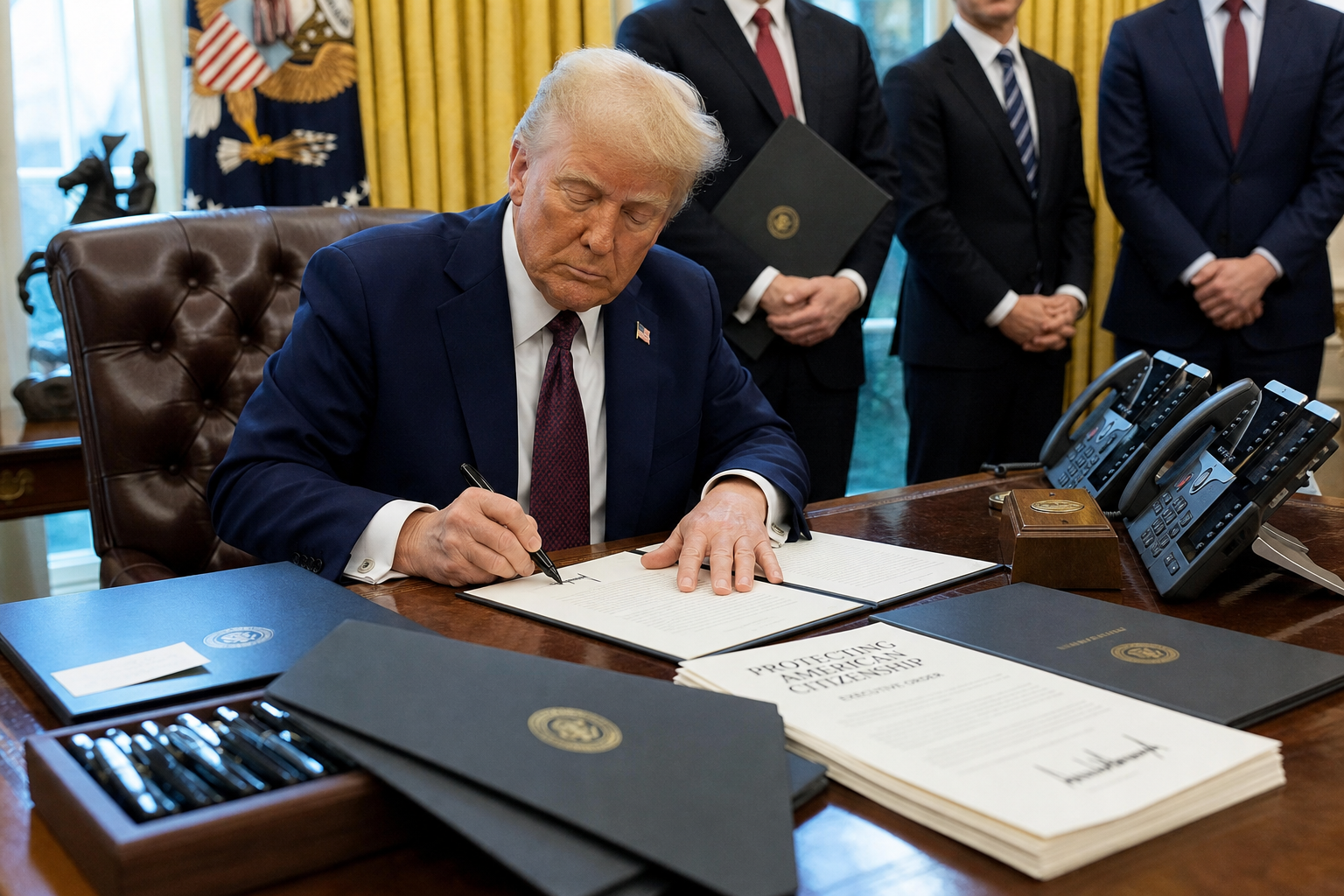
President Donald Trump has signed two new executive orders aimed at narrowing birthright citizenship in the United States, reviving a long-running political and legal fight after the Supreme Court previously rejected his attempt to end the constitutional right altogether. One order expands the administration’s definition of which non-citizen parents’ children would not qualify for automatic citizenship, while the other seeks to ban birth tourism, the practice of pregnant foreigners traveling to the US to give birth so their children can obtain citizenship. Trump framed the orders as necessary to protect the country from fraud and abuse, arguing that previous policy had been exploited by foreign actors.
The article explains that Trump’s earlier effort to eliminate birthright citizenship, launched after returning to office in 2025, was blocked by the Supreme Court in June, which upheld the long-standing interpretation of the 14th Amendment. Legal experts quoted in the story say the president may have some authority to restrict entry for the purpose of birth tourism, but he likely cannot deny citizenship to a child already born in the United States. The piece also notes that Trump and his administration have repeatedly portrayed birth tourism as a national security and immigration issue, though research cited in the article suggests the scale of the phenomenon is far smaller than Trump claims. Overall, the report highlights the continuing clash between the White House, constitutional protections, and the courts over immigration and citizenship policy.
Entities: Donald Trump, Supreme Court, birthright citizenship, birth tourism, 14th Amendment • Tone: analytical • Sentiment: neutral • Intent: inform
07-08-2026
President Trump signed two new executive orders aimed at narrowing who is eligible for U.S. birthright citizenship, reviving his long-running effort after the Supreme Court previously struck down an earlier version of the policy. In remarks from the Oval Office, Trump argued that the Court’s decision was “very unfortunate” and said his administration was making “adjustments.” One order targets so-called “birth tourism,” seeking to deny entry or citizenship-related benefits to people who travel to the United States specifically to give birth to a child. The other expands the categories of people the administration says should be excluded from birthright citizenship, including children of certain foreign government employees, children of parents linked to terrorist groups, and children of people involved in commercial arrangements to ensure birth in the U.S.
The article explains that these orders are likely to face serious constitutional challenges. The 14th Amendment states that all persons born or naturalized in the United States and subject to its jurisdiction are citizens, and the Supreme Court recently ruled 6-3 that Trump’s earlier executive order attempting to end birthright citizenship was unlawful. The ACLU condemned the new order and said the Court had already settled the question. White House adviser Stephen Miller defended the policy by describing birth tourism as an abuse of the system that gives access to citizenship and benefits. The article also notes that Chief Justice John Roberts, during oral arguments, dismissed the relevance of birth tourism to the legal analysis. Overall, the story frames the executive orders as the latest escalation in Trump’s effort to limit birthright citizenship and a likely prelude to another court fight.
Entities: Donald Trump, Stephen Miller, John Roberts, John Sauer, American Civil Liberties Union (ACLU) • Tone: analytical • Sentiment: negative • Intent: inform
07-08-2026
President Trump signed two executive orders on Thursday aimed at narrowing access to birthright citizenship and targeting so-called “birth tourism,” the practice of traveling to the United States to give birth so a child receives automatic citizenship. The move came shortly after the Supreme Court, in a 6-3 decision, rejected Trump’s earlier attempt to end birthright citizenship through executive action. Trump framed the issue as a misuse of the Fourteenth Amendment, arguing it was intended to protect the children of formerly enslaved people and not modern immigration-related cases. White House officials Stephen Miller and Will Scharf defended the orders as lawful corrections to an allegedly abused system, while a Homeland Security official suggested the birth tourism order added little in terms of enforceable new policy. Legal experts and advocates, including the ACLU, said the orders would likely face immediate court challenges and would not overcome the Supreme Court’s ruling that birthright citizenship is constitutionally guaranteed. The article also notes that some of Trump’s factual claims were contradicted by historical record and research, including the timing and scope of the Fourteenth Amendment and data showing that births to tourists are rare.
Entities: Donald Trump, Stephen Miller, Will Scharf, U.S. Supreme Court, 14th Amendment • Tone: analytical • Sentiment: neutral • Intent: inform