07-09-2026
Nepali rescuers are continuing to search hydropower tunnels for workers missing after catastrophic floods struck the Himalayan border with China on August 26. Around 900 people remain unaccounted for from hydro-electric projects in Nepal, and army officials estimate that about 121 may be trapped inside tunnels. Rescuers believe some could still be alive because the extensive tunnel systems contain air pockets, rooms and other spaces where people might have survived.
The search gained hope after four people were rescued in recent days, including a Chinese national found in a tunnel, two hydropower workers recovered from another tunnel and a Nepali woman pulled from a buried house. Authorities are using specialised equipment and new techniques to search the Chilime hydropower project in Rasuwa district, where four of six missing workers may still be alive.
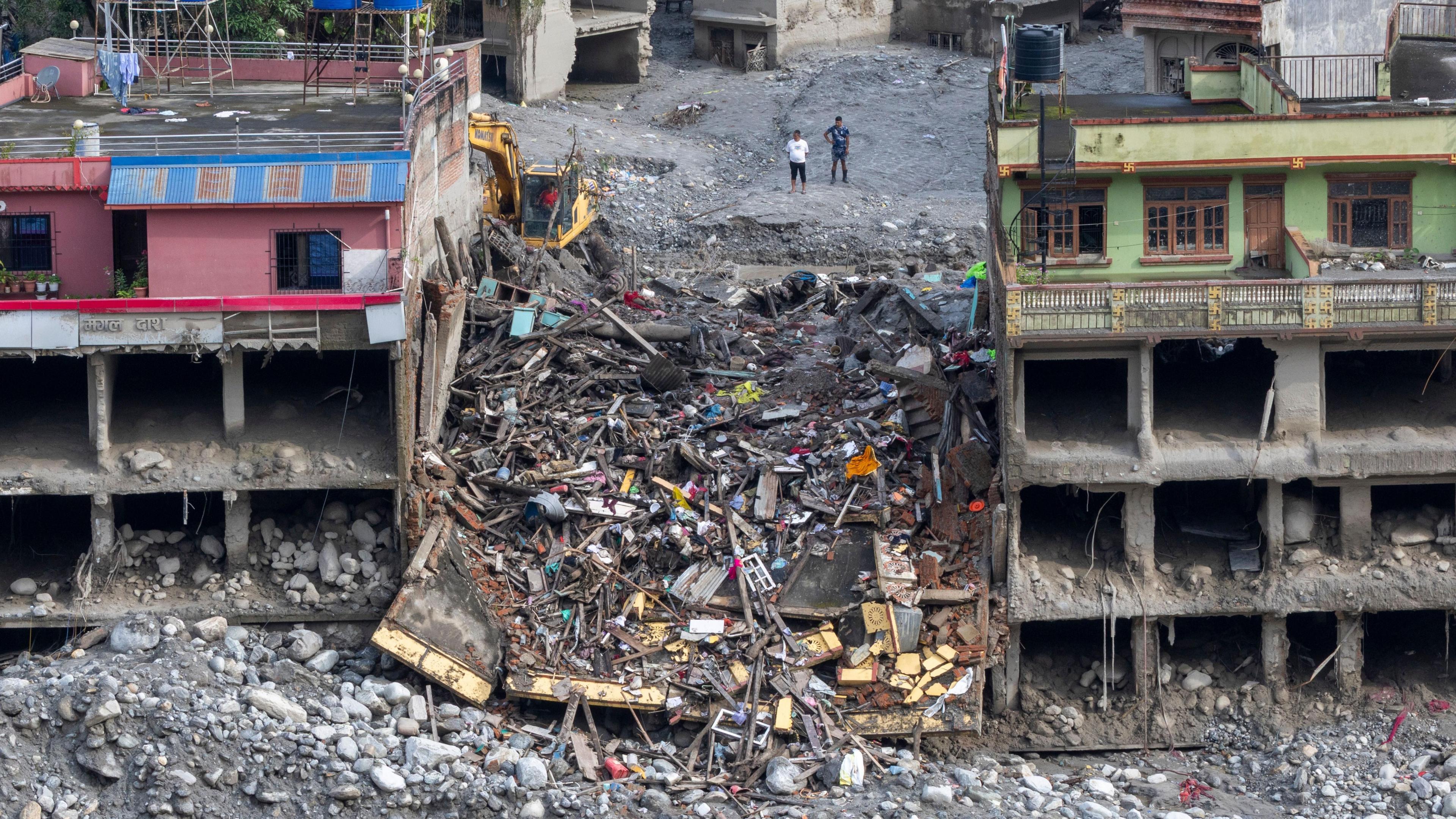
The disaster has killed at least 1,380 people, while more than 5,500 remain missing across Nepal and Tibet, including 35 Australians. It began when a glacial collapse sent mud and rock into a river, triggering floods that destroyed communities and buried roads and highways. China has reported recovering 12 additional bodies in Tibet and has faced criticism from families of missing foreign visitors seeking information.
Australia will send a 15-person Disaster Assistance Response Team, including specialist drone operators from Fire and Rescue New South Wales and the Queensland Fire Department, to support mapping and imaging during Nepal’s search operations.
Nepal marked the 13th day after the disaster, traditionally the final day of mourning in Hindu rites, with flags at half-mast. However, no wider government ceremonies were planned because rescue efforts were continuing. President Ram Chandra Paudel visited affected areas, while Prime Minister Balendra Shah reported that security personnel had saved 923 prisoners from a flooded jail in Nuwakot and later recaptured 50 who escaped during the disaster.
Entities: Nepal, Tibet and the Nepal-China border, Chilime hydropower project, Rasuwa district, Hydropower tunnels • Tone: urgent • Sentiment: negative • Intent: inform
07-09-2026
Nepal observed a national day of mourning on 7 September for at least 1,287 people killed in a devastating flash flood in a Himalayan valley near the border with Tibet. The disaster, believed to have been triggered by a glacial collapse, swept through villages and left more than 5,000 people missing nearly two weeks later.
Flags were flown at half-mast across Nepal, including at government offices and diplomatic missions abroad. Candlelight vigils were planned, but official commemorations were limited because rescue and search operations were still under way. The National Emergency Operation Centre said no government programmes would be organised while teams continued working in the affected areas. President Ram Chandra Paudel visited devastated locations.
Rescuers are focusing on hydropower tunnels, where hundreds of workers may still be trapped and where authorities believe survivors could remain. Army spokesperson Raja Ram Basnet said operations were intensifying both on the ground and from the air, with teams trying to ensure nobody remained stranded. Australian tunnel-rescue expert Arnold Dix, advising Nepali teams, described the effort as involving several dangerous and uncertain rescues at the same time.
Four people have been rescued in recent days, including three from hydropower stations or tunnels. A 64-year-old woman was found alive on the fourth floor of her mud-buried home in Nuwakot district more than 10 days after the flood. She was airlifted to a hospital in Kathmandu. On the Tibetan side of the border, Chinese rescue workers recovered 12 bodies. Chinese media reported 31 deaths and 531 people missing there, while Nepal’s authorities reported 5,083 people still unaccounted for. The continuing recoveries have offered limited hope amid a large-scale humanitarian disaster.
Entities: Nepal, Tibet, Nuwakot district, Kathmandu, Ram Chandra Paudel • Tone: urgent • Sentiment: negative • Intent: inform
07-09-2026
Nepal observed an official day of mourning on Monday, the 13th day after devastating floods on Aug. 26 killed more than 1,300 people in Nepal and Tibet and left approximately 5,000 missing, according to Nepal’s disaster management agency. Government offices lowered their flags to half-staff, while families completed traditional 13-day Hindu mourning rituals and held prayers for those who died. Some families performed symbolic funerals for missing relatives because their bodies had not been recovered, providing what they described as a sense of spiritual release.
While the country mourned, search-and-rescue operations continued, particularly at 12 hydropower projects where about 900 workers are missing and roughly 500 may be trapped in tunnels. Relatives protested in Kathmandu near the offices of the prime minister and other ministries, arguing that authorities had not acted quickly or forcefully enough. They called for more equipment and larger helicopters to reach remote, debris-covered sites.
Sumana Shrestha said her husband, a consulting geologist at the Trishuli hydropower plant, disappeared when the project’s office was buried by debris. She and other relatives said they had received no information about meaningful rescue attempts. Another protester, Mahesh Prasad Shrestha, said a small excavator was not flown to the site until nearly a week after the disaster.
Specialized teams from India, China, South Korea and the United States were searching damaged structures, tunnels and debris. Two Nepalese workers were rescued on Friday, and a Chinese man was rescued on Saturday. Candlelight vigils were also held in Kathmandu to honor those who died.
Entities: Nepal, Tibet, Kathmandu, Bhotekhoshi River, Trishuli hydropower plant • Tone: neutral • Sentiment: negative • Intent: inform
07-09-2026
Nepal observed the traditional 13th and final day of Hindu mourning on Monday as search-and-rescue teams continued working after a catastrophic mudslide along the country’s border with China. Government offices in Nepal and diplomatic missions abroad lowered the national flag to half-mast, while families marked the day with religious rituals and food offerings. Authorities did not organize broader public ceremonies because rescue operations remained active.
The disaster began on Aug. 26, when a glacier break-off triggered a massive wall of mud and rock that collapsed into a river in the Himalayan border region. The resulting floods and mudslides destroyed towns and villages and buried roads and highways. The article reports that at least 1,380 people were killed and more than 5,500 remained missing in Nepal. Chinese officials separately said that 12 additional bodies had been recovered in Tibet, where hundreds were still unaccounted for.
Rescuers achieved four unlikely survivals in recent days. A Chinese national was pulled from a tunnel on Saturday, while two hydropower workers were rescued from another tunnel on Friday and a Nepali woman was found alive in her buried home. Search teams were concentrating on hydropower facilities, where officials believed additional survivors might be trapped.
President Ram Chandra Paudel toured affected areas to assess the damage. In Nuwakot district, security personnel saved 923 prisoners by moving them to higher ground before floodwaters entered their building. Authorities later recaptured 50 prisoners who broke through the prison wall and gates but fled only a short distance. The continuing search, large death toll, and thousands of missing people left Nepal’s day of mourning focused on rescue efforts rather than public events.
Entities: Nepal, China’s Tibet, Rasuwa, Nuwakot district, Trishuli-3A Hydropower Project • Tone: urgent • Sentiment: negative • Intent: inform