13-10-2026
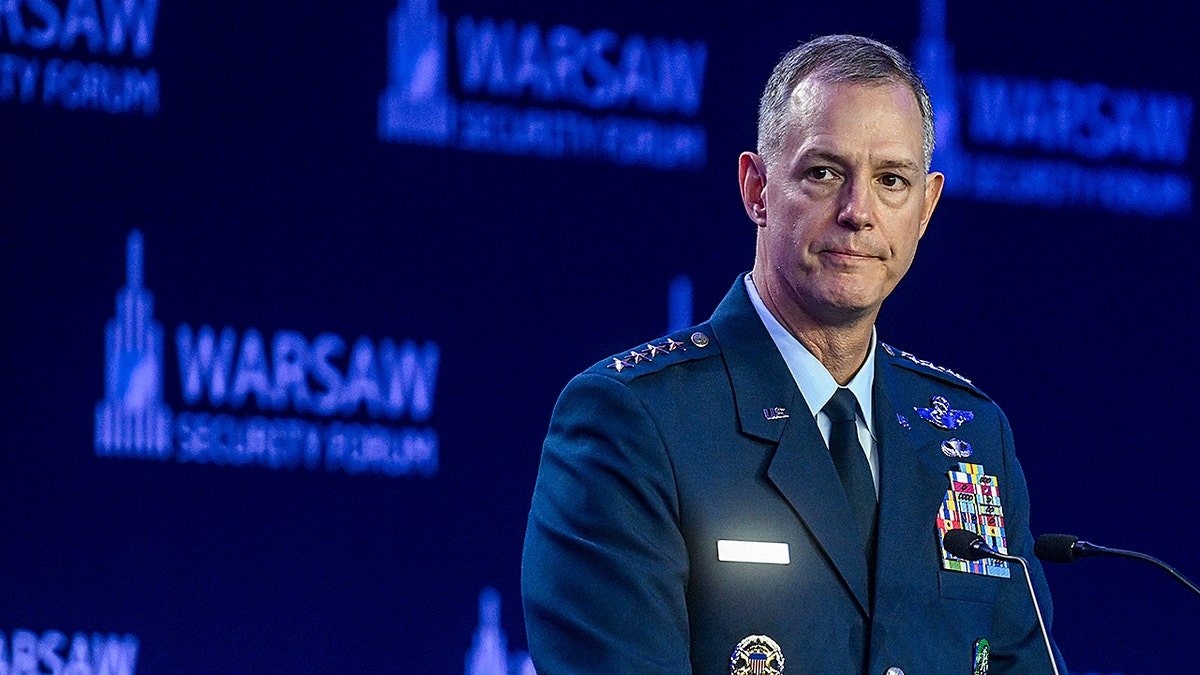
NATO’s top military commander, U.S. Air Force Gen. Alexus Grynkewich, warned at the Warsaw Security Forum that the alliance would respond decisively if an adversary attacked a member state. He said NATO would “break” the enemy’s warfighting system, including the forces carrying out an attack and the assets that support, sustain and control them. Grynkewich described the alliance’s approach as “blocking, blunting and breaking” enemy forces, and emphasized that an attack on any of NATO’s 32 members would be stopped and denied its objectives.
His remarks come amid heightened tensions between Russia and Western countries. European officials have linked drone incursions and suspected sabotage operations to Moscow and have accused Russia of hybrid warfare involving sabotage, arson and cyberattacks. In 2025, Russian drones entered Polish airspace during a large attack on Ukraine, prompting Polish and allied aircraft to respond. NATO subsequently launched Operation Eastern Sentry to reinforce its eastern flank. Romania has also reported drone incursions, and Estonia has accused Russian military aircraft of violating its airspace.
The article also describes recent developments in the Russia-Ukraine war and diplomatic efforts. Russia launched new strikes on Ukrainian energy infrastructure despite efforts to reduce hostilities. The article reports that President Donald Trump announced an agreement with Russian President Vladimir Putin to increase Russian diesel supplies to U.S. and global markets, including a waiver of certain U.S. sanctions on Russian energy exports. Ukrainian President Volodymyr Zelenskyy accused Russia of continuing attacks on energy facilities, raising doubts about a broader ceasefire.
Finally, the article cites a Russian warning that NATO could face nuclear weapons if it tried to isolate Kaliningrad, a heavily militarized Russian exclave between Poland and Lithuania. A diplomatic note obtained by Reuters described NATO’s course as dangerous and warned of risks of direct conflict. The submitted article ends mid-sentence while describing Russia’s threat to use its full military arsenal, including nuclear weapons, to defend the exclave.
Entities: Alexus Grynkewich, NATO, Warsaw Security Forum, Russia, Poland • Tone: urgent • Sentiment: neutral • Intent: inform
13-10-2026
Former U.S. Assistant Secretary of State for European Affairs Dan Hamilton tells NPR host Steve Inskeep that NATO allies are concerned about both Russia’s actions in Europe and uncertainty over the United States’ commitment to the alliance. The concerns include Russia’s conventional war against Ukraine and suspected or reported unconventional attacks across Europe, such as sabotage, arson and cyberattacks. Hamilton cites a suspected assault on a British base that prompted U.S. B-1 bombers to relocate, while Inskeep notes British authorities blamed that incident on Iran, not Russia; sabotage at Leipzig Airport is another example raised in the interview.
Hamilton says a large-scale Russian attack on NATO territory seems unlikely while Russia is occupied in Ukraine, and such a movement of forces would probably be detected. He argues that Russia could instead seek to undermine European governments, divert attention from Ukraine, weaken public support for supplying Ukraine with weapons, or divide NATO over how to respond to an ambiguous incident. One hypothetical is armed men without insignia crossing into Estonia near the Russian border—a scenario recalling Russia’s seizure of Crimea in 2014 and posing difficult questions about alliance consensus and whether to go to war.
The interview also addresses differing U.S. and European approaches to Russia. Hamilton characterizes a U.S. announcement to lift sanctions on Russian diesel as working at cross-purposes with the European Union’s launch of its largest batch of sanctions since Russia’s 2022 invasion of Ukraine. He says sanctions have harmed Russia and forced difficult choices, although the economy has gradually recovered. In his view, it is being sustained as a wartime economy with Chinese support and may not be able to continue on its current path. Overall, the discussion explains NATO’s concern with both military threats and political destabilization, while emphasizing the challenge of maintaining unity among allies.
Entities: NATO, Russia, Ukraine, Dan Hamilton, Steve Inskeep • Tone: analytical • Sentiment: negative • Intent: inform
13-10-2026
NATO’s Supreme Allied Commander Europe, US Air Force Gen. Alexus Grynkewich, warned at the Warsaw Security Forum that the alliance would stop an attack on any member and, if necessary, destroy not only attacking forces but also the systems and infrastructure supporting them. He described NATO’s approach as “blocking, blunting and breaking”: halt an initial assault, prevent an enemy advance, and disable the forces and operational system behind it. Grynkewich said NATO was preparing through exercises, greater readiness and investment in new capabilities, while stressing that the alliance remained defensive.
The remarks came amid rising tensions between Russia and Western countries. European governments have linked suspected sabotage, cyberattacks and other hybrid operations to Moscow. The article cites Russian drone incursions into Polish and Romanian airspace, Estonia’s accusation that Russian aircraft violated its airspace, and NATO’s Operation Eastern Sentry, which strengthens defenses on the alliance’s eastern flank. Russia had also recently struck Ukrainian energy infrastructure, while Ukrainian President Volodymyr Zelensky questioned whether a broader ceasefire was possible.
The report also describes Moscow’s warning that it could use its military arsenal, including nuclear weapons, if NATO tried to isolate Kaliningrad. NATO Secretary-General Mark Rutte rejected the threats and said Russia could not defeat the alliance; Russian President Vladimir Putin has said Russia does not intend to attack European countries. Grynkewich did not name Russia in his Warsaw speech, though NATO’s 2022 Strategic Concept identifies it as the principal direct threat to allied security.
Against concerns over US commitment—amplified by President Donald Trump’s pressure on European allies to increase defense spending—Grynkewich sought to reassure NATO’s members. He said the alliance was ready to fight, and offered to discuss suspected hybrid attacks with governments that wanted him to address them. The forum brought European political and defense leaders together as Russia’s war in Ukraine and tensions on NATO’s eastern flank remained central concerns.
Entities: Alexus Grynkewich, Vladimir Putin, Donald Trump, Mark Rutte, Volodymyr Zelensky • Tone: analytical • Sentiment: neutral • Intent: inform
13-10-2026
Nato’s senior military commander, US General Alexus Grynkewich, said the alliance is prepared to respond immediately if attacked, declaring it “ready to fight tonight.” His remarks came amid warnings from European officials that Russia may increase covert operations against Nato countries or test the alliance through a limited military incursion. The article cites recent incidents in Europe, including an arson attack on an Estonian defence company and an unsuccessful attempt to attack a Ukrainian aircraft at a German airport, as examples of escalating covert Russian activity.
Speaking at the Warsaw Security Forum in Poland on Monday, Grynkewich outlined what he called Nato’s “Theory of Victory.” He said that, in the event of a Russian attack on Nato, the alliance would draw on sensors, autonomous systems and military force to stop the assault. The account does not describe an attack as underway, nor does Grynkewich portray conflict as inevitable or imminent.
Instead, he argued that readiness and communication should work together to preserve peace. Preparing for war, he said, is the most effective way to deter conflict, while open lines of communication can help resolve misunderstandings. The article thus presents Nato’s posture as a combination of military preparedness and efforts to avoid escalation. Its central message is that the alliance says it can respond decisively to an attack while maintaining that it does not seek war.
Entities: Nato, Alexus Grynkewich, Warsaw, Warsaw Security Forum, Russia • Tone: analytical • Sentiment: neutral • Intent: inform