14-09-2026
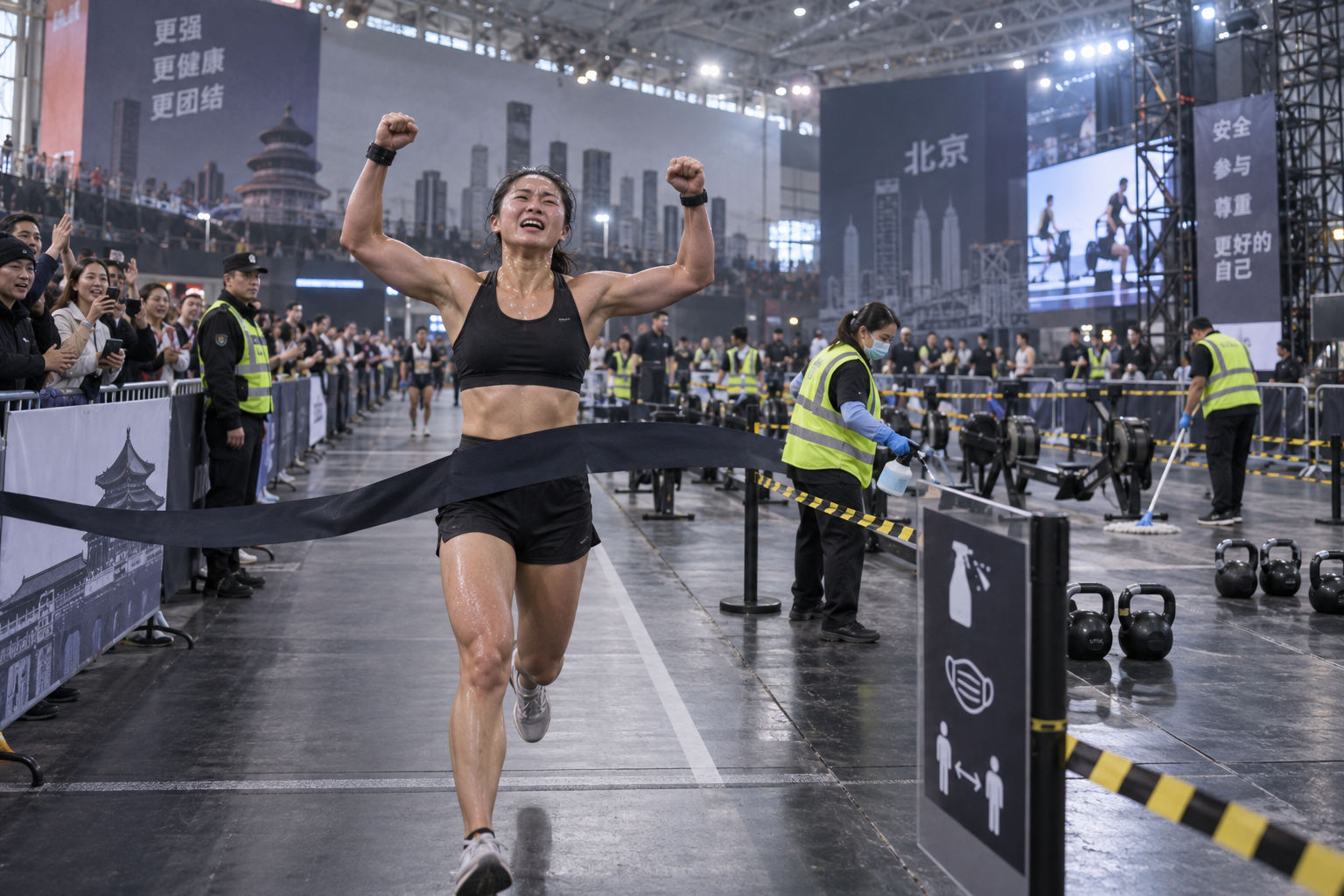
HYROX organisers are facing strong criticism after Australian elite athlete Joanna Wietrzyk experienced fecal incontinence during a HYROX fitness race in Beijing but was allowed to continue competing. Wietrzyk completed the demanding indoor course and won her event, despite videos and photographs appearing to show her continuing to use shared equipment while visibly soiled. The incident quickly went viral on Chinese social media, where users questioned both the athlete’s decision to continue and the organisers’ handling of the situation.
Critics argued that allowing the race to continue may have exposed other competitors to health risks and raised concerns about HYROX’s hygiene and safety procedures. The hashtag “#Hyrox incontinence female competitor has not been punished” reportedly received more than 27 million views on Weibo, while the Global Times published one of the most-read stories about the incident.
HYROX China said the affected area and track were isolated and comprehensively disinfected after the event. It also said contaminated equipment was removed, waste was handled according to municipal standards, and venue flooring would be replaced. HYROX World acknowledged that its bio-contaminant and medical protocols had not been applied clearly in this case, creating ambiguity between procedures for elite competition and mass participation.
Some athletes said responsibility ultimately rested with HYROX because competitors had paid for a professionally organised and safe event. However, Chinese sports-management academic Li Hongxin said Wietrzyk should not be criticised for experiencing a physiological problem and praised her determination. He argued that organisers should have assessed the potential impact on other competitors, particularly because HYROX is an indoor event in which participants share equipment. Wietrzyk and HYROX were contacted for comment, but the article does not report responses from either.
Entities: Joanna Wietrzyk, Allyson Horn, Kat Tse, Xiaoning Mo, HYROX • Tone: analytical • Sentiment: negative • Intent: inform
14-09-2026
Hyrox has apologised after allowing a female athlete to continue competing in a Beijing event after she appeared to soil herself during the race. Video of the incident prompted concerns about hygiene, contaminated equipment and the organisers’ decision not to intervene. Hyrox co-founder Moritz Fürste accepted responsibility, saying the company “did not handle the situation like we should have” and promising immediate changes to event procedures.
The company said it already had biocontaminant and medical protocols, but acknowledged that an unforeseen situation caused confusion over how those rules should be applied. Some competitors reportedly demanded an apology and refunds, arguing that they had been required to use contaminated equipment. Participant Joe Ho criticised Hyrox for failing to offer compensation or other meaningful remedies.
The incident also led to online abuse after the athlete’s identity was shared. Hyrox said anyone making threats or encouraging harm against her would be permanently banned from future events.
Anthony Huang, an associate professor at the National Taiwan University of Sport, told the BBC that the episode could indicate a results-driven culture in which sporting performance is prioritised over safety and hygiene. He also questioned whether Hyrox’s rapid commercial expansion had outpaced its ability to manage competitions effectively.
Hyrox combines one-kilometre runs with exercises such as sled pushes, burpees, indoor rowing and sandbag lunges. Founded in Hamburg in 2017, it has rapidly expanded worldwide and entered mainland China in late 2024. More than 500 Chinese gyms now offer Hyrox-specific training, and demand for the Beijing event was so high that organisers added an extra day. The article notes that bodily functions during endurance events are not unprecedented, citing marathon runners Paula Radcliffe and Li Meizhen as examples, but distinguishes those incidents from concerns about event management and contaminated equipment.
Entities: Hyrox, Moritz Fürste, Beijing, China, Joe Ho, Anthony Huang • Tone: analytical • Sentiment: negative • Intent: analyze
14-09-2026
Australian Hyrox athlete Joanna Wietrzyk, 24, has sparked a fierce social-media debate after suffering fecal incontinence during a competition in Beijing and continuing to race despite fecal matter reportedly streaming down her legs. Wietrzyk completed running, rowing and lunge segments, crossed the finish line first and initially celebrated on Instagram with the message, “Go hard or go home they say… a win is a win.” She later deleted the post as criticism intensified.
Online reactions have been sharply divided. Critics argued that Wietrzyk should have stopped or been disqualified because contaminated equipment and sections of the track allegedly created a hygiene and safety hazard. Chinese officials reportedly cordoned off affected areas, disinfected the venue, removed contaminated equipment and planned to replace the carpet. Participants and spectators said fecal matter remained on the course and that several athletes fell.
Others defended Wietrzyk, framing her decision as an extraordinary display of toughness and resilience. They emphasized that fecal incontinence can happen to athletes and argued that an accident should not erase her achievement.
HYROX acknowledged the controversy, saying that its biocontaminant and medical procedures became unclear in an unforeseen situation. The organization said athletes are encouraged to push themselves but that organizers must provide appropriate boundaries and safety procedures. Co-founder Moritz Fuerste later admitted that HYROX made a mistake by failing to intervene immediately and said new rules and procedures were being implemented.
The article concludes that although Wietrzyk officially won the event, the controversy may overshadow her athletic achievement and define her public reputation.
Entities: Joanna Wietrzyk, HYROX, Moritz Fuerste, Beijing, China, Australia • Tone: emotional • Sentiment: negative • Intent: inform
14-09-2026
Australian athlete Joanna Wietrzyk won a Hyrox indoor fitness competition in Beijing in 1 hour, 1 minute and 23 seconds despite experiencing diarrhea and fecal incontinence during the event. Photos and videos showed her continuing to compete while fecal matter ran down her legs. The incident prompted widespread outrage because Hyrox events involve shared equipment, including rowing machines, kettlebells and other surfaces used by numerous athletes and staff.
Social media users criticized Wietrzyk for continuing the race and accused her and the organizers of prioritizing a medal over public health. Wietrzyk initially celebrated her victory on Instagram with the message, “a win is a win,” but deleted the post after backlash intensified. Chinese officials said affected areas were cordoned off, disinfected, and cleaned, while contaminated equipment was removed and the carpet was scheduled for replacement. However, participants and spectators said the cleanup was not immediate and that fecal matter remained visible on equipment and across the track.
Hyrox later issued a statement acknowledging that its biocontaminant and medical protocols had not been applied clearly in the unusual situation. The organization said the matter exposed ambiguity between procedures for elite competition and mass-participation events. Hyrox co-founder Moritz Fuerste subsequently apologized and admitted that organizers made a mistake by failing to stop the race immediately. He said the organization had introduced new procedures and rulebook changes.
The article also explains that exercise-related fecal urgency, commonly known as runner’s diarrhea or runner’s trots, can occur during strenuous endurance activity. Reduced blood flow to the gastrointestinal tract, dehydration, certain foods, and the repetitive jostling of running and lifting can contribute to symptoms. Studies suggest that 30% to 90% of endurance athletes experience gastrointestinal problems during exercise.
Entities: Joanna Wietrzyk, Hyrox, Beijing, China, Moritz Fuerste • Tone: emotional • Sentiment: negative • Intent: inform