21-09-2026
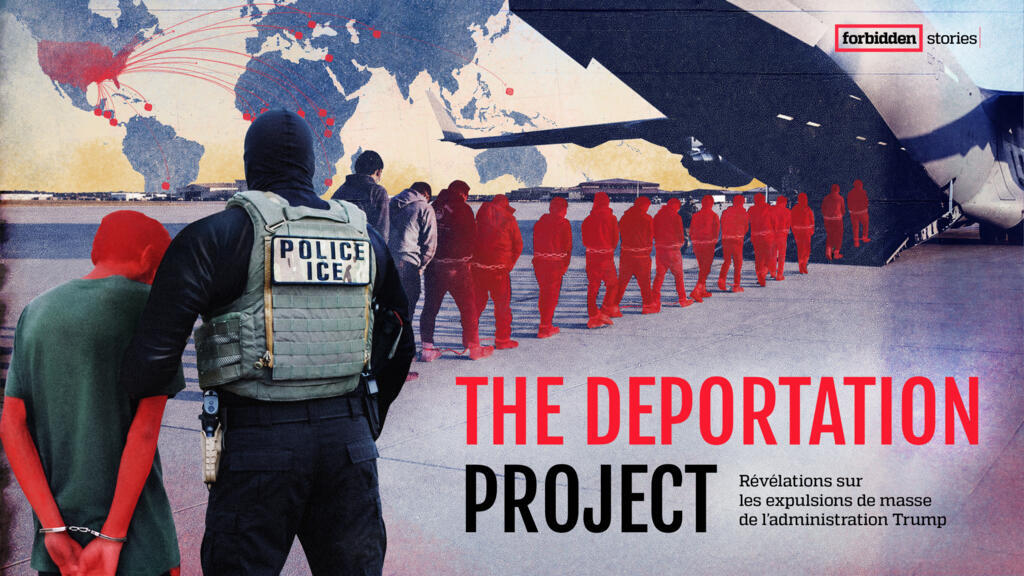
FRANCE 24 and RFI, working with the Forbidden Stories consortium, investigated secret agreements between the administration of US President Donald Trump and 35 countries that accepted migrants deported from the United States. The investigation involved 72 journalists from 26 media outlets in 15 countries, more than 100 interviews and testimonies from 33 deported migrants.
Since January 2025, more than 25,400 foreigners have reportedly been deported to countries they had often never visited. Many had legal protections preventing their return to their countries of origin because they faced possible persecution there. The Trump administration used agreements with so-called “third countries” to bypass those protections, although the terms of the deals and what the receiving countries obtained in return remain largely secret.
Twelve of the agreements were made with African countries, including Ghana, Cameroon and Eswatini. The investigation documents the experiences of people who were sent to unfamiliar countries and left in precarious situations. Some had lived in the US for decades, working, paying taxes and raising families. After deportation, they became effectively stateless and faced possible detention, mistreatment or removal to the countries from which they had originally fled.
The article also describes the risks faced by journalists investigating US Immigration and Customs Enforcement. Salvadoran reporter Mario Guevara was detained in 2025 while covering an anti-ICE protest in Atlanta and was later deported to El Salvador. The wider “Deportation Project” examines the human consequences of the policy through reports on Cameroon, Ghana and Eswatini, as well as an interactive map documenting the deportations and the countries involved. Overall, the investigation presents the policy as opaque and damaging, while highlighting the uncertain legal and humanitarian status of those deported.
Entities: Donald Trump, US Immigration and Customs Enforcement (ICE), Forbidden Stories, FRANCE 24, RFI • Tone: analytical • Sentiment: negative • Intent: inform
21-09-2026
France 24’s Reporters+ investigation, “ICE, Trump and Africa: Secret deals, broken lives,” examines how the Trump administration’s immigration policy has used African countries as destinations for deportations carried out by US Immigration and Customs Enforcement (ICE). The investigation focuses on the removal of migrants to so-called “third countries”—including Ghana, Eswatini and Cameroon—rather than to their countries of origin.
Many of those deported had lived in the United States for decades. They had worked, paid taxes and established families, but were reportedly arrested and detained without warning before being sent to countries they had never known and where they often had no relatives, income, legal status or support network. The documentary follows people living in legal and social limbo, including individuals who risk detention or deportation to the countries they originally fled. Some fear for their safety if returned.
The report is part of The Deportation Project, a six-month investigation conducted by a consortium of 26 media outlets coordinated by Forbidden Stories, with RFI and France 24 participating. Journalists investigated confidential agreements between the US administration and African governments that allow undocumented migrants detained by ICE to be transferred to countries unrelated to their citizenship or personal history.
Beyond the individual stories, the film examines the political system supporting these removals. It alleges that Washington has used political pressure, financial arrangements, trade negotiations and tariff incentives to persuade African states to accept deportees. The investigation portrays these agreements as a largely opaque form of bargaining in which vulnerable migrants become instruments of US foreign policy.
Through interviews and reporting from Ghana, Cameroon and Eswatini, the documentary highlights the uncertainty faced by deported people and the pressure placed on African governments. Its central argument is that the United States is relocating its deportation system abroad while leaving those removed without meaningful protection, documentation or stability.
Entities: Karina Chabour, Donald Trump, US Immigration and Customs Enforcement (ICE), France 24, RFI • Tone: analytical • Sentiment: negative • Intent: inform
21-09-2026
A joint investigation by Forbidden Stories, FRANCE 24 and 25 other international media outlets estimates that the Trump administration has deported more than 25,000 people to countries other than their countries of origin since January 2025. The investigation used NGO data, flight-tracking information, freedom-of-information requests, court and legal sources, and reporting from journalists in multiple countries.
About 20,000 people were sent to Mexico by land, even though many were not Mexican nationals and there is no formal third-country deportation agreement between the United States and Mexico. At least 5,447 additional people from 89 nationalities were flown to countries around the world. By August 31, 2026, 28 countries across six continents had received deportees, while agreements had been reached with seven additional countries. Guatemala received nearly 3,000 people, while Costa Rica, Honduras, Panama and El Salvador each received more than 250.
The investigation identifies agreements with 13 African countries, 12 of which had already received deportees, totaling approximately 450 people. Ghana received more than 100, while several other countries received dozens. Human Rights First argues that the administration has become increasingly secretive about the transfers and is prioritizing agreements over the human-rights records of partner governments.
The article profiles Rabbiatu Kuyateh, a Sierra Leonean nurse who lived in the United States for more than 30 years before being detained and sent to Ghana, a country with which she had no meaningful connection. It also describes Malick, a Senegalese man who had protection from removal to his home country because of threats to his safety but was deported to a third country. Although the administration says it is targeting serious criminals, interviews with 33 deportees and NGO reports suggest that many people had no criminal records. The article presents third-country removals as a central, opaque and expanding element of the administration's immigration policy.
Entities: Donald Trump, Rabbiatu Kuyateh, Savi Arvey, Forbidden Stories, FRANCE 24 • Tone: analytical • Sentiment: negative • Intent: inform
21-09-2026
FRANCE 24 and Forbidden Stories investigate the fate of African migrants deported from the United States to Cameroon under opaque “third-country” agreements associated with Donald Trump’s administration. At least 44 people from across Africa have reportedly been sent to Cameroon, despite having no connection to the country. They are being held in a temporary migrant shelter in Yaoundé, where they live in sparse dormitories and face uncertain legal and personal futures.
The article profiles Barbara, an Ethiopian woman from Tigray who fled persecution after the region’s devastating war. After travelling through Brazil and reaching the United States, she was detained in Louisiana. A US judge granted her “withholding of removal,” a protection preventing deportation to Ethiopia because she faced a significant risk of persecution. Nevertheless, she was later placed on a plane and deported to Cameroon, a country she had never known.
Another deportee, Soraya from Ghana, says she fled after her family discovered her sexual orientation and threatened her life. She too had received protection in the United States before being deported without warning. Lawyers say that US law allows people with withholding of removal to be sent to countries considered “safe,” creating a legal loophole that the Trump administration has used to expand deportations.
More than 35 agreements with countries in Africa and Latin America have reportedly enabled the deportation of over 25,000 people. Lawyers and rights advocates criticize the arrangements for their secrecy, limited access to legal assistance and alleged detention-like conditions. In Cameroon, the publicly available agreement consists of diplomatic notes promising treatment consistent with international law, but its full terms remain unclear. Reports suggest Washington applied financial pressure by threatening to suspend approximately $30 million in refugee-related funding, although the UN refugee agency denies that the money was intended to resettle deportees.
Entities: Donald Trump, Barbara, Soraya, Joseph Awah Fru, Beatrice Njeri • Tone: analytical • Sentiment: negative • Intent: analyze
21-09-2026
The Washington Post reports that the Trump administration has transformed the State Department’s refugee-focused Bureau of Population, Refugees and Migration into a mechanism for arranging third-country deportations. Through the newly created Office of Remigration, career diplomat Christian Ehrhardt has traveled across Africa and elsewhere to persuade governments to accept migrants deported from the United States despite those migrants having no connection to the receiving country.
According to internal government records reviewed by The Post, the administration had authorized or pledged at least $410 million for agreements with 31 countries as of the end of June. The money includes $81 million in direct payments to 13 foreign governments, along with $179 million for the International Organization for Migration and $124 million for the U.N. Refugee Agency. Although the organizations are not formally parties to the deportation deals, their funding has reportedly been negotiated as an incentive for countries to accept deportees.
The arrangements vary significantly. Costa Rica accepted migrants from China, Russia, Iran and Afghanistan, while Eswatini received people from Vietnam, Laos, Cuba and Jamaica. Uganda will accept only African nationals, while the Democratic Republic of the Congo will not accept Africans. Some countries permit the transfer of violent criminals, while others restrict agreements to nonviolent offenders.
The article says the deals were advanced under the influence of White House deputy chief of staff Stephen Miller and were structured to bypass statutory requirements, including human-rights safeguards, that normally apply to foreign assistance. Officials and former staff members described the process as rapid and subject to little oversight, despite the involvement of authoritarian governments with documented records of torture, killings and indefinite detention.
The creation of the Office of Remigration represents a major reversal of the bureau’s traditional refugee-resettlement mission. The term “remigration” is also associated with European white-nationalist movements seeking to expel immigrants and racial minorities. Migrants deported under the arrangements have alleged beatings, denial of food, and restrictions on communication with lawyers and relatives.
Entities: Donald Trump and the second Trump administration, Christian Ehrhardt, Stephen Miller, Office of Remigration, U.S. Department of State • Tone: analytical • Sentiment: negative • Intent: analyze
21-09-2026
The article opens in Panama City, where Arsalan Saleh Fard, an Iranian-born Christian, has been living in uncertainty after being sent there by the United States. Two years earlier, he had never heard of Panama City and would not have been able to locate it on a map. Now the unfamiliar Latin American capital has become the setting for his unsettled life, including periods when he slept on a mattress on the floor.
The opening presents Saleh Fard’s situation as an example of displacement and bureaucratic limbo. The headline indicates that the United States transferred him to Panama without a clear plan for what would happen afterward. The excerpt does not provide the details of his transfer, his legal status, or the broader policy context, but it establishes the central issue: a person who was moved across borders without an evident pathway to stability or resettlement.
The contrast between Saleh Fard’s unfamiliarity with Panama and his current dependence on the city underscores the abruptness of his circumstances. The description of sleeping on the floor conveys material hardship, while the phrase “living a life in limbo” suggests unresolved immigration, humanitarian, or legal problems. The article appears to be a reported account of the consequences of U.S. migration policy for an individual migrant, focusing on the gap between government action and the support available afterward.
Because only the opening excerpt was provided, the summary cannot responsibly describe later events, official responses, or the article’s full conclusions. The available text primarily introduces Saleh Fard, his destination, and the precarious conditions he faces in Panama.
Entities: Arsalan Saleh Fard, Teo Armus, Panama City, Panama, Iran • Tone: emotional • Sentiment: negative • Intent: inform