22-09-2026
Sri Lanka’s High Court has convicted 15 men in connection with the 2019 Easter Sunday bombings, the deadliest terrorist attacks in the country’s recent history. The attacks targeted three churches and three luxury hotels, killing more than 260 people and injuring more than 500. The victims included Australians Manik Suriaaratchi and her 10-year-old daughter, Alexendria, who were killed when a bomb exploded inside St Sebastian’s Church in Negombo, north of Colombo.
The three-judge bench delivered its decision after a five-year trial. Fourteen of the 24 men accused of being directly involved were convicted of charges including murder and conspiracy to commit terrorism. One additional defendant was found guilty of only some charges, while nine men were acquitted. The convicted men will be sentenced at a later date. None of the people believed to have directly carried out the attacks remain alive.
The bombings were carried out by terrorists inspired by Islamic State. In 2021, authorities filed more than 23,000 charges against suspects accused of planning or encouraging the attacks. The case has also raised questions about whether the bombings could have been prevented. An Indian intelligence agency reportedly warned Sri Lankan authorities weeks beforehand about a possible suicide attack by Islamist extremists, but officials failed to act.
Sri Lankan President Anura Kumara Dissanayake had pledged to hold those responsible accountable after taking office two years ago. In July, former police chief Pujith Jayasundara and former Defence Ministry secretary Hemasiri Fernando were sentenced to death for failing to prevent the attacks. However, Sri Lanka has not carried out an execution since 1976, and the two officials were expected instead to serve life sentences. The latest convictions mark a significant legal development, but sentencing remains outstanding.
Entities: Sri Lanka High Court, 2019 Easter Sunday bombings, Manik Suriaaratchi, Alexendria, Negombo • Tone: neutral • Sentiment: negative • Intent: inform
22-09-2026
Sri Lanka’s High Court has convicted 15 of the 24 men tried for their alleged involvement in the Easter Sunday bombings of April 2019, attacks that killed 279 people—including 45 foreigners—and injured more than 500. Fourteen defendants were found guilty on all charges, including murder, conspiracy to commit terrorism, and possession of firearms and explosives under the Prevention of Terrorism Act. A 15th defendant was convicted on some charges, while nine were acquitted. Twenty-five men had initially been charged, but one died in custody during the five-year trial. All the defendants are members of Sri Lanka’s minority Muslim community.
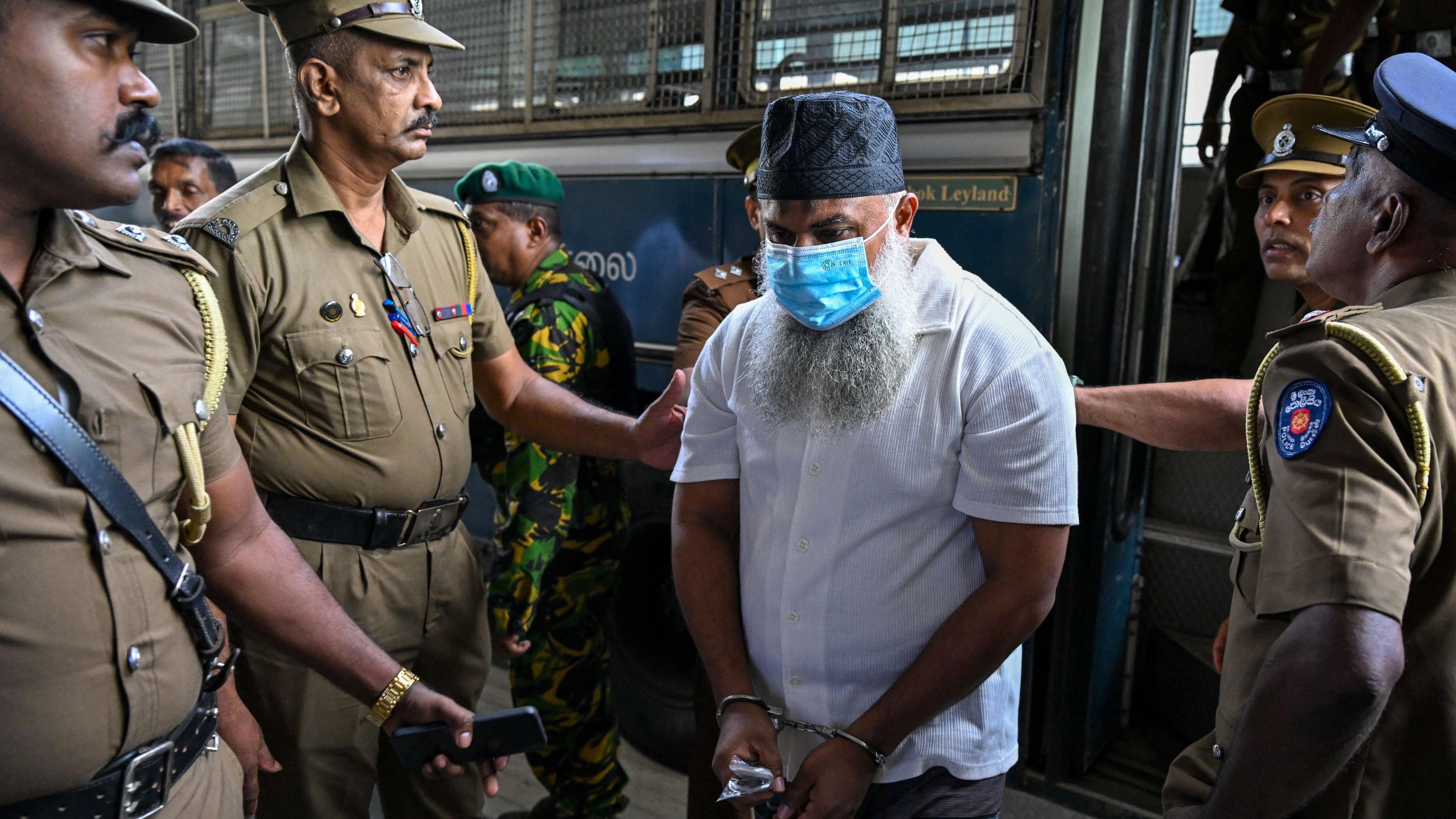
Among those convicted on all charges is Mohamed Naufar, whom prosecutors described as the ringleader who supported the eight-member team that carried out the bombings. The court announced that sentencing would take place later on the day of the verdict. Heavy security was deployed outside the Colombo courtroom as the decision was read.
The coordinated attacks targeted three luxury hotels and three churches—two Catholic and one Protestant. The bombings were allegedly carried out by two Sri Lanka-based armed groups. A parliamentary committee previously concluded that police and intelligence officials failed to respond to repeated warnings about the planned attacks. The case has also prompted continuing allegations from Sri Lanka’s Catholic Church that the defendants identified as perpetrators may not include the masterminds and that a broader conspiracy existed, although the church has not provided evidence for that claim.
The Catholic Church welcomed the convictions. Priest Jude Fernando called the verdict justice after a long wait, while survivor Teresa Fernando said victims had come to court to receive justice and would accept the court’s decision. Separately, a former police chief and a former senior Defence Ministry official were sentenced to death in July for failing to act promptly on foreign intelligence warnings of possible attacks.
Entities: Sri Lanka High Court, Colombo, Sri Lanka, 2019 Easter Sunday bombings, Mohamed Naufar, Sri Lanka’s Roman Catholic Church • Tone: neutral • Sentiment: negative • Intent: inform
22-09-2026
Sri Lanka’s High Court has sentenced 15 men to prison terms of 200 to 260 years for plotting the Easter Sunday bombings of 2019. Prosecutors identified Naufer Moulavi as the alleged mastermind. Nine other defendants were acquitted, while one of the 25 men originally indicted had died in custody. The court also ordered the convicted men’s movable and immovable assets confiscated.
The coordinated suicide bombings targeted three churches and three luxury hotels, killing 270 people and injuring more than 500. Most victims were Sri Lankan, including children, hotel employees and members of several families. Forty-five foreign nationals were among those killed, including citizens of India, Britain and the United States. Three children of Danish billionaire Anders Holch Povlsen died in the attack on the Shangri-La hotel. All the bombers died in the blasts.
The attacks prompted scrutiny of security failures. Sri Lankan authorities acknowledged a major intelligence lapse, and parliament heard that a warning from India had not been properly shared. In 2023, the Supreme Court ordered former president Maithripala Sirisena to compensate victims, finding him responsible for national security failures. Last month, two former senior officials received death sentences for criminal negligence, although Sri Lanka’s long-standing moratorium means such sentences are usually commuted to life imprisonment.
The latest verdict comes amid continued public demands for justice and a separate investigation into former intelligence chief Suresh Sallay, who is accused of helping orchestrate the attacks. Sallay denies the allegation. Claims that the bombings were allowed to happen to strengthen the Rajapaksa family politically were made in a 2023 Channel 4 documentary; former president Gotabaya Rajapaksa has also denied them. Rajapaksa, elected months after the attacks, has asked a court to prevent his potential arrest and is barred from leaving the country.
Entities: Sri Lanka, Colombo High Court, Easter Sunday bombings (2019), Naufer Moulavi, Islamist extremism • Tone: neutral • Sentiment: negative • Intent: inform
22-09-2026
A Sri Lankan court convicted 15 men on Tuesday for their involvement in the 2019 Easter Sunday bombings, a series of coordinated attacks that killed more than 260 people and injured approximately 500 others. The bombings struck three churches and three hotels on April 21, during Easter services and celebrations, and were among the deadliest attacks in Sri Lanka’s history. Forty-two foreign nationals were among those killed. The attacks were inspired by the Islamic State group and were attributed to two Sri Lanka-based Islamic militant organizations. The bombings caused widespread devastation and renewed scrutiny of Sri Lanka’s security and intelligence systems. In 2021, prosecutors filed 23,270 charges against 24 suspects, including allegations of murder, conspiracy to commit terrorism, and offenses involving firearms and explosives under the Prevention of Terrorism Act. The article does not specify the sentences imposed on the 15 men convicted in this case. It notes that none of the people believed to have directly carried out the attacks is still alive. Because Sri Lanka has not conducted executions since 1976, death sentences generally lead to life imprisonment in practice. Sri Lanka’s Catholic Church has argued, without presenting evidence, that the individuals identified as perpetrators were not the masterminds and that a broader conspiracy was involved. The case follows separate death sentences in July for a former police chief and a former senior defense ministry official, who were convicted of failing to respond promptly to foreign intelligence warnings about possible attacks. The convictions represent a major legal development in the country’s long-running effort to establish responsibility for the Easter bombings.
Entities: Sri Lanka, Colombo, 2019 Easter Sunday bombings, Islamic State group, Sri Lanka-based Islamic militant groups • Tone: neutral • Sentiment: negative • Intent: inform