24-08-2026
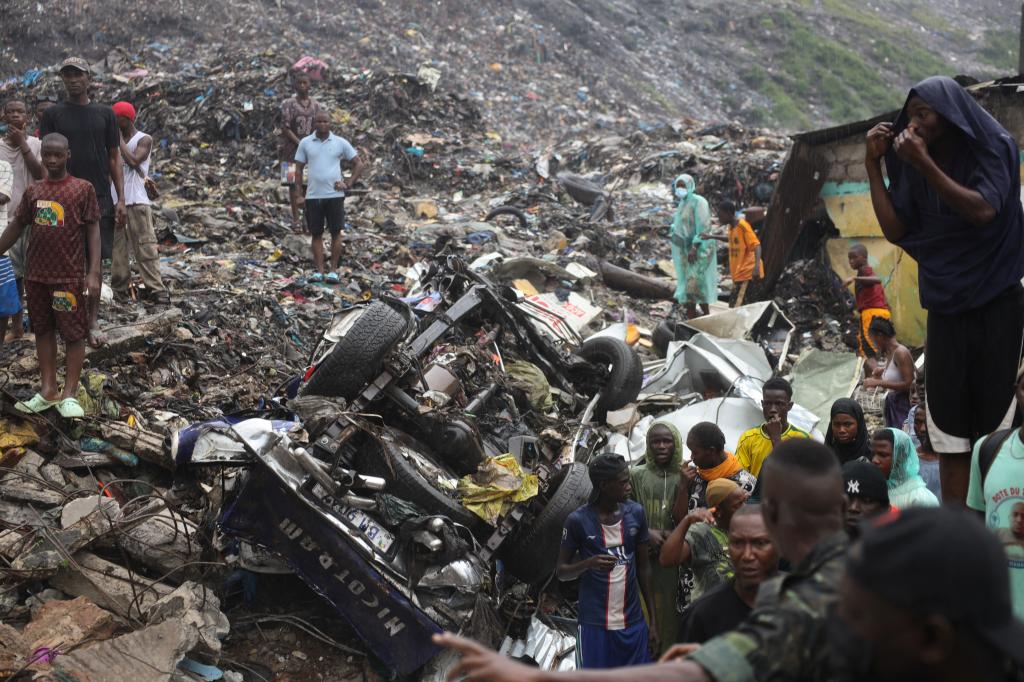
Residents of Conakry, Guinea, are dealing with the aftermath of a deadly landfill collapse that sent waste and debris onto nearby homes after heavy rains. The disaster killed 30 people and left communities in shock, despite the arrival of emergency crews at the scene. Resident Aboubacar Camara described hearing a sliding sound and screams during the early morning hours before urging his wife to leave their home. His account reflects the suddenness of the collapse and the fear experienced by people living near the landfill.
The incident occurred after the government had ordered residents near the site to leave because of concerns that the landfill could collapse. However, some residents argue that the authorities failed to act decisively enough to prevent the disaster. Abou Hamza, a young resident of Dar es Salam, said local people had repeatedly raised concerns through sit-ins, appeals to officials, and other efforts. He accused the state of failing to close the dump, despite promises made approximately a year earlier.
The disaster has therefore prompted both grief and anger. Residents are questioning why the landfill remained in operation or continued to threaten neighboring homes after warnings had been issued. The response has also attracted political attention. Cellou Dalein Diallo, a prominent opposition figure and former prime minister, called for an investigation into the circumstances that led to the collapse. The requested inquiry could examine the landfill’s safety conditions, the government’s prior warnings and evacuation order, and whether officials took sufficient measures to protect nearby communities. The article presents the event as both a humanitarian tragedy and a possible failure of public safety oversight.
Entities: Guinea, Conakry, Dar es Salam, Aboubacar Camara, Abou Hamza • Tone: urgent • Sentiment: negative • Intent: inform
24-08-2026
At least 31 people have been killed and 22 injured after a large mound of rubbish collapsed onto homes near a major landfill in the Dar-es-Salam area of Conakry, Guinea. Six of the injured people are reportedly in serious condition. The collapse occurred at about 02:00 local time after heavy overnight rain, prompting the government to deploy substantial resources, including military personnel, to search for survivors.
Rescuers used excavators to sift through the debris as local residents gathered near the site. An eyewitness said a second section of the landfill collapsed in three stages after people rushed onto the first fallen section to look for survivors, causing more rubbish to cascade onto nearby residents. One woman told local media that all five of her children had died.
Prime Minister Mamadou Oury Bah visited the scene, while Health Minister Khaïté Sall visited injured people in hospital and promised free medical care and government support for affected families. Residents described being awakened by the noise of the collapse, with some losing their homes and relatives. Local officials had earlier reported recovering 18 bodies and warned that the death toll could rise.
The disaster has raised concerns about the safety of people living near the landfill. Guinea experienced a similar tragedy at the same site in 2017, when 10 people died. Although the government had ordered nearby residents to relocate, many remained. Opposition figure and former Prime Minister Cellou Dalein Diallo said the accident was particularly troubling because the landfill was reportedly due to close on 23 August. Rescue teams continued searching the waste for people trapped beneath it.
Entities: Guinea, Conakry, Dar-es-Salam, Landfill collapse, Heavy overnight rain • Tone: urgent • Sentiment: negative • Intent: inform
24-08-2026
A landslide at Dar Es Salam, Guinea’s largest open-air landfill on the outskirts of Conakry, killed 30 people and seriously injured at least six others early Sunday, according to the Guinean government. Heavy rain caused a mound of rubbish to collapse, burying nearby tents and shacks and destroying homes. Rescue workers used excavators and other equipment to search the debris for survivors and recover bodies, while authorities said medical care and assistance would be provided to those affected.
The landfill had been scheduled to close on the same day as the disaster. In the days before the collapse, the government issued eviction orders to residents living nearby because of concerns that the waste mound could fail. Although many residents left, local authorities said others remained in the area when the landslide occurred. Territorial Administration and Decentralisation Minister Dienabou Touré said the remaining families would be relocated.
Residents had previously protested and appealed to officials to close the dump. Activist Abou Hamza told Agence France-Presse that local residents had organized sit-ins and invited government departments to address the danger, but said their warnings were not taken seriously. He blamed the state for failing to implement promised safety measures.
The tragedy occurred in a country rich in bauxite, iron ore, gold and diamonds, but where 43.7% of the population lives below the national poverty line, according to the World Bank. Approximately 3.7 million of Guinea’s 15.1 million residents live on less than $4.20 per day.
Entities: Guinea, Conakry, Dar Es Salam landfill, Guinean government, Dienabou Touré • Tone: urgent • Sentiment: negative • Intent: inform
24-08-2026
At least 30 people were killed in Guinea on Sunday after a massive section of the Dar Es Salam open-air landfill collapsed in Conakry, burying nearby shacks and trapping victims beneath a large mass of garbage. The landfill is the largest waste dump in Guinea’s capital. Guinea News reported that the weight of the waste caused a three-story building beneath the landfill to collapse, while heavy overnight rainfall washed over the refuse and created dangerous conditions.
Six people were seriously injured, several homes were destroyed, and authorities launched a search-and-rescue operation to look for survivors. The disaster occurred despite official warnings about the site’s hazards. According to The Associated Press, the landfill had been scheduled to close on Sunday after sanitation officials raised concerns about its safety. The decision followed a similar incident in recent years.
Residents living near the dump had reportedly received eviction notices and were ordered to leave as a precaution. However, many people remained in the area when the collapse occurred. Dienabou Touré, Guinea’s minister of territorial administration and decentralization, said authorities would relocate the remaining families.
The landfill has a history of deadly accidents. Reuters reported that torrential rains caused a mudslide at the same site in 2017, killing at least eight people. The latest collapse prompted emergency personnel, including staff from the National Agency for the Management of Emergencies and Humanitarian Disasters, to respond to the scene. The incident highlights the dangers faced by communities living near poorly managed waste facilities, particularly during periods of heavy rainfall.
Entities: Dar Es Salam landfill, Conakry, Guinea, West Africa, landfill landslide • Tone: urgent • Sentiment: negative • Intent: inform
24-08-2026
A landslide at a large waste dump in the Gbessia commune of Conakry, Guinea, killed 30 people and injured 22 others after heavy overnight rain caused part of the mound to collapse. Six people were seriously injured and 16 sustained lighter injuries. The collapse occurred at about 2am local time and buried tents, shacks and other nearby dwellings. Witnesses said the debris was extensive enough to cover an apartment building, while rescue workers used excavators and other equipment to search for victims and clear the site.
The disaster came less than a week after Guinea’s government announced that it would close the landfill and move the waste outside Conakry because the site was considered unsafe. The rainy season regularly brings landslides and deadly flash floods to crowded, underdeveloped cities in parts of West Africa, making the landfill an especially serious hazard.
Cire Diallo, a woman who spoke at the scene, said that all five of her children had been killed. Prime Minister Amadou Oury Bah visited the landfill to assess the damage and oversee the response. The government urged residents to remain calm, show solidarity and follow instructions from rescue services and authorities.
The incident highlights Guinea’s severe infrastructure and poverty challenges despite its considerable mineral wealth. Guinea has the world’s largest bauxite reserves and the untapped Simandou iron ore deposit, where a major mining project began in November. However, a World Bank report said that 3.7 million of the country’s 15.1 million people live on less than $4.20 a day.
Entities: Guinea, Conakry, Gbessia commune, Waste dump landfill collapse, Landslide • Tone: urgent • Sentiment: negative • Intent: inform
24-08-2026
The article presents a roundup of major developments across Africa, beginning with a deadly landfill collapse in Conakry, Guinea. At least 30 people have died after heavy rains caused a large pile of waste at the Dar-es-Salam landfill to collapse. Rescue operations are continuing, while authorities have promised to evacuate families living near the site, which had already been scheduled for closure.
The report also highlights diplomatic and humanitarian developments in the Democratic Republic of Congo. Kinshasa and the M23 movement have agreed on a roadmap for the next stage of peace negotiations following talks in Switzerland, and they intend to create a mechanism for monitoring the ceasefire. Separately, the Ebola outbreak in the DRC has killed more than 2,500 people. Pope Leo XIV has urged greater international assistance and stressed the importance of involving local communities in prevention efforts.
Somalia is facing a worsening humanitarian emergency, with the World Food Programme estimating that six million people are experiencing acute hunger, including nearly two million in emergency conditions. Drought, insecurity, climate shocks and declining international funding are contributing to the crisis. Regional tensions are also increasing after Chad accused Sudan’s army of bombing a convoy on Chadian territory, allegedly using drones and aircraft.
The article concludes with several upcoming continental and international events. Health ministers from the WHO African Region will meet in Addis Ababa to discuss stronger health systems and healthcare access. Trade officials will meet in Douala to advance implementation of the African Continental Free Trade Area. UEFA will conduct the 2026–2027 Champions League draw, while the African Union will hold an extraordinary summit in Luanda focused on conflict prevention and resolution.
Entities: Dar-es-Salam landfill, Conakry, Guinea, Landfill collapse and rescue operations, Democratic Republic of Congo, M23 movement • Tone: urgent • Sentiment: negative • Intent: inform