24-10-2026
Kenya has reported its second Ebola death, involving a 65-year-old woman who developed symptoms while in quarantine. She was a close relative of a Kenyan man who died of Ebola earlier in October after travelling from the Democratic Republic of the Congo (DRC). Kenya’s Ministry of Health says seven patients are currently receiving treatment at two isolation facilities and that all identified cases belong to one cluster, with no evidence of community transmission. Authorities have traced 135 contacts and placed them in quarantine; nine cases have been confirmed, including the two people who died.
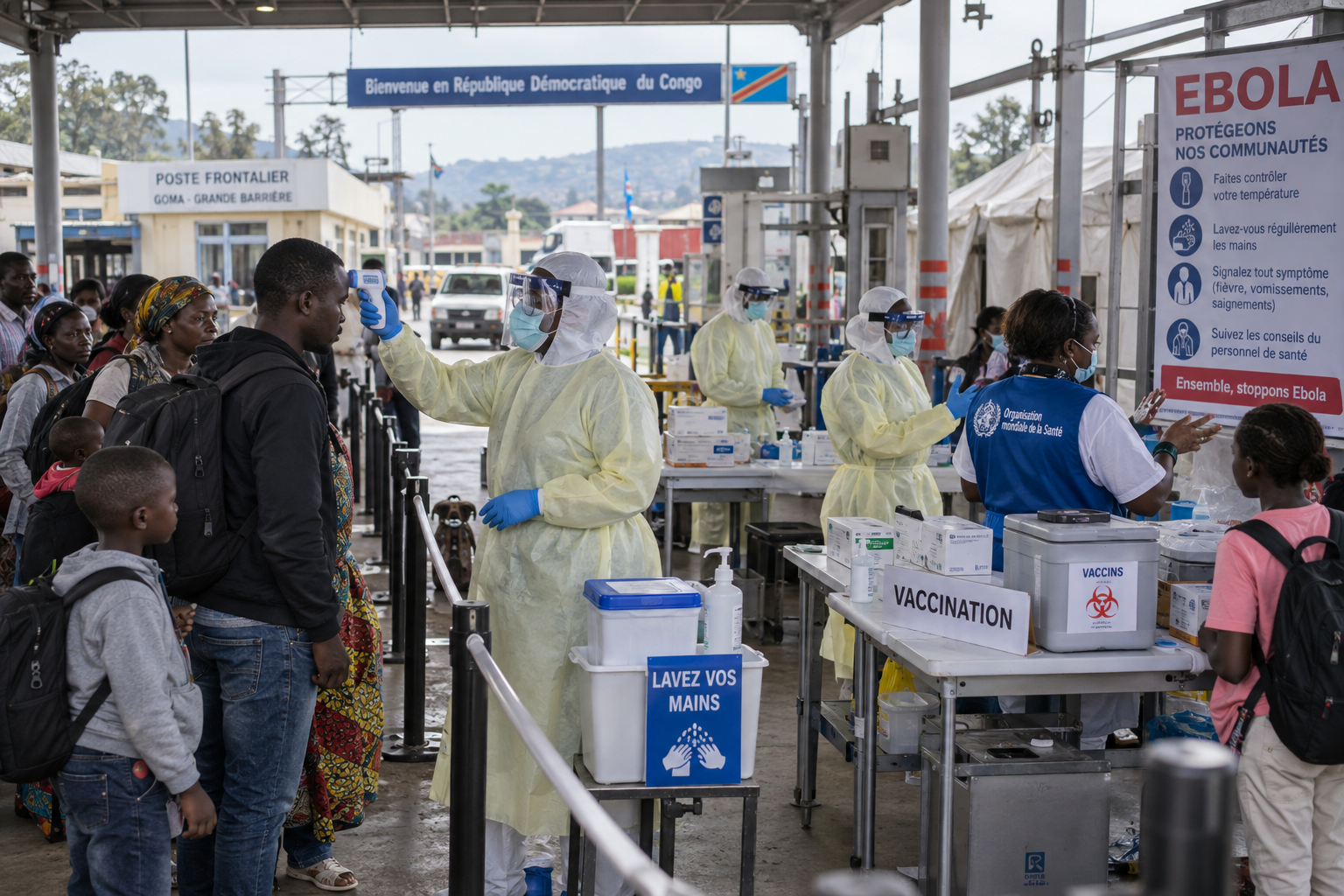
The outbreak has spread beyond the DRC into several African countries and now has the widest geographic reach of any Ebola outbreak on the continent, according to the report. The DRC declared its 17th Ebola outbreak in May and has reported more than 9,000 cases and 4,600 deaths. Ebola has killed more than 15,000 people in Africa over the past 50 years.
Nigeria became the fourth African country to report a case on Tuesday. Nigerian Health Minister Muhammad Ali Pate said an analysis found that the virus in Nigeria’s case was closely related to the strain detected in Kenya’s first case. Uganda, which had reported 20 infections—almost all among people who had travelled from the DRC—and two deaths before being declared Ebola-free in August, announced that travellers with a history of travel to the DRC would not be allowed to transit through the country. The article reports continued cross-border precautions as authorities monitor the outbreak, while Kenya’s ministry emphasizes that it has not found evidence of community spread.
Entities: Kenya, Democratic Republic of the Congo (DRC), Nairobi, Kenyan Ministry of Health, Nigeria • Tone: neutral • Sentiment: negative • Intent: inform
24-10-2026
The World Health Organization has announced the launch of the first clinical trial of an Ebola vaccine during the Democratic Republic of the Congo’s current outbreak. The trial began in Bunia, capital of Ituri province and the outbreak’s epicentre, where participants received the Ervebo vaccine. Ervebo is approved for the Zaire strain of Ebola; researchers will investigate whether it offers cross-protection against Bundibugyo, the species responsible for this epidemic.
The DRC declared its 17th Ebola outbreak in May. It has reported more than 9,700 cases and over 4,600 deaths. The WHO has declared a public health emergency of international concern. The outbreak has been reported in four countries across eastern, central and western Africa, making it the continent’s widest-spreading Ebola outbreak to date.
Known as the Tumaini trial, the study uses a single framework to assess the safety, efficacy and immune response generated by multiple vaccines. It employs ring vaccination, offering immunisation to contacts considered at high risk of infection. Two Bundibugyo-specific vaccine candidates are expected to join the trial: an Oxford-developed ChAdOx1 adenoviral vector vaccine and an mRNA vaccine from Moderna. Both have been funded by the Coalition for Epidemic Preparedness Innovations and are progressing through earlier-stage trials.
The trial will include pregnant women and children aged 12 and older, groups often excluded from clinical studies. WHO leaders say the DRC-led effort aims to generate rigorous evidence on whether candidate vaccines can protect people at risk and help guide efforts to save lives.
Entities: World Health Organization (WHO), Tedros Adhanom Ghebreyesus, Chikwe Ihekweazu, Democratic Republic of the Congo (DRC), Bunia • Tone: analytical • Sentiment: negative • Intent: inform
24-10-2026
Kenya has reported its second death from Ebola during its first outbreak of the disease. The victim, a 65-year-old woman and close relative of the first patient, developed symptoms while in quarantine and died, according to the health ministry. The first victim was a man who had travelled from the Democratic Republic of Congo (DR Congo), became ill there, and died in Nairobi on 5 October after receiving treatment in several hospitals. Seven other patients—three relatives, three health workers and a hospital cleaner—were receiving treatment at two isolation facilities. Kenyan authorities said all cases belonged to one cluster and that there was no evidence of community transmission.
The article places Kenya’s outbreak within a wider regional context: more than 4,000 people have died in Africa since the outbreak was confirmed in DR Congo in May, making it the second most deadly Ebola outbreak. The United States has warned its citizens against travel to Kenya, while Uganda, Ethiopia and Somalia are among neighbouring countries on alert. Kenya has intensified screening of travellers and aircraft arriving from DR Congo and nine other countries considered high risk. Travellers must complete a digital surveillance form and show a QR code to port health officials. The government is also promoting public awareness, prompt reporting of suspected cases, medical care, handwashing and avoiding close contact with sick people.
The report explains that Ebola spreads through contact with infected bodily fluids and can cause vomiting, diarrhoea, organ failure and, in some patients, internal or external bleeding. The Bundibugyo species involved is rare and has no approved vaccine or treatment, although trials are under way. The International Rescue Committee says Kenya remains at risk of imported cases because of the number of cases in DR Congo.
In a related development, Nigeria’s health minister said the country’s single confirmed case appears genetically related to a strain identified earlier in Kenya. Officials have found no evidence that the Kenyan patient travelled to Nigeria; testing continues. Investigators are examining whether the patients crossed paths at Uganda’s Entebbe International Airport.
Entities: Ebola virus, Bundibugyo species, Kenya, Democratic Republic of Congo, Nigeria • Tone: analytical • Sentiment: negative • Intent: inform
24-10-2026
The World Health Organization has begun the first clinical trial of Ebola vaccines during the ongoing outbreak in the Democratic Republic of Congo (DRC). WHO Director-General Tedros Adhanom Ghebreyesus said the first participants received the Ervebo vaccine in Bunia, the capital of Ituri province, an area at the centre of the outbreak. Ervebo is approved against the Zaire strain of Ebola; the trial will examine whether it provides cross-protection against the Bundibugyo virus causing the current epidemic, for which approved vaccine options are limited.
The study, called the Tumaini trial, will use a ring-vaccination approach, offering vaccination to people identified as close contacts of infected individuals and therefore at high risk. It is designed to assess the safety, effectiveness and immunogenicity of several vaccine candidates. Alongside Ervebo, the trial is expected to include two experimental Bundibugyo-specific candidates: ChAdOx1, an adenoviral-vector vaccine developed by the University of Oxford, and an mRNA vaccine developed by Moderna. The Coalition for Epidemic Preparedness Innovations has funded both candidates, which are expected to enter the trial soon. The study will include pregnant women and children aged 12 and older to build evidence for groups often excluded from clinical research.
The DRC declared its 17th Ebola outbreak in May. The article reports more than 9,700 cases and over 4,600 deaths, making it the country’s worst outbreak on record. The WHO declared a public health emergency of international concern. Cases have also been reported in four countries across eastern, central and western Africa, representing the widest geographical spread of an Ebola outbreak on the continent so far. WHO officials say the trial is intended to generate robust evidence about whether existing and experimental vaccines can protect people at risk.
Entities: World Health Organization (WHO), Democratic Republic of Congo (DRC), Tedros Adhanom Ghebreyesus, Bunia, Ituri province • Tone: analytical • Sentiment: negative • Intent: inform