01-09-2026
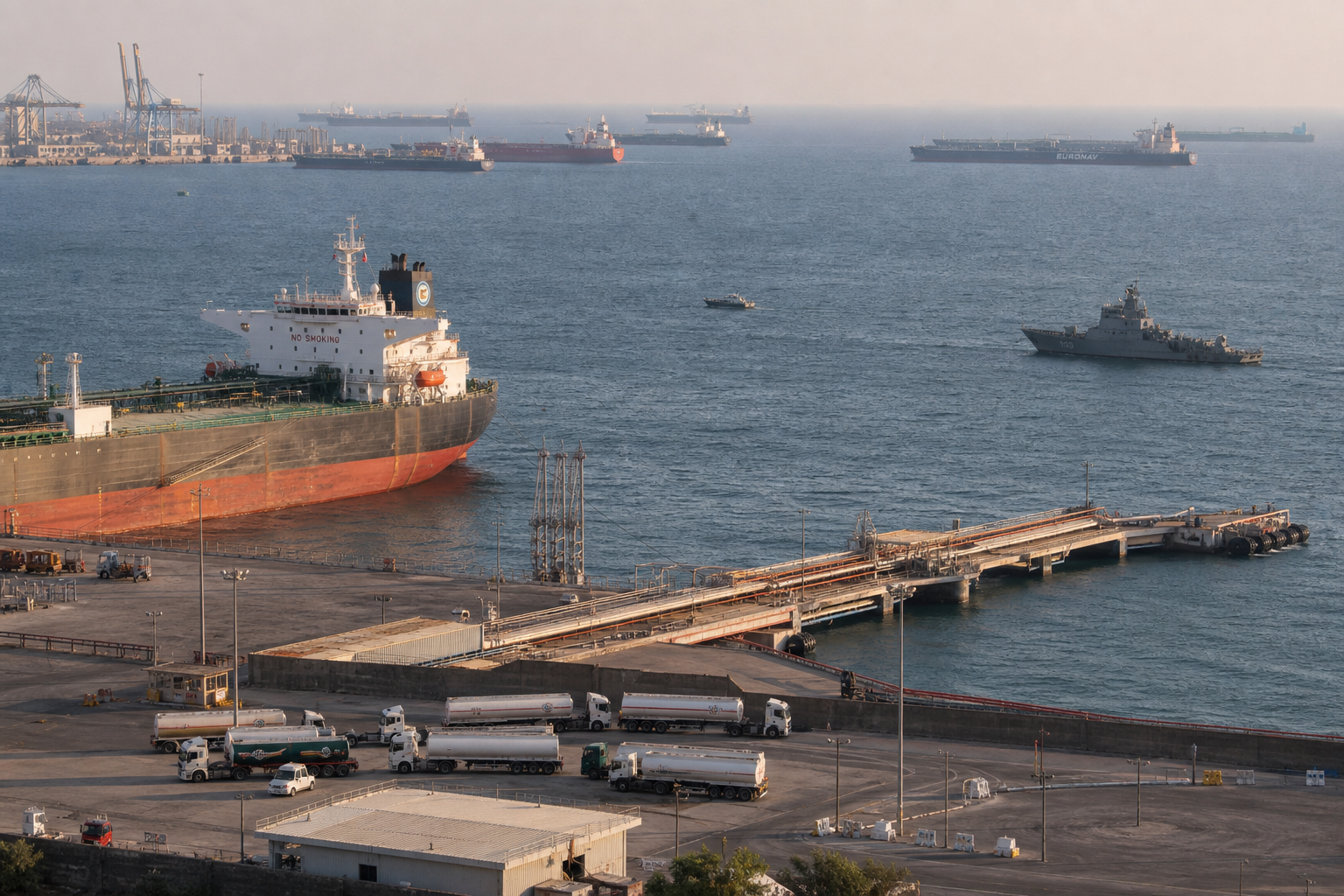
A tanker was hit by three unidentified projectiles while traveling eastbound through the Strait of Hormuz near Oman, raising fears that the escalating U.S.-Iran conflict could disrupt one of the world’s most important maritime routes. No casualties were reported. The incident followed a series of retaliatory actions: Iran said it intercepted a U.S. MQ-9 drone, while the United States struck two Iranian rocket launchers on Larak Island after alleging that Iran planned to fire rockets carrying sea mines into the strait. Iran then attacked two U.S. bases in Jordan.
The exchanges were the first direct U.S.-Iran strikes in more than a month. Although neither side appeared to be seeking a return to full-scale war, both warned that further attacks would trigger retaliation. President Donald Trump said the United States would respond forcefully. Analysts characterized the strike on Larak Island as a limited attempt to counter Iran’s ability to mine the strait rather than a broad expansion of U.S. war aims.
The article also describes Washington’s growing economic pressure on Tehran through secondary sanctions targeting countries and companies that purchase Iranian crude. Treasury Secretary Scott Bessent said Iran was responding militarily because the sanctions were damaging its economy. Experts described the conflict as an endurance contest in which economic pressure could prompt Iran to act more aggressively.
The conflict, now in its seventh month, has disrupted energy supplies and rattled financial markets. Brent crude rose above $90 per barrel, reaching $91.08, while U.S. West Texas Intermediate futures climbed to $86.65. The tanker attack and military exchanges underscore the risk that continued escalation could threaten shipping and further increase global energy costs.
Entities: Strait of Hormuz, U.S.-Iran conflict, Tanker attack by three unidentified projectiles, Islamic Revolutionary Guard, U.S. MQ-9 drone interception • Tone: analytical • Sentiment: negative • Intent: analyze
01-09-2026
Iran is experiencing a worsening fuel crisis as war-related infrastructure damage, difficulties importing refined petroleum products and tighter US sanctions compound a longstanding gasoline deficit. The country is short roughly 15 million liters of gasoline per day, while diesel shortages are creating kilometer-long queues for truck drivers. In some cities, motorists wait for hours or overnight, sleep in their cars and face purchase limits of approximately five liters. Some filling stations run out of fuel or close before serving everyone. For truck drivers, the delays mean lost income and higher operating costs.
The crisis has also intensified concerns about fuel quality. Persian Gulf Star Oil Company confirmed that it is testing methanol as an oxygenate in gasoline, although the company says it accounts for only about 0.5% of the mixture and remains within Iran’s permitted fuel standards. Unverified videos and allegations of water or excessive alcohol being added to gasoline have fueled public distrust. Authorities did confirm one case in Rafsanjan in which water contaminated gasoline because of a technical fault.
The article argues that the shortage is connected to broader economic and political problems. Iran’s subsidized fuel prices encourage high consumption and smuggling, according to officials, while consumers blame inefficient vehicles, inadequate public transport and incomes eroded by inflation. Economist Hassan Mansour says the government may be preparing public opinion for higher fuel prices, which could reduce demand and generate revenue amid the oil industry’s heavy debts and financial obligations.
However, raising prices is politically dangerous. A gasoline price increase in November 2019 triggered nationwide protests, a deadly crackdown and an internet shutdown. With purchasing power already weakened and infrastructure damaged, another increase could transform the current supply problem into a broader public-anger crisis that would be difficult for the government to contain.
Entities: Iran, Tehran, Karaj, Rafsanjan, Rey • Tone: analytical • Sentiment: negative • Intent: analyze
01-09-2026
Iran’s gasoline and diesel shortages have become increasingly visible as war damage, difficulties importing refined fuel and tighter US sanctions deepen a pre-existing supply deficit. Drivers in cities including Tehran, Karaj and areas near major urban centers report waiting for hours or overnight at filling stations, with some stations limiting purchases or running out of fuel. Truck drivers face particularly severe diesel shortages, with kilometer-long queues costing them working time and income.
The crisis has also intensified public concerns about fuel quality. Iran’s Persian Gulf Star Oil Company has confirmed that it is testing methanol as an oxygenate in domestically produced gasoline, although officials say the concentration remains within national standards. Online videos showing unusually clear fuel and allegations of water or excessive alcohol contamination have fueled suspicion. One confirmed incident in Rafsanjan involved water mixing with gasoline because of a technical fault. Some motorists blame poor-quality fuel for costly vehicle damage, though those claims have not been independently verified.
The shortages are occurring as Tehran considers increasing gasoline and diesel prices. Economist Hassan Mansour argues that the government is preparing public opinion for such a move, citing excessive consumption, fuel smuggling and the financial weakness of Iran’s oil sector. Iran’s National Iranian Oil Company reportedly carries heavy debts and tax liabilities, adding pressure to state finances.
However, raising prices is politically dangerous. A 2019 fuel-price increase triggered nationwide protests, a deadly crackdown and an internet shutdown. With inflation high, purchasing power falling and infrastructure damaged by war, further price increases could provoke renewed public anger. The government must choose among costly options: securing imports, investing in refinery and production capacity, imposing tighter rationing or raising prices. None offers an easy solution to the immediate fuel shortage or the deeper economic crisis.
Entities: Iran, United States sanctions, Gasoline shortage, Diesel shortage, Fuel queues and rationing • Tone: analytical • Sentiment: negative • Intent: analyze
01-09-2026
The supplied page is a live-news entry from The National dated September 1, 2026, covering a renewed escalation between the United States and Iran. Its main headline reports that a tanker was attacked near Oman while leaving the Strait of Hormuz, a strategically important maritime route. The updates list includes competing claims about the incident: the Islamic Revolutionary Guard Corps (IRGC) reportedly claimed that a supertanker struck mines in the strait, while US Central Command denied that claim. The IRGC also claimed attacks on US bases in Jordan.
The page describes broader regional and economic consequences. The prime minister of Pakistan urged restraint during a meeting with Iran’s president, while the United Arab Emirates, Qatar, Kuwait, Egypt and Jordan condemned renewed Iranian attacks. US President Donald Trump said Iran was “dead” after the first US attack in weeks, and other associated video reports describe the United States sending a warning to Iran, Iran facing economic pressure, and renewed strikes occurring ahead of a Shanghai Cooperation Organisation summit. Oil prices rose above $90 as the US and Iran resumed attacks.
Additional video headlines indicate growing public and diplomatic pressure, including fuel shortages prompting panic buying in Iran, a meeting between Qatar’s prime minister and Iran’s foreign minister in Tehran, French diplomatic efforts focused on the Gulf and the Hormuz crisis, and an Iranian ambassador losing diplomatic immunity in Lebanon. The page also references an AI-generated video posted by Trump and comments from US Treasury Secretary Scott Bessent.
The supplied material contains the live-page headline, update list and video captions, but not the full body of the article. The summary therefore reflects only the information explicitly present in the provided text.
Entities: Iran, United States, Donald Trump, Strait of Hormuz, Oman • Tone: urgent • Sentiment: negative • Intent: inform
01-09-2026
Damien McElroy argues that pressure, rather than escalation or deterrence, has become the principal force shaping the Iran war and the wider regional confrontation. Iranian Foreign Minister Abbas Araghchi’s statement that diplomacy remains possible if Washington accepts that pressure is ineffective is presented as evidence that economic and military coercion is affecting both sides. The US campaign, including Operation Economic Outcast, the US Navy’s shipping embargo and potential action against Chinese “teapot” refineries, has coincided with attacks by Iran’s Islamic Revolutionary Guard Corps on shipping in the Strait of Hormuz. Vessel crossings have reportedly fallen from 88 to 16 per day, while regional oil exports have dropped from roughly 20 million barrels to 3.6 million barrels daily. The disruption is also affecting helium, fertiliser, aluminium and other goods.
The article stresses that the pressure is damaging Iran as well. Petrol queues in Tehran, declining bazaar activity and fears surrounding a possible US escalation are worsening domestic economic conditions. At the same time, Iran’s ability to exploit the Strait of Hormuz may be a wasting asset. Gulf states are exploring pipelines and land-based export routes that could sharply reduce their dependence on the chokepoint within several years. This helps explain Tehran’s continued diplomatic engagement with Pakistan, Oman and Qatar.
McElroy also examines the parallel threat posed by the Houthis around the Bab Al Mandeb and Red Sea. Their attacks, expanding regional networks and links to instability in Sudan and Somalia could threaten global trade, although the article questions whether they can sustain control over such a vast and internationally important corridor. European naval forces remain involved through the Aspides coalition.
Ultimately, the author argues that pressure is uneven: the US is less vulnerable to the disruption than Iran and its allies, while other countries and supply chains can adapt. The most durable alternative to deterrence is therefore a halt to hostilities or a negotiated settlement.
Entities: Iran war, Abbas Araghchi, Donald Trump, US government, Operation Economic Outcast • Tone: analytical • Sentiment: negative • Intent: analyze
01-09-2026
Saudi Crown Prince Mohammed bin Salman and Oman’s Sultan Haitham met in Jeddah on September 1 to discuss regional security, bilateral relations and expanded co-operation. Their talks took place as the conflict between the United States and Iran intensified, raising concerns about instability, commercial shipping and energy supplies throughout the Gulf.
The meeting followed an exchange of strikes between Washington and Tehran. American forces reportedly attacked Iran’s Larak Island in the Strait of Hormuz, while Iran targeted US bases in Jordan in retaliation. Iranian President Masoud Pezeshkian said Tehran would respond if the United States upheld its commitments under a June interim agreement intended to halt the conflict. His comments came after US President Donald Trump threatened additional strikes.
Oil prices increased after the attacks and reports that two tankers had come under fire while leaving the Strait of Hormuz, a vital global oil-shipping route that Iran has effectively closed to maritime traffic. The Saudi-owned supertanker Sidr was reportedly hit northeast of Khasab, Oman, while the Senegal Prosperity, operated by Sinokor, was struck by three projectiles in the same general area. The UK Maritime Trade Operations agency also reported that a tanker had been attacked by three unidentified projectiles east of Oman, without naming the vessel.
The article notes that the six-month conflict had previously developed into an economic confrontation before the latest military escalation. Oman has taken a prominent diplomatic role in attempts to contain the conflict and has participated in discussions concerning the security and reopening of the Strait of Hormuz. Senior officials attending the Jeddah meeting included Saudi Foreign Minister Prince Faisal bin Farhan and Oman’s Foreign Minister Badr Albusaidi.
Entities: Saudi Arabia, Oman, Crown Prince Mohammed bin Salman, Sultan Haitham, Iran–US war • Tone: urgent • Sentiment: negative • Intent: inform
01-09-2026
US Treasury Secretary Scott Bessent said the Strait of Hormuz could lose its importance as an oil transportation route within two years as countries build pipelines that bypass the waterway. He estimated that as much as 70 per cent of the energy normally shipped through the strait could eventually be redirected overland.
Bessent made the comments during the G20 finance ministers’ meeting in Asheville, North Carolina, amid the continuing conflict between the United States, Israel and Iran. Shipping through the strait reportedly collapsed after the war began on February 28. Although volumes have risen slightly in recent weeks, they remain well below pre-conflict levels. Bessent said Iran was attempting to use the waterway as a strategic choke point, but argued that new infrastructure would soon make it less consequential.
The Treasury secretary also said the Trump administration was preparing further measures against Iran. He indicated that Washington could announce actions against banks connected to the Iranian regime within two weeks and described the administration’s objective as attempting to “asphyxiate” Iran’s economy. The US has already expanded secondary sanctions against countries and companies doing business with Iran, warning that non-compliant entities could lose access to the US dollar system.
Bessent said he was seeking support from international partners, including the European Union, European Central Bank, United Kingdom and United Arab Emirates, to isolate Iran economically. He argued that the economic pressure would not have been possible without what he called the conflict’s “initial kinetic success.” His assessment presents pipeline development, sanctions and diplomatic coordination as key elements of Washington’s strategy to reduce Iran’s leverage over global energy shipping.
Entities: Scott Bessent, US Treasury Department, Strait of Hormuz, Iran, United States • Tone: analytical • Sentiment: negative • Intent: inform
01-09-2026
Iranian oil exports through the Strait of Hormuz have nearly stopped for about seven weeks after the United States reinstated a naval blockade on July 14, according to shipping-monitoring firms Kpler, Vortexa and TankerTrackers.com. The blockade appears to have succeeded in restricting Iran’s crude trade more effectively than years of sanctions, which still allowed some shipments to reach buyers. China, Iran’s only major remaining oil customer, has reportedly received no new Iranian crude cargoes through the strait since the blockade began and is relying on oil held in floating storage in Asia.
Iran loaded an estimated 220,000 to 255,000 barrels per day of crude and condensate in August, sharply below approximately 740,000 barrels per day in July and 2 million barrels per day in March. The decline threatens Tehran’s foreign-currency earnings and could force the government to finance spending by printing money, potentially worsening inflation. The International Monetary Fund estimates that Iran’s inflation rate could reach nearly 70% this year, among the highest in the world.
The article reports that 29 tankers carrying 36.11 million barrels remain inside the Strait of Hormuz. The US blockade operates south of Iran, between the Gulf of Oman and the Arabian Sea, where US naval vessels inspect ships approaching or leaving Iranian ports. Iran-linked shadow-fleet vessels remain active elsewhere, although Reuters could not independently verify the reported numbers.
Iranian crude is still being offered for delivery to China in September and October, but available floating storage is shrinking. Iranian crude stored west of the blockade increased in late August, while total Iranian crude afloat declined substantially. Once tankers sell their cargoes, they cannot return to Iranian ports, leaving some vessels idle offshore. The restrictions therefore threaten not only current exports but also Iran’s ability to sustain future shipments.
Entities: Iran, Strait of Hormuz, United States naval blockade, China, Kpler • Tone: analytical • Sentiment: negative • Intent: inform