03-09-2026
More than 80 migrants are feared to have died after a boat carrying people from West Africa was found adrift in the Atlantic Ocean for 27 days. Spanish Maritime Rescue teams located the vessel about 65 nautical miles southwest of Arguineguín, on Gran Canaria, on Wednesday. They found 44 survivors and five deceased people on board. The boat is believed to have left The Gambia in early August carrying 127 occupants, although Maritime Rescue said it could not independently verify the original number of passengers.
Helena Maleno Garzón, founder of the Spanish charity Caminando Fronteras, said 83 people had died. The five bodies discovered by rescuers could not be recovered because of dangerous sea conditions, including winds of 20 knots and waves measuring 2.5 metres. Three survivors were airlifted to hospital in critical condition, while the remaining survivors were taken by sea to Gran Canaria. Maritime Rescue said all 44 survivors were men from sub-Saharan Africa.
The incident highlights the continuing dangers of the Atlantic migration route from West Africa to the Canary Islands, one of the world’s deadliest migration crossings. Thousands of people attempt the journey each year to reach Spanish territory, despite the route’s long distances, powerful currents and rough seas.
Fernando Clavijo, head of the Canary Islands government, condemned the deaths and said the islands could not accept the Atlantic becoming a “death trap.” The report presents the tragedy through rescue-service information, an activist’s estimate of the death toll and a political response, while noting uncertainty over the boat’s original number of occupants.
Entities: Spanish Maritime Rescue, Helena Maleno Garzón, Caminando Fronteras, Fernando Clavijo, Gran Canaria • Tone: urgent • Sentiment: negative • Intent: inform
03-09-2026
Five African migrants died while trying to reach Spain’s Canary Islands, according to Spanish maritime rescuers. Salvamento Marítimo rescued 44 men from sub-Saharan Africa after their boat was found drifting about 120 kilometres southwest of Gran Canaria on Wednesday night. Three survivors were airlifted to hospital, while the other 41 were taken by boat to Arguineguín and assisted by the Red Cross. All of the survivors were men, including some minors, and were from Mali or Senegal.
The five bodies could not initially be recovered because of dangerous weather conditions, including strong winds and waves reaching 2.5 metres. The vessel was later transported to port. José Antonio Rodríguez Verona of the Red Cross said survivors reported that more than 100 people had originally been aboard, including women and a baby.
Helena Maleno of the migrant-aid organisation Caminando Fronteras gave a substantially higher death toll, saying on X that 83 migrants—including three women and a baby girl—had died aboard a boat that departed Gambia 27 days earlier. It remains unclear whether this was the same vessel. The organisation bases its figures on information from migrants’ families and official rescue data, and its estimates are often higher than authorities’ confirmed figures. Salvamento Marítimo said the additional alleged victims had not been found or rescued and that the claim could not be confirmed.
The Canary Islands are a major arrival point for migrants travelling from West Africa. The Atlantic route is considered especially dangerous because of powerful currents and overcrowded boats. Although more than 46,000 migrants reached the islands in 2024, arrivals fell by 57% year-on-year during the first eight months of 2026, when 5,163 people arrived by sea, according to Spain’s Interior Ministry.
Entities: Five migrant deaths, Canary Islands, Spain, Salvamento Marítimo, Gran Canaria • Tone: neutral • Sentiment: negative • Intent: inform
03-09-2026
Five migrants were found dead aboard a boat rescued approximately 65 nautical miles southwest of Arguineguin, on Spain’s Gran Canaria island, according to Spain’s maritime rescue authorities. The vessel was spotted by a rescue aircraft on Wednesday and reached by rescuers amid adverse weather conditions. The five bodies remained aboard because conditions prevented their recovery.
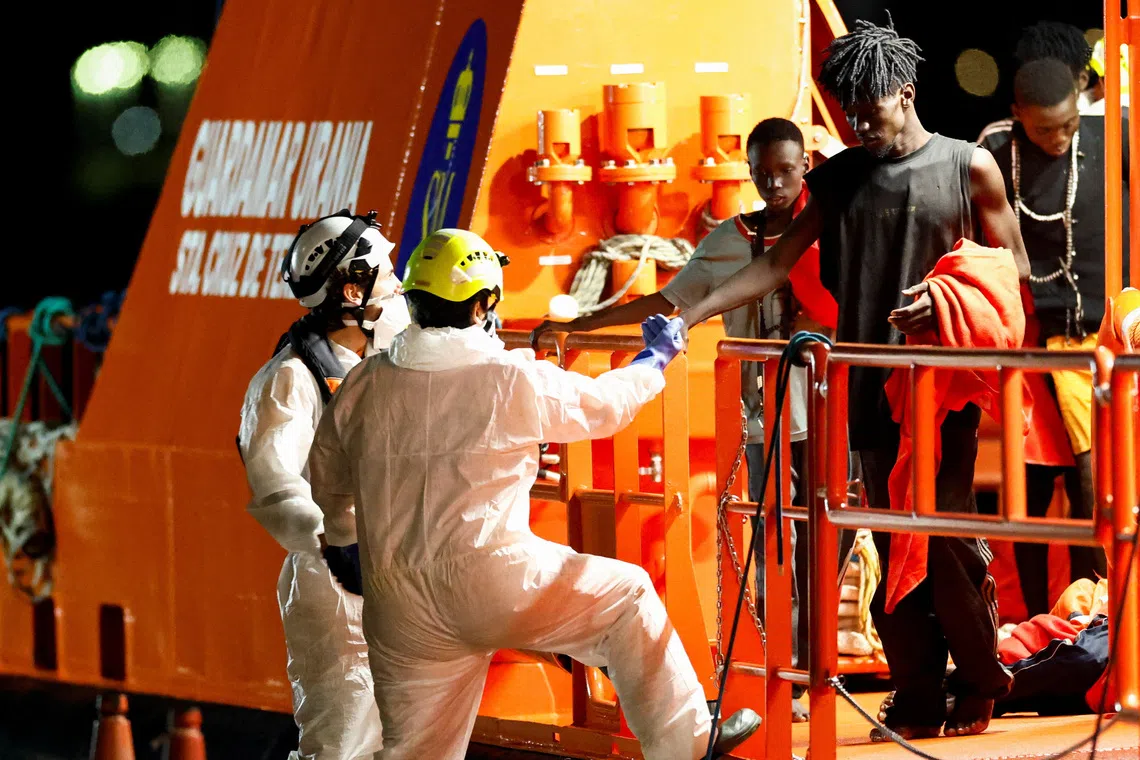
Forty-four survivors disembarked at Arguineguin in the early hours of Thursday. Three were in serious condition and were airlifted to hospital, while another 41 came ashore. The boat had reportedly departed from The Gambia 27 days earlier, highlighting the extreme duration and risks of the Atlantic migration route from West Africa to the Canary Islands.
Helena Maleno, founder of the migrant rights group Walking Borders, said survivors reported that 83 people—including three women and a baby—had died during the crossing. Reuters was unable to independently verify that figure, and Maritime Rescue said it could confirm only the five bodies found aboard the vessel.
Fernando Clavijo, leader of the Canary Islands regional government, described the incident as evidence of the need for a coordinated state migration policy. Referring to the continuing loss of life, he said the Canary Islands could not accept the Atlantic as a “death trap.” His comments followed a deadly migrant surge in Spain’s North African enclave of Ceuta in July.
The Atlantic route remains one of the world’s deadliest migration crossings. Thousands of migrants attempt it each year in overcrowded boats despite rough seas, powerful currents and long distances. Official data indicates that the number of migrants reaching the Canary Islands from West Africa has fallen by 57.4% so far this year, but the latest incident underscores the continuing danger of the journey.
Entities: Helena Maleno, Fernando Clavijo, Walking Borders, Maritime Rescue, Canary Islands • Tone: urgent • Sentiment: negative • Intent: inform
03-09-2026
At least five African migrants died after a boat carrying more than 100 people experienced difficulties while attempting to reach Spain’s Canary Islands, according to Spanish authorities. Spain’s Maritime Rescue Service located the precarious vessel drifting south of Gran Canaria on Wednesday. Forty-four people survived and were brought to safety: three were transported by helicopter to a hospital, while 41 others were taken by boat to Arguineguín and treated by the Red Cross.
The survivors, all men from Mali or Senegal and including some minors, were reportedly severely dehydrated and disoriented. Red Cross spokesperson José Antonio Rodríguez Verona said many collapsed or vomited after reaching land. Survivors said the boat had departed from Gambia and had drifted at sea for nearly a month. They reported that the vessel initially carried more than 100 people, including women and a baby, and that passengers began dying after food and water supplies ran out. Some reportedly drank seawater after falling ill.
The Maritime Rescue Service said rough conditions, including strong winds and waves reaching 2.5 metres, initially prevented rescuers from recovering five bodies found aboard the boat. However, Helena Maleno, founder of the migrant-rights group Walking Borders, claimed that 83 people had died during the voyage, including three women and a baby girl. Spanish authorities said they could not confirm the higher figure because the alleged additional victims had not been found or rescued.
The crossing from West Africa to the Canary Islands is one of the most dangerous migration routes to Europe because of powerful currents and overcrowded vessels. Despite the risks, 5,163 migrants reached the islands by sea between January 1 and August 31, a 57% decline from the same period the previous year.
Entities: African migrants, Atlantic Ocean, Spain’s Canary Islands, Gran Canaria, Arguineguín • Tone: urgent • Sentiment: negative • Intent: inform