04-09-2026
The article examines Vice President JD Vance’s response to a deadly US strike on a wedding gathering in Kuhestak, southern Iran, and places his remarks within a broader history of US officials initially denying, disputing, or minimizing civilian harm during military operations. The attack, which occurred on September 2, reportedly killed four people—including two children—and injured 67 others, according to the Iranian Red Crescent Society. Iranian authorities released images and documentation, while weapons experts cited by Reuters said the damage appeared consistent with a US munition, possibly an AGM-84K SLAM-ER cruise missile. Iran’s Foreign Ministry described the strike as part of a “catalogue of atrocities,” while the US said it was investigating.
Vance expressed skepticism toward Iranian reports, saying Iran’s state media had not been reliable, but also stated that the United States never targets civilians. His comment that “sometimes, things happen” drew attention because it echoes language used after previous US attacks later found to have caused civilian deaths. The article reviews several examples: the February strike on a girls’ school in Minab, the US air campaign in Yemen, the 2008 Azizabad attack in Afghanistan, the 2021 Kabul drone strike that killed 10 civilians, abuses at Abu Ghraib prison, and the My Lai massacre during the Vietnam War.
Experts argue that this pattern reflects institutional efforts to manage civilian casualties as a public-relations problem rather than address them through transparent investigations and accountability. Emily Tripp of Airwars says civilians face obstacles from the initial military operation through attempts to document harm and obtain official acknowledgment. The article therefore presents the Kuhestak strike not only as an unresolved incident, but also as a test of whether the US will investigate civilian deaths openly and accept responsibility if its forces caused them.
Entities: JD Vance, United States, Iran, Kuhestak, Hormozgan, Iranian Red Crescent Society • Tone: analytical • Sentiment: negative • Intent: analyze
04-09-2026
The US military is investigating Iranian claims that a US missile struck a wedding ceremony in Sirik, southern Iran, killing at least four people, including two children. Iran’s Red Crescent Society said shrapnel hit the ceremony at a family home on Tuesday, injuring 67 people. Iranian state media later reported that a 22-year-old woman died in hospital, bringing the reported death toll to five. Local reports identified the other victims as Zarkhatoon Taheri, Kolsum Mallahi Nazhdnia, Mohammad Mallahi and four-year-old Amirali Karimi.
Iranian Foreign Ministry spokesman Esmaeil Baqaei called the incident a “war crime.” The allegation came as the US launched missiles following what it described as attempted Iranian attacks on American forces. A spokesperson for US Central Command said the US “never targets civilians.” Vice-President JD Vance said he was “extremely sceptical” of Iranian state-media accounts but confirmed that the military was investigating.
Iran subsequently launched fresh attacks on US bases in Kuwait and the United Arab Emirates, reportedly in response to the alleged strike. Evidence reviewed by the BBC supports the presence of substantial damage near the reported wedding location but does not by itself establish who caused it. BBC Verify confirmed videos and images showing a destroyed telecommunications tower near Kuhestak’s coast and damaged houses approximately 130 metres north of the tower. BBC Persian Forensics determined that the tower was about 112 metres from the house where the wedding was reportedly taking place.
The incident occurred during a conflict that has continued for more than six months since the US and Israel launched a joint attack on Iran on 28 February. The article presents competing claims, official denials and open-source evidence while emphasizing that the investigation remains ongoing.
Entities: JD Vance, Esmaeil Baqaei, Iranian Red Crescent Society (IRCS), US military, US Central Command • Tone: analytical • Sentiment: negative • Intent: inform
04-09-2026
The CBS News live update describes escalating tensions in the U.S.-Iran conflict on September 3, 2026, while U.S. officials attempt to characterize the level and duration of hostilities. Vice President JD Vance said he was “extremely skeptical” of Iranian claims that a U.S. strike hit a wedding party near Sirik, killing civilians. He said the U.S. military was investigating, while reiterating that American forces do not intentionally target civilians. Tehran has claimed that strikes killed at least 18 people across Iran, although the specific wedding attack was reported by Iranian officials as killing four civilians and injuring dozens.
Vance also resisted calling the conflict an ongoing war, saying there was no active shooting and that major combat operations had ended after roughly six weeks. He said the United States would not negotiate with Iran while attacks on commercial shipping in the Strait of Hormuz continued. Shipping traffic through the strategic waterway has fallen sharply, with 102 transits recorded last week compared with 126 the previous week and more than 130 per day before the conflict. Oil continues to move through a riskier southern route near Oman under U.S. military guidance.
President Donald Trump warned that the United States could launch additional strikes “anytime we want.” Vance said the U.S. campaign was intended in part to prevent Iran from obtaining a nuclear weapon, while acknowledging that gasoline prices had risen to an average of $4.14 per gallon and offering no timeline for returning to $3.
Israeli Prime Minister Benjamin Netanyahu said Iran’s government was weakening and that toppling the regime was “within reach,” comments made before Israel’s October 27 elections. Separately, Israel announced the release of five Lebanese civilians captured during its conflict with Hezbollah, with the first detainee transferred to the Lebanese army through the International Committee of the Red Cross. The update concludes with a partial report about sailors from the USS Abraham Lincoln arriving in Thailand.
Entities: JD Vance, Donald Trump, Benjamin Netanyahu, United States, Iran • Tone: analytical • Sentiment: negative • Intent: inform
04-09-2026
The CBS News live update reports escalating military and geopolitical tensions surrounding the U.S.- and Israel-led conflict with Iran, as well as its wider regional consequences. Vice President JD Vance expressed strong skepticism toward Tehran’s claim that a U.S. strike hit a wedding party and killed at least 18 people. He also said he would not describe the conflict as a war and avoided predicting whether fighting would end before the November midterm elections. President Donald Trump separately warned that the United States could launch additional strikes against Iran whenever it chose. A U.S. official said no military facilities hosting American personnel in the Middle East were damaged in Iranian attacks that Tehran said targeted U.S. forces in Kuwait and the United Arab Emirates.
The fighting is affecting several regional allies and strategic routes. Israel’s military said it had taken operational control of the Ali Taher ridge in southern Lebanon after clearing Hezbollah fighters from underground routes near a suspected military facility. Jordan, a longstanding U.S. ally and host to American forces, has faced repeated Iranian drone and missile attacks while also struggling with economic weakness, refugee pressures, inflation and instability near the West Bank. South Korea said it was considering, but had not approved, possible military or noncombat contributions to security operations in the Strait of Hormuz.
Shipping through Hormuz remains far below prewar levels because vessels face the risk of Iranian attack unless they comply with Tehran’s vetting system. Despite the reduced traffic, oil continues to move through a southern route near Oman under U.S. military guidance. Israeli Prime Minister Benjamin Netanyahu said Iran’s government was weakened and that overthrowing it was “within reach,” remarks made ahead of Israel’s October elections. The supplied excerpt ends during an update reporting that Lebanon had received the first of five detainees Israel was expected to release.
Entities: JD Vance, Donald Trump, Benjamin Netanyahu, Iran, United States • Tone: analytical • Sentiment: negative • Intent: inform
04-09-2026
Iran said it attacked US military assets at the Ahmad al-Jaber Air Base in Kuwait and the Al Minhad Air Base in the United Arab Emirates, describing the strikes as retaliation for a missile attack on a wedding in Kuhestak that reportedly killed at least four people, including a child, and injured more than 50. Kuwait confirmed that it intercepted a missile and drone attack originating from Iran and condemned it as a serious violation of international law, while the UAE reported no strike on its territory.
The alleged wedding attack has become a major source of tension. US Vice President JD Vance said Washington was investigating the incident but expressed skepticism toward Iranian state media's reporting. US Central Command spokesperson Tim Hawkins denied that the US deliberately targets civilians and accused Iran's Islamic Revolutionary Guard Corps of doing otherwise. The article compares the incident with an earlier attack on a girls' school that killed more than 120 children and was initially denied by Washington before later investigations confirmed it.
The latest exchanges follow a week of extensive US bombardment across Iran, which reportedly killed at least 19 people. Iran said six naval personnel were also killed, although it was unclear whether they were included in that figure. Tehran reported retaliatory strikes against US bases and personnel in the UAE, Kuwait, Bahrain, Jordan and Iraq's Kurdistan region.
The fighting has disrupted the strategically vital Strait of Hormuz, through which roughly one-fifth of global oil shipments previously passed, causing oil prices to rise again. The conflict began on February 28 with US-Israeli attacks that killed Iran's former Supreme Leader Ayatollah Ali Khamenei. A fragile July ceasefire collapsed after attacks on commercial shipping resumed. Although Vance rejected describing the situation as an active war and called the exchanges “flare-ups,” the article portrays a continuing and dangerous military standoff involving blockades, airstrikes and disputed civilian casualties.
Entities: Iran, United States, Strait of Hormuz, Kuwait, United Arab Emirates • Tone: urgent • Sentiment: negative • Intent: inform
04-09-2026
France 24’s live Middle East report, issued September 4, 2026, focuses on escalating tensions involving Iran, the United States, Israel, and regional states. The lead development is that South Korea is reportedly considering sending military assets to the Strait of Hormuz to help protect freedom of navigation. However, Seoul denied that it had made a final decision to deploy forces, making the proposal unconfirmed.
The report also states that Iran launched attacks against American military targets in the Gulf. Iran reportedly described the strikes as retaliation for an attack on Tuesday night that killed four people at a wedding. The Strait of Hormuz is a strategically important waterway for global energy shipments, and any military escalation there could threaten maritime traffic and oil and gas supplies.
The article’s recap of the previous day’s events highlights several other significant developments. Israeli Prime Minister Benjamin Netanyahu expressed confidence that Iran’s Islamic Republic could soon collapse, describing it as “weaker than ever.” US Vice President JD Vance said he would not classify the conflict with Iran as a war, despite continuing clashes that the report says have lasted six months. Iran’s army also claimed to have targeted US bases in the United Arab Emirates and Kuwait, in spite of warnings from US President Donald Trump that further Iranian strikes could prompt additional consequences.
Overall, the article presents a rapidly deteriorating regional security situation involving military retaliation, threats against American facilities, uncertainty over South Korean involvement, and risks to navigation through the Strait of Hormuz. It is framed as a developing liveblog and attributes its reporting to France 24, Reuters, the Associated Press, and Agence France-Presse.
Entities: South Korea, Strait of Hormuz, Iran, United States, Israel • Tone: urgent • Sentiment: negative • Intent: inform
04-09-2026
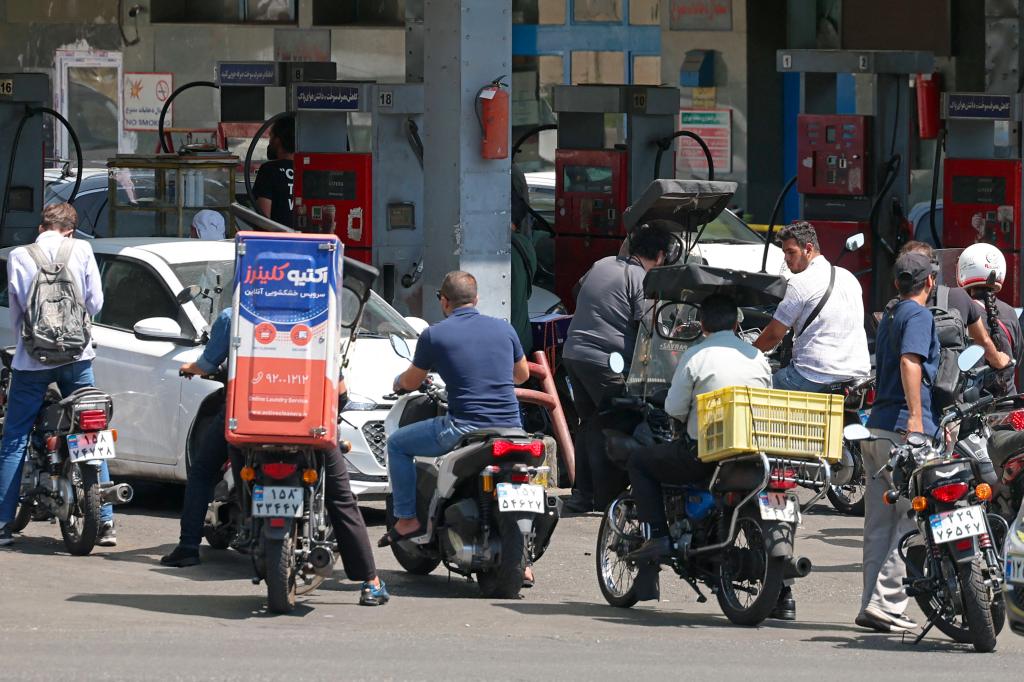
Iran is facing a severe economic and energy crisis as intensified US sanctions, military pressure and restrictions on its oil exports reportedly leave the country with only about two months of gasoline supplies. Three senior Iranian sources told Reuters that sanctions have sharply limited Tehran’s access to international financing, foreign currency and imported goods. Iran is now reportedly forced to import gasoline because its refinery infrastructure has been badly damaged and the government lacks the funds to repair it.
The article attributes the escalation to Treasury Secretary Scott Bessent’s “Operation Economic Outcast,” which aims to impose what he called the toughest sanctions in US history and economically pressure Iran’s government into collapse. President Trump has also warned countries that continue providing Iran with assistance that they could face economic retaliation. The sanctions have reportedly made it difficult for Iran to finance the illicit networks it has used for decades to evade restrictions, including front companies, unregistered tankers and smuggling operations.
Iran has also lost financial support from the United Arab Emirates, which announced that it would suspend financial dealings with Tehran after US pressure and Iranian attacks. Although shipping through the Strait of Hormuz has largely resumed, the US blockade has curtailed Iran’s oil exports, undermining its main source of revenue.
The economic crisis predates the war but has since worsened. The rial has fallen from roughly 1 million to more than 2.2 million per dollar, annual inflation has reached 69.9%, and unemployment has risen to 9.1%. Average monthly wages are reportedly about $125, less than one-third of basic household expenses. Iranian citizens describe becoming poorer every day.
The pressure could increase further if China cooperates with US efforts to isolate Iran. President JD Vance said China was prepared to cooperate, while President Xi Jinping’s expected visit to Washington is likely to include discussions about Iran’s economic isolation and a possible peace deal.
Entities: Iran, United States, US secondary sanctions, Operation Economic Outcast, Scott Bessent • Tone: urgent • Sentiment: negative • Intent: inform
04-09-2026
The United States is investigating a deadly strike on an Iranian wedding celebration after weapons experts concluded that the attack likely involved a direct hit by a US-made munition. The conclusion was based on images and videos verified by Reuters and contrasts with the possibility that the munition may have ricocheted from another target. Washington has not accepted responsibility for the incident.
US Vice-President J.D. Vance said the investigation was being conducted because the United States wanted to understand what happened and “obviously” cared about the reported casualties. The strike occurred on Tuesday in southern Iran, amid heavy US air strikes along the Strait of Hormuz coast. It hit a home in or near the village of Kuhestak in Sirik County during a wedding gathering.
Iranian state television reported that a 22-year-old woman died in hospital on Thursday, raising the reported death toll to five. Iranian officials said nearly 70 people were wounded. Funeral-goers gathered outside Kuhestak on Thursday afternoon to mourn those killed.
The incident is increasing political pressure on US President Donald Trump’s administration, which is already facing domestic criticism over the war and its impact on his approval ratings before the November midterm elections. The article does not establish who ordered the strike or whether the United States will accept legal or political responsibility. It focuses on the weapons analysis, the rising casualty figures, Washington’s response, and the broader consequences of the conflict.
Entities: J.D. Vance, Donald Trump, United States, Iran, Reuters • Tone: analytical • Sentiment: negative • Intent: inform
04-09-2026
US Vice-President J.D. Vance said Washington is investigating a deadly strike on a wedding gathering in southern Iran after a Reuters analysis by four weapons experts concluded that the destruction was most consistent with a direct hit from a US munition. The experts reviewed Reuters-verified photographs and video of the Sept 1 explosion. Three said the weapon was probably American rather than an Iranian air-defence missile, while another suggested it may have missed its intended target. The United States has not accepted responsibility, and the US military said it never targets civilians. Officials are considering several possibilities, including a US strike, an Iranian missile ricochet, or an errant interceptor.
The attack struck a home during a wedding in the village of Kuhestak in Sirik County, on Iran’s Strait of Hormuz coast, which had been heavily bombed by the United States. Iranian state television reported that a 22-year-old woman later died in hospital, bringing the reported death toll to five. Nearly 70 people were wounded. Funerals were held on Sept 3, with mourners grieving victims including a four-year-old child and condemning the transformation of a wedding celebration into a scene of mourning.
The incident has intensified pressure on President Donald Trump’s administration, which is facing domestic criticism over the war ahead of November’s mid-term elections. It also follows a separate missile strike that destroyed an Iranian primary school and reportedly killed more than 175 children and teachers; a previous Reuters report said an internal US investigation found US forces were likely responsible, although the Pentagon has not released its findings.
The wedding strike formed part of a wider escalation. Washington said its Sept 1 airstrikes targeted Iranian military sites in retaliation for attacks on shipping in the Strait of Hormuz. Iran reported 18 deaths and retaliated against US bases in several regional countries. Oil prices rose for a fourth consecutive day, with Brent crude exceeding US$96 a barrel, although major hostilities appeared to subside on Sept 3.
Entities: J.D. Vance, Donald Trump, United States, Iran, Reuters • Tone: analytical • Sentiment: negative • Intent: inform
04-09-2026
The article reports that US Vice President JD Vance says the Trump administration is keeping multiple options open in its escalating conflict with Iran. These options include economic, military, diplomatic and covert pressure. Vance declined to disclose specific future actions, arguing that maintaining uncertainty gives President Donald Trump greater flexibility and prevents Iran from anticipating US moves.
Vance framed the US military campaign partly as a response to Iran’s alleged attacks on commercial shipping in the Strait of Hormuz. He said those attacks risked creating a global energy crisis and defended US operations intended to protect commercial vessels and keep oil and gas supplies moving. The comments come as Washington considers whether the conflict should be declared over, while the Pentagon has extended troop deployments in West Asia and fighting continues. US Central Command reportedly targeted sites in Iran, while Tehran attacked US-linked facilities across the Gulf. Trump has suggested that the conflict may end soon, despite describing a recent US strike as particularly heavy.
The report also highlights China’s role in Washington’s effort to isolate Iran economically. Vance said Beijing was willing to cooperate with the US, although he acknowledged continuing policy disagreements and stressed that Chinese cooperation did not mean it accepted every American request. He contrasted China’s conduct with Iran’s alleged attacks on commercial shipping.
The latest escalation follows the launch of “Operation Economic Outcast,” a campaign announced by Treasury Secretary Scott Bessent to increase financial pressure on Tehran. The initiative targets oil, shipping, aviation and digital assets, with the stated aim of limiting Iran’s access to international financial networks and restricting revenue streams that Washington says support the Iranian government. The article presents the conflict as unresolved, with diplomatic, economic and military pressures all continuing simultaneously.
Entities: JD Vance, Donald Trump, Iran, United States, Strait of Hormuz • Tone: analytical • Sentiment: negative • Intent: inform