04-09-2026
Nepalese authorities have reported the rescue of a second person alive from a hydropower tunnel, nine days after floods trapped people inside. The announcement came from the office of Nepal’s energy minister on Friday, September 4, 2026. Earlier the same day, the energy minister said that one person had already been rescued alive and that another person was being brought out of the tunnel. The later update confirmed that the second person had also been rescued.
The report provides no further information about the identities or conditions of the rescued individuals, the location of the hydropower project, the cause or extent of the flooding, or the details of the rescue operation. It also does not specify whether anyone else remains trapped or whether additional casualties have been recorded.
ABC News describes the report as breaking news and says that its journalist is gathering and verifying more information. The outlet indicates that an update will be published as additional details become available. The rescue of both people alive is a significant development following the prolonged entrapment caused by the floods, but the situation remains unfolding and incomplete. The article therefore primarily communicates the official rescue announcement while cautioning readers that further confirmed information is expected.
Entities: Nepal, Nepal's energy minister, Office of Nepal's energy minister, ABC News, Hydropower tunnel • Tone: urgent • Sentiment: positive • Intent: inform
04-09-2026
The supplied page capture does not include the body of the Associated Press report; it is overwhelmingly made up of AP News navigation, section labels, newsletter promotions, and unrelated headlines. The available article information comes from the page title and repeated top-story headline.
According to that headline, two workers became trapped inside a hydropower tunnel in Nepal during or after flooding. They were eventually brought out alive nine days after the floods. The central news is therefore a successful rescue following a prolonged period of confinement in infrastructure affected by a natural disaster. The wording gives three key facts: there were two workers, the tunnel was associated with a hydropower project, and the workers remained trapped for nine days before rescue. It also makes clear that both survived, which frames the event as a hopeful outcome amid dangerous flood conditions.
The supplied text does not identify the workers, name the hydropower project, specify the exact location in Nepal, describe the flooding, explain how rescuers reached them, or provide information about injuries, deaths, damage, government agencies, or statements from officials. It also does not include a timeline beyond the nine-day interval. The URL references Nepal-China flash floods, but the visible headline itself only explicitly says Nepal floods; consequently, the precise geographic setting and cross-border relevance cannot be established from the excerpt alone.
In short, the report concerns the rescue alive of two people trapped in a Nepali hydropower tunnel for nine days after floods. A full article-level summary would require the missing body text.
Entities: Nepal, Nepal floods, Nepal-China flash floods, Hydropower tunnel, Two trapped workers • Tone: neutral • Sentiment: positive • Intent: inform
04-09-2026
A tunnelling expert has described the complex rescue operation that reached two survivors trapped inside a blocked hydropower tunnel in Nepal after a massive flash flood on the Nepal-Tibet border. Arnold Dix, who is advising Nepalese hydropower authorities, said the rescue was achieved through “layer upon layer of miracles” because the flood had buried the tunnel entrance, filled the passage with water and left rescuers uncertain about the survivors’ location.
Dix and his team used old topographic maps, satellite images, helicopter footage, engineering methods and surface landmarks such as power poles to identify where the entrance had been. They then dug through mud and rocks, some reportedly larger than cars. Explosives were used to clear sections of the blockage, with the Nepalese army carefully managing the blasts to avoid harming people inside or destabilising the tunnel.
Rescuers also had to drain water from the tunnel by digging trenches to the nearby river and using pumps. They eventually created a narrow, person-sized passage through the upper part of the debris, using the original tunnel roof for protection. In the early hours of Friday, they heard possible voices and received a faint response after calling to the trapped workers. Sanjaya Shah and Kabir Maharjan were subsequently pulled out alive.
The operation is continuing because dozens of people are still believed to be trapped farther inside, near the Trishuli 3A Hydropower Station. Rescuers have dug about 60m from the entrance but may need to clear another 150m. They face the risks of further flooding from either direction, water inside the tunnel and additional mud or rock reaching the station. Nevertheless, the successful rescue has renewed the team’s confidence. Dix said they are now targeting a higher area of the station, which he called a “Goldilocks zone” where survivors may have more space and better chances of staying alive.
Entities: Nepal, Nepal-Tibet border, Arnold Dix, Sanjaya Shah, Kabir Maharjan • Tone: urgent • Sentiment: positive • Intent: inform
04-09-2026
The article reports that two people have been rescued alive from a tunnel in Nepal more than a week after flash flooding struck the Nepal-Tibet border. The disaster has killed more than 1,300 people, while many others remain missing and families continue to wait for news about their relatives.
Nepal’s army is maintaining a search-and-rescue operation, but the effort is being hindered by layers of mud and rocks inside and around the tunnel. The difficult conditions have made it challenging for rescuers to reach other people who may still be trapped.
The successful rescue of the two survivors has provided a rare moment of hope amid the widespread destruction. Reporting from Nepal, BBC South Asia correspondent Azadeh Moshiri describes how the operation has renewed optimism among families who are still uncertain about the fate of missing relatives. The rescues have also encouraged emergency teams to continue searching despite the dangerous and difficult terrain.
The article focuses on the contrast between the scale of the flooding disaster and the emotional impact of finding survivors more than a week after the initial flash floods. Although the search remains difficult and the death toll is already extremely high, the discovery of two people alive has led families and rescuers to believe that others might still be found. The Nepalese army continues working to clear the tunnel and investigate whether more survivors are trapped inside.
Entities: Nepal, Nepal-Tibet border, Azadeh Moshiri, BBC South Asia, Nepalese army • Tone: emotional • Sentiment: neutral • Intent: inform
04-09-2026
Two workers were rescued alive from a hydropower tunnel in Nepal nine days after catastrophic floods devastated communities along the Trishuli River. The men, identified as mechanical foreman Sanjay Sah and mechanical supervisor Kabir Maharjan, were recovered from the Trishuli 3A construction site and flown to a hospital in Kathmandu. One was reportedly in critical condition.
Rescuers located the workers after hearing voices inside the tunnel Friday morning. Nepal Army spokesperson Brig. Gen. Raja Ram Basnet said one survivor indicated that additional people might still be alive underground, raising hopes for further rescues. Sah told army officials that he had been in the tunnel’s control room when a mountain collapsed above the power plant. Although he warned other workers to evacuate, he was unable to escape and stayed behind because he felt responsible for helping save lives.
The rescue effort is taking place amid a massive humanitarian disaster. According to Nepal’s disaster management agency, at least 1,259 people were killed in the Aug. 26 floods, which were likely triggered by a glacier collapse, and more than 5,000 remain missing. China reported 31 deaths and 531 missing people on the Tibet side of the border.
The Independent Power Producers Association of Nepal said at least 557 workers from the Trishuli 3A project remain missing, with approximately 115 believed to be trapped in the tunnel. Local authorities estimate that about 900 workers are missing from 12 hydropower projects in Nepal, and roughly 500 may be trapped underground. Officials continue to express hope that more survivors can be found, while families wait for news about those still missing.
Entities: Sanjay Sah, Kabir Maharjan, Brig. Gen. Raja Ram Basnet, Biraj Bhakta Shrestha, Bikram Timilsina • Tone: urgent • Sentiment: negative • Intent: inform
04-09-2026
Two hydropower workers were rescued from the Trishuli 3A tunnel in Nepal nine days after catastrophic flash floods struck the country. Rescuers located the men after hearing voices from deep inside the mud-covered, water-filled tunnel. Both survivors were reportedly in stable condition and were flown to a hospital in Kathmandu. One worker, mechanical foreman Sanjay Shah, said “thank you” when rescued but was advised not to speak because of his weakened condition. The other, mechanical supervisor Kabir Maharjan, was reunited with his family after the rescue; his wife said the family had been frightened and unable to eat or drink properly for days.
Officials remained hopeful that more people could be alive inside the tunnel, possibly dozens. Authorities said at least 557 workers from the Trishuli 3A hydropower project were still missing, with approximately 115 believed to be trapped in the main tunnel. An energy adviser explained that the facility is a complex system of rooms and chambers extending beneath and around the Trishuli River, rather than a single passage. The workers’ greatest danger was believed to be a lack of oxygen, although officials said they may have been trying to find ways to survive and escape.
The floods, likely triggered by a glacier collapse, killed at least 1,287 people in Nepal and left more than 5,000 missing, according to the country’s disaster management agency. China reported additional deaths and missing people on the Tibet side of the border. Across Nepal, roughly 900 workers from 12 hydropower projects were missing, with about 500 thought to be trapped in tunnels. The rescues provided a moment of hope amid a broader disaster, while officials continued racing against time to locate other survivors.
Entities: Nepal, Kathmandu, Trishuli 3A hydropower project, Trishuli 3A tunnel, Trishuli River • Tone: urgent • Sentiment: negative • Intent: inform
04-09-2026
Nine days after catastrophic floods struck Nepal's border region with China, rescuers pulled two hydropower workers alive from a tunnel at the Upper Trishuli 3A Hydropower Station. The survivors were identified as mechanical foreman Sanjay Shah and mechanical supervisor Kabir Maharjan. Authorities said rescuers first heard voices inside the tunnel Friday morning. Maharjan, 45, was unable to move his hands or legs, while Shah, 30, suffered injuries that were not considered critical. Both men were flown to a hospital in Kathmandu after being treated at the scene by army doctors.
The rescue offers hope as emergency teams continue searching for hundreds of workers believed to be trapped in hydropower tunnels along the Trishuli River. Officials estimate that as many as 900 workers remain missing across several project sites, including roughly 500 who may be trapped underground. At the Trishuli 3A site alone, the Independent Power Producers Association of Nepal reported 557 missing workers, with approximately 115 believed to be inside the main tunnel. Rescue crews are using helicopters, heavy machinery and guidance from experts coordinating through a WhatsApp group.
The floods have caused enormous destruction. Nepal's disaster authority estimates at least 387.5 billion Nepalese rupees, or $2.56 billion, in damage to property, homes and infrastructure. Early recovery work is expected to cost $52.6 million and include rebuilding roads, providing temporary shelters, and restoring water and electricity. Around 20,000 homes will need to be rebuilt, with at least 7,500 completely destroyed.
The disaster began on August 26 when a glacier upstream on the Trishuli River collapsed, sending ice, rock and mud through communities near the Nepal-China border. Nepal has reported at least 1,259 deaths and more than 5,000 missing people, while China has reported 21 deaths and 541 missing on the Tibet side of the border.
Entities: Nepal, Trishuli River, Nepal-China border, Upper Trishuli 3A Hydropower Station, Sanjay Shah • Tone: urgent • Sentiment: negative • Intent: inform
04-09-2026
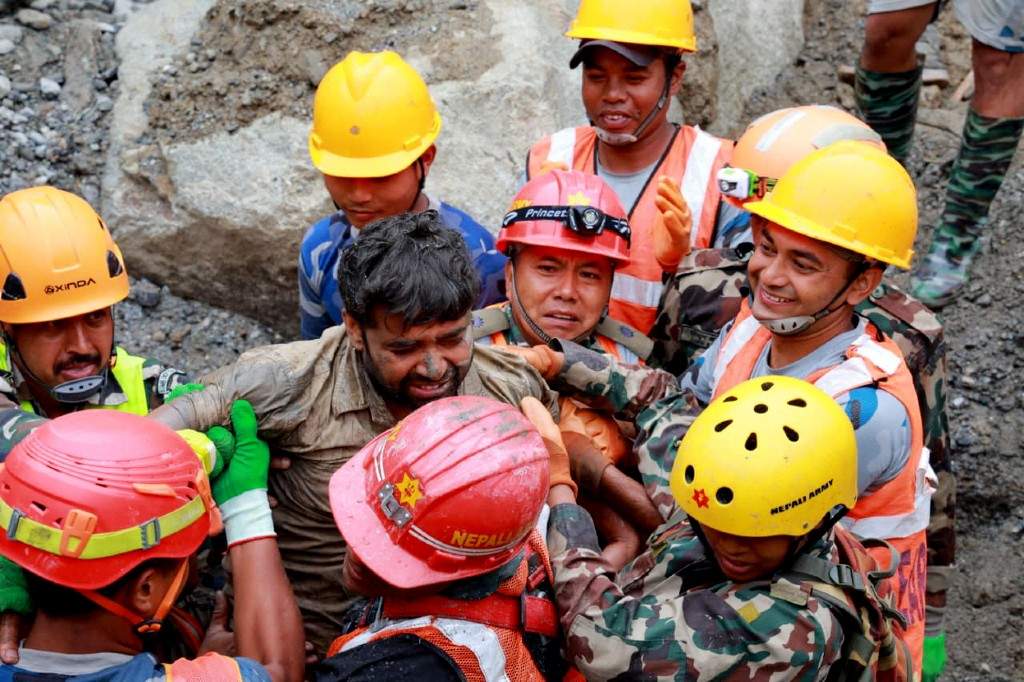
Rescue teams in Nepal have pulled two workers alive from a hydropower tunnel nine days after catastrophic flooding devastated parts of the country. Searchers heard men’s voices on Friday morning at the Trishuli 3A hydropower project in Rasuwa district, prompting the Nepal Army and other rescuers to launch an intensive operation. Images showed soldiers carrying one mud-covered worker from the tunnel with assistance from other troops.
The rescued men were identified as a mechanical foreman and a mechanical supervisor. Both were flown to a hospital in Kathmandu, and one was reported to be in critical condition. One survivor reportedly told officials that additional people remained alive inside the tunnel, raising hopes that more rescues may be possible. Brig. Gen. Raja Ram Basnet said the search operation was continuing.
The Associated Press reported that approximately 115 people may still be trapped in the Trishuli 3A tunnel. Across Nepal, authorities estimate that about 900 workers are missing from 12 hydropower plants, including roughly 500 believed to be trapped in tunnels. Communication Minister Bikram Timilsina thanked the rescuers and said officials were awaiting the recovery of more survivors.
The floods, which began on Aug. 26, have killed at least 1,287 people and left more than 5,000 missing, according to the report. Scientists believe the disaster was likely triggered by a glacier collapse. On the Tibet side of the border, China reported 21 deaths and 541 missing people. Nepal’s disaster agency estimated that the flooding caused at least 387.5 billion Nepalese rupees—approximately $2.5 billion—in damage to infrastructure and property.
The successful rescue offers a rare moment of hope amid a wider humanitarian disaster and an ongoing search for workers and other missing people.
Entities: Nepal, Trishuli 3A hydropower project, Rasuwa district, Nepal Army, Shri Ram Neupane • Tone: urgent • Sentiment: negative • Intent: inform
04-09-2026
Nepalese emergency crews rescued two hydropower workers who had been trapped inside a mud-clogged tunnel for nine days following severe flash flooding near the Nepal-Tibet border. The men were pulled out alive more than a week after the floods struck the region. Both workers suffered injuries to their hands and legs and were airlifted to a hospital in Kathmandu for medical treatment. Their rescue is one of the few positive developments amid a devastating disaster that has killed more than 1,200 people, according to the report. The flooding has created a major humanitarian and logistical crisis, with authorities also working to identify hundreds of victims, bury unidentified bodies, and respond to families waiting for information about missing relatives. The report presents the tunnel rescue as a significant emergency response effort, highlighting the dangers faced by workers trapped in flood-damaged infrastructure and the continuing challenges confronting Nepal after the disaster. The video was produced by Caitlin Brown for France 24 and was published on September 4, 2026, in the Asia-Pacific section.
Entities: Nepal, Tibet, Nepal-Tibet border, France 24, Caitlin Brown • Tone: urgent • Sentiment: negative • Intent: inform
04-09-2026
Two workers were rescued alive on Friday from a tunnel at Nepal’s Trishuli 3A hydropower project, nine days after severe flooding and mudslides struck the Himalayan region. The rescue renewed hopes that dozens of other workers believed to be trapped in tunnels across the country may still be alive.
Search teams reportedly heard voices from inside the tunnel in the morning and used them to locate the men. Images showed one survivor being carried out covered in mud, assisted by rescuers and soldiers. One of the rescued workers told officials that more people remained alive inside the tunnel, prompting authorities to continue searching. The men, identified as a mechanical foreman and a mechanical supervisor, were flown to a hospital in Kathmandu. One was reported to be in critical condition.
The rescue operation is part of a much larger emergency response. Authorities estimate that about 900 workers are missing from 12 hydropower projects in Nepal, with approximately 500 thought to be trapped in tunnels. Around 115 people may be trapped at the Trishuli 3A project alone.
The floods, believed to have been caused by a glacier collapse, killed at least 1,287 people in Nepal and left more than 5,000 missing, according to the country’s disaster management agency. China reported additional deaths and missing people on the Tibet side of the border. Nepal estimated that the disaster caused roughly 387.5 billion Nepalese rupees, or about US$2.5 billion, in damage to infrastructure and property. Officials said they were hoping to rescue more survivors as quickly as possible.
Entities: Nepal, Trishuli 3A hydropower project, Rasuwa district, Nepali Army, Shri Ram Neupane • Tone: urgent • Sentiment: negative • Intent: inform
04-09-2026
Two workers were rescued alive Friday from an underground tunnel at Nepal’s Trishuli-3A hydropower project, nine days after catastrophic floods swept through parts of Nepal and Tibet. Search teams located the men after hearing voices from inside the tunnel. Images released by the Nepal Army showed soldiers carrying one survivor, who was covered in mud, out of the facility. Both rescued workers—a mechanical foreman and a mechanical supervisor—were flown to a hospital in Kathmandu. One was reported to be in critical condition.
The rescue has renewed hope that other workers may still be alive. One of the survivors reportedly said that more people remained inside the tunnel, and the search operation continued. Authorities estimate that about 900 workers are missing from 12 hydropower projects across Nepal, including approximately 500 believed to be trapped in tunnels. The Independent Power Producers Association of Nepal estimates that about 115 people may be trapped at Trishuli-3A alone.
The floods, which occurred on Aug. 26 and were likely caused by a glacier collapse, killed at least 1,287 people in Nepal and left more than 5,000 missing, according to the country’s disaster management agency. China reported 31 deaths and 531 missing on the Tibet side of the border. Nepal estimated that the flooding caused at least 387.5 billion Nepalese rupees, or about $2.5 billion, in damage to infrastructure and property. Officials and rescuers continue working to find survivors while displaced residents receive aid at temporary shelters.
Entities: Nepal, Trishuli-3A hydropower project, Rasuwa district, Kathmandu, Nepal Army • Tone: urgent • Sentiment: negative • Intent: inform
04-09-2026
Nepalese rescuers pulled two workers alive from the Trishuli 3A hydropower tunnel on Friday, nine days after devastating floods and mudslides struck the region along the Nepal-Tibet border. The floods, which officials believe may have been caused by a glacier collapse or avalanche, destroyed towns, swept away villages and left thousands of people dead or missing.
The rescued men were identified as a mechanical foreman and a mechanical supervisor. Rescuers heard voices from inside the tunnel Friday morning, confirming that survivors were still alive and helping teams locate them. One worker was shown on local television covered in mud and being carried from the tunnel. Both men were reportedly in stable condition and were flown to a hospital in Kathmandu. Amir Maharjan, the brother of one survivor, said the family was grateful and traveling to the hospital.
The rescue operation remains active. The Independent Power Producers Association of Nepal estimates that at least 557 workers are missing from the Trishuli 3A hydropower project, with approximately 115 believed to be trapped in the main tunnel. Officials at the site said some other workers could still be alive, and Communication Minister Bikram Timilsina said authorities remained hopeful that more people would be rescued.
The disaster has caused extensive casualties across the region. Nepal’s disaster management agency reported at least 1,259 deaths and more than 5,000 missing people. China reported 21 deaths and 541 missing people on the Tibet side of the border. Local authorities also estimated that about 900 workers were missing from 12 hydropower projects in Nepal, with roughly 500 believed to be trapped in tunnels. The two rescues have provided hope amid a continuing and large-scale emergency response.
Entities: Nepal, Trishuli 3A Hydropower Project, Trishuli 3A tunnel, Trishuli River, Rasuwa district • Tone: urgent • Sentiment: negative • Intent: inform
04-09-2026
The article reports that two workers were rescued from a tunnel at Nepal’s Trishuli 3 Hydropower Project nine days after deadly flash floods struck the region. Nepal’s disaster management authority announced the rescue on Friday and identified the men as employees working at the hydropower facility. The workers had apparently remained inside the tunnel since the flooding, although the available article excerpt does not provide details about how they survived, how rescuers located them, or their medical condition after extraction.
The rescue occurred in the aftermath of severe flooding that caused deaths and widespread disruption in the area. The report emphasizes the extraordinary delay between the disaster and the men’s recovery, highlighting the dangers faced by workers at the project and the challenges confronting emergency responders. The hydropower plant’s tunnel became an isolated and hazardous space after the flash floods swept through the region.
The excerpt is brief and does not include a full account of the floods’ overall impact, including the number of fatalities, damage to infrastructure, or the status of other missing people. It also does not identify the rescued workers by name or describe the agencies and personnel involved in the operation beyond Nepal’s disaster management authority. Nevertheless, the rescue represents a rare hopeful development following a deadly natural disaster. The central focus is the survival and recovery of the two hydropower workers, as well as the continuing emergency response nine days after the floods.
Entities: Nepal, Trishuli 3 Hydropower Project, Nepal’s disaster management authority, deadly flash floods, hydropower plant tunnel • Tone: urgent • Sentiment: negative • Intent: inform