06-11-2026
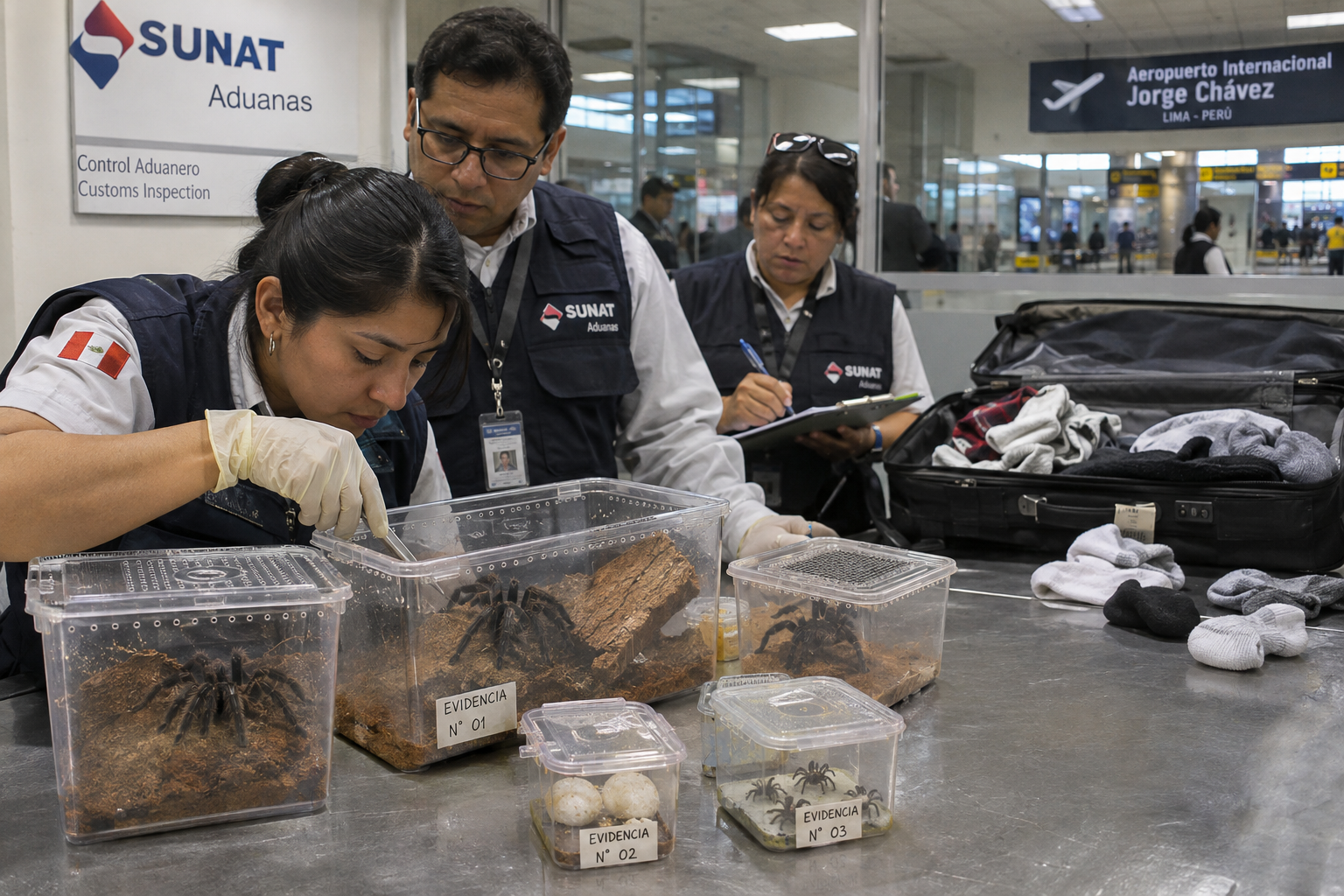
Airport workers at Jorge Chavez International Airport in Callao, Peru, seized more than 3,000 tarantulas from the luggage of three passengers who were preparing to fly to Germany. Authorities said the discovery followed an anonymous tip. The spiders were packed into 15 to 20 socks in each suitcase and included eggs, young spiders and adults. The passengers—a pair of Germans and a Polish national—were detained by Peru’s environmental crimes police. Officials believe they intended to smuggle the tarantulas to Germany for sale to collectors. Cora Suarez, a wildlife forestry control technician with Peru’s National Forestry and Wildlife Service (SERFOR), said the animals can be valuable because of their colors and size and their appeal to collectors. The three travelers face prosecution by a specialized environmental prosecutor’s office. The article notes another attempted insect-smuggling case from 2025: US Customs and Border Protection intercepted 37 live beetles concealed in Japanese snacks in an air-cargo shipment from Japan at Los Angeles International Airport. The beetles, which are sought after by collectors, were estimated to be worth about $1,500.
Entities: Callao, Peru, Jorge Chavez International Airport, Germany, SERFOR (Peru’s National Forestry and Wildlife Service), Cora Suarez • Tone: emotional • Sentiment: negative • Intent: inform
06-11-2026
Peruvian authorities seized more than 3,000 tarantulas at an airport in Lima as the animals were allegedly being smuggled to Germany. According to the National Forestry and Wildlife Service (SERFOR), the spiders were concealed in dirty socks packed inside three suitcases carried by two German nationals and one Polish national. Customs officers discovered them during a routine inspection after noticing movement in the luggage. SERFOR wildlife control technician Cora Suarez said the seized tarantulas included both small and large specimens.
The animals came from several regions of Peru and were found at different stages of development, including eggs, hatchlings and adults. Suarez said a single tarantula can sell for about €500 in Europe, putting the potential value of the shipment at roughly €1.5 million. Police specialising in environmental crimes detained the three alleged smugglers, who will face criminal proceedings, SERFOR said.
The report places the seizure in the wider context of illegal wildlife trafficking. Interpol estimates that the highly lucrative criminal activity generates about US$20 billion worldwide each year. The trade is also among the primary causes of biodiversity loss. The article therefore presents the airport seizure both as an alleged trafficking operation involving a large number of animals and as an example of a broader environmental crime with significant economic incentives and consequences for biodiversity.
Entities: Lima, Peru, Germany, National Forestry and Wildlife Service (SERFOR), Cora Suarez, Interpol • Tone: neutral • Sentiment: negative • Intent: inform
06-11-2026
Peruvian authorities seized more than 3,000 tarantulas at Jorge Chávez International Airport in Lima after customs agents noticed movement inside luggage during a routine inspection. The spiders were packed into dirty socks in three suitcases carried by two German nationals and one Polish citizen, and were bound for Germany. Cora Suarez, a wildlife control technician with Peru’s National Forestry and Wildlife Service (SERFOR), said the agents saw spiders of different sizes moving inside the luggage. The seized animals included specimens at several stages of development, from eggs and hatchlings to adults, and came from multiple regions of Peru.
Suarez estimated that a single tarantula can sell for about €500 ($560) in Europe. At that price, the shipment could have been worth roughly €1.5 million. The three travelers were detained by police specialising in environmental crimes and, according to SERFOR, will face criminal proceedings.
The case is presented in the broader context of illegal wildlife trafficking, which Interpol estimates generates around $20 billion annually worldwide. The article describes the trade as highly lucrative and identifies it as one of the main causes of biodiversity loss. It reports the seizure and its potential value while highlighting the environmental harm associated with wildlife trafficking.
Entities: Peru, Lima, Jorge Chávez International Airport, Germany, National Forestry and Wildlife Service (SERFOR) • Tone: analytical • Sentiment: negative • Intent: inform