07-11-2026
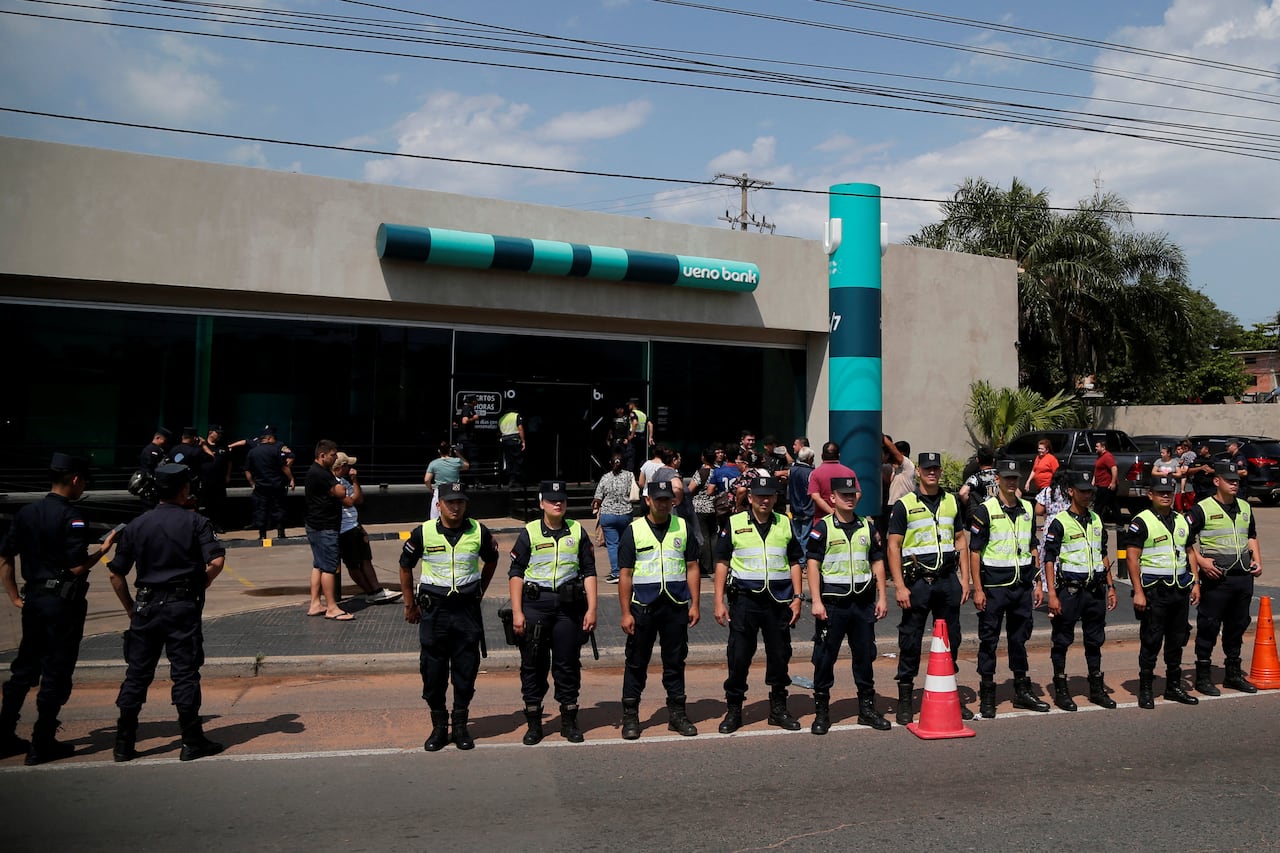
Pedro Alliana was sworn in as Paraguay’s president after the Senate unanimously impeached his predecessor, Santiago Peña, for misconduct in office. Alliana, who was Peña’s vice president and running mate in the 2023 election, is expected to serve the remainder of Peña’s term, which runs until August 2028. The impeachment came amid a political and financial crisis triggered by the seizure of Ueno Bank, which left nearly three million customers unable to access savings or use bank cards.
Peña was placed under house arrest on suspicion of breach of trust after his removal. Prosecutors ordered him held at home until he could appear before an economic crimes and anti-corruption unit. The attorney general’s office confirmed his detention to The Associated Press. Authorities also called for the arrest of former central bank chief Carlos Carvallo, whom Peña had appointed; it was unclear whether Carvallo had been taken into custody.
Lawmakers accused Peña of using his influence to direct hundreds of millions of dollars in public funds to Ueno while regulators turned a blind eye to risky insider lending. Peña denied wrongdoing. He had submitted his resignation the previous day, but Congress rejected it. His lawyers argued that lawmakers should have approved his departure rather than continue the impeachment trial.
Alliana, a veteran of the governing conservative Colorado Party and a former provincial governor and speaker of the lower house, is also under investigation. The previous day, lawmakers shelved an opposition effort to impeach him. Meanwhile, public anger grew as protesters marched through downtown Asunción demanding the return of their frozen savings and accountability for the bank’s failure.
Entities: Pedro Alliana, Santiago Peña, Carlos Carvallo, Ricardo Preda, Adolfo Ferreiro • Tone: neutral • Sentiment: negative • Intent: inform
07-11-2026
The report says Paraguayan authorities moved former President Santiago Pena to a military base for his protection after a turbulent day in Asuncion. Earlier, Pena had been placed under house arrest following the collapse of UENO bank. The move to the base ended the day’s sequence of events, according to the brief article. The report does not explain why the bank collapsed, what connection—if any—Pena had to the bank, who ordered the house arrest or the transfer, or what legal grounds were involved. It also provides no details about the condition of the bank, the impact on customers, or any public response. The headline characterizes the situation as “chaos,” while the article’s short description presents the military placement as a protective measure. Published on November 7, 2026, the item is a concise news update rather than a detailed account. Its central facts are the bank’s collapse, Pena’s earlier house arrest, and his subsequent relocation to a military base under the protection of Paraguayan authorities. No further developments or explanation are included in the supplied text.
Entities: Santiago Pena, Paraguay, Asuncion, UENO bank, Paraguayan authorities • Tone: urgent • Sentiment: negative • Intent: inform
07-11-2026
Pedro Alliana was sworn in as Paraguay’s 53rd president on Friday, November 6, after the Senate impeached and removed his predecessor, Santiago Pena. Alliana, a 52-year-old conservative and former vice president, took office amid a major political and financial scandal linked to the collapse of Ueno Bank. Forty-four of the Senate’s 45 members voted to remove Pena, with one abstention. The Chamber of Deputies had voted 78–0 to impeach him the previous day. Congress rejected Pena’s offer to resign and proceeded with impeachment instead; had he resigned, he could have retained a Senate seat and related legal protections. Prosecutors subsequently ordered Pena placed under house arrest on suspicion of breach of trust and other crimes. An arrest warrant was also issued for former central bank head Carlos Carvallo, who resigned earlier in the week.
The crisis began when the central bank said Ueno had fallen below legal solvency standards and seized the lender, transferring its remaining assets to other institutions. Millions of customers reportedly lost access to accounts and pension payments. Ueno had become Paraguay’s fifth-largest bank by deposits, with about $800 million in public money contributing to its growth, and roughly three million members. Pena had been identified as a shareholder in its parent company in 2023, though he said he sold his shares in early 2025. Investigators are examining whether government connections protected the bank from oversight and whether Pena had a conflict of interest. Some $355 million in state pension funds had been invested in Ueno.
At least 27 people, including lead shareholder Miguel Vazquez, face criminal charges related to alleged offenses including attempted fraud, breach of trust, misappropriation of funds and influence peddling. Pena said he would cooperate with the investigation and cited the need to avoid further division, while also objecting that the Senate hearing gave him insufficient time to defend himself. The Colorado Party, which has dominated Paraguayan politics since 1948, supported his impeachment. Alliana now takes office as the country faces one of its most severe political and economic scandals in recent history.
Entities: Santiago Pena, Pedro Alliana, Paraguay, Asuncion, Ueno Bank • Tone: analytical • Sentiment: negative • Intent: inform
07-11-2026
Paraguay’s President Santiago Peña was impeached and arrested after the collapse of Ueno Bank, a digital bank linked to his former business interests, left an estimated three million people unable to access savings and pensions. Legislators, including members of Peña’s own party, voted 44 to one to remove him, finding him guilty of dereliction of duty. Peña had offered to resign the day before, but senators instead impeached him and charged him with misconduct, removing the immunity normally granted to former presidents. He denies wrongdoing.
The impeachment charges allege conflicts of interest, interference with regulatory oversight, diversion of pension funds and a cover-up involving the central bank. Prosecutor Silvia Margarita Gonzalez Vester said Peña was due to be questioned about alleged breach of trust, influence peddling and misappropriation of funds. Analysts expect he may be prosecuted; his lawyer called the accusations reckless and irresponsible.
Vice-President Pedro Alliana was sworn in as interim president and said people affected by the financial collapse would be compensated. The bank’s seizure by the central bank prompted long queues at branches in Asunción, public outrage and protests across the country. Demonstrations included clashes with police, who used tear gas and water cannons. The article presents the crisis as both a severe financial disruption for depositors and a major political scandal, with Senator Rafael Filizzola calling it the largest corruption scandal in Paraguay’s democratic history.
Entities: Santiago Peña, Pedro Alliana, Ueno Bank, Paraguay, Asunción • Tone: analytical • Sentiment: negative • Intent: inform
07-11-2026
Paraguay’s Senate unanimously removed President Santiago Peña from office after the collapse of Ueno Bank, a government-linked financial institution whose seizure left many depositors unable to access their savings. Soon after the vote, Peña was placed under house arrest while prosecutors investigated allegations including breach of trust, influence peddling and using public office for personal gain. The charges carry potential prison sentences of up to 10 years. Peña denies wrongdoing, and lawmakers allege that he used his influence to direct hundreds of millions of dollars in public funds to Ueno while regulators overlooked risky lending to companies connected to the bank’s insiders.
The bank’s seizure triggered Paraguay’s worst political crisis in more than a decade. Protesters, including depositors, retirees and students, gathered outside Congress and demanded the return of their savings and accountability. Police guarded Peña’s home as demonstrators kept watch. Prosecutors also ordered the arrest of Carlos Carvallo, Ueno’s former finance-company head, whom Peña appointed central bank chief in 2023; it was unclear whether Carvallo was in custody. Vice-President Pedro Alliana was sworn in to complete Peña’s term, ending in August 2028, though Alliana is also under investigation in connection with the bank’s collapse.
Peña’s downfall unfolded rapidly. He had offered to resign after his Colorado Party withdrew support, but the Senate impeached him instead, removing the immunity resignation would have preserved. Analysts describe the crisis as a struggle between Peña and his political mentor, former president and party leader Horacio Cartes. Peña had built a competing power base, with Ueno’s access to public funds central to it. Cartes and his allies had already pressed for scrutiny of the bank’s risky related-company lending, and Cartes ultimately called for Peña’s ouster. The article portrays a political upheaval driven by the banking collapse, public anger and an internal party power struggle.
Entities: Santiago Peña, Horacio Cartes, Pedro Alliana, Carlos Carvallo, Miguel Vázquez • Tone: analytical • Sentiment: negative • Intent: inform
07-11-2026
Paraguay’s Senate voted to remove President Santiago Peña from office over alleged misconduct, and he was placed under house arrest pending a court appearance. Prosecutors are expected to hear charges including breach of trust, influence peddling and using public office for personal gain. The most serious charges carry potential prison sentences of up to 10 years. Lawmakers allege that Peña used his influence to direct hundreds of millions of dollars in public funds to Ueno Bank while regulators failed to address risky insider lending. Peña denies wrongdoing. The political crisis followed the Central Bank’s seizure of Ueno three days earlier. The collapse left customers unable to withdraw cash, access savings or use payment cards. More than one million Paraguayans reportedly opened their first bank account with the digital lender, which had courted low-income and unbanked customers with supermarket rebates. The disruption has affected even members of the national soccer team, which Ueno sponsored. The bank’s failure has also spread economic hardship beyond depositors: a ride-hailing app that depended on Ueno closed, leaving 3,000 drivers out of work, while $21 million in development loans intended for public works became trapped at the bank. Paraguay’s bonds suffered steep losses, and its currency weakened against the U.S. dollar. Some customers began receiving funds back on Thursday, starting with deposits of up to 10 million guaraníes, or about $1,500. Deposits are insured up to roughly $35,000, a limit the central bank says covers 97% of Ueno customers. Regulators describe the failure as an isolated case and maintain that the wider financial system is safe. The article characterizes the episode as Paraguay’s most serious political crisis in more than a decade and notes that Peña is the second president impeached since the end of Alfredo Stroessner’s dictatorship in 1989.
Entities: Santiago Peña, Paraguay, Asunción, Ueno Bank, Paraguay Senate • Tone: analytical • Sentiment: negative • Intent: inform
07-11-2026
Paraguay’s Senate impeached and convicted President Santiago Peña over allegations connected to the collapse of digital lender Ueno, a major bank whose frozen accounts left millions of customers unable to access their deposits. Peña had resigned the previous day, but lawmakers proceeded with impeachment, stripping him of the lifetime Senate seat and immunity normally granted to former presidents. Vice President Pedro Alliana is set to complete the presidential term, which ends in August 2028. Prosecutors ordered Peña’s arrest alongside former central bank chief Carlos Carvallo; officials later said Peña was under house arrest while prosecutors considered final charges.
The crisis arose as Ueno, which served approximately 2.94 million customers—around 60% of Paraguay’s adult population—was placed into a resolution or closure process. The central bank said the lender’s solvency ratio had fallen below half the required minimum. Its app, card payments and transfers stopped, branches closed, and customers queued to try to retrieve their savings. Ueno reportedly held about $800 million in public-sector deposits, including funds connected to the country’s hydroelectric dams. The Social Security Institute, which manages pension and health-care funds, had $355 million at the bank.
Impeachment articles accused Peña of conflicts of interest, misuse of pension funds, institutional cover-ups, improper financial gain, and interference benefiting Ueno. Allegations included two loans he received from the bank and his appointment of Carvallo, a former chair of Financiera Ueno, as central bank chief. Peña sold his shares in Ueno Holding in April 2025. The crisis intensified after influential political figures withdrew their support, while protesters demanded their money back and workers sought unpaid wages and severance.
Authorities detained eight senior executives, including Ueno founder Miguel Vazquez and bank president Juan Manuel Gustale, and charged 27 bank officials and associates with offenses including breach of trust and attempted fraud. Peña had promised legislation to return savers’ money, but the crisis forced him to cancel attendance at an Ibero-American summit in Madrid.
Entities: Santiago Peña, Pedro Alliana, Carlos Carvallo, Miguel Vazquez, Juan Manuel Gustale • Tone: analytical • Sentiment: negative • Intent: inform
07-11-2026
Pedro Alliana was sworn in as Paraguay’s president after lawmakers impeached Santiago Peña amid a banking crisis triggered by the collapse of Ueno Bank. The bank’s failure froze savings belonging to half of the country’s adult population. Alliana, 52, had served as vice president for three years and is expected to lead the country until August 2028. Peña was placed under house arrest in Asunción and was due to be questioned over alleged breach of trust, influence peddling and misappropriation of funds. Prosecutors announced the allegations; the article does not report that they have been proven.
The article traces Alliana’s political rise and relationship with former president Horacio Cartes, a powerful figure in the ruling Colorado Party. Born in Pilar in 1974, Alliana first pursued business and played for Paraguay’s national basketball team. After losing a mayoral race in 2006, he was elected governor of Ñeembucú two years later. He served in the Chamber of Deputies from 2013 to 2023, presided over the lower house and later led the Colorado Party. Cartes backed him as Peña’s running mate instead of supporting his expected Senate bid.
Alliana has faced criticism over relatives holding public-administration posts, including his eldest daughter, Montserrat. He is married to congresswoman Fabiana Souto and has four children. He had openly expressed presidential ambitions, and Cartes endorsed a possible candidacy in 2025. Their relationship later deteriorated after Cartes withdrew his support; Alliana said loyalty should not mean “blind obedience.” His path to the presidency opened when lawmakers pursued Peña’s impeachment but rejected proceedings against Alliana. The article presents the succession against the backdrop of acute political and financial uncertainty.
Entities: Pedro Alliana, Santiago Peña, Horacio Cartes, Fabiana Souto, Montserrat • Tone: analytical • Sentiment: neutral • Intent: inform
07-11-2026
France 24 reports that Paraguay’s former president, Santiago Peña, was placed under house arrest after senators unanimously voted to remove him from office in connection with a banking scandal. The report identifies the collapse of Ueno Bank as the central event: nearly three million customers were left unable to access their savings. Peña denies wrongdoing. His successor, Pedro Alliana, has promised to compensate people affected by the collapse.
The article presents the political consequences and immediate impact on customers, but the supplied text does not provide further details about the bank’s collapse, the allegations against Peña, the legal basis for his house arrest, or how compensation would be funded or delivered. It also does not describe the timeline of the bank’s failure or include responses from customers, bank officials, or other government figures. The report’s central focus is therefore the removal and detention of the president, the disruption to millions of customers’ access to savings, Peña’s denial, and Alliana’s pledge to provide compensation. The available article text is brief and does not establish whether the pledge has been implemented or what further proceedings may follow.
Entities: Paraguay, Santiago Peña, Pedro Alliana, Ueno Bank, Paraguayan senators • Tone: neutral • Sentiment: negative • Intent: inform
07-11-2026
The article reports that Constanza Peña, a Columbia University undergraduate and daughter of Paraguay’s then-president Santiago Peña, faced widespread online criticism after a photo showed her wearing a T-shirt with the slogan “T.T.P Tax The Poor.” The image, reportedly shared on her Instagram Stories and later circulated on other platforms, went viral shortly after her father submitted a resignation letter amid the collapse of Ueno Bank. The article describes the shirt as “tone-deaf” and quotes social media users who criticized its message as an expression of privilege, particularly while Paraguayans were struggling to recover money held at the failed bank. Some commenters called on Columbia University to remove Peña, while others argued that her family’s wealth and the hardship faced by bank customers made the shirt especially offensive.
Ueno Bank, which had grown rapidly to become Paraguay’s fifth-largest lender, was seized by the central bank. The article says nearly three million customers, including retirees, could not access their funds. It reports that at least 97% of depositors were covered by deposit insurance up to 223 million Paraguayan guaraníes (about $38,000), and that the central bank announced an initial payment of up to 10 million guaraníes (about $1,700), less any debts owed. At least 33,000 retirees were to have pension payments redirected to another bank.
The article also recounts the political fallout: Congress rejected Santiago Peña’s resignation, the lower house voted to impeach him, and the Senate proceeded with a trial before voting to remove him on Friday. Vice President Pedro Alliana was sworn in as president. Constanza Peña did not respond to the publication’s request for comment, and Columbia University declined to comment, citing student privacy restrictions.
Entities: Constanza Peña, Santiago Peña, Pedro Alliana, Columbia University, Paraguay • Tone: negative • Sentiment: negative • Intent: inform
07-11-2026
Paraguay’s Senate unanimously removed President Santiago Peña from office after the collapse of Ueno Bank, which left millions of customers unable to access their savings. Shortly afterward, Peña was placed under house arrest while prosecutors investigate suspected breach of trust, influence peddling and misuse of public office. He denies wrongdoing. Lawmakers allege he helped direct hundreds of millions of dollars in public funds to Ueno, including deposits from the state pension fund that exceeded legal limits, and that his connections weakened regulatory oversight. Vice President Pedro Alliana was sworn in to complete Peña’s term, which ends in August 2028, though Alliana is also under investigation in connection with the bank.
The bank’s seizure triggered widespread financial and political fallout. More than a million people reportedly opened their first accounts with Ueno, and customers lost access to cash, savings and card payments. The disruption also affected workers, a ride-hailing service, public works funding, Paraguay’s currency and its bond market. Regulators have begun returning money to some smaller depositors and say deposit insurance covers 97% of Ueno customers, while maintaining that the collapse is isolated and the wider financial system is safe.
Prosecutors have charged 27 people connected to Ueno, including its founder and former CEO Miguel Vázquez. Authorities have detained several former directors and seized assets linked to Vázquez. The article describes Peña’s rapid fall: after Ueno was seized, his Colorado Party allies turned against him, and former president Horacio Cartes—Peña’s mentor and a powerful party figure—called for his removal. Analysts say Ueno had become central to Peña’s effort to build an independent political base, while its public funding and political ties exposed him to accusations of favoritism. The crisis has prompted demonstrations demanding frozen savings, accountability and a return to democratic safeguards.
Entities: Santiago Peña, Ueno Bank, Paraguay, Asunción, Pedro Alliana • Tone: analytical • Sentiment: negative • Intent: inform
07-11-2026
Pedro Alliana became Paraguay’s president after the Senate impeached and removed Santiago Pena amid a political and banking crisis linked to digital lender ueno. The lender’s collapse left millions of customers unable to access their accounts, and lawmakers blamed Pena for the crisis. Pena had been a business partner in the group that owned ueno until March 2025. The fallout brought protests to Asuncion and led to the resignation of the central bank chief on Nov 3.
Alliana, 52, will serve the remainder of Pena’s term, through August 2028. A long-time Colorado Party leader who had expected to seek the presidency in 2028, he suspended his bid for the party’s December primary on Nov 2, saying the government needed to address the financial turmoil. He had remained loyal to Pena until then, but his remarks distancing himself from responsibility for others’ mistakes were seen as a sign of growing separation from the president.
Alliana led the Colorado Party for seven years and rose through its ranks alongside former president Horacio Cartes. The party has governed Paraguay for most of the past eight decades. Analyst Mariano Machado characterized an Alliana presidency as likely to preserve policy continuity and orthodox macroeconomic policy, while remaining dependent on Cartes and facing a weak mandate. He also expected increased pressure for patronage spending ahead of the 2028 elections.
Alliana has emphasized Paraguay’s close relationship with the United States and backed the Trump administration’s Shield of the Americas security initiative as a way to combat organized crime. He also supports Paraguay’s diplomatic ties with Taiwan and Israel. Before becoming vice-president in 2023, he represented the southern department of Neembucu in the Chamber of Deputies for a decade and had served as the department’s governor. He is described as reserved and closely connected to the Colorado Party establishment.
Entities: Pedro Alliana, Santiago Pena, Paraguay, Colorado Party, ueno • Tone: analytical • Sentiment: neutral • Intent: inform
07-11-2026
Paraguay’s Congress impeached President Santiago Peña amid a banking crisis that left 2.9 million Ueno customers—about 60% of the country’s adult population—unable to access their accounts after regulators suspended the digital bank. The suspension followed reported irregularities and triggered protests, clashes with police and a sharp decline in retail sales, with some businesses reporting drops of up to 80%. Vice-President Pedro Alliana was sworn in as president as Peña was placed under house arrest.
Prosecutors are investigating Peña on suspicion of illicit enrichment, money laundering and influence peddling. Their inquiry concerns allegations that he used political influence to benefit Ueno, which grew rapidly during his administration. Peña appointed former Ueno chief executive Carlos Carvallo Spalding to lead the central bank. Three months later, Spalding approved Ueno’s transition to a digital bank; he is also named in Peña’s arrest warrant.
Peña had held shares in a company that later became Ueno Holding, the bank’s parent company, and sold them in April 2025, after becoming president. He said he had acquired the shares as an investor. The bank’s rapid expansion included easy account opening and unusually high returns. State and pension funds estimated at $800m to $860m were also invested in Ueno, with an analyst saying the presidency’s support helped direct government-linked pension funds there.
Peña reportedly tried to resign before his impeachment in an effort to retain the special jurisdiction granted to former Paraguayan presidents, who become senators for life. Lawmakers rejected the resignation, leaving him subject to ordinary courts. During the impeachment debate, an opposition senator described the affair as one of the country’s biggest corruption scandals since democracy was restored. Peña, who left his defence to lawyers, posted a farewell message acknowledging customers’ distress and their demand for answers.
Entities: Santiago Peña, Paraguay, Ueno Bank, Ueno Holding, Pedro Alliana • Tone: analytical • Sentiment: negative • Intent: inform