08-10-2026
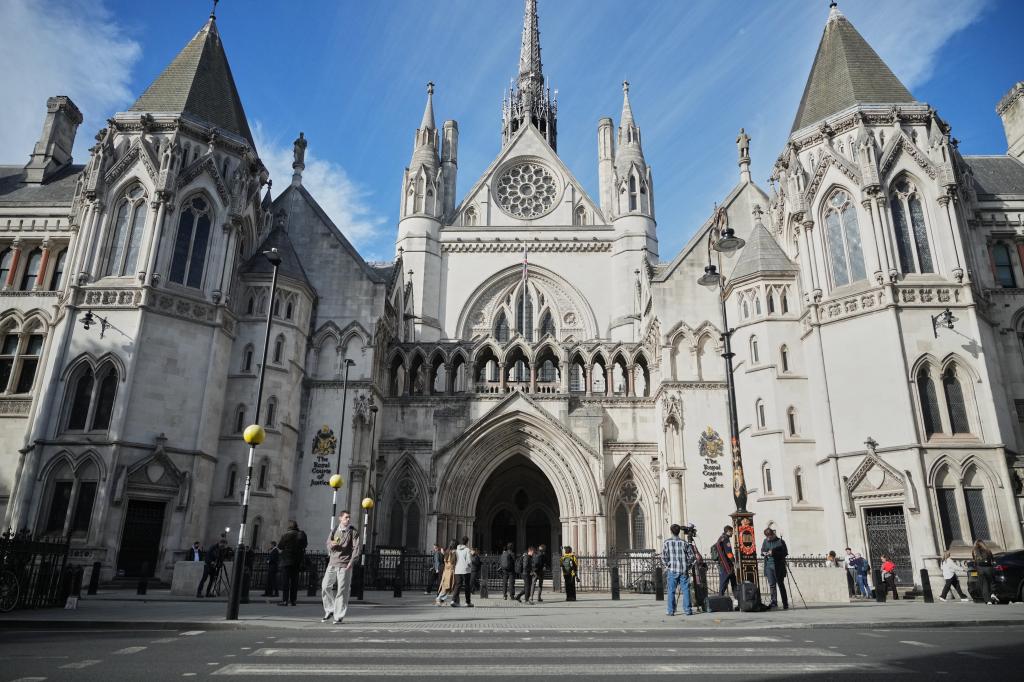
Andrew Mountbatten-Windsor has won a court challenge after Thames Valley Police accepted that warrants used to search his homes in February were unlawful. The High Court of England and Wales heard that police had taken documents and electronic devices during searches of his home on the Sandringham Estate in Norfolk and Royal Lodge near Windsor. Police acknowledged that information they provided to a judge when applying for the warrants at the Central Criminal Court, commonly known as the Old Bailey, was incorrect. The article does not say what will happen to the seized material.
The searches took place when Mountbatten-Windsor was arrested on his 66th birthday. Thames Valley Police are investigating allegations of misconduct in public office connected to his work as a UK trade commissioner from 2001 to 2011. He was stripped of his royal titles last year, has not been charged, and has consistently maintained his innocence. Despite the court development, the police investigation will continue.
Entities: Andrew Mountbatten-Windsor, Riley Stuart, Elias Clure, Thames Valley Police, High Court of England and Wales • Tone: analytical • Sentiment: neutral • Intent: inform
08-10-2026
Thames Valley Police has accepted that the search warrants used to search properties linked to Andrew Mountbatten-Windsor were incorrectly granted and should be legally quashed, a London judge said. Police searched properties in Sandringham and Windsor as part of an investigation into whether Andrew, formerly known as Prince Andrew, passed confidential government documents to Jeffrey Epstein while serving as a British trade representative from 2001 to 2011. Andrew was arrested in February on suspicion of misconduct in public office, but police have not charged him. He denies wrongdoing in relation to Epstein and has said he regrets their friendship.
Andrew applied to have the warrants quashed, and police agreed that the legal basis used to issue them was incorrect. The court process has not resolved what will happen to material seized during the searches. Thames Valley Police said separate legal proceedings are underway to determine how that material will be handled and whether it can lawfully be retained for the investigation.
The investigation began after the US Department of Justice released millions of documents relating to Epstein, a late convicted sex offender. Police say the investigation remains ongoing. The article also describes the arrest and public anger over Andrew’s association with Epstein as contributing to one of the British royal family’s worst crises in 90 years. The ruling concerns the legality of the search warrants; it does not announce an outcome to the underlying investigation or establish whether Andrew committed an offence.
Entities: Andrew Mountbatten-Windsor (formerly Prince Andrew), Jeffrey Epstein, King Charles III, Queen Elizabeth II, Thames Valley Police • Tone: analytical • Sentiment: neutral • Intent: inform
08-10-2026
A London judge has said Thames Valley Police agreed that the search warrants used to search two properties belonging to former Prince Andrew were unlawful. The searches were part of an investigation into Andrew Mountbatten-Windsor’s links to the late convicted sex offender Jeffrey Epstein. Justice Nicholas Hilliard said police had made a significant error in applying for the warrants. The parties agreed to invalidate them before a High Court hearing on Thursday, following an application by Mountbatten-Windsor’s lawyers to have the warrants set aside.
Mountbatten-Windsor was arrested on Feb. 19 on suspicion of misconduct in public office. He was questioned by police for 11 hours and then released under investigation; he has not been charged or exonerated. His lawyers’ challenge could form part of a wider effort to argue that evidence seized in the searches was improperly obtained and should not be admitted at a criminal trial. A lawyer described the warrant hearing as a preliminary step in that broader legal dispute. Mountbatten-Windsor was not present in court.
The investigation initially focused on allegations that he shared sensitive information with Epstein while serving as a U.K. trade envoy, although police later said they might consider other matters. The allegations emerged amid the U.S. Justice Department’s release of millions of pages of documents related to Epstein’s sex-trafficking investigation and his connections to wealthy and powerful people. Andrew’s relationship with Epstein had already damaged his standing in the royal family: he gave up his role as special trade envoy in 2011, and a 2019 BBC interview about his continuing ties to Epstein ended his career as a working royal. King Charles III removed his brother’s princely title last year, seeking to protect the wider royal family from further fallout. Buckingham Palace has also said the king’s private funds cannot be used to pay for Andrew’s legal challenge.
Entities: Andrew Mountbatten-Windsor (former Prince Andrew), Jeffrey Epstein, Justice Nicholas Hilliard, Thames Valley Police, King Charles III • Tone: analytical • Sentiment: neutral • Intent: inform
08-10-2026
A London judge said Thames Valley Police agreed that search warrants used to search two properties belonging to Andrew Mountbatten-Windsor, formerly Prince Andrew, were unlawful. Justice Nicholas Hilliard said police had made a significant error in applying for the warrants, and the parties agreed before Thursday’s hearing that they should be quashed. Mountbatten-Windsor’s lawyers had asked the High Court to invalidate them. Police said the original court’s decision to issue the warrants was incorrect, while legal proceedings continue over how evidence seized in the searches will be handled and whether it can be retained for the investigation.
Mountbatten-Windsor was arrested on Feb. 19 on suspicion of misconduct in public office. Police questioned him for 11 hours and released him under investigation; he has not been charged or exonerated. The investigation initially concerned allegations that he shared sensitive information with Jeffrey Epstein while serving as a U.K. trade envoy, though police said they could consider other matters. His lawyer’s representative, Mark Stephens, characterized the warrant challenge as an early step in a larger effort to argue that evidence was improperly obtained and should be excluded from any criminal trial.
The article places the case in the context of Mountbatten-Windsor’s long-standing ties to Epstein, whose sex-trafficking investigation and connections to powerful people prompted the release of millions of pages of U.S. Justice Department records. King Charles III stripped his brother of his princely title last year amid continuing fallout, and Buckingham Palace has said royal private funds may not be used to finance the legal challenge. The controversy has damaged Mountbatten-Windsor’s public role for years: he relinquished his trade-envoy position in 2011 and left royal duties after a widely criticized BBC interview in 2019. His arrest was described as the first of a senior British royal in nearly four centuries.
Entities: Andrew Mountbatten-Windsor (formerly Prince Andrew), Justice Nicholas Hilliard, Thames Valley Police, Jeffrey Epstein, King Charles III • Tone: analytical • Sentiment: neutral • Intent: inform
08-10-2026
Thames Valley Police has accepted that search warrants used to search properties associated with Andrew Mountbatten-Windsor were granted incorrectly and must be legally quashed. The searches took place at properties in Sandringham and Windsor after Andrew was arrested in February on his 66th birthday on suspicion of misconduct in public office. He had applied to have the warrants quashed. A police spokesperson said the court had issued the warrants under a provision of legislation that was not properly applicable. Although the warrants are to be quashed, legal proceedings are still under way to determine how authorities will handle material seized during the searches and whether they may lawfully retain it for the investigation. Police said their criminal investigation remains active. It began after the US Department of Justice released millions of documents relating to Jeffrey Epstein, the late convicted sex offender. Andrew, the second son of Queen Elizabeth II, has denied wrongdoing in relation to Epstein and has said he regretted their friendship. The article reports a significant procedural development in the investigation, but does not say that the warrant ruling resolves the allegations or ends the police inquiry.
Entities: Andrew Mountbatten-Windsor, King Charles, Queen Elizabeth, Thames Valley Police, Sandringham • Tone: neutral • Sentiment: neutral • Intent: inform
08-10-2026
The provided text reports that a British court ruled Thursday that police used unlawful search warrants when they searched the homes of former Prince Andrew on the day he was arrested in February. The ruling concerns the legality of the warrants used for those searches; it does not end the investigation. The judge specifically stipulated that the investigation against Andrew could continue. The excerpt does not identify the court, explain why the warrants were unlawful, describe the underlying allegations, or provide responses from Andrew, police, or prosecutors. It also gives no further details about the searches or the consequences of the ruling. Because the supplied article content consists only of a headline and a brief opening sentence, a 200–400-word account of the full article cannot be produced without adding unsupported information. This summary therefore covers only the facts contained in the provided excerpt.
Entities: Prince Andrew, British court, British police, London, Search warrants • Tone: analytical • Sentiment: neutral • Intent: inform