10-10-2026
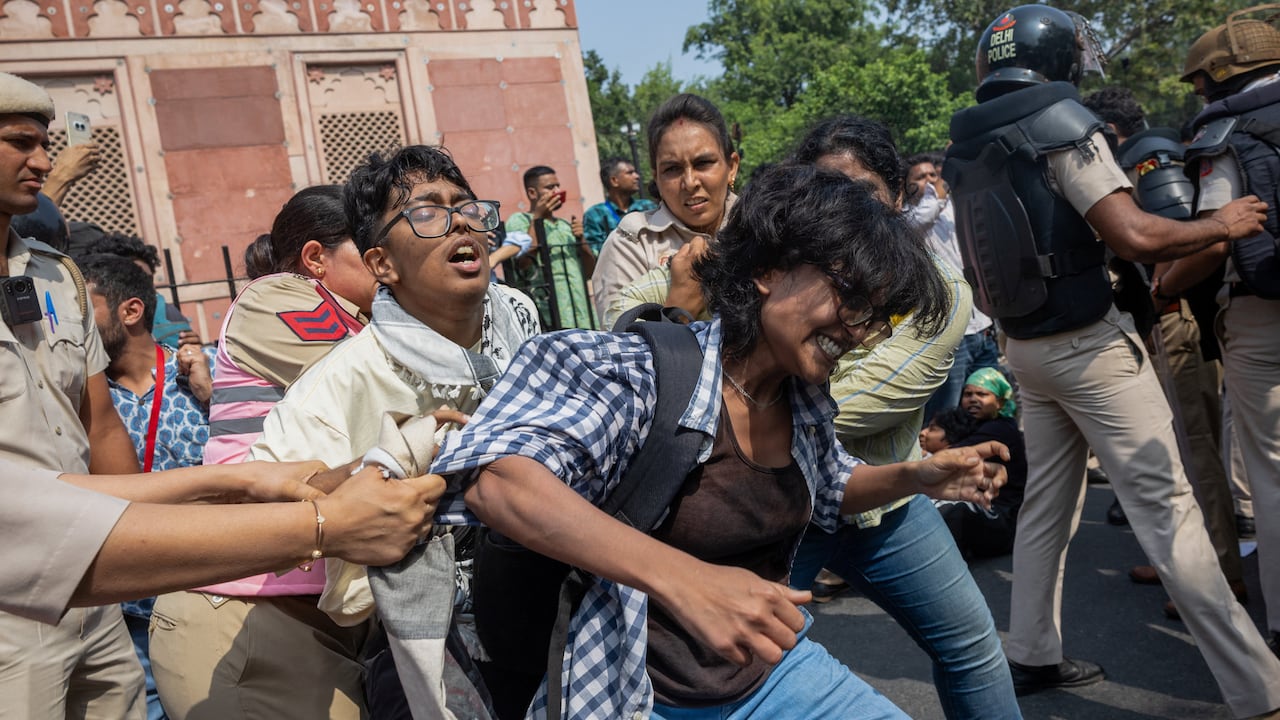
Indian police detained hundreds of protesters and three leaders of the Cockroach Janta Party (CJP), including founder Abhijeet Dipke, ahead of a planned demonstration in New Delhi. Dipke, Saurav Das and Ashutosh Ranka were detained after their flight from Mumbai landed in Delhi. The movement condemned what it called the “authoritarian detention” of its leaders, describing the arrests as a pre-planned effort to disrupt the rally and demanding their immediate release.
The demonstration was intended to demand the resignation of Chief Election Commissioner Gyanesh Kumar and oppose the Election Commission’s Special Intensive Revision of voter lists. Opposition groups say the revision has disenfranchised eligible voters and may benefit Prime Minister Narendra Modi’s ruling Bharatiya Janata Party (BJP); more than 130 million names have reportedly been removed from voter lists. The Election Commission and government reject claims of manipulation, saying the process removes duplicate and ineligible entries.
Authorities deployed thousands of police and paramilitary personnel, sealed the designated rally site at Jantar Mantar, suspended mobile internet in central Delhi, and closed dozens of metro stations and markets. Police stopped vehicles heading toward the area, intercepted protesters and detained some who tried to reach the site. Small demonstrations nevertheless took place elsewhere, with participants calling for Kumar’s resignation. A student who had travelled from Mumbai said peaceful protest was being suppressed by force. Journalists also faced restrictions in some areas, while transport disruption was expected to impede access to the rally.
The demonstration followed several days of protests and growing opposition scrutiny of Modi’s government. Congress leader Rahul Gandhi had recently been briefly detained after criticizing the voter-list revision. The dispute gives the CJP an opportunity to expand its campaign, which gained prominence after protests over exam paper leaks helped force the education minister to resign in July.
Entities: Abhijeet Dipke, Saurav Das, Ashutosh Ranka, Tanya Negi, Gyanesh Kumar • Tone: analytical • Sentiment: neutral • Intent: inform
10-10-2026
India has deployed thousands of police and paramilitary personnel in central Delhi and imposed transport and communications restrictions ahead of a youth-led protest calling for Chief Election Commissioner Gyanesh Kumar to resign. Organised by the Cockroach Janta Party (CJP), the rally is expected to be the largest in a series of near-daily demonstrations over revisions to India’s voter lists. Critics say the changes favour Prime Minister Narendra Modi’s Bharatiya Janata Party (BJP), while organisers describe the rally as a bid to “Save Democracy.”
Police have not authorised the protest at Jantar Mantar, a site commonly designated for demonstrations, citing a late application and alleged breaches of undertakings from earlier protests. Authorities warned of a forceful response if demonstrators violate the ban. Roads near the site were barricaded; 57 metro stations were reportedly shut, some long-distance trains cancelled, and mobile internet suspended within four kilometres of the protest area. India’s Supreme Court said some trains must continue running and questioned whether a blanket metro shutdown was likely.
The CJP said at least 10,000 people, including demonstrators travelling by train, had been detained across the country. Protesters oppose a voter-list revision that has removed more than 130 million names. The Election Commission says the process removes duplicate and ineligible voters and prevents foreign illegal immigrants from voting. Critics say it has disproportionately affected marginalised and minority communities. Allegations intensified after the Indian Express reported that two of Kumar’s deputies had raised concerns about the revisions at least 14 times over 10 months. The Election Commission and BJP deny the allegations, while the BJP accuses the opposition of misleading the public.
The CJP began as online political satire in May, after Chief Justice Surya Kant called unemployed youth “cockroaches.” It has since gained support among young people. Protests in July preceded the resignation of Modi’s education minister over exam paper leaks. The current demonstrations come months before state elections in early 2027, including in Uttar Pradesh, which is governed by the BJP.
Entities: Delhi, India, Jantar Mantar, Gyanesh Kumar, Abhijeet Dipke • Tone: analytical • Sentiment: negative • Intent: inform
10-10-2026
Indian police detained more than 1,000 people in New Delhi as authorities moved to prevent a planned demonstration calling for Chief Election Commissioner Gyanesh Kumar’s resignation. The protest was organized by the satirical Cockroach Janta Party (CJP) and other youth groups, which oppose a revision of voter rolls known as the Special Intensive Revision (SIR). Protesters and opposition parties allege the governing Bharatiya Janata Party (BJP) has used the process to influence election results, accusations the BJP rejects. Security forces sealed the planned protest site at Jantar Mantar, while a broad lockdown included police and paramilitary deployments, cancelled trains, suspended mobile internet, and closed metro stations and markets. CJP founder Abhijeet Dipke and associates Saurav Das and Ashutosh Ranka were detained after arriving in Delhi by plane. Other detainees included activists, journalists, student leaders, lawyers and opposition politicians. Some smaller demonstrations took place elsewhere, but protesters and journalists were also detained. Participants condemned the crackdown as an attack on democratic freedoms and said they intended to keep protesting. Congress president Mallikarjun Kharge criticized Prime Minister Narendra Modi’s government, while Amnesty International and the Committee to Protect Journalists called for detainees’ release and for authorities to protect peaceful assembly and press freedom. The protests have intensified scrutiny of election authorities following allegations that voter-roll revisions affected recent state elections. Political analyst Sanjay Kapoor described the government’s response as fearful and said the BJP was losing credibility ahead of important state elections scheduled to begin in early 2027.
Entities: New Delhi, Cockroach Janta Party (CJP), Special Intensive Revision (SIR), Bharatiya Janata Party (BJP), Gyanesh Kumar • Tone: analytical • Sentiment: negative • Intent: inform
10-10-2026
The article reports that New Delhi police detained dozens of people as protesters tried to assemble for a planned mass anti-government demonstration. Those detained reportedly included leaders of the “Cockroach” party and journalists. The brief report describes a police crackdown ahead of the march, but provides no further details about the arrests, the protesters’ demands, the authorities’ stated reasons for detaining people, or whether the demonstration ultimately took place. The available text also does not identify the party leaders or journalists by name, give an exact number of detainees, or describe any injuries or charges. Its focus is the tension surrounding attempts to gather for an anti-government protest in India’s capital and the detention of people associated with the planned event. The report is dated October 10, 2026. Because the supplied article text is very short, these conclusions are limited to the information it explicitly provides.
Entities: New Delhi, India, New Delhi police, ‘Cockroach’ party, Party leaders • Tone: neutral • Sentiment: negative • Intent: inform
10-10-2026
Hundreds of people were detained in Delhi during a planned protest by the Gen-Z-led Cockroach Janta Party (CJP), which is demanding electoral reforms and the resignation of Chief Election Commissioner Gyanesh Kumar. The group said its founder, Abhijeet Dipke, and two other leaders, Saurav Das and Ashutosh Ranka, were detained aboard a flight from Mumbai shortly after arriving in Delhi. The CJP said they were taken to an undisclosed location; Delhi Police had not commented. Police had refused permission for the demonstration at Jantar Mantar, and extensive security measures—including barricades, road closures and a large deployment of personnel—kept protesters away from the site. Transport disruptions included cancelled trains and closed metro stations. Buses carrying detained protesters were seen leaving the area.
The CJP accuses Kumar of favouring Prime Minister Narendra Modi’s Bharatiya Janata Party (BJP) through the updating of electoral rolls. The Election Commission says the nationwide exercise is routine and intended to remove dead, duplicate or ineligible voters. The commission and the BJP deny the allegations, while people in several states have said they were wrongly removed from voter lists.
Despite the restrictions and arrests, CJP leaders urged supporters to continue. Ajinkya Shinde, acting as the group’s designated leader, told protesters that any place where police stopped them could become their Jantar Mantar. Student activist Neha Bora, also detained, urged demonstrators to “hold the line.” One protester, Sabika Muzaffar, told the BBC she and her mother had memorized their lawyer’s phone number on the way to the demonstration because they expected to be detained. She described protesting as her way of defending the country and its democracy; she was taken away shortly after speaking to the BBC.
The CJP originated after Dipke responded online to Chief Justice Surya Kant’s comparison of some unemployed young people to “cockroaches.” Dipke’s May post asking, “What if all cockroaches come together?” went viral and helped launch the movement. The group previously led demonstrations over education reforms, unemployment, exam paper leaks and government accountability. Its summer protests ended after five weeks with the resignation of Education Minister Dharmendra Pradhan.
Entities: Cockroach Janta Party (CJP), Abhijeet Dipke, Jantar Mantar, Delhi, Delhi Police • Tone: neutral • Sentiment: neutral • Intent: inform
10-10-2026
Delhi is preparing for a major protest on Saturday organized by the Gen Z-led Cockroach Janata Party (CJP), which is demanding electoral reforms and the resignation of Chief Election Commissioner Gyanesh Kumar. The movement alleges that a nationwide revision of voter rolls has removed eligible voters and is being manipulated to benefit Prime Minister Narendra Modi’s Bharatiya Janata Party. The Election Commission says the revision is intended to remove duplicate and ineligible entries; it reports that 130 million names have been removed. The Commission and BJP deny the allegations, and Kumar has not commented on calls for his resignation.
Authorities have refused permission for the protest, citing the short notice, alleged past non-compliance with lawful directions, and concerns about public safety and traffic. More than 30,000 police and paramilitary personnel have been deployed. Roads near Jantar Mantar, the intended protest site, have been barricaded, transport has been disrupted, and several trains and metro stations have been affected. Police say Jantar Mantar can hold only 1,000 people at a time and have urged residents to avoid the demonstrations. CJP founder Abhijeet Dipke says the group will march to the site regardless of the consequences. The CJP disputes that it needs police approval to assemble, saying it only has to notify authorities.
The planned rally follows earlier CJP demonstrations that brought thousands of young people into the streets in July, where clashes with police preceded the education minister’s resignation. The movement has since held rallies in Mumbai and Bengaluru, and its latest protest is backed by opposition parties, farmer organizations and student groups. CJP leaders say authorities are preventing supporters from reaching Delhi. The article also describes a parallel escalation between opposition politicians and the Election Commission, including police breakups of protests led by Rahul Gandhi and viral footage of police forcing him onto a bus. Overall, the story reports a tense standoff over electoral integrity, protest rights and public order.
Entities: Delhi, Jantar Mantar, Cockroach Janata Party (CJP), Abhijeet Dipke, Gyanesh Kumar • Tone: analytical • Sentiment: negative • Intent: inform
10-10-2026
Indian authorities detained thousands of people and imposed extensive security restrictions in New Delhi on Saturday as members of the youth-led Cockroach Janta Party (CJP) sought to protest a disputed revision of voter lists. Police intercepted demonstrators travelling to Jantar Mantar, detained movement leaders and opposition lawmakers, barricaded the protest site, set up checkpoints, restricted mobile internet in parts of the city, and briefly detained some journalists. The CJP said the arrests were intended to cripple a peaceful demonstration. Although some protesters reached the area and chanted against Prime Minister Narendra Modi and election authorities, they were also detained. The government’s BJP spokesperson described the protest as an “anarchic” flop, while a student demonstrator and an opposition lawmaker criticized the suppression of dissent.
The protests concern the Election Commission’s Special Intensive Revision, which has removed more than 130 million names from voter lists. Opposition parties say eligible voters have been disenfranchised and allege that people more likely to support opposition parties were disproportionately affected. They demand the resignation of Chief Election Commissioner Gyanesh Kumar and an end to the revision. The Election Commission and the government deny manipulating voter rolls, arguing that the process removes duplicate and ineligible entries.
The voter-list dispute has given the CJP an opportunity to expand its campaign, which began online in May around alleged exam paper leaks. Earlier demonstrations, sit-ins, and hunger strikes over those allegations culminated in the resignation of Modi’s education minister in July. The latest crackdown has renewed concerns about the space for public protest under Modi, who has been in power for more than 12 years. With national elections not due until 2029, upcoming state elections in Uttar Pradesh and Gujarat will provide nearer-term tests of the BJP’s support; the movement’s wider political impact remains uncertain.
Entities: New Delhi, Cockroach Janta Party (CJP), Narendra Modi, Gyanesh Kumar, Election Commission of India • Tone: analytical • Sentiment: negative • Intent: inform
10-10-2026
Indian authorities mounted a large security operation in New Delhi on Saturday to prevent a planned demonstration by the youth-led “Cockroach” movement, detaining thousands of protesters and arresting movement leaders, student activists and opposition lawmakers before many could reach Jantar Mantar. Police intercepted people traveling toward the protest site, searched vehicles at checkpoints, barricaded the area, deployed anti-riot vehicles and restricted mobile internet and access to parts of the city. Authorities said they had refused permission for the demonstration because organizers applied late; a spokesperson for Prime Minister Narendra Modi’s party called the protesters “anarchic elements.”
The protest was intended to broaden the movement’s campaign to include opposition to the Election Commission’s Special Intensive Revision of voter lists. The revision has removed more than 130 million names. Opposition leaders and protesters say eligible voters have been disenfranchised and are demanding that Chief Election Commissioner Gyanesh Kumar resign and that the changes end. The Election Commission and government deny manipulating voter lists, saying the process removes duplicate and ineligible entries.
The movement began online in May and became prominent through protests over alleged exam paper leaks. Those demonstrations culminated in the resignation of Modi’s education minister in July. The current crackdown drew renewed accusations that the government is restricting dissent, with opposition lawmaker John Brittas describing a “total siege” of the city before he too was detained. Student Tanya Negi questioned why peaceful protest was being suppressed.
The episode highlights growing scrutiny of Modi’s government and the authorities’ approach to public dissent, although its broader political consequences remain uncertain. The protests come midway through Modi’s third term. National elections are not due until 2029, but upcoming state elections in Uttar Pradesh and Gujarat will test the governing BJP’s standing.
Entities: New Delhi, Narendra Modi, Cockroach movement, Jantar Mantar, Delhi Police • Tone: analytical • Sentiment: negative • Intent: inform
10-10-2026
Hundreds of protesters gathered in New Delhi on Saturday despite a major security clampdown, while police detained Abhijeet Dipke, founder of the Cockroach Janta Party and a leader of the so-called “cockroach movement,” along with two other leaders. The group said they were detained before leaving an aircraft after arriving in the capital and taken to an undisclosed location. It also alleged they were being denied access to lawyers and prevented from contacting others; these claims were attributed to the group’s statement.
The protest followed weeks of opposition mobilisation over allegations of misconduct in a nationwide revision of voter rolls by the Election Commission of India (ECI). The movement is demanding the election commissioner’s resignation. Opposition parties and other critics argue that the revision could disenfranchise millions of voters and advantage Prime Minister Narendra Modi’s ruling Bharatiya Janata Party. The ECI rejects allegations of impropriety, saying the process is intended to remove duplicate and ineligible voters.
New Delhi had been under tight security since Friday, with tens of thousands of police and paramilitary personnel deployed to prevent demonstrators from reaching the main protest site in the city centre. Authorities closed dozens of metro stations, cancelled several trains bound for Delhi and temporarily shut down mobile internet around the site. AFP reporters saw police take away dozens of protesters in vehicles after they attempted to march to Jantar Mantar while shouting anti-government slogans. The Hindu reported that as many as 3,000 people had been detained, though the article said that figure could not be immediately verified.
Entities: Abhijeet Dipke, Cockroach Janta Party (CJP), “Cockroach movement”, New Delhi, Jantar Mantar • Tone: neutral • Sentiment: negative • Intent: inform
10-10-2026
France 24 reports that Indian police detained the leader of a satirical online movement known as the “cockroach” movement on Saturday, October 10, 2026. The detention came as hundreds of protesters gathered in New Delhi to demand the resignation of the election commissioner. The demonstration took place despite what the report describes as a heavy security crackdown, and the headline frames the detentions as an effort to thwart an election protest.
The available article text provides only a brief description accompanying a 1-minute, 43-second video. It does not identify the detained leader, explain the movement’s origins or activities, specify the grounds for the detention, or provide details about the election commissioner or the dispute prompting calls for resignation. It also does not describe the size or nature of the security operation beyond characterizing it as heavy. Those details therefore cannot be established from the supplied content.
The report’s central development is the overlap between police action against a movement leader and a planned or ongoing protest in the Indian capital. Its wording presents the protest as a demand for accountability from the election commissioner and suggests that authorities’ actions were intended to prevent the demonstration. The brief account does not include responses from police, government officials, protesters, or the election commission, nor does it say whether the protest continued or resulted in arrests beyond the movement leader’s detention. Overall, the item is a concise news report about political protest, state action, and election-related tensions in India, with further context apparently available only in the video or material not included in the provided text.
Entities: India, New Delhi, Indian police, Election commissioner, Satirical “cockroach” online movement • Tone: neutral • Sentiment: neutral • Intent: inform
10-10-2026
A France 24 video report says Indian police detained the head of the satirical online “cockroach” movement on Saturday, shortly before a major protest against the Election Commission. According to the group, the detained person was Abhijeet Dipke, founder of the Cockroach Party. The report links the detention to the timing of the planned demonstration, which had prompted strict security measures, but does not provide further details about the arrest, the protest’s location, or the authorities’ stated reasons for detaining Dipke.
Before his detention, Dipke named an interim leader in a prerecorded video, apparently arranging for someone else to take over the movement’s leadership. France 24 correspondent Andrew Hilliar comments that the group seemed to have anticipated the possibility of the detention. The item is presented as a short video report, and the supplied text does not identify the interim leader or describe the movement’s specific activities beyond its satirical online character and planned protest against the Election Commission.
Overall, the report focuses on the movement’s leadership change in the lead-up to a major protest and the security response surrounding it. It gives a brief account of the detention and succession announcement, while leaving important context—such as the broader dispute with the Election Commission and the expected scale or outcome of the protest—unspecified. The article’s presentation is primarily factual and concise, without making a detailed argument about the legality or consequences of the detention.
Entities: India, Indian police, Abhijeet Dipke, Andrew Hilliar, France 24 • Tone: analytical • Sentiment: neutral • Intent: inform
10-10-2026
France 24’s video report, issued on October 10, 2026, concerns the detention of Abhijeet Dipke, identified as the head of the satirical Cockroach Janta Party (CJP) movement. Indian police detained Dipke on Saturday, ahead of a major protest against the Election Commission, according to the party. The report highlights the unusual nature of the movement and its planned demonstration through a reaction from Subir Sinha, director of the SOAS South Asia Institute, who describes the situation as “unprecedented.”
The supplied article text provides only a brief description of the video and does not explain why Dipke was detained, what the protest is opposing in detail, or how authorities and other political actors have responded. It also does not provide further remarks from Sinha or background on the Cockroach Janta Party. Accordingly, the report’s central focus, as represented in the available text, is the police detention before the protest and the significance of the episode as characterized by the academic guest. The page lists a related headline about CJP leaders being detained ahead of an election protest, but offers no additional reporting on the events. The article therefore informs readers of a developing political protest story rather than presenting a detailed account of its causes or consequences.
Entities: India, Abhijeet Dipke, Cockroach Janta Party (CJP), Subir Sinha, SOAS South Asia Institute • Tone: analytical • Sentiment: neutral • Intent: inform
10-10-2026
Indian authorities mounted a sweeping security operation in New Delhi on Saturday, detaining thousands of protesters and preventing many from reaching Jantar Mantar, the designated protest site. The demonstrations were organized by the youth-led “Cockroach” movement and focused on a voter-list revision by India’s Election Commission. Police detained movement leaders, student activists and opposition lawmakers, blocked routes into the capital, barricaded the protest site, and imposed restrictions on mobile internet and gatherings. Journalists were also briefly detained or restricted in some areas. Authorities said they had denied permission for the demonstration because its application was submitted late; a spokesperson for Prime Minister Narendra Modi’s party dismissed the protest as an “anarchic” failure.
The voter-list revision, known as the Special Intensive Revision, has removed more than 130 million names. Opposition parties say eligible voters have been disenfranchised, particularly people likely to support opposition parties, and demand the resignation of Chief Election Commissioner Gyanesh Kumar. The Election Commission and government deny manipulating the process, saying it is intended to remove duplicate and ineligible entries.
The dispute has given the “Cockroach” movement a new focus as it expands beyond its origins in protests over alleged exam-paper leaks. Those demonstrations contributed to the resignation of Modi’s education minister in July. The movement’s leaders described Saturday’s arrests as an attempt to cripple peaceful demonstrations, while protesters and opposition figures criticized the police response as an assault on democratic rights and dissent. The government’s actions add to longstanding concerns about restrictions on public protest under Modi. The political effects of the latest demonstrations remain uncertain, but state elections next year in Uttar Pradesh and Gujarat will test the standing of Modi’s Bharatiya Janata Party. National elections are not scheduled until 2029.
Entities: Narendra Modi, Gyanesh Kumar, Abhijeet Dipke, Saurav Das, Ashutosh Ranka • Tone: analytical • Sentiment: negative • Intent: inform
10-10-2026
Protests erupted across New Delhi against a sweeping revision of India’s electoral rolls, which has removed or put at risk an estimated 130 million names from voter lists that previously included about 980 million people. The revision was announced by India’s electoral commission last year as a cleanup intended to remove people who had died, moved, or were otherwise absent. The ruling Bharatiya Janata Party (BJP) also described it as a way to remove people it said were illegal migrants. Critics, including lawyers involved in litigation against the revision, argue that the scale of the removals amounts to unprecedented disenfranchisement and could disproportionately affect Muslims and other groups considered unlikely to support the ruling party.
Authorities imposed extensive measures to contain the demonstrations. Security forces barricaded the designated protest area, shut down internet service in parts of the city, and broadcast warnings that gatherings were prohibited. Protesters, many of them young, assembled at changing locations as police detained demonstrators. The Indian Express reported that around 6,000 people were detained. Those taken into custody reportedly included protest leaders detained after arriving by plane, lawyers, and journalists. Some detainees were held at a sports stadium being used as a makeshift detention site. Demonstrators later gathered on a bridge and chanted slogans, including “Delhi belongs to us all.”
The electoral commission said its actions were legal and asked local officials to review cases in which voters may have been wrongly deleted. The prime minister had not publicly commented at the time of the report. Protesters accused him of hiding behind the police and called for the chief election commissioner to resign. The report documents both the government’s stated rationale for revising the rolls and opponents’ concerns about disenfranchisement, while describing the large-scale police response to the protests.
Entities: New Delhi, India, Diaa Hadid, Joel Rose, Kaustubh Chaturvedi • Tone: analytical • Sentiment: negative • Intent: inform
10-10-2026
France 24 reports that Indian police detained the head of a satirical online movement known as the “cockroach” movement on Saturday, ahead of a major protest directed at the Election Commission. The group said its leader had been detained. The planned protest prompted strict security measures, according to the report. The video report is presented by France 24 correspondent Navodita Kumari, who is identified as reporting further on the situation.
The article’s central focus is the detention and the security response in the run-up to the protest. It does not provide the detained leader’s name, the location of the detention, the specific grounds for police action, or details about the Election Commission dispute. Nor does the supplied text describe the size or outcome of the protest, or include comments from police or election officials. The headline characterizes the movement’s leaders as “cockroach” leaders, while the brief report identifies the group as satirical; the excerpt does not explain the movement’s origins or aims.
The material provided is a short video-news description rather than a full transcript. Accordingly, the summary is limited to the facts stated in that description and does not infer why the detention occurred or what the protest concerned beyond opposition to the Election Commission. Overall, the item informs viewers of a detention and heightened security before a politically focused protest, without offering enough detail to assess the broader circumstances.
Entities: India, Indian police, Election Commission, satirical “cockroach” online movement, head of the online movement • Tone: neutral • Sentiment: neutral • Intent: inform
10-10-2026
France 24 reports that Indian police detained more than 2,000 protesters and the founder of the youth movement known as the “cockroach” movement in Delhi on Saturday, October 10, 2026. Security forces also locked down parts of the capital in an effort to prevent a rally calling for India’s election chief to resign. The report identifies the protest’s demand and describes the authorities’ actions, but the supplied article text does not explain the specific allegations against the election chief, provide the protesters’ account, or give details about the detained people and the movement’s founder. It also does not state how long the lockdown lasted or whether the planned rally ultimately took place. France 24 correspondent Navodita Kumari provides further reporting in the video, but no additional transcript or details from her account are included in the supplied text. The central events presented are the large number of detentions, the detention of a movement leader, and the security restrictions imposed in Delhi ahead of a political protest. The article’s brief description frames these measures as an attempt to thwart the rally. It offers a concise report of the confrontation between protesters seeking the election chief’s resignation and authorities seeking to prevent the demonstration, without supplying broader context or commentary.
Entities: India, Delhi, Indian police, Security forces, More than 2,000 protesters • Tone: neutral • Sentiment: negative • Intent: inform