25-10-2026
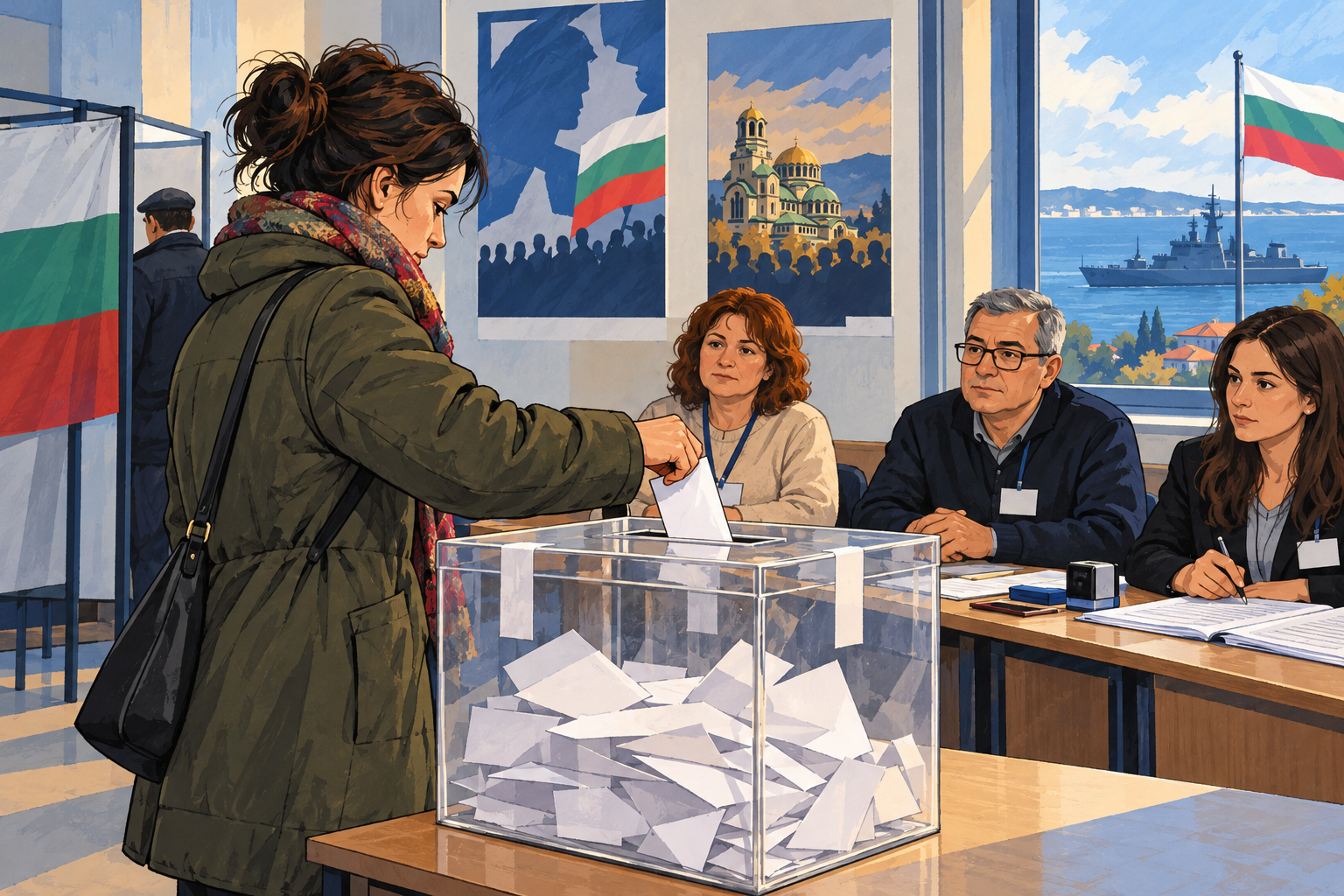
Bulgarians voted in a presidential election shaped by economic hardship, uncertainty over Russia’s war on Ukraine, and drone attacks on merchant ships in the Black Sea. Incumbent Iliana Iotova and former caretaker Prime Minister Andrey Gyurov led a field of 27 candidates ahead of the vote. Although Bulgaria’s presidency is largely ceremonial, the president can lead the armed forces, veto legislation, sign treaties and appoint ambassadors, giving the directly elected office meaningful political influence.
The attacks on ships off Bulgaria’s coast likely killed around two dozen international seafarers. They raised concerns about the war’s growing reach and led Bulgaria to seek allied help to strengthen maritime security. The government has not directly blamed Russia, though Prime Minister Rumen Radev said Russia benefits from the strikes.
The leading candidates have condemned the attacks but differ over Ukraine. Gyurov, backed by pro-Western reformist parties, supports Ukraine and signed a security cooperation agreement with Kyiv while serving as premier. Iotova, backed by Radev, calls for a diplomatic end to the war and argues that Bulgarians are exhausted by it. Analysts say she favors a more neutral stance, including ending aid and arms deliveries to Ukraine; critics characterize such language as echoing Kremlin rhetoric.
The campaign also addressed rising energy prices and inflation, which are straining households, especially in rural areas. Alpha Research polling put Iotova at 41 percent and Gyurov at 28 percent. Analysts expected no candidate to win an outright majority in the first round. With turnout forecast below 40 percent—short of the 50 percent threshold among 6.6 million registered voters—a runoff on November 1 was considered likely.
Entities: Bulgaria, Iliana Iotova, Andrey Gyurov, Rumen Radev, Dobromir Zhivkov • Tone: analytical • Sentiment: neutral • Intent: inform
25-10-2026
Bulgarians are voting in a presidential election shaped by disagreements over Russia’s war in Ukraine and the country’s relationship with Moscow. The conflict has become more immediate for Bulgaria after drone attacks reportedly hit merchant ships in the Black Sea off its coast. The attacks have prompted calls for stronger maritime security and assistance from Bulgaria’s allies, while incidents involving Starlink antennas near Sofia have added to concerns about the conflict’s spillover.
Incumbent President Iliana Iotova is the frontrunner, with polls putting her support at 41–47%. She favors dialogue with Moscow as a route to peace and opposes military aid to Kyiv. Her election would make her Bulgaria’s first elected female president and would bolster former prime minister Rumen Radev, who shares her emphasis on dialogue. Andrey Gyurov, a former caretaker prime minister backed by the pro-Western opposition, is polling at 28–31%. He supports Bulgaria’s Euro-Atlantic ties and signed a security cooperation agreement with Kyiv while in office. Kostadin Kostadinov, leader of the far-right Vazrazhdane party, is polling third at 10–13%. In total, 27 presidential and vice-presidential candidate pairs are competing, nearly half described as openly pro-Kremlin.
The presidency is largely ceremonial but carries significant powers, including appointing interim governments during political crises, serving as commander-in-chief, and vetoing legislation. Low turnout was reported at 15.1% by mid-afternoon. A candidate needs more than half of valid votes to win outright, with more than half of eligible voters participating; otherwise, the two leading candidates will face a runoff on November 1.
The election also reflects economic and domestic concerns. Rising energy prices and inflation are straining households in the EU’s poorest member state. Voters are also concerned about persistent government corruption and political instability following repeated elections and coalition breakdowns. Although Bulgarian authorities have not directly blamed Moscow for the recent incidents, the attacks have intensified concern about Russia’s intentions.
Entities: Iliana Iotova, Rumen Radev, Andrey Gyurov, Kostadin Kostadinov, Bulgaria • Tone: analytical • Sentiment: neutral • Intent: inform
25-10-2026
Bulgarians are voting for president in an election shaped by the war in Ukraine, security concerns in the Black Sea, and economic pressures including rising energy prices and inflation. The vote is also the first major test of Prime Minister Rumen Radev’s Progressive Bulgaria party since its victory in parliamentary elections the previous April.
Although a record 27 candidates are running, the article expects the contest to lead to a runoff between incumbent President Iliana Yotova and former caretaker Prime Minister Andrey Gyurov. Yotova, backed by Radev’s party, favors dialogue with Moscow and opposes military aid to Ukraine. Polling puts her at 41%–47%. Gyurov, supported by pro-Western opposition parties and a strong supporter of Ukraine, is polling at 28%–31%. Kostadin Kostadinov, leader of the pro-Russian far-right Vazrazhdane party, is in third place with 10%–13%.
Recent drone attacks on commercial vessels off Bulgaria’s Black Sea coast have heightened security concerns in the EU and NATO member country. The strikes have raised questions about Russia’s intentions and prompted the government to seek help from partners to strengthen maritime security. Meanwhile, many families—particularly in rural areas—are struggling with higher energy costs and inflation.
Yotova became president after Radev stepped down to enter parliamentary politics. If elected, she would become Bulgaria’s first woman president. A former journalist and European Parliament member, she served as vice-president alongside Radev after their elections in 2016 and 2021. Gyurov is an economist and former deputy governor of Bulgaria’s central bank. As caretaker prime minister, he signed a security cooperation agreement with Kyiv.
Polling stations are due to close at 8 p.m. local time, with exit polls expected afterward and preliminary results on Monday. Because turnout is projected to be below 40%, short of the 50% threshold, the article anticipates a runoff on 1 November.
Entities: Bulgaria, Iliana Yotova, Andrey Gyurov, Rumen Radev, Kostadin Kostadinov • Tone: analytical • Sentiment: negative • Intent: inform
25-10-2026
Bulgarians are voting in a presidential election amid heightened concern that Russia’s war in Ukraine is affecting security in the Black Sea. The contest features 27 candidates, with acting President Iliana Iotova and former caretaker prime minister Andrey Gyurov leading in polls. Although Bulgaria’s presidency is largely ceremonial, the election has acquired added importance following drone attacks on merchant ships off the country’s Black Sea coast. The attacks likely killed about two dozen international seafarers, drew international condemnation and raised concerns about the war’s expanding reach. Bulgaria has sought allied help to strengthen maritime security but has not directly accused Russia of carrying out the strikes. Prime Minister Rumen Radev said their outcome “benefits the Russian Federation.”
Both leading candidates condemned the attacks, but they differ in their positions on the wider war. Gyurov is backed by pro-Western, reformist parties and has expressed support for Ukraine. As caretaker prime minister, he signed a security cooperation agreement with Kyiv. He has called for Bulgaria to be a reliable NATO ally with a distinct voice in Europe, emphasizing preparedness and diplomacy. Iotova, a former vice president who became acting president in January after Radev resigned to run in parliamentary elections, is supported by Radev. Both favor a diplomatic end to the war. Iotova’s election would make her Bulgaria’s first elected female president. At a rally, she criticized the idea of a war of attrition and said Bulgarians were exhausted.
Alpha Research polling puts Iotova at 41 percent and Gyurov at 28 percent. If no candidate receives a majority, a runoff is scheduled for November 1. Polling stations open at 7 a.m. and close at 8 p.m.
Entities: Bulgaria, Sofia, Iliana Iotova, Andrey Gyurov, Rumen Radev • Tone: analytical • Sentiment: neutral • Intent: inform