26-10-2026
Thousands of Israeli citizens living overseas are travelling to Israel to vote in an election widely viewed as a referendum on Prime Minister Benjamin Netanyahu’s leadership and his government’s handling of Hamas’s October 7, 2023 attacks. Because most overseas citizens cannot vote abroad, political activists have organised efforts to bring voters home. The US-based AID Coalition estimates that as many as 67,000 expatriates may return through its Fly&Vote initiative, with around half coming from the United States and others from Europe, Canada, Australia and New Zealand. Some estimates suggest 500 to 1,000 voters could travel from Australia.
The article follows two Australian-based Israeli citizens making the trip. Anat Dror, who has lived in Melbourne for nearly five years and recently became an Australian citizen, says voting is essential despite the expense, missed work and separation from her children. She believes Netanyahu’s government should leave office, but is wary of endorsing an individual opposition candidate, saying she is counting on the anti-Netanyahu “change bloc” to form a coalition. Dror also describes Israel as still traumatised by the October 7 attacks and points to earlier challenges, including the cost of living.
Guy Marom, who moved with his family to Australia during the COVID-19 pandemic, is also undecided between candidates but says he will vote for one of the change parties. He views Netanyahu as contributing to divisions within Israeli society, though not necessarily as their sole cause.
Recent Israeli television polling placed Gadi Eisenkot’s newly established Yashar party a few seats ahead of Netanyahu’s Likud. Neither party is expected to govern alone: both would need coalition negotiations to secure the 61 seats required for a parliamentary majority. The article also notes that Likud tried to block Fly&Vote through an appeal to the elections committee, then withdrew it after reaching an agreement with the coalition.
Entities: Benjamin Netanyahu, Gadi Eisenkot, Anat Dror, Guy Marom, Israel • Tone: analytical • Sentiment: neutral • Intent: inform
26-10-2026
Israelis are set to vote in the country’s first national election since Hamas’s October 7, 2023, attack. The campaign has focused on Prime Minister Benjamin Netanyahu’s leadership, security failures surrounding the attack, the wars that followed, and domestic issues including living costs, military-service exemptions for ultra-Orthodox Jews, and a judicial overhaul criticized as weakening democratic institutions. The article describes the election as a referendum on Netanyahu, while noting that the conduct of the war in Gaza and Israeli military operations elsewhere have received relatively little campaign debate. Both major political blocs broadly support West Bank settlements and oppose a Palestinian state.
Centrist challenger Gadi Eisenkot has presented himself as an alternative who could help bridge divisions. A former military chief of staff, he has promised an investigation into the October 7 failures and efforts to restore Israel’s standing with international allies. He resigned from Netanyahu’s war cabinet after eight months, accusing the prime minister of lacking a clear strategy. Eisenkot is also associated with the “Dahiyeh Doctrine,” a strategy calling for disproportionate force in areas used by militants to launch attacks. If he forms a coalition, he could become Israel’s first prime minister of Mizrahi descent. His son and two nephews were killed in combat in Gaza after the attacks.
Voters quoted in the article express competing priorities: some back Eisenkot in the hope of national unity, while others believe Netanyahu is best equipped to address security threats. Another voter calls for a new generation of leaders and greater equality. The election will decide the makeup of the 120-seat Knesset; a party or bloc needs at least 61 seats to form a governing coalition.
Entities: Benjamin Netanyahu, Gadi Eisenkot, Shimon Elmaliah, Refael Ohayon, Gitti Amrani • Tone: analytical • Sentiment: neutral • Intent: inform
26-10-2026
Israel’s legislative election, scheduled for Tuesday, is the country’s first since the Hamas-led October 7, 2023 attacks and the ensuing war in Gaza. The result will shape government policy amid prolonged conflicts, international criticism and sharp domestic divisions. Two broad blocs are competing: Prime Minister Benjamin Netanyahu’s Likud-led coalition, which includes far-right and ultra-Orthodox parties, and a four-party opposition grouping led by former military officials and politicians including Naftali Bennett and Yair Lapid. Final pre-election polling suggested neither bloc would reach the 61 seats needed for a majority, while both have ruled out partnering with Arab-led parties. That leaves the possibility of difficult coalition negotiations, a minority government or another election.
Voters are weighing security failures preceding the 2023 attacks, exemptions from military service for ultra-Orthodox Israelis, judicial reforms, economic and security concerns, and how to handle military conflicts in Gaza, the occupied West Bank and Lebanon. The election also matters because of rising far-right attitudes and worsening relations with other countries, including criticism of Israel’s actions and sanctions on settlements. The result may indicate whether the next government continues Netanyahu’s approach or tries to repair international ties.
Netanyahu’s political future is at stake. He faces scrutiny over the security failures, a corruption trial underway since 2019 and an International Criminal Court arrest warrant for alleged war crimes. Defeat could leave him more exposed in court and affect prospects for an inquiry into the October 2023 attacks.
About 1.2 million Palestinian citizens of Israel are eligible to vote, while millions of Palestinians in Gaza, the West Bank and East Jerusalem cannot vote in the Israeli election despite being subject to Israeli control over key aspects of their lives. Higher Arab voter turnout could translate into more Knesset seats and influence the balance of power. The article notes that Israel’s top court overturned a decision barring the Joint List and Ra’am, although Balad leader Sami Abu Shehadeh was required to withdraw. The supplied article ends mid-sentence while introducing a comment from former aide Joseph Mansour.
Entities: Benjamin Netanyahu, Stephen Quillen, Israel, Gaza Strip, Hamas-led October 7, 2023 attacks • Tone: analytical • Sentiment: neutral • Intent: inform
26-10-2026
The article is a brief news video introduction about the Israeli candidates seeking to defeat Prime Minister Benjamin Netanyahu in an election. It says that Israelis are due to vote on Tuesday and that several candidates are hoping to unseat Netanyahu, whom it identifies as the incumbent prime minister. The item promises to identify the election’s frontrunners, but the text provided here does not name any candidates, describe their platforms, report polling figures, or provide details about the election. It therefore offers a topic and a basic piece of context rather than a substantive account of the candidates or the campaign. The supplied page text also includes publication information—October 26, 2026—and website actions such as saving or sharing the item and adding Al Jazeera on Google; these are not part of the article’s reporting. Because the source content is so limited, no further claims about the candidates, political parties, or likely election outcome can be supported. The central focus is the contest to replace Netanyahu, framed around the approaching vote and the candidates described as frontrunners.
Entities: Benjamin Netanyahu, Israel, Israeli candidates, Israeli voters, Al Jazeera • Tone: neutral • Sentiment: neutral • Intent: inform
26-10-2026
Israel’s 2026 election is the first since the Hamas attacks of Oct. 7, 2023, and the start of the U.S.-Israeli war with Iran in February. The vote is widely viewed as a referendum on Prime Minister Benjamin Netanyahu, whose Likud-led coalition has faced disputes over Gaza policy and the conscription of ultra-Orthodox men. The attacks killed around 1,200 people and led to more than 250 people being abducted; the Palestinian Ministry of Health says Israel’s subsequent campaign in Gaza has killed more than 74,500 people.
Israel’s proportional representation system makes coalition-building central. Polls indicate that neither Netanyahu’s bloc nor the main opposition bloc, led by former military chief Gadi Eisenkot, is on course to secure the 61 seats required for a Knesset majority. Smaller parties may therefore determine who forms the next government. Arab parties are also competing, although most major Jewish parties have ruled out forming alliances with them.
Security and the wars in Gaza and Iran are prominent campaign issues, alongside military-service obligations and the economic consequences of prolonged conflict. Expert László Csicsmann says voters are likely to favor the side they believe can better protect the population. Military spending is around 8% of Israel’s GDP, and widespread call-ups have also left many families dealing with months away from work.
Analyst Daniel Schatz describes the election as a decision about restoring confidence in government and converting military power into lasting security. Netanyahu’s supporters regard him as experienced in confronting threats, while critics cite failures of preparedness, accountability and strategic direction. Allegations that Netanyahu was warned of a possible Hamas offensive before Oct. 7 have been denied by him. Schatz cautions that dissatisfaction with Netanyahu does not necessarily represent support for the political left. A change of government, he adds, may not dramatically alter Israel’s positions on Palestinian statehood, Iran or other foreign-policy questions. Likud emphasizes security and economic priorities; Eisenkot’s Yashar party describes its aims as democratic, powerful, progressive and secure, with attention to integrating ultra-Orthodox and Arab communities.
Entities: Benjamin Netanyahu, Gadi Eisenkot, László Csicsmann, Daniel Schatz, Israel • Tone: analytical • Sentiment: neutral • Intent: analyze
26-10-2026
Israel’s national election is expected to be extremely close, prompting an estimated 80,000 Israelis living abroad to return home to vote. Because Israel generally does not permit citizens to vote from overseas—with an exception for diplomatic personnel—the travelers must cast their ballots in the country. Political scientist Yael Shomer said that, although the returning voters are not a large share of the electorate, they could matter in a tight result. Israel has about 7.3 million eligible voters.
The contest is the country’s first election since 2022. Prime Minister Benjamin Netanyahu, leader of Likud, faces Gadi Eisenkot, a former Israel Defense Forces chief of staff who leads the Yashar party. Both are likely to need support from coalition partners, and experts say the election could result in an unprecedented minority government. The campaign has been shaped by security concerns amid the Iran war, disagreements over exemptions from military service for some ultra-Orthodox men, and Netanyahu’s proposed changes that would increase the governing coalition’s influence over the judiciary.
Turnout could be unusually high. It was just over 70% in 2022, but pollsters believe it could reach 87% this time. Foreign-service workers voting at embassies and consulates recorded 90% turnout, compared with a typical level of around 70%.
Fly & Vote, organized by the America-Israel Democracy Coalition, has helped Israelis abroad arrange travel. The group chartered a flight from Portugal and bought blocks of tickets from the New York area, while requiring travelers to pay for their own seats. Its co-founder said the organization does not take a political position or advise people how to vote. Other options include commercial flights from Israeli, U.S. and European airlines; some El Al seats from New York-area airports were priced at $1,300 to $2,500. The election follows years of political instability, including five elections from 2019 to 2022, and could shape Israel’s political, security and economic direction while underscoring the country’s divisions.
Entities: Israel, Israeli national election, Benjamin Netanyahu, Likud, Gadi Eisenkot • Tone: analytical • Sentiment: neutral • Intent: inform
26-10-2026
Israel’s upcoming parliamentary election is being shaped by a central question: whether Benjamin Netanyahu should remain prime minister. Former Israeli government spokesperson Eylon Levy told Euronews that the “yes Bibi or no Bibi” divide has dominated politics for years and has made cooperation among parties increasingly difficult. Netanyahu’s long tenure, questions about responsibility for the security failures preceding the Hamas-led attacks of 7 October 2023, and his ongoing criminal trial all contribute to the political divide. Levy expects Netanyahu’s eventual departure to realign Israeli politics, though he says the current battle lines remain centered on his leadership.
The election is Israel’s first since the 7 October attacks and takes place amid calls for a state commission of inquiry into the failures that allowed the assault. Levy identifies accountability for the attacks, the future of Hamas’s rule in Gaza, and the social and economic costs of three years of war as major campaign issues. Public anger over the unresolved question of Hamas’s future has made lasting security a key point of competition between parties.
The article also addresses the possibility of renewed conflict with Iran. Levy predicts that hostilities could resume after the US midterm elections on 3 November, describing the standoff with Tehran as unsustainable and citing tensions around the Strait of Hormuz and Iranian military activity in the region. He says Donald Trump has signalled reluctance to restart the war before the midterms, partly because of possible effects on oil prices. Levy believes Netanyahu would seek a more decisive result in any future confrontation, potentially including the removal of Iran’s leadership. More broadly, he argues that Netanyahu’s eventual exit could make cross-party cooperation possible and reshape Israeli politics.
Entities: Benjamin Netanyahu, Eylon Levy, Israel, Israeli parliamentary election, Hamas • Tone: analytical • Sentiment: neutral • Intent: inform
26-10-2026
Former Israeli Prime Minister Naftali Bennett is seeking a political comeback, campaigning on a vision of expanding the Abraham Accords, increasing economic cooperation with Arab nations, and repairing Israel’s strained international relationships, especially with the United States. Bennett’s American family background and experience as a technology entrepreneur, he argues, give him a personal connection to the U.S. and a practical, results-focused approach that could help him work with President Donald Trump. His campaign says a Bennett-led government would revive the Negev Forum and advance regional security and stability.
Bennett’s plans overlap with Trump’s interest in expanding the Abraham Accords, but Trump has endorsed current Prime Minister Benjamin Netanyahu for re-election. Bennett also faces a competitive domestic race. His joint Beyachad (Together) party with former Prime Minister Yair Lapid trails Netanyahu’s Likud and Gadi Eisenkot’s Yashar party in a Channel 12 poll cited by the article. The poll projected 23 seats for Eisenkot, 21 for Netanyahu and 15 for Bennett and Lapid. Still, Israel’s parliamentary system makes coalition-building crucial: Bennett became prime minister in 2021 even though his Yamina party won only seven of the Knesset’s 120 seats.
The article recounts Bennett’s path from military service and cybersecurity entrepreneurship to senior political roles. Born in Haifa to American immigrants, he served in elite Israeli military units, co-founded Cyota, and later held several ministerial posts. A religious Zionist and opponent of Palestinian statehood, he surprised the political establishment in 2021 by assembling a coalition that included right-wing, centrist, left-wing and Arab parties, ending Netanyahu’s 12 consecutive years in power. That coalition collapsed in 2022. The supplied article ends mid-sentence while describing the reaction of some of Bennett’s former supporters.
Entities: Naftali Bennett, Benjamin Netanyahu, Yair Lapid, Gadi Eisenkot, Donald Trump • Tone: analytical • Sentiment: neutral • Intent: analyze
26-10-2026
Ahead of Israel’s October 27 national election, President Donald Trump has endorsed Prime Minister Benjamin Netanyahu, describing him as a strong partner and ally in confronting Iran. Netanyahu thanked Trump and reiterated his pledge to prevent Iran from obtaining nuclear weapons. The vote is framed as a referendum on whether Netanyahu should receive another term to pursue his security goals, including disarming Hamas and Hezbollah and countering Iran’s nuclear program. The election is Israel’s first national vote since the Hamas-led October 7, 2023, massacre.
An official from Netanyahu’s office called the Trump-Netanyahu relationship unmatched in the history of U.S.-Israel relations. He said Israel would prefer to act alongside the United States against Iran, but pointed to Israel’s June 2025 Operation Rising Lion as evidence that it is prepared to act independently. The article also reviews Netanyahu’s long political career, including his diplomatic service in Washington and at the United Nations, his leadership of Likud, and his periods as prime minister. It credits him with economic liberalization and helping establish Israel as a global technology hub.
Netanyahu’s governing bloc includes parties led by Itamar Ben-Gvir and Bezalel Smotrich, as well as the ultra-Orthodox Shas and United Torah Judaism. A newer party led by Ofer Winter may also join, though its proximity to the electoral threshold has prompted concern that it could divide right-wing voters. Polls cited in the article show neither Netanyahu’s bloc nor the opposition led by former army chief Gadi Eisenkot has a clear route to the 61 Knesset seats needed to form a government. Failure to form a coalition could lead to another election, echoing the political instability of 2019–2021. A security analyst says the next government will inherit serious challenges without an obvious prospect of quick victories.
Entities: Benjamin Netanyahu, Donald Trump, Gadi Eisenkot, Doron Spielman, Dan Diker • Tone: analytical • Sentiment: neutral • Intent: inform
26-10-2026
France 24 reports that Israelis are preparing to vote on Tuesday, October 27, in the country’s first national elections since the October 7, 2023 attacks. The election is widely viewed as a referendum on Prime Minister Benjamin Netanyahu’s leadership, making the vote a public assessment of his performance and direction for the country. The article also highlights the participation of Israeli citizens living abroad: because expatriates are unable to vote from overseas, some have flown back to Israel to cast their ballots. The report offers no polling figures, party breakdowns, or detailed discussion of the campaign’s policy issues, so its focus is on the election’s timing, its symbolic significance, and the effort by overseas citizens to take part. The accompanying France 24 video is titled “Israel braces for national elections seen as a referendum on Netanyahu.” Related links on the page point to other election coverage, including the possible role of Arab Israeli voters and Arab parties, the main issues in the campaign, demonstrations against the government, and reports concerning the Israeli military and the West Bank. These related items are not developed in the article text itself. Overall, the brief report frames the election as a consequential political test for Netanyahu, held in the aftermath of the 2023 attacks, while emphasizing that some citizens abroad are returning to participate in the vote.
Entities: Israel, Israeli national elections, Benjamin Netanyahu, October 7 attacks, October 27 vote • Tone: analytical • Sentiment: neutral • Intent: inform
26-10-2026
France 24 reports that tens of thousands of Israelis who live abroad are expected to travel to Israel to vote in the country’s national election on Tuesday, October 27, 2026. Because expatriate citizens are unable to cast their ballots from abroad, those who wish to participate must return to Israel in person. The report describes voters arriving from different parts of the world ahead of the election, which the article characterizes as pivotal. France 24 journalist Noga Tarnopolsky met some of the returning citizens at the airport and reported on their journeys and plans to vote.
The short article is a preview of the election-day vote and focuses specifically on the practical effort required for Israelis living overseas to take part. It does not provide estimates beyond describing the number as “tens of thousands,” identify the countries from which the travelers are arriving, or give details about the people interviewed or their political preferences. Nor does the supplied text explain the election’s issues or predict its result. Related links on the page connect the vote with Benjamin Netanyahu and describe it as a possible referendum on his leadership, but those are separate headlines rather than details developed in this report.
The central point is that the inability to vote from abroad has prompted a substantial number of expatriate Israelis to fly home to participate. The item is presented as a brief video report, credited to Noga Tarnopolsky, and dated October 26, 2026, the day before the scheduled vote. Its focus is on voter travel and participation, not on advocating for a candidate or interpreting the likely outcome.
Entities: Israel, Israeli expatriates, Benjamin Netanyahu, Noga Tarnopolsky, FRANCE 24 • Tone: neutral • Sentiment: neutral • Intent: inform
26-10-2026
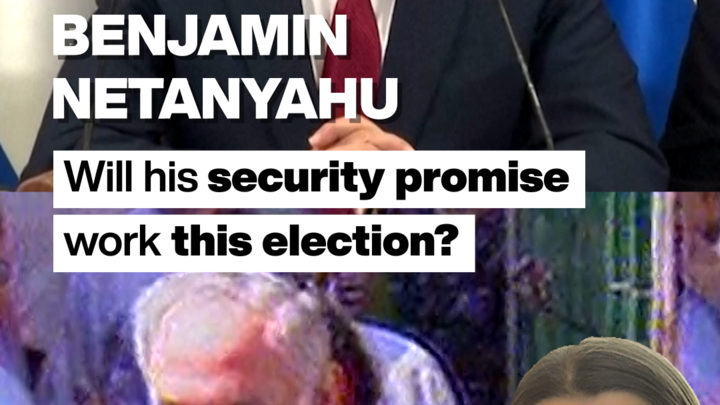
The France 24 video report examines whether Benjamin Netanyahu’s longstanding campaign message—that he alone can keep Israel safe—will persuade voters in the upcoming Israeli election. Netanyahu is described as Israel’s longest-serving prime minister, and security has been a central promise throughout his political career. The election is presented as particularly consequential because it is the first since the Hamas attacks of October 7 and the beginning of the war in Gaza. Those events form the backdrop against which voters may judge Netanyahu’s record and his claim to be the country’s most reliable security leader. The report suggests that this familiar strategy may be less effective than before, rather than assuming it will secure him victory. France 24 correspondent Gabrielle Nadler explains the question at the heart of the report: whether Netanyahu’s security promise can still win him the election. The supplied article text does not provide polling, voter interviews, or a definitive answer, so the piece’s stated focus is the potential limits of Netanyahu’s appeal in this election.
Entities: Benjamin Netanyahu, Gabrielle Nadler, France 24, Israel, Israeli election • Tone: analytical • Sentiment: neutral • Intent: analyze
26-10-2026
The article examines how Israel’s election, scheduled for Tuesday, could determine both Benjamin Netanyahu’s political future and his historical legacy. After Hamas-led militants attacked Israel on October 7, 2023, killing about 1,200 people and taking 251 hostages, Netanyahu appeared likely to lose power amid public grief and anger over what the article describes as the country’s deadliest security breakdown. Instead, the veteran prime minister has remained a central force through years of domestic crises and regional wars, and now faces a close reelection contest.
The vote is presented as a referendum on Netanyahu’s leadership. His opponents, led by former military chief Gadi Eisenkot, argue that he must answer for the failures surrounding October 7 and for not translating military gains into diplomatic outcomes. Eisenkot warns that Netanyahu’s approach amounts to choosing prolonged war. Netanyahu’s supporters counter that the defense establishment betrayed him and credit him with a turnaround marked by devastating strikes against Hamas, Hezbollah in Lebanon, and Iran.
Netanyahu’s campaign invokes security fears with the slogan “Right or Palestine,” implying that his rivals would create a Palestinian state—an outcome they reject. The article notes that a two-state solution remains widely viewed internationally as the only realistic path to resolving the conflict, yet is politically toxic in Israel, a condition it describes as part of Netanyahu’s legacy.
Former Prime Minister Ehud Olmert says the election carries unusually high stakes, including national security, democratic institutions, and Israel’s international standing. The story portrays the contest as consequential beyond Netanyahu’s career: a defeat could usher in a new political era, while victory would reinforce his image as a political survivor. The supplied article text ends partway through a sentence about the October 7 attack and its continuing impact on voters.
Entities: Benjamin Netanyahu, Gadi Eisenkot, Ehud Olmert, Israel, Hamas • Tone: analytical • Sentiment: neutral • Intent: analyze
26-10-2026
Thousands of Americans who have moved to Israel amid rising antisemitism in the United States may influence the country’s national election, with many reportedly leaning toward Prime Minister Benjamin Netanyahu. About 3,500 Americans have made aliyah in each of the past two years, following the Oct. 7, 2023 attacks, the Gaza war, and anti-Israel protests in the US. Marc Zell, chairman of Republicans Overseas Israel, estimates there are 500,000 American Israelis, including roughly 200,000 from New York City, and says most favor Netanyahu and right-wing politics.
The election centers in part on whether voters hold Netanyahu responsible for the security failures preceding Oct. 7 or see him as the strongest leader during a multi-front war. Zell supports Netanyahu but says responsibility for the attacks is shared. He favors an independent commission to investigate, though he believes the inquiry should follow the war and argues that countering Iran is an urgent priority. Netanyahu has not endorsed an independent state inquiry.
Heather Stone, vice chair of American Democrats in Israel, says American-Israelis also support opposition parties. Many opposition voters favor an immediate Oct. 7 inquiry and requiring ultra-Orthodox Haredi men to serve in the military, a policy Netanyahu’s coalition partners have resisted. Polls show Netanyahu’s alliance trailing the center-right bloc led by former military chief Gadi Eisenkot, though neither side is projected to win the 61 seats needed to govern alone.
Because most Israelis must vote in person, large numbers of expatriates are traveling back; AID Coalition says it arranged flights for 67,000 voters, about half from the US. Views among American-Israelis vary: some say Netanyahu is best placed to lead internationally, while others criticize his failure to accept responsibility or fear Israel is changing. Security dominates the campaign, while everyday economic concerns such as fuel and food prices are less central.
Entities: Benjamin Netanyahu, Gadi Eisenkot, Marc Zell, Heather Stone, American Israelis • Tone: analytical • Sentiment: neutral • Intent: inform
26-10-2026
The article compares Israeli Prime Minister Benjamin Netanyahu’s and opposition leader Gadi Eisenkot’s approaches to ending the Iran war, as voters prepare to choose Israel’s next leader. Eisenkot supports economic pressure on Iran and strikes against its nuclear program, but opposes a return to an all-out war. He argues that regime change is not achievable and that a combination of military action and diplomacy is more realistic. He also says President Donald Trump’s economic pressure may make Iran’s ruling leaders feel defeated more effectively than a renewed military campaign.
Netanyahu, by contrast, argues that Israel must bring down Iran’s current regime to protect the country. He has called for all-out war and urged Iranians to overthrow their government. The article reports, citing CNN and an Israeli source, that Netanyahu sought Trump’s approval for a joint US-Israeli attack before the election; Netanyahu’s office rejected that report as “fake news.” Critics have also accused Netanyahu of seeking to restart the war to delay the election amid a close contest with Eisenkot’s coalition.
The rivals also differ over Israel’s reliance on the United States. Netanyahu says his relationship with Trump and US support are essential to Israel’s security. Eisenkot argues that Israel should prepare for a future in which it is less dependent on Washington, and accuses Netanyahu of being unable to act independently of Trump. Eisenkot, a former IDF chief, has criticized Netanyahu’s war planning, including when Israel faced simultaneous fronts in Gaza, Lebanon, and Iran. The article says the two leaders are otherwise largely aligned on Gaza and the West Bank, while Iran and accountability for the October 7, 2023, attacks remain major points of disagreement.
Entities: Benjamin Netanyahu, Gadi Eisenkot, Iran war, Iranian nuclear program, Donald Trump • Tone: analytical • Sentiment: neutral • Intent: inform
26-10-2026
With Israel’s general election approaching, polls suggest neither the bloc aligned with Prime Minister Benjamin Netanyahu nor the opposition led by Gadi Eisenkot will win the 61 seats needed for a Knesset majority. Both are projected to receive about 50 seats, making smaller parties potentially decisive in forming a government. The Joint Arab List and United Arab List are expected to win at least 13 seats, raising the possibility that Arab parties could influence the outcome.
Eisenkot and other opposition figures have said they will not form alliances with Arab parties. However, researcher Thair Abu Ras says the parties may pursue “ad-hoc cooperation” with Eisenkot’s Change coalition on issues where their positions overlap. Those issues could include opposing Netanyahu’s judicial reforms, establishing term limits for lawmakers, and addressing organized crime and violence in Arab-majority neighborhoods—problems Arab parties say Israeli lawmakers have long neglected.
Israeli Arabs make up about 20% of Israel’s population and, unlike Palestinians in the West Bank and Gaza, hold Israeli citizenship and are represented in the Knesset. Abu Ras expects strong Arab voter turnout as a way to press lawmakers to address their community’s needs. Arab parties have often avoided coalition politics, partly to avoid association with governments overseeing the occupation of Gaza and the West Bank.
Pollster Dahlia Scheindlin says relations between Israeli Arabs and the broader political system reached a low point after the October 7, 2023, Hamas attacks, despite Israeli Arabs also being among the victims. She nevertheless expects Eisenkot to reconsider his pledge if cooperation is necessary to defeat Netanyahu. Scheindlin points to polling in which most respondents expect Eisenkot to work with Arab parties, suggesting that campaign promises may give way to the arithmetic of coalition-building.
Entities: Benjamin Netanyahu, Gadi Eisenkot, Thair Abu Ras, Dahlia Scheindlin, Joint Arab List • Tone: analytical • Sentiment: neutral • Intent: inform
26-10-2026
As Israel prepares to elect a new Knesset, voters in communities battered by years of conflict are weighing not only whether Benjamin Netanyahu should remain prime minister but also who can restore security, rebuild damaged regions, and repair public trust. The article presents sharply differing views from residents along the Lebanese border and near Gaza, where the consequences of war remain visible in displacement, economic decline, trauma, and unresolved political questions.
Asaf Lengleben, head of the Upper Galilee Regional Council, says fewer than 1,000 families with children have returned to his region. He argues that residents need sustained government investment in infrastructure, including a train, as tourism and local businesses struggle. Although the government has approved reconstruction measures, he supports centrist Yashar, led by former IDF chief Gadi Eisenkot. Other northern residents credit the military with improving security but say a change in government could restore confidence. Their preferences are not uniform: some favor Eisenkot or left-wing Democrats, while others support alternative right-wing candidates despite acknowledging Netanyahu’s historical importance.
The article highlights several prominent criticisms of Netanyahu. Former soldier Eylon Bader objects to the political divisions associated with the prime minister and to exemptions from military service for many ultra-Orthodox men. Retired IDF Col. Kobi Marom holds Netanyahu and his government responsible for the failures surrounding Hamas’ Oct. 7, 2023, attack, and criticizes their approach to Qatar and military conscription. Near Gaza, Hila Fenlon calls the government’s handling of the hostage crisis a moral failure after a relative of her partner was murdered in captivity.
Other voters defend Netanyahu’s wartime record, citing Israel’s stronger position against Hezbollah and Iran, even when they believe he should eventually be replaced. The election will decide the composition of the 120-seat Knesset. Polling suggests neither bloc is assured of the 61 seats needed to govern, making coalition negotiations likely. A subdued campaign, described by former national security adviser Tzachi Hanegbi as “sleepy,” contrasts with the intense political demonstrations of past elections.
Entities: Benjamin Netanyahu, Gadi Eisenkot, Asaf Lengleben, Hila Fenlon, Israel • Tone: analytical • Sentiment: neutral • Intent: analyze
26-10-2026
Israel’s 2026 election is framed around a central question: whether Prime Minister Benjamin Netanyahu should be held responsible for the failures surrounding the Oct. 7, 2023, Hamas attack, or whether his experience makes him the best person to lead Israel through continuing regional conflict. The attack killed 1,200 people and left 251 hostages, and was followed by wars involving Gaza and Hezbollah in Lebanon. Netanyahu’s Likud-led coalition is challenged by an opposition alliance centered on former military chief Gadi Eisenkot, together with former prime ministers Naftali Bennett and Yair Lapid and other parties. Polls cited in the article project Netanyahu’s coalition at about 50 of the Knesset’s 120 seats and opposition parties at about 54, leaving smaller parties potentially decisive if no bloc reaches the 61-seat majority required to govern.
The article identifies several major campaign issues. Critics want an independent commission to investigate the government’s handling of the Oct. 7 attack; Netanyahu’s defenders point to his conduct in the subsequent conflicts. The exemption of many ultra-Orthodox men from military service is another contentious issue, as are reservists’ fatigue and Netanyahu’s proposed judicial changes, which critics say threaten democracy. Netanyahu emphasizes his relationship with President Donald Trump and his international experience. Eisenkot, meanwhile, argues that Israel should rely less on the United States, a position that concerns some voters.
The article also explains Israel’s proportional parliamentary system: voters choose parties, which receive seats according to their share of the national vote, and a party needs at least 3.25% to enter the Knesset. Exit polls are expected on election day, preliminary results the following day, and official results by Nov. 4. Coalition negotiations could take weeks. The supplied article ends mid-sentence while discussing Eisenkot’s prospects for forming a government.
Entities: Benjamin Netanyahu, Gadi Eisenkot, Naftali Bennett, Yair Lapid, Oct. 7, 2023, Hamas attack • Tone: analytical • Sentiment: neutral • Intent: analyze
26-10-2026
On the eve of Israel’s Oct. 27 election, Prime Minister Benjamin Netanyahu highlighted his endorsement by US President Donald Trump and suggested that military action against Iran could resume if he remains in office. Trump urged Israeli voters to re-elect Netanyahu, saying the two leaders needed to “finish the job” they had started in the war launched jointly against Iran in February. Netanyahu said Trump was prepared to act to eliminate the Iranian threat and said he had instructed Israel’s Mossad intelligence service and military to bring down Iran’s regime. The White House did not immediately comment.
Netanyahu’s leading opponent, centrist former military chief Gadi Eisenkot, also praised Trump’s support for Israel, but said Trump would cooperate with whichever leader Israelis choose. Eisenkot accused Netanyahu of running a campaign based on “fear-mongering, lies, and threats.” He pointed to Netanyahu’s online posts, including a computer-generated image of a nuclear explosion over Tel Aviv and an AI-generated video depicting Iran’s new supreme leader.
The election is the first since the Hamas attacks of Oct. 7, 2023, and offers voters a chance to judge the government’s response and the wars on multiple fronts that followed. Israeli politics have moved further right, with nearly all Jewish-led parties—including Eisenkot’s—opposing a two-state solution. Polls indicate Netanyahu’s Likud Party may lose seats, potentially costing his coalition its narrow majority, but the opposition has no clear route to replace him. Netanyahu has repeatedly demonstrated political resilience, returning to power after opponents briefly displaced him.
Trump’s endorsement may also carry political costs in the United States, where the Iran war is unpopular and associated with rising prices, particularly for fuel. Major fighting has been suspended for months following ceasefire negotiations held without Israel’s participation.
Entities: Benjamin Netanyahu, Donald Trump, Gadi Eisenkot, Israel, Iran • Tone: analytical • Sentiment: neutral • Intent: inform
26-10-2026
Gazans interviewed by The National hope Israeli Prime Minister Benjamin Netanyahu loses the election, but they have little expectation that a change of government will improve their lives. They describe years of conflict and successive Israeli governments as evidence that policy towards Gaza is unlikely to change with a new leader. Netanyahu’s defeat might bring emotional relief to people who hold him responsible for the destruction, deaths and displacement, but it would not resolve their urgent needs: shelter, food, water, education, health care and livelihoods.
Munir Isleem, whose home in Gaza City’s Shujaiya neighbourhood was destroyed, has spent two years moving between displacement camps with his family. Once a machine operator earning enough to support them, he is now unemployed and relies on aid. Ahmed Sammour, a former Arabic teacher who has lived through more than 10 Israeli governments, likewise doubts that a successor would be better. He recalls the brief promise of the Oslo Accords, which faded after Israeli Prime Minister Yitzhak Rabin was assassinated in 1995. Palestinian analyst Mustafa Ibrahim argues that the election is not a referendum on Palestinian rights: candidates may differ in approach, but their underlying security objectives remain similar.
The article also emphasizes the long-term consequences of the war. Amal Al Hinnawi, a teacher at a tent school in northern Gaza, sees children trying to learn in makeshift classrooms amid displacement and instability. She says rebuilding the territory and restoring lives could take decades, even under a government with better policies. For the people interviewed, the election matters less than escaping tent life, hunger and poverty and confronting the enormous task of rebuilding Gaza.
Entities: Gaza, Benjamin Netanyahu, Gadi Eisenkot, Munir Isleem, Mustafa Ibrahim • Tone: analytical • Sentiment: negative • Intent: analyze
26-10-2026
The article explains the schedule and mechanics of Israel’s October 27, 2026 election, which it describes as a pivotal vote. About 7.3 million eligible voters will choose among parties competing for seats in the 120-member Knesset; 36 parties are running, though parties must win at least 3.25 per cent of the vote to enter parliament. Polling opens at 7am at most stations, while special stations in smaller communities and institutions open at 8am. Special stations generally close at 8pm and most main stations at 10pm, with people already in line allowed to vote. Israeli broadcasters are expected to publish exit polls after the main stations close, followed by overnight counting and preliminary results the next day. Official results are due by November 4, and appeals must be filed by November 18.
The article emphasizes that election night will not necessarily reveal who becomes prime minister. Israel uses proportional representation: voters select parties, not a prime minister directly, and no party has ever won an outright majority. A government therefore typically depends on coalition agreements, with 61 Knesset seats needed for a majority. After results are confirmed, President Isaac Herzog will ask a member of parliament—usually the person judged best placed to secure support—to form a government. A minority government is also possible if it has sufficient parliamentary backing. If government-formation efforts fail, another election could follow, while Benjamin Netanyahu would head a caretaker government.
The vote is framed around accountability for security failures connected to the October 7, 2023 attacks, leadership during regional conflict, and the contentious question of military service. Coalition negotiations may take weeks or months, and the article points to five elections held between 2019 and 2022 as evidence of Israel’s history of political deadlock.
Entities: Israel, Israeli election (October 2026), Knesset, Benjamin Netanyahu, Isaac Herzog • Tone: analytical • Sentiment: neutral • Intent: inform
26-10-2026
The Times of India reports an alleged disagreement between Israeli Prime Minister Benjamin Netanyahu and Israel Defense Forces Chief of Staff Eyal Zamir over a possible military operation, one day before Israel’s election. Citing anonymous sources reported by Israel’s Channel 12, the article says Zamir requested further discussions and written legal authorisation before proceeding. The report did not describe the operation, but a military source said it could risk escalation with Iran at a sensitive moment. Other unnamed sources raised concern that the Iran issue might be used for political advantage. Netanyahu rejected the allegations as “nonsense” and has separately said he instructed the IDF and Mossad to work toward toppling Iran’s regime.
The reported dispute unfolds amid a close election contest between Netanyahu and his main rival, Gadi Eisenkot. US President Donald Trump publicly endorsed Netanyahu, urging Israeli voters to support him and arguing that the two leaders had worked together to address threats. Trump invoked slogans directed against the United States and Israel and said the work they had started needed to be finished.
The article also describes Netanyahu’s election messaging on Iran. He posted an AI-generated image depicting a nuclear explosion in Tel Aviv and warned that voting for another candidate could expose Israelis to a “second Holocaust.” A post quoting right-wing activist Yuval Blumberg called Iran’s potential acquisition of nuclear weapons an existential danger and argued that Trump’s remaining time in office offered an opportunity to confront the threat. Finally, election projections published October 23 suggested neither the governing coalition nor the opposition would win enough support to form a government, pointing to continued political gridlock.
Entities: Benjamin Netanyahu, Eyal Zamir, Israel Defense Forces (IDF), Gadi Eisenkot, Donald Trump • Tone: analytical • Sentiment: neutral • Intent: inform
26-10-2026
The article reports that US President Donald Trump publicly urged Israeli voters to re-elect Prime Minister Benjamin Netanyahu, two days before an Israeli election. In a Truth Social post, Trump repeated an endorsement he had issued the previous week and described his relationship with Netanyahu as successful. He argued that the two leaders should continue their joint campaign against Iran and asked voters to consider what he called Netanyahu’s record as an “outstanding Warrior Prime Minister.”
Trump’s message invoked US and Israeli military operations, including Operation Midnight Hammer and Operation Epic Fury, and made sweeping claims about Iran’s military capabilities, economy, inflation and leadership. He framed the conflict as a shared effort to prevent threats to Israel and the United States, and concluded with a direct appeal to “Vote for Bibi Netanyahu” and “finish the job” against Iran.
The report says the endorsement came as polls indicated Netanyahu’s coalition was well short of a parliamentary majority. It also cites an Axios report that Netanyahu had pressed Trump to reaffirm his support publicly. The article places the endorsement against a backdrop of reported tensions between the leaders over the Iran conflict. Media reports had said Trump was frustrated by Netanyahu’s alleged early promises of a quick victory, while Israel reportedly worried that Washington’s decision to halt its campaign and seek an agreement with Iran could undermine Israeli security. Trump had also criticized Netanyahu over Israeli strikes in Lebanon that complicated peace talks, though he had previously said he would most likely endorse him.
Despite those reported differences, both leaders have continued to describe their relationship as good. The article concludes by noting that Trump’s public intervention in an allied country’s election departs from the longstanding norm that US presidents avoid publicly influencing such contests.
Entities: Donald Trump, Benjamin Netanyahu, Israel, United States, Iran • Tone: neutral • Sentiment: neutral • Intent: inform