27-09-2026
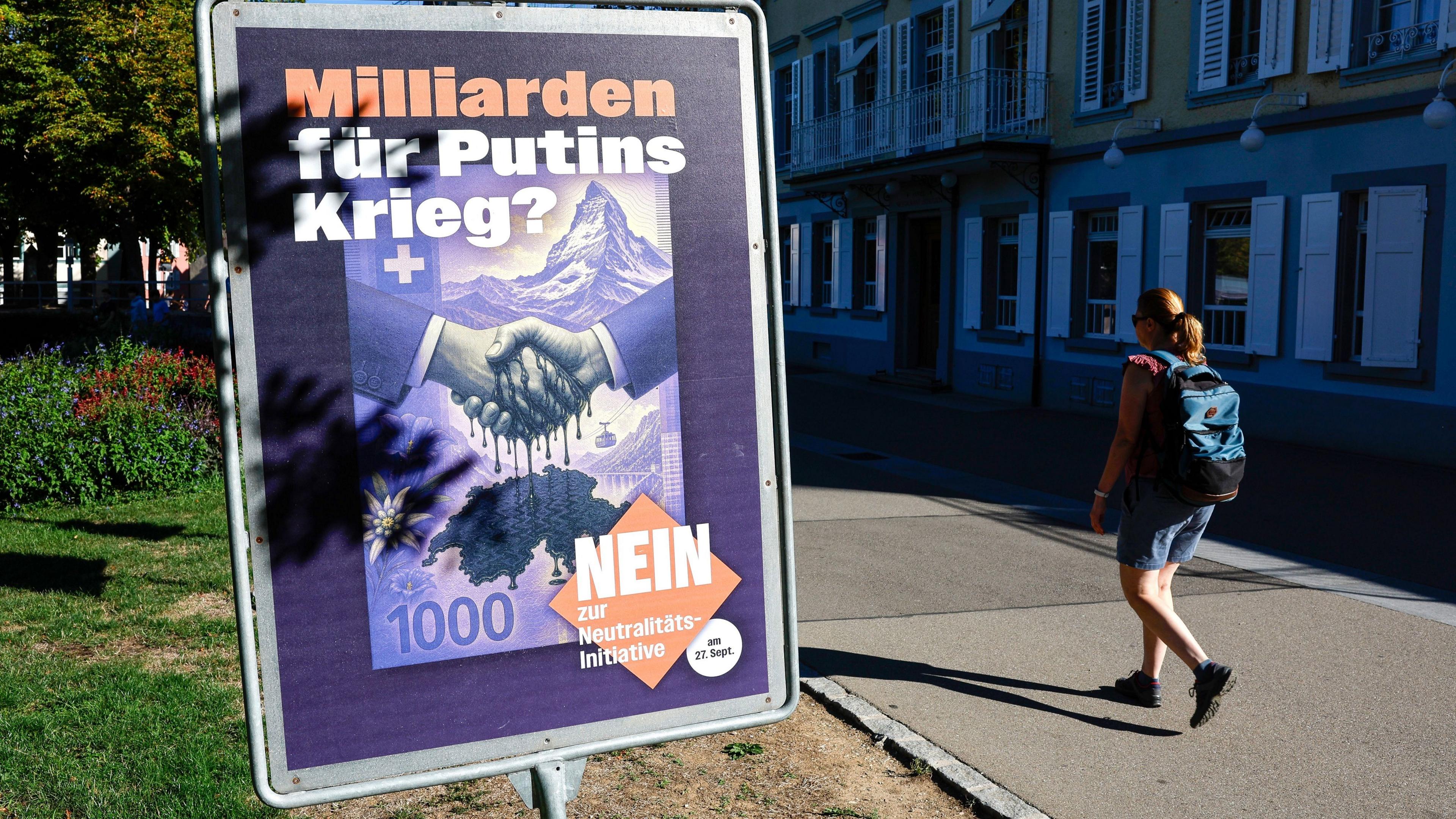
Swiss voters appeared set to reject a referendum initiative that would have imposed stricter constitutional limits on the country’s neutrality. A projection by polling institute GFS Bern for Swiss public broadcaster SRG indicated that about 71 percent voted against the proposal, with roughly 29 percent supporting it. The result would preserve the government’s discretion to apply sanctions and cooperate on security matters with NATO, rather than confining those choices under a narrower constitutional definition of neutrality.
The initiative, organized by the sovereignty campaign group Pro Switzerland and supported by the right-wing Swiss People’s Party (SVP), sought to define neutrality as “perpetual and armed.” It would have barred Switzerland from joining or cooperating with military and defence alliances unless the country faced an attack or imminent attack. It would also have restricted sanctions against states at war to those approved by the United Nations Security Council. Supporters said Switzerland had undermined its traditional neutral role by adopting European Union sanctions against Russia and expanding security cooperation with NATO. The government, parliament and nearly all major parties opposed the measure, arguing it would reduce the country’s ability to respond to international crises.
The dispute intensified after Russia’s 2022 full-scale invasion of Ukraine. Switzerland largely adopted EU sanctions against Moscow, drawing criticism from Russia and advocates of stricter neutrality. Switzerland has been internationally recognised as neutral since 1815, and neutrality has been part of its federal constitutional framework since 1848. The referendum was therefore principally about how much latitude the government should have in applying neutrality as Europe’s security environment changes, rather than whether Switzerland should remain neutral.
Entities: Switzerland, Swiss neutrality, neutrality referendum, GFS Bern, SRG • Tone: analytical • Sentiment: neutral • Intent: inform
27-09-2026
Swiss voters have decisively rejected a proposal to impose a stricter definition of the country’s neutrality, with more than 70% voting against it. The initiative, backed by the right-wing Swiss People’s Party (SVP) and openly supported by Russia, would have barred Switzerland from imposing sanctions without United Nations approval and restricted closer ties with Nato. The federal government and all other major parties opposed the proposal.
The vote comes amid renewed debate over Switzerland’s long-standing non-alignment following Russia’s full-scale invasion of Ukraine. Gfs.bern co-director Lukas Golder said the result did not mean voters were rejecting neutrality itself; rather, he interpreted it as support for Switzerland’s ability to sanction Russia. Foreign Minister Ignazio Cassis likewise argued that neutrality has historically been applied flexibly and does not require indifference to violations of international rules. Switzerland nevertheless continues to prohibit arms sales to countries at war, including Ukraine, and previously refused Germany’s request to re-export ammunition for tanks sent to Kyiv.
The article places the referendum in the context of Switzerland’s history. The country’s “eternal neutrality” was internationally recognised at the Congress of Vienna in 1815 and legally defined by the 1907 Hague Convention, which prohibited supplying weapons to countries at war. Switzerland remained neutral during the Second World War, but also banked gold looted by the Nazis and turned away thousands of Jewish refugees in an effort to avoid a German invasion. It apologised for those policies in the 1990s. The result illustrates how Switzerland’s direct-democracy system gives voters a central role in major political decisions.
Entities: Switzerland, Swiss voters, Swiss People's Party (SVP), Lukas Golder, Gfs.bern • Tone: analytical • Sentiment: neutral • Intent: inform
27-09-2026
Swiss voters have firmly rejected a proposal to write a more restrictive definition of neutrality into the country’s constitution. More than two-thirds voted against it, according to projections from Swiss broadcaster SRF, and the proposal also failed to win the required support among cantonal constituencies. The initiative would have barred Switzerland from joining or cooperating with military and defence alliances unless attacked, and from imposing sanctions unless they were approved by the United Nations.
The right-wing Swiss People’s Party (SVP), which backed the initiative, argued that Switzerland’s neutrality had been weakened after the government imposed sanctions on Russia following its invasion of Ukraine. Supporters said neutrality had helped keep Switzerland out of past wars and enabled it to offer its “good offices” in peace negotiations. SVP backer Christoph Blocher argued that Russia now viewed Switzerland as a party to the conflict because of the sanctions.
The Swiss government and most political parties opposed the proposal. Foreign Minister Ignazio Cassis warned that it could harm national security and prevent Switzerland from training with NATO. Green Party lawmaker Sibel Arslan said voters had rejected what she characterized as an effort to isolate Switzerland and avoid its responsibilities when international law is violated. The Green Party and the smaller Evangelical People’s Party welcomed the projections.
The SVP accepted the defeat but said it would watch how the government applies neutrality. Lawmaker Lukas Reimann said the party could act again if Switzerland’s opponents of the initiative departed from their stated commitment, for example by adopting tougher sanctions. University of Bern professor Fabio Wasserfallen said voters value neutrality while generally supporting the government’s current approach, including sanctions against Russia. The result preserves Switzerland’s existing flexibility on sanctions and cooperation with NATO.
Entities: Swiss voters, Swiss neutrality, Swiss People’s Party (SVP), NATO, Switzerland • Tone: analytical • Sentiment: neutral • Intent: inform
27-09-2026
Swiss voters appear to have rejected a proposal to define the country’s neutrality more strictly in its constitution, according to projections from the state broadcaster SRF. The projected result was 71% against the initiative and 29% in favor. Swiss neutrality has been recognized since 1815 and has been part of the constitution since 1848, but the rules for how the government applies it are not precisely set out.
The initiative was advanced by Pro Schweiz, a right-wing association linked to the populist Swiss People’s Party (SVP). Its supporters argued that Switzerland had moved too close to the European Union and NATO following Russia’s invasion of Ukraine. The proposal sought to require Switzerland to remain permanently and exceptionally neutral, maintain a defensive army, avoid involvement in conflicts between other parties, and stay out of defense alliances unless attacked. It also called for UN approval before Switzerland joined sanctions.
Public opinion polling had already suggested the proposal would fail: a Swiss Broadcasting Corporation poll found 63% intended to oppose it and 34% to support it. Most major political parties opposed the initiative, with the SVP as the notable exception. SVP vice president Celine Amaudruz defended armed neutrality as essential to peace, diplomacy, dialogue, and Switzerland’s credibility. Opponents said neutrality should not mean treating aggressors and victims equally. Foreign Minister Ignazio Cassis argued that neutrality has historically required some flexibility.
Voters also considered a separate food-security initiative calling for access to sufficient, high-quality, affordable food. SRF projections indicated that proposal was rejected as well, with 72% voting against and 28% supporting it. The initiative aimed to increase domestic food production.
Entities: Switzerland, Swiss neutrality, Pro Schweiz, Swiss People's Party (SVP), Celine Amaudruz • Tone: neutral • Sentiment: neutral • Intent: inform
27-09-2026
Swiss voters decisively rejected a proposal to strengthen and constitutionally define the country’s neutrality, with about 70% voting against it. Final results showed the measure lost in all 26 cantons. The initiative, led by the right-wing Swiss People’s Party (SVP), would have allowed Switzerland to impose sanctions on other countries only when approved by the United Nations. Because Russia can veto decisions as a permanent member of the UN Security Council, the restriction could have prevented Switzerland from adopting sanctions against Russia over its invasion of Ukraine.
Supporters said Switzerland had moved too close to the European Union and NATO. The proposal was championed by influential SVP figure Christoph Blocher, who reportedly spent 3.8 million Swiss francs on its campaign—a record contribution by an individual to a Swiss referendum campaign. The initiative’s defeat had been widely expected.
Opponents argued that enshrining neutrality in rigid terms would limit the country’s ability to respond to changing circumstances and could leave it effectively supporting an aggressor. Swiss Foreign Minister Ignazio Cassis said the result was not a vote against neutrality, adding that Switzerland would remain neutral. The government’s current approach, described as “cooperative neutrality,” keeps Switzerland militarily non-aligned while preserving the option to impose sanctions it considers necessary to uphold international law. Defence Minister Martin Pfister has also advocated closer cooperation with NATO.
The proposal would have established “perpetual and armed neutrality” in the constitution and limited military cooperation with NATO to cases of imminent military attack. Although voters rejected those restrictions, support for neutrality remains broad: a survey cited in the debate found that 82% of respondents supported it. The referendum took place during a nationwide voting round. Switzerland’s direct-democracy system brings citizens to the polls around four times a year on legislation, constitutional amendments and other policy matters.
Entities: Switzerland, Swiss voters’ neutrality referendum, Swiss People's Party (SVP), European Union, NATO • Tone: analytical • Sentiment: neutral • Intent: inform
27-09-2026
The France 24 Spotlight segment examines a Swiss referendum on whether the country’s neutrality should be more strictly and legally enforced in the Constitution. Its central context is the long history of Swiss neutrality: the segment traces international recognition back to the Congress of Vienna in 1815, after Napoleon’s defeat. European powers, as they rebuilt the continent’s balance of power, wanted Switzerland to serve as a stable buffer. The report notes that the meeting was later depicted by French artist Jean-Baptiste Isabey.
The segment then distinguishes Switzerland’s stated military neutrality from its economic choices. It says Switzerland codified its neutrality in 1907, defining it in terms of not militarily supporting one belligerent over another. However, this position does not prevent Switzerland from taking economic measures. The report gives the example of Switzerland joining European Union sanctions against Russia in 2022.
Against this historical and practical background, the referendum asks whether neutrality should be more firmly written into Swiss law. The headline indicates that voters rejected stricter neutrality, but the supplied article text does not provide the vote’s margin, the arguments made by supporters or opponents, or further detail about the result. The segment’s focus, as represented in the available text, is therefore on explaining the historical roots and limits of Swiss neutrality rather than presenting a detailed account of the referendum campaign. It highlights the distinction between a longstanding policy of military non-alignment and the possibility of participating in economic sanctions.
Entities: Switzerland, Swiss neutrality, Swiss referendum, Swiss Constitution, Congress of Vienna • Tone: analytical • Sentiment: neutral • Intent: inform
27-09-2026
Swiss voters rejected a proposal to write a stricter definition of neutrality into the country’s constitution. Final results showed that 70.1 per cent voted against the initiative, which was promoted by the hard-right and described by its opponents as “pro-Russian.” The vote took place amid disagreement in Switzerland about what the country’s longstanding neutrality should mean, particularly in the context of debate over Russia. Although neutrality is widely embraced by Swiss voters, the proposal sought to formalize a more rigid interpretation of it. Foreign Minister Ignazio Cassis said the result should not be understood as a rejection of neutrality. Instead, the article presents the outcome as support for the government’s more flexible diplomatic approach. The report gives no further detail about the initiative’s specific constitutional provisions or the government’s policies, but emphasizes the contrast between strict neutrality rules and the existing approach. The result is a decisive rejection of the proposed change, rather than a referendum on neutrality itself.
Entities: Switzerland, Swiss voters, Ignazio Cassis, Agence France-Presse, Bern • Tone: analytical • Sentiment: neutral • Intent: inform
27-09-2026
Swiss voters are deciding in a referendum whether to write a stricter definition of neutrality into the country’s Constitution. The proposal would bar Switzerland from joining or cooperating with military or defence alliances unless the country were attacked, and would prevent it from joining sanctions unless they had United Nations approval. Switzerland is not a NATO member but currently trains and conducts joint exercises with the alliance.
The right-wing Swiss People’s Party (SVP), which supports the change, argues that Switzerland’s neutrality has been weakened by the government’s decision to impose sanctions on Russia after its invasion of Ukraine. Supporters say neutrality has helped keep Switzerland out of wars, including both world wars, and enables the country to offer its “good offices” in peace negotiations. SVP backer Christoph Blocher said Russia now regards Switzerland as a party to the conflict because of the sanctions.
Most other political parties and the Swiss government oppose the proposal. Foreign Minister Ignazio Cassis warned that it could harm national security and prevent Switzerland from training with NATO. University of Bern professor Fabio Wasserfallen said voters value neutrality but support the government’s current approach, including sanctions on Russia.
Polls indicated that the proposal was likely to be rejected: one recent survey found 68 per cent opposed and 31 per cent in favour. The article presents the vote as a debate over how Switzerland should balance its long-standing neutrality with sanctions policy, defence cooperation and national security.
Entities: Switzerland, Swiss neutrality, Swiss People’s Party (SVP), NATO, United Nations • Tone: neutral • Sentiment: neutral • Intent: inform
27-09-2026
Swiss voters rejected a proposal to impose stricter neutrality rules in the country’s constitution, with early results showing about 69 per cent opposed and 31 per cent in favour. The initiative would have defined Swiss neutrality as “eternal and armed,” prohibited joining military alliances and barred Switzerland from imposing sanctions not approved by the United Nations. Its defeat leaves the government free to interpret neutrality flexibly, including continuing to align with European Union sanctions against Russia over the 2022 invasion of Ukraine.
The proposal followed Switzerland’s decision to mirror those sanctions, which supporters argued violated its neutrality. Russia also urged voters to back the initiative. The government, Parliament and all major parties other than the right-wing Swiss People’s Party (SVP) opposed it. Former SVP leader Christoph Blocher funded the campaign with two million francs and argued that Switzerland’s neutrality and military readiness had helped keep the country out of war, while sanctions had led Russia to view Switzerland as a party to the conflict.
The result does not indicate that Swiss voters have turned against neutrality. Rather, the article says, voters continue to support the principle while approving of the government’s current, pragmatic approach and sanctions on Russia. Fabio Wasserfallen, a University of Bern professor of European politics, offered that interpretation.
This was the second SVP-backed initiative rejected by voters in 2026; a June proposal to cap Switzerland’s population at 10 million also failed. Switzerland’s direct-democracy system allows voters to take part in as many as four ballots a year. In a separate Sept 27 vote, voters rejected a proposal to increase local food production, which would have indirectly reduced domestic meat production; it received 24 per cent support.
Entities: Switzerland, Swiss neutrality, Swiss voters’ neutrality referendum, Swiss People’s Party (SVP), Christoph Blocher • Tone: analytical • Sentiment: neutral • Intent: inform