31-08-2026
The Ebola outbreak in eastern Democratic Republic of Congo has become the country’s largest on record, surpassing 6,000 confirmed cases and approaching 3,000 deaths. Health authorities reported 6,041 confirmed cases and 2,911 deaths by August 31, while 1,366 people had recovered. The outbreak, declared on May 15, has spread across six provinces and 60 health zones, with Ituri remaining the epicentre. Cases have also been identified in North Kivu, South Kivu, Haut-Uélé, Tshopo and Bas-Uélé.
The epidemic is being driven by the Bundibugyo virus, a rare Ebola strain for which no approved vaccine or specific approved treatment is currently available. This has complicated efforts to prevent transmission and care for patients. The outbreak has a case fatality ratio of approximately 48 percent, reflecting both the severity of the disease and the difficulties of detecting cases and delivering timely treatment.
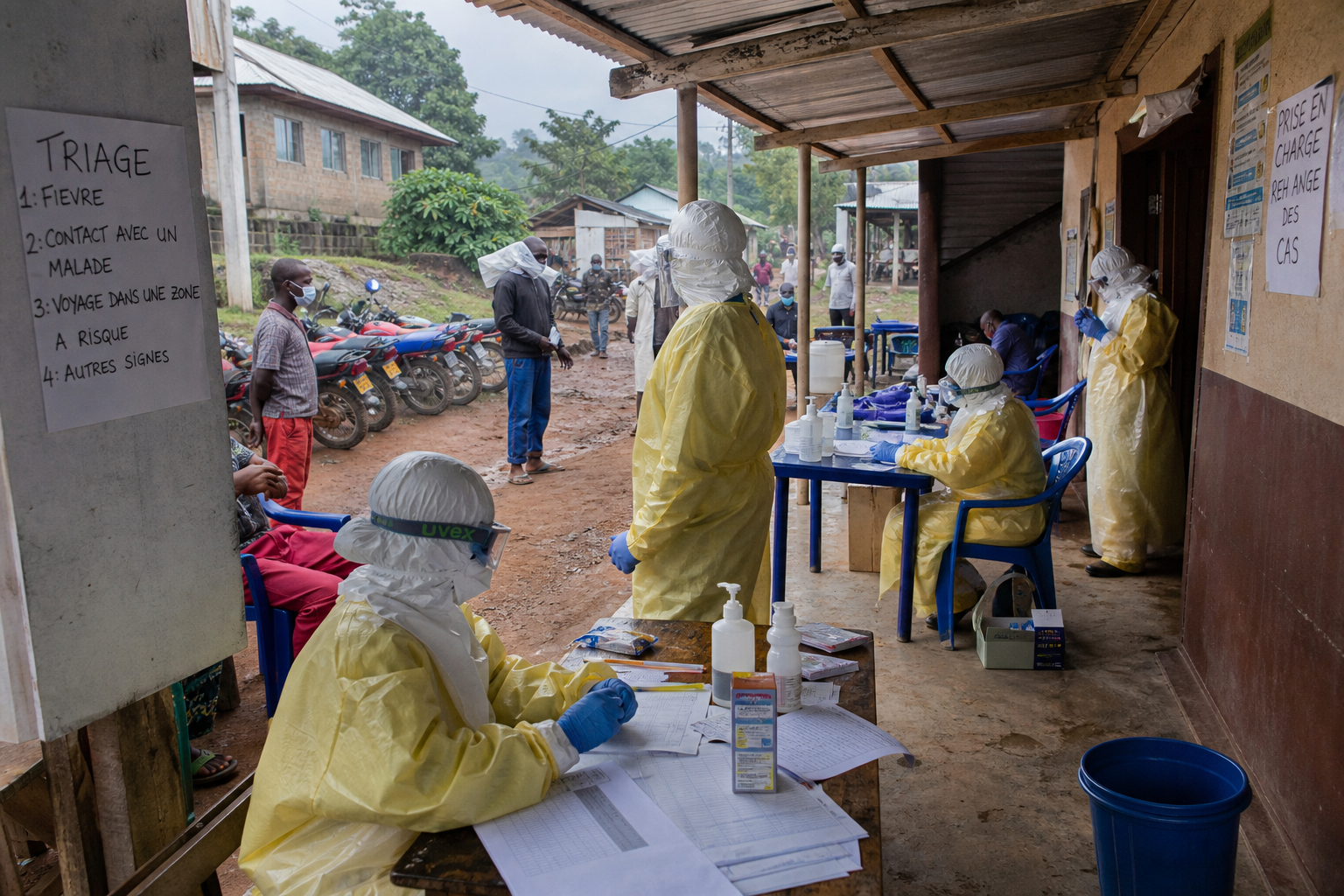
Response efforts are being hindered by armed violence, population displacement, fragile health services and a strike by health workers. Movement between affected communities is making contact tracing and disease surveillance more difficult, while also increasing the risk of cross-border spread. The World Health Organization considers the risk very high within the DRC and high in neighbouring countries.
The WHO has warned that the epidemic could eventually surpass the 2014–2016 West Africa Ebola outbreak, which killed more than 11,000 people and remains the deadliest Ebola epidemic recorded. Authorities and international partners are expanding surveillance, testing, treatment capacity and community engagement, but officials face significant challenges in slowing transmission and containing an outbreak that is growing at an unprecedented pace in the country.
Entities: Democratic Republic of Congo (DRC), Ebola outbreak, Bundibugyo virus, World Health Organization (WHO), Ituri province • Tone: urgent • Sentiment: negative • Intent: inform
31-08-2026
The Ebola outbreak in the Democratic Republic of Congo (DRC) has become the country’s worst recorded outbreak, with 6,041 confirmed cases, 2,911 deaths and 1,366 recoveries, according to figures released by the DRC Ministry of Communications. A further 619 patients are in isolation or receiving hospital treatment, while the outbreak continues to spread rapidly across the country.
The outbreak is caused by the rare Bundibugyo strain of Ebola, for which there is currently no approved vaccine or treatment. United Nations Secretary-General Antonio Guterres has described it as “the fastest-spreading Ebola epidemic ever recorded.” Health officials say infections are occurring faster than frontline workers can identify and respond to new cases. The Africa Centres for Disease Control and Prevention attributes part of the spread to infections among people who are not being monitored through contact tracing.
The response is particularly difficult in eastern DRC, where cases are concentrated in densely populated areas affected by armed conflict, population displacement and longstanding humanitarian needs. Doctors Without Borders reports that airport closures and flight restrictions are obstructing the movement of medical personnel, diagnostic materials, patient referrals and essential supplies.
The medical response has also been weakened by labor unrest. Frontline healthcare workers went on strike in early August to protest unpaid wages and extremely poor working conditions. Meanwhile, Uganda was declared free of Ebola on August 28 after recording no new cases for 42 days. Despite that development, the situation in DRC remains critical as aid agencies intensify efforts to contain the rapidly expanding outbreak.
Entities: Democratic Republic of Congo (DRC), Ebola outbreak, Bundibugyo strain, Mungwalu, Ituri province, Charles Mambo • Tone: urgent • Sentiment: negative • Intent: inform
31-08-2026
Government figures released on Monday, Aug 31, show that the number of confirmed Ebola infections in the Democratic Republic of Congo has risen to 6,041, with 2,911 deaths recorded. The outbreak is now the largest in the country’s history, surpassing the previous worst epidemic, which lasted from 2018 to 2020. The figures were provided by Congo’s communication ministry in a post on X.
The current epidemic is being caused by the Bundibugyo strain of Ebola. According to the report, this strain has no approved vaccines or treatments, presenting a significant challenge for health authorities and response teams. Teams are operating across six provinces affected by the outbreak, with particular attention directed toward Ituri, North Kivu and Haut-Uele.
The article provides no further details about the outbreak’s origin, rate of transmission, or the number of suspected and recovered cases. It focuses on the government’s confirmed totals and the scale of the epidemic compared with the 2018–2020 outbreak.
An accompanying Reuters file photograph shows displaced people watching a health worker in full personal protective equipment prepare to disinfect an area during the burial of suspected Ebola victims at the Kigonze displaced persons camp in Bunia, eastern Democratic Republic of Congo, on June 18, 2026. The image highlights the involvement of displaced communities and frontline health workers in the response. The report was datelined Dakar and published by The Straits Times on Aug 31, 2026.
Entities: Ebola outbreak, Democratic Republic of Congo, Bundibugyo strain, 2018–2020 Ebola outbreak, Ituri province • Tone: urgent • Sentiment: negative • Intent: inform