01-11-2026
German cities saw looting and violent clashes on Saturday night after thousands of people joined demonstrations over the cost of living, underfunded schools, public spending cuts and compulsory military service. The protests, organised by the youth campaign group Gen Z regelt, were largely peaceful during the day. Violence later broke out in Frankfurt, Berlin, Cologne and Hamburg. Police reported smashed shop windows, thefts, attacks on emergency workers and officers, and the use of fireworks, stones and bottles. Water cannon was used to disperse protesters, and authorities made arrests. In Frankfurt, police said a gun shop was damaged and two weapons were seized after a suspect was arrested. Hesse Interior Minister Roman Poseck said left-wing extremists had infiltrated the demonstration and condemned how it ended. Gen Z regelt spokesperson Lina Friedrich said the campaign sought better support for health and education, peace and a fairer distribution of burdens, and opposed compulsory military service.
Germany's Interior Minister Alexander Dobrindt called for harsh punishments for rioters and said police had prevented violence on the scale seen in France. The German unrest took place alongside protests elsewhere in Europe. More than 320,000 people demonstrated in France for a third consecutive weekend, mainly over living costs and poor public services. French police used tear gas in some cities; the interior ministry reported more than 770 arrests. An officer was injured by a Molotov cocktail, prompting an attempted-murder investigation. Protesters and organisers also raised concerns about injuries from police grenades.
Demonstrations and clashes were reported in Italy, while Portuguese police cleared a newly established tent camp after a march against a rental bill. The article places these events in a wider wave of youth-led protests across Europe, where demands differ but commonly concern housing access, education and cuts to public services.
Entities: Gen Z regelt, James Chater, Alexander Dobrindt, Lina Friedrich, Roman Poseck • Tone: neutral • Sentiment: negative • Intent: inform
01-11-2026
German officials have vowed tough penalties for people involved in violence during protests in Frankfurt, where demonstrators had gathered to call for better education and lower living costs. The protests were part of a wider day of demonstrations across dozens of German cities, organized by the campaign group “Gen Z regelt” (“Gen Z takes charge”). Most demonstrations were peaceful, but Frankfurt became the focal point of overnight violence.
Hesse Interior Minister Roman Poseck said rioters damaged 17 shops, looted five, and clashed with police. Authorities deployed 1,300 officers, more than 100 of whom were injured, and arrested 54 people aged between 13 and 29. Poseck said police believed between 1,000 and 1,500 violent troublemakers were involved, and that many had migrant backgrounds. He condemned the violence and said those responsible must be held accountable.
German Interior Minister Alexander Dobrindt also promised tough penalties. He said violent left-wing groups and people from migrant communities had hijacked otherwise peaceful protests, but did not elaborate on the claim. Dobrindt praised the police strategy of maintaining a large presence across several locations, saying it prevented violence on a larger scale, such as that seen in Paris.
The article places the Frankfurt disturbances in the context of protests elsewhere in Europe. Demonstrations in France continued largely peacefully for a third weekend, following riots and looting on October 17 that damaged shops, public buildings, and businesses.
Entities: Frankfurt, Germany, Hesse, Roman Poseck, Alexander Dobrindt • Tone: analytical • Sentiment: negative • Intent: inform
01-11-2026
Masked rioters smashed storefronts and looted goods in Frankfurt late Saturday during protests across Germany over the rising cost of living. The demonstrations were organized by a youth initiative called “Gen Z regelt,” roughly translated as “Gen Z’s got this,” and took place in more than 30 cities. Organizers said tens of thousands of people participated, though official attendance figures were not immediately available. The protesters called for investment in education, health, climate protection and affordable living, and opposed a return to military conscription.
Most demonstrations were peaceful during the day, but tensions escalated in the evening after some groups refused to disperse. Clashes and violence were reported in Frankfurt, Berlin, Cologne and Hamburg. Frankfurt police said masked protesters threw stones, fireworks and pepper bombs. Authorities reported that looters stole weapons from a gun store, but the weapons were later recovered. Police also said rioters threw Molotov cocktails at officers after earlier attacks with stones and bottles.
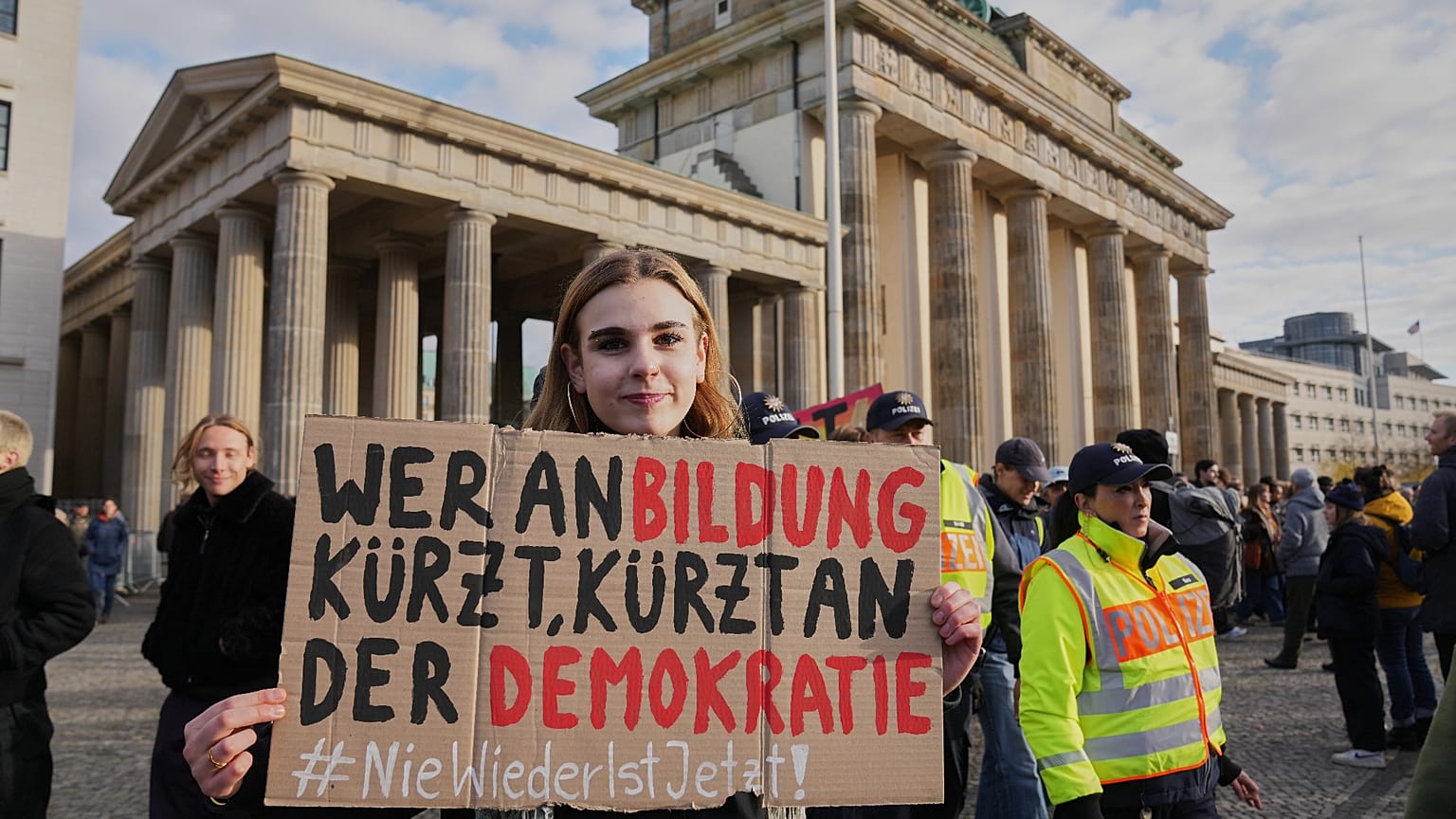
In Hamburg, some demonstrators fired pyrotechnics toward police and set barricades on fire. Police used water cannons and tear gas to disperse crowds. Earlier in Berlin, young protesters gathered at the Brandenburg Gate to demand more funding for education and housing. High school student Lara Breitenbach said young people would bear the consequences of decisions affecting their future, and called for investment in social services, education and climate protection. Another student, Janelle Schulz, described deteriorating conditions at her school, including water damage, a lack of teachers and broken toilets, as examples of insufficient investment in education.
Entities: Gen Z regelt, Frankfurt, Berlin, Cologne, Hamburg • Tone: neutral • Sentiment: negative • Intent: inform
01-11-2026
“Gen Z” demonstrations in Germany began largely peacefully on Saturday, with protesters raising concerns including rising living costs, but violence broke out in several cities after dark. Rioters clashed with police, smashed shop windows, looted or attempted to enter stores, and erected burning barricades. Police used water cannons in response. The unrest was especially tense in Berlin, Hamburg, Frankfurt and Cologne, and the article notes that the scenes recalled recent protests in France.
In Berlin, a march of around 3,500 people travelled from Rosenthaler Platz towards Prenzlauer Berg. Pro-Palestinian and anti-fascist demonstrators also joined, and some participants chanted political slogans while flares and firecrackers were set off. Police reported 27 officers with minor injuries and nearly 60 arrests. Interior Minister Alexander Dobrindt blamed left-wing groups and people he described as troublemakers from a migrant background, and called for harsh penalties.
In Hamburg, people built burning blockades and attacked officers with stones, bottles and fireworks. Police said about 120 people had been temporarily detained, while roughly 1,300 officers were deployed; final injury and arrest figures had not yet been released. In Frankfurt, rioters targeted the Zeil shopping street and attacked a gun shop, where police seized two weapons. Officers also reported being attacked with Molotov cocktails and other objects. More than 30 temporary arrests were reported, and the situation eased by early Sunday, although property damage was considerable. Around 8,000 people had demonstrated in Frankfurt, mostly peacefully, before violence began; organisers distanced themselves from it.
In Cologne, the rally was ended after some participants covered their faces, set off fireworks and attacks on police followed. One officer suffered a hand injury. The article describes a broad wave of demonstrations and violence, while distinguishing the largely peaceful demonstrations from the later actions of rioters and troublemakers.
Entities: Germany, Berlin, Hamburg, Frankfurt am Main, Cologne • Tone: neutral • Sentiment: negative • Intent: inform
01-11-2026
Rioting and looting broke out in Frankfurt after youth demonstrations on Saturday, leaving damaged shops, burning barricades and several people injured. Police remained on the streets of the city centre on Sunday, 1 November, as they responded to the aftermath. Video footage showed smashed shop windows, looted stores, fires and debris across streets. Officers used water cannon to extinguish fires and clear obstacles from roads, and police cordoned off parts of the city centre. The situation had calmed by early Sunday morning. Several protesters and police officers were injured, and 30 people were detained. Hesse state premier Boris Rhein condemned the violence, saying he was shocked and that those responsible would face consequences. The article also reports violence in other German cities: in Cologne, police used water cannon to disperse crowds; in Berlin, protesters attacked officers with bottles and pyrotechnics. The report focuses on the disorder, its visible consequences and the police response, without giving further details about the demonstrations’ causes or the identities of those detained.
Entities: Frankfurt, Germany, Cologne, Berlin, Hesse • Tone: neutral • Sentiment: negative • Intent: inform
01-11-2026
France 24 reports that youth-led demonstrations are spreading across Europe, with protests in France helping inspire rallies in Portugal, Italy and Germany. Germany experienced particularly large demonstrations on Saturday, organized by a youth initiative whose name is translated roughly as “Gen Z has got this.” Participants raised a range of concerns: they called for improvements to education and healthcare, stronger climate protections and a lower cost of living. They also opposed a possible return to compulsory military service. The demonstrations were not entirely peaceful. In several major German cities, protests became violent toward the end of the day, with particularly serious incidents reported in Frankfurt, a major financial hub. The report places the German rallies within a broader wave of youth activism across Europe but provides no further details about the size of the crowds, the causes or extent of the violence, or official responses. Charlotte Hughes reports on the demonstrations across Europe. The article is presented as a short video report; its accompanying text highlights the spread of protests and the issues motivating participants, while noting that some demonstrations in Germany ended in violence.
Entities: France, Portugal, Italy, Germany, Frankfurt • Tone: neutral • Sentiment: neutral • Intent: inform
01-11-2026
Tens of thousands of young people demonstrated in 34 German cities on Saturday, with the campaign group “Gen Z regelt” (“Gen Z takes charge”) organizing rallies calling for better education, lower living costs, improved public services, and opposition to compulsory military service. The protests took place in cities including Berlin, Frankfurt and Munich. Some demonstrations turned violent: in Frankfurt, rioters smashed shop windows, raided at least two stores, and threw Molotov cocktails at emergency services, according to police. Barricades were also set on fire in Hamburg. Authorities urged bystanders to avoid central Frankfurt or leave the area.
Hesse Interior Minister Roman Poseck warned against treating unrest in France as a model, referring to looting, arson and attacks on police there. Ahead of the demonstrations, some businesses—particularly along Berlin’s luxury Kurfuerstendamm shopping boulevard—boarded up windows and closed. Police in Frankfurt, Munich and Berlin reported up to 18,000 protesters, while organizers claimed the total was twice as high.
Gen Z regelt spokesperson Lina Friedrich said the campaign sought peace and freedom and better support for health and education systems, as well as a fairer distribution of burdens. The article says it remains unclear how broadly German youth support the protests. The national school student umbrella organization, BSK, distanced itself from Saturday’s event and said it planned a separate demonstration for November 20.
The protests come as Germany, Europe’s largest economy, struggles to restore economic growth while facing pressure on pensions and public services. The interior ministry also suggested that far-left extremists and groups linked to foreign extremist movements had helped mobilize participants.
Entities: Gen Z regelt, Lina Friedrich, Roman Poseck, Germany, Frankfurt • Tone: neutral • Sentiment: negative • Intent: inform
01-11-2026
German politicians condemned clashes and looting that took place on the margins of youth-led demonstrations on October 31, while cautioning that the violence should not eclipse the protesters’ demands. Tens of thousands of people joined rallies organised by “GenZ regelt!” (“Gen Z has got this!”), calling for greater attention to young people’s priorities, including the cost of living, education spending and budget cuts. The demonstrations took place in several German cities and were inspired by similar movements in France and Italy.
Unrest was reported in Frankfurt, Berlin, Cologne and Hamburg. Masked rioters looted shops in Frankfurt, and police used water cannon against youths throwing Molotov cocktails. Hesse Minister-President Boris Rhein described the violent acts as “totally unacceptable.” Interior Minister Alexander Dobrindt attributed the unrest to leftist groups and troublemakers from migrant communities, though he said it was less severe than disturbances in Paris.
Politicians across the political spectrum responded to the events. Die Linke leader Ines Schwerdtner argued that vandalism by small groups would not erase the demands of peaceful demonstrators. Green Party co-leader Franziska Brantner condemned the violence, saying it harmed the legitimate cause of those who had demonstrated peacefully. The far-right AfD blamed left-wing extremism and uncontrolled migration.
The “GenZ regelt!” movement said it planned further demonstrations for November 14, describing the rallies as “just the start.” The article reports both the protests’ policy concerns and the disagreement over how to interpret the violence, without suggesting that the clashes represented the movement as a whole.
Entities: GenZ regelt! (Gen Z has got this!), Boris Rhein, Alexander Dobrindt, Ines Schwerdtner, Franziska Brantner • Tone: analytical • Sentiment: neutral • Intent: inform
01-11-2026
Germany's Interior Minister Alexander Dobrindt called for tough penalties against people involved in looting and violence in Frankfurt, while crediting a substantial police deployment with preventing more extensive unrest. The disturbances took place late Saturday, after tens of thousands of people had demonstrated during the day in dozens of German cities. The protests, led by the campaign group “Gen Z regelt” (“Gen Z takes charge”), called for improved education and lower living costs.
Frankfurt police reported violent incidents that included smashed windows and petrol bombs thrown at emergency services. More than 30 people were temporarily arrested, according to local broadcaster HR, which provided no further details about those detained. Dobrindt said rioters and looters would be identified and held accountable, and described the events as a breach of the peace requiring tough penalties.
The minister alleged that violent left-wing groups and troublemakers from the migrant community had hijacked protests that were otherwise peaceful, but the article provides no elaboration or evidence for that accusation. Dobrindt, a member of the conservative CSU, also said police had effectively maintained a large presence while deploying officers across multiple locations. He compared the outcome favorably with the extensive violence in Paris, saying that similar excesses had been prevented in Frankfurt.
The report places the German unrest alongside continuing demonstrations in France. Those protests had remained largely peaceful for a third weekend, following riots and looting on October 17 that damaged shops, public buildings, and businesses. The article is attributed to Reuters and reports the minister’s statements and police information without independently assessing the accusations or the causes of the unrest.
Entities: Alexander Dobrindt, Frankfurt, Germany, France, Bild • Tone: neutral • Sentiment: neutral • Intent: inform
01-11-2026
Thousands of young people demonstrated in 34 German cities on Saturday, protesting the rising cost of living, cuts to education spending, and plans to expand the military. Organised by the youth campaign group GenZ regelt! (“Gen Z takes charge”), the demonstrations also opposed compulsory military service and called for greater investment in education and public services. The protests drew inspiration from youth-led movements elsewhere in Europe.
Most demonstrations were peaceful during the day, but violence broke out in several cities in the evening. In Frankfurt, masked groups reportedly looted shops, smashed windows—including those of a gun store—and threw stones, fireworks and petrol bombs. Police used water cannons and pepper spray; officers and emergency workers were injured, and police arrested a suspect and seized two weapons. Clashes and injuries were also reported in Berlin, Cologne, Hamburg and Bonn. Authorities said extremist groups had joined or sought to exploit the protests. Hesse Interior Minister Roman Poseck condemned the violence and warned against Germany repeating unrest seen in France. GenZ regelt! rejected the violence and said extremism, racism and hate speech had no place in its demonstrations.
Protesters said they were concerned not only about military policy and education cuts but also about government priorities and the financial pressures facing younger generations. They pointed to poorly maintained university buildings, strained public services and demographic pressures as older people approach retirement. Organisers initially expected about 182,000 participants, but police figures in three cities were far below organisers’ counts; the movement later estimated nationwide attendance at about 120,000. Halloween coincided with the demonstrations, with some protesters in costume and signs criticising Chancellor Friedrich Merz. The article ends by introducing questions about who is leading the movement, but the supplied text cuts off before providing details.
Entities: GenZ regelt!, Germany, Berlin, Frankfurt, Munich • Tone: analytical • Sentiment: negative • Intent: inform
01-11-2026
Al Jazeera reports that thousands of people joined protests across 34 cities in Germany, with demonstrations led by members of Generation Z. The protesters called for improved education, lower living costs and an end to compulsory military service. The article links the opposition to military service with rising military spending. It also reports that some protests turned violent, with demonstrators clashing with police.
The available article text does not identify specific cities, describe how the clashes began, provide details about injuries or arrests, or include statements from protesters, police or government officials. It therefore offers only a brief account of the demonstrations and their stated demands, rather than a fuller explanation of their causes or consequences. The report’s central points are the nationwide scale of the protests, the range of economic and public-policy concerns raised, and the confrontations with police. It was published on November 1, 2026.
Entities: Germany, Generation Z (Gen Z), Al Jazeera, German protests, 34 cities • Tone: neutral • Sentiment: negative • Intent: inform
01-11-2026
Hundreds of young demonstrators gathered outside Berlin’s Brandenburg Gate on Saturday for a youth protest organised by the “GenZ regelt!” movement. The movement’s name translates roughly as “Gen Z will sort it out!” and the rally was part of a nationwide day of demonstrations in Germany. Protests were planned in more than 30 cities, including Frankfurt and Cologne, following student demonstrations in several European countries. The article describes the Berlin gathering as an expression of solidarity with those protests and says the movement was calling for demonstrations over political and social issues. Participants carried banners calling for German Chancellor Friedrich Merz and French President Emmanuel Macron to resign. Other demonstrators chanted anti-capitalist and anti-fascist slogans, while speakers addressed the crowd. The report provides no further detail about the speakers, the specific policy demands behind the broader calls, the size of the demonstrations outside Berlin, or any responses from the named leaders. Presented as a short Euronews video report under the “No Comment” label, the article focuses on the visible elements of the gathering—flags, banners, chants and speeches—and situates it within a wider wave of youth and student protest activity across Germany and Europe.
Entities: GenZ regelt! movement, Generation Z, Brandenburg Gate, Berlin, Germany • Tone: neutral • Sentiment: neutral • Intent: inform