02-10-2026
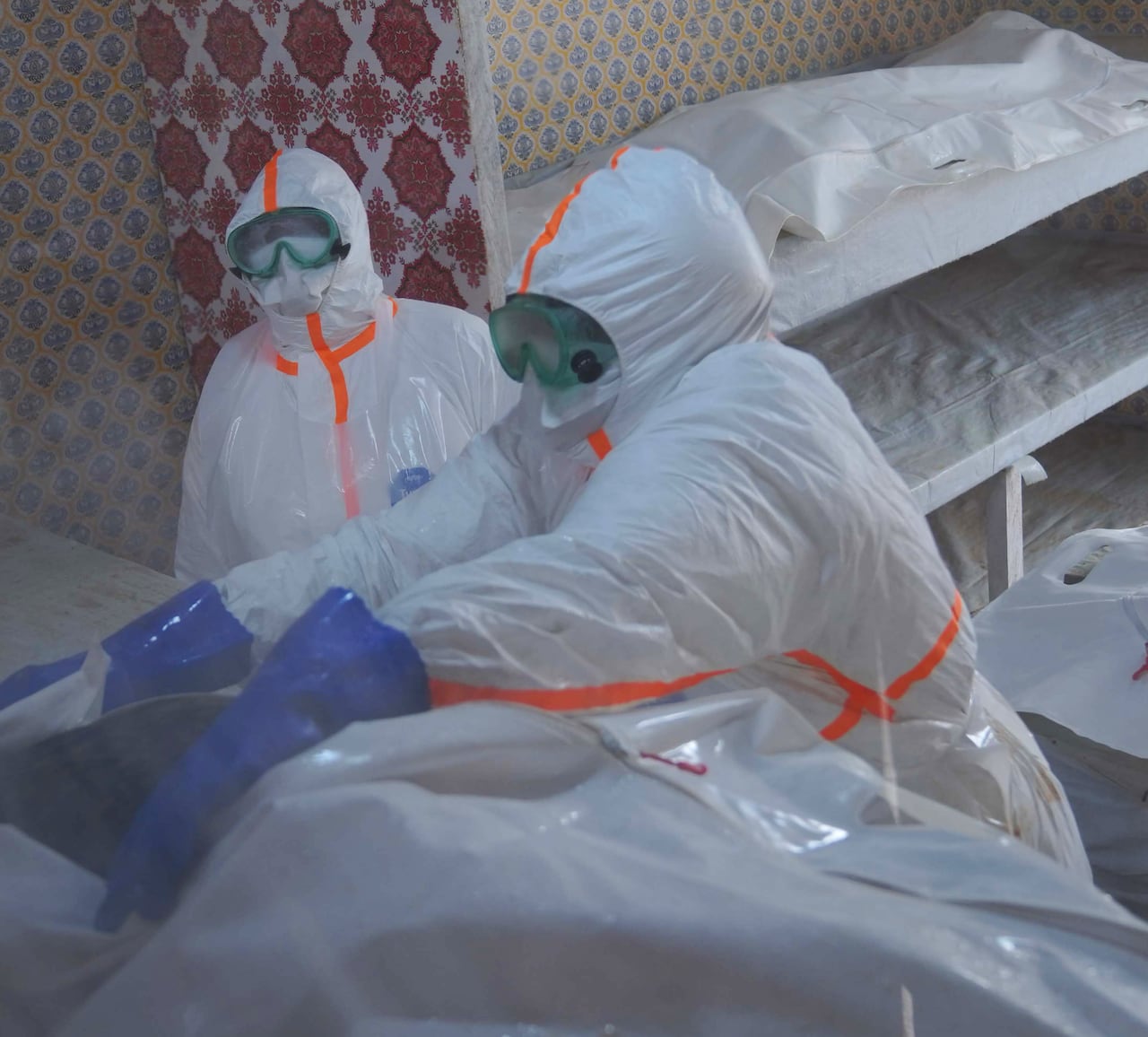
The Democratic Republic of the Congo’s Ebola outbreak has killed 4,018 people and produced 8,300 confirmed cases across seven provinces, according to figures released on October 2, 2026. It is now the deadliest epidemic in the country’s history, and the World Health Organization warns that it is “far from over.” The outbreak could surpass the 2014–2016 West Africa epidemic, which killed more than 11,000 people, mainly in Guinea, Liberia, and Sierra Leone.
Efforts to control the outbreak are complicated by weak infrastructure, the remoteness of affected areas in eastern DRC, and conflict with armed groups near the borders with South Sudan, Uganda, and Rwanda. A further setback occurred when soldiers searching for weapons burned an Ebola-hit camp near Bunia, in Ituri Province. The camp included a transit centre for infected patients, and the incident forced 19,000 people to flee. The UN said the destruction of the centre made an already difficult response harder.
Mistrust and anger toward health workers and authorities have also impeded containment. In Butembo, North Kivu Province, local UDPS official Marie-Celestin Karondwa was beaten to death after participating in a radio programme to raise awareness about Ebola; his house was later set on fire. The article reports that the outbreak is caused by the Bundibugyo strain, for which no vaccine or treatment is currently approved, although several candidates are being trialled. This is the DRC’s 17th Ebola outbreak and became its largest and deadliest after surpassing the 2018–2020 epidemic. More than 2,000 patients have recovered. The Africa Centres for Disease Control and Prevention said confirmed cases were falling, but cautioned that the decline might reflect insecurity and difficulty obtaining cooperation in some hotspots rather than a reliable improvement.
Entities: Democratic Republic of the Congo (DRC), Ebola outbreak, Bundibugyo strain, Ituri Province, Bunia • Tone: analytical • Sentiment: negative • Intent: inform
02-10-2026
The Democratic Republic of Congo’s Ebola outbreak has caused 4,018 deaths among 8,300 confirmed cases, according to figures released by the health ministry. The outbreak, declared on May 15, is caused by the Bundibugyo virus, a rare strain with no known treatment or vaccine. It is described as the fastest-growing Ebola outbreak in history and the deadliest in Congo’s history.
The response is being undermined by a shortage of money and staff, violence, and mistrust. Health workers in Bunia protested unpaid wages, including surveillance workers responsible for identifying people exposed to infected patients. Their repeated strikes have disrupted containment work. Separately, soldiers searching for weapons reportedly burned a camp that housed an Ebola transit centre, forcing about 19,000 people to flee. UN Ebola coordinator Julien Harneis said losing treatment capacity means people lose access to care. More than 50 health workers have died after contracting the virus.
Médecins Sans Frontières said one of its aid workers was infected in Congo and evacuated to a high-level isolation unit in the Netherlands. The World Health Organization has warned that the virus is spreading into new health zones. Though weekly confirmed cases and deaths have fallen since July, Africa CDC cautioned that lower reporting may reflect insecurity and difficulties securing community co-operation, rather than a clear improvement.
Tensions were underscored by the killing of local official Marie-Célestin Karondwa, who had defended the government’s response. He was beaten at his home in Butembo, which was then set on fire; he later died in hospital. Resistance to containment efforts persists, with some residents dismissing Ebola as a hoax and broader distrust rooted in past outbreak management and chronic corruption. Authorities have introduced a village-centred approach, but face significant challenges in gaining community support.
Entities: Democratic Republic of the Congo (DRC), Bundibugyo virus, Ebola outbreak, Bunia, Ituri province • Tone: urgent • Sentiment: negative • Intent: inform
02-10-2026
Congo’s Ebola outbreak has caused more than 4,000 deaths, with health ministry figures reporting 4,018 deaths among 8,300 confirmed cases. Authorities describe it as the fastest-growing Ebola outbreak on record. More than 2,000 patients have recovered. The outbreak, announced on May 15, is caused by the Bundibugyo virus, for which the article says there is no known treatment or vaccine.
Efforts to contain the outbreak face serious obstacles. Health workers in Ituri province protested over unpaid wages, including members of surveillance teams who identify people exposed to infected patients. Repeated strikes have hindered response work. More than 50 health workers have died after contracting Ebola, and an aid worker with Médecins Sans Frontières was infected and transferred to a high-level isolation unit in the Netherlands.
The World Health Organization has warned that the virus is spreading rapidly into new health zones, placing further strain on limited resources. Although the Africa Centers for Disease Control and Prevention reported a decline in confirmed cases, it cautioned that insecurity and difficulty securing community cooperation in some hotspots may explain the decrease.
The article also describes growing tensions and mistrust. Local official Marie-Célestin Karondwa was beaten to death after defending government response measures; his home was then set on fire. In some communities, residents regard Ebola as a hoax, while distrust of the government reflects its handling of past outbreaks and chronic corruption. Authorities have introduced a village-centered approach, but skepticism and local insecurity continue to complicate efforts to slow the outbreak.
Entities: Ebola outbreak, Democratic Republic of the Congo, Bundibugyo virus, Bunia, Ituri province • Tone: neutral • Sentiment: negative • Intent: inform
02-10-2026
The Democratic Republic of Congo’s worst-ever Ebola outbreak has killed 4,018 people among 8,300 reported cases, according to figures released by Congolese officials. A further 2,162 people have recovered, putting the reported fatality rate at 48.4 percent. The outbreak, detected in mid-May, began in Ituri province and has spread to seven provinces in the country’s north and east. Officials also reported four deaths among six cases in parts of North Kivu controlled by the M23 group.
The response is being impeded by armed conflict, insecurity, limited health resources and deep mistrust of authorities. Recent militia clashes in Ituri disrupted health efforts and displaced more than 5,000 people, the UN said. A transit centre for Ebola patients burned down after soldiers entered a site for displaced people, prompting people there to flee. In North Kivu, an attack on a health facility killed a contractor responsible for detecting cases.
French Foreign Minister Jean-Noel Barrot was scheduled to visit Bunia, Ituri’s capital, to express support for local authorities and humanitarian workers. The article says France had allocated €13.4 million to Ebola efforts between January and July, while the United States announced a further €237 million to help combat the disease. Healthcare workers face particular risk in remote areas with poor medical infrastructure.
The outbreak is caused by the Bundibugyo strain. Vaccines and treatments are being studied, and volunteers among frontline workers have recently received initial doses of the Ervebo vaccine in a clinical trial. Ervebo has previously been shown effective against the more common Zaire strain, but the article does not report that it is proven effective against Bundibugyo.
Entities: Democratic Republic of Congo (DR Congo), Ebola outbreak, Bundibugyo strain, Ervebo vaccine, Zaire strain • Tone: analytical • Sentiment: negative • Intent: inform
02-10-2026
Congo’s Ebola outbreak has killed 4,018 people among 8,300 recorded cases since it was declared in eastern Congo on May 15, according to the Health Ministry. Authorities are struggling to contain what the article describes as the fastest-growing Ebola outbreak in history, with the World Health Organization warning that it could surpass the West African outbreak of 2014–2016, which killed 11,000 people.
The response is being hindered by shortages of staff and funding, insecurity, and mistrust. Health workers in Ituri Province protested over unpaid wages, with some saying they had not been paid for August and September. Front-line workers have struck several times during the outbreak. Separately, a senior U.N. official said soldiers burned an Ebola-affected displacement camp that included a transit center for infected patients while searching for weapons. The incident forced 19,000 people to flee and destroyed treatment capacity that will be difficult to replace.
An MSF aid worker infected with Ebola in Congo was evacuated to the Netherlands and placed in a high-level isolation unit. At least 50 health workers have died after contracting the virus. Mobile laboratories are helping speed diagnosis: tests that once took 72 hours can now be completed in six hours, and the labs can be moved to hard-to-reach locations.
Although newly confirmed cases have fallen from mid-July levels, Africa CDC cautioned that insecurity and difficulties gaining community cooperation may partly explain the decline. The virus is spreading at different rates in different areas. Community resistance is compounded by misinformation and distrust of the government, while recent violence—including the killing of a politician who supported government response measures—underscores the tensions facing containment efforts.
Entities: Ebola outbreak in eastern Congo, Democratic Republic of the Congo, Ituri Province, Bunia, Kigonze displacement camp • Tone: analytical • Sentiment: negative • Intent: inform
02-10-2026
A Doctors Without Borders (Médecins Sans Frontières) worker has contracted Bundibugyo virus disease while helping respond to the Democratic Republic of Congo’s largest Ebola outbreak and is being evacuated to the Netherlands for treatment. The organization said the evacuation is being conducted under strict medical protocols and in coordination with Congolese and Dutch health authorities. Separately, a Montreal hospital isolated a patient with symptoms consistent with Ebola and began infection-control procedures while investigating the case; the hospital said there was no identified public risk.
The worker’s infection highlights the danger to medical personnel. Africa Centres for Disease Control and Prevention figures cited in the article show that 254 health workers have been infected during the outbreak, and 50 have died. Congo has reported 8,224 confirmed infections and 3,982 deaths since the outbreak began in May. On Sept. 29 alone, authorities recorded 53 new cases and 28 deaths, including 22 people who died in the community.
Containment remains difficult. Nearly 80% of new infections are being found among people who were not already listed as contacts, according to Wessam Mankoula, who leads a joint Africa CDC–World Health Organization incident management support team. Although Congo reported following 79% of its listed contacts on Sept. 29, Africa CDC estimated that responders were reaching only about 23% of the contacts expected based on known cases. More than 30,000 identified contacts were being monitored that day. Mankoula cautioned that the outbreak could not yet be considered under control.
Entities: Doctors Without Borders (Médecins Sans Frontières), Democratic Republic of Congo, Netherlands, Bundibugyo virus disease, Ebola outbreak • Tone: analytical • Sentiment: negative • Intent: inform
02-10-2026
The article reports that children are being infected with and dying from Ebola at a high rate during an outbreak in the eastern Democratic Republic of Congo (DRC). Save the Children says an average of about seven children have died each day since the virus was detected on 15 May. The charity cites figures from Congo’s Ministry of Health showing that at least 2,071 people under 18 have contracted Ebola since that date, and 961 of them have died—nearly half of the infected children. Children under five account for 623 of the child deaths, or about two-thirds of the total reported for children.
The reported case fatality rate among children aged zero to four is 61%, considerably higher than the overall outbreak rate of 48%. Save the Children is urging stronger protection for the youngest children as the outbreak continues to spread across eastern DRC. The article does not describe specific protective measures, but presents the charity’s appeal alongside the age-specific mortality figures.
The Health Ministry’s latest figures, released on Thursday, put the outbreak-wide toll at 4,018 deaths among 8,300 recorded cases. The outbreak was declared in eastern Congo on 15 May. Together, the figures indicate a particularly severe impact on children, especially those under five, while also showing the broader scale of the outbreak. The report attributes the child statistics to Save the Children’s account of ministry data and places its call for increased protection within the context of continuing transmission.
Entities: Ebola outbreak, Democratic Republic of Congo (DRC), Eastern Congo, Save the Children, Congo Ministry of Health • Tone: neutral • Sentiment: negative • Intent: inform