17-09-2026
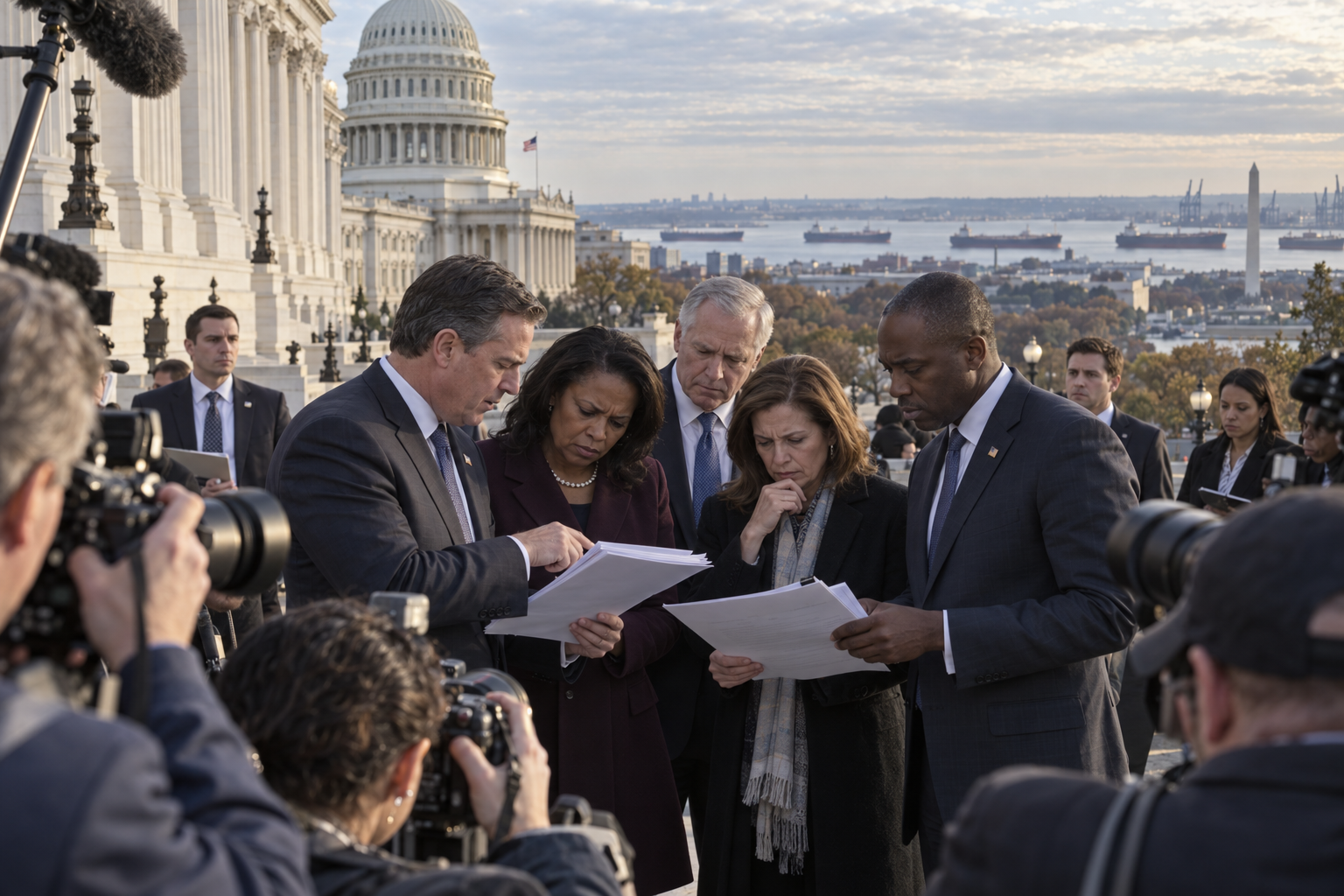
The US House of Representatives has passed a bipartisan bill imposing sweeping sanctions on Russia over its continuing war in Ukraine, sending the legislation to President Donald Trump for his expected signature. The 262–159 vote ended more than a year of congressional delays and obstacles. The measure had already passed the Senate and represents the first Ukraine-related legislation approved by Congress in more than two years.
Named after the late Republican Senator Lindsey Graham of South Carolina, who helped negotiate Trump’s support for the bill before his death in July, the legislation would expand the president’s authority to impose tariffs of up to 100 percent on countries such as China and India that import Russian energy. It would also authorize sanctions against Russian officials, banks and a shadow fleet of tankers used to transport Russian energy and sustain Moscow’s revenues.
Ukrainian President Volodymyr Zelenskyy had urged the Senate to approve the measure. Although support for Ukraine has generally been strong among congressional Democrats, House Democratic Leader Hakeem Jeffries opposed the bill, arguing that its tariff provisions give the White House excessive discretion and contain loopholes that could prevent sanctions from being imposed.
House Speaker Mike Johnson said the legislation would apply “maximum pressure” to Russian President Vladimir Putin and help bring the war to a just end. At a bipartisan news conference after the vote, Democratic Senator Richard Blumenthal, who co-authored the bill with Graham, said he hoped the sanctions would push Putin toward negotiations. The legislation’s passage was celebrated by lawmakers from both parties, and Trump is expected to sign it into law.
Entities: United States House of Representatives, US Senate, Donald Trump, Lindsey Graham, Vladimir Putin • Tone: analytical • Sentiment: neutral • Intent: inform
17-09-2026
The US Congress has passed the Lindsey O Graham Sanctioning Russia Act of 2026, sending it to President Donald Trump for his signature. The legislation would give Trump broad authority to impose sanctions on Russia, its officials, defence-related companies and its so-called shadow fleet of oil tankers. It would also allow tariffs of up to 100 percent on imports from the five largest purchasers of Russian energy, military equipment or countries accused of helping Russia evade sanctions. Russian goods entering the US could face tariffs as high as 500 percent. The measures are intended to reduce Moscow’s ability to finance its war against Ukraine, but they do not automatically activate the tariffs.
China and India, which together account for the overwhelming majority of Russian crude purchases, are expected to face the greatest pressure. China buys approximately half of Russia’s crude exports, while India accounts for about 37 percent. India has warned Washington that the legislation could affect bilateral relations and global energy markets, and said it would protect its trade and economic interests. Its Russian crude imports have already fallen, while China’s reached a record high in January.
China has rejected what it describes as extraterritorial US jurisdiction and defended its energy trade as normal cooperation. It also has an advantage because some Russian crude reaches it through the Eastern Siberia-Pacific Ocean pipeline, avoiding maritime disruptions.
The article argues that the law’s impact will depend on how aggressively Trump uses his authority. Middle Eastern supply routes are already strained by the war involving Iran, Israel and the United States. The Strait of Hormuz, through which roughly one-fifth of global oil previously traveled, has been disrupted, while Saudi Arabia temporarily closed its East-West pipeline after a drone attack. If China and India substantially reduce Russian purchases, competition for alternative supplies could intensify and drive global oil prices sharply higher.
Entities: Donald Trump, United States Congress, Russia, China, India • Tone: analytical • Sentiment: negative • Intent: analyze
17-09-2026
The article examines how a proposed US law could transform India’s reliance on discounted Russian crude from an economic advantage into a major geopolitical liability. The US House of Representatives has passed legislation that would give President Donald Trump authority to impose sanctions on Russia and tariffs of up to 100% on countries continuing to buy Russian oil and gas. India and China would be especially exposed, as they are Russia’s largest customers, with India accounting for 37% of Russian crude exports between December 2022 and August 2026, according to the Centre for Research on Energy and Clean Air.
Russian crude represented 30.3% of India’s crude imports in fiscal 2026, worth $40.8bn. In July, it accounted for more than half of India’s imports and exceeded the combined supply from six other major suppliers. Although discounts have narrowed and shipping, insurance and sanctions risks have increased, replacing Russian oil at scale could raise costs and tighten global markets. India imports more than 88% of its crude, and its refineries cannot always easily switch between crude grades.
The proposed US measures could also harm India indirectly through tariffs on Indian exports to the US, affecting exporters, the rupee, refinery margins and the trade balance. The US imported approximately $104bn of Indian goods in 2025, including electronics, pharmaceuticals, machinery, textiles and petroleum products. The threat comes while India and the US are conducting sensitive trade negotiations.
India also refines Russian crude into fuels that are exported, including to Russia itself, whose refinery sector has been damaged by Ukrainian strikes. Despite having alternatives, India would face higher freight, insurance and crude costs if it shifted suppliers. Its vulnerability is compounded by limited strategic reserves, heavy dependence on imported LPG and concentration of crude supplies among a small number of countries. India has saved an estimated $12.6bn since shifting toward Russian crude after 2022, but the proposed tariff could make those savings far less valuable than the resulting economic and diplomatic costs.
Entities: India, Russia, United States, China, Donald Trump • Tone: analytical • Sentiment: negative • Intent: analyze
17-09-2026
The House of Representatives passed a sweeping Russia sanctions bill by a vote of 262-159, overcoming opposition from several Democratic leaders who warned that the legislation would give President Donald Trump broad new tariff powers. Fifty-eight Democrats supported the measure, while seven Republicans opposed it. The vote took place on the chamber’s final day in session before lawmakers leave Washington until after Election Day.
The Senate approved the bill with overwhelming bipartisan support in August following more than a year of negotiations led by the late Sen. Lindsey Graham of South Carolina. The legislation, now headed to Trump’s desk, is formally titled the Lindsey O. Graham Sanctioning Russia and Iran Act of 2026. It authorizes tariffs of up to 100% on the five largest purchasers of Russian oil or natural gas, with exceptions for countries importing less than 15% of their natural gas from Russia and taking significant steps to reduce those imports. The bill also imposes sanctions on Russian President Vladimir Putin, government officials, oligarchs, banks and other financial institutions.
China and India are identified as the largest buyers of Russian crude oil, while Europe has historically been Russia’s biggest natural-gas customer. At Trump’s request, the bill also extends sanctions targeting Iran’s energy and weapons sectors, although the president may waive them by certifying that doing so is in the national interest of the United States.
House Democratic leaders, including Hakeem Jeffries, Katherine Clark and Pete Aguilar, opposed the bill because they said Trump had not demonstrated a willingness to pressure Russia and could use the tariff authority to increase prices for American families. Other Democrats argued that the measure could undermine long-term support for Ukraine. Republicans countered that tariffs would make sanctions more difficult to evade and cited support from Ukrainian President Volodymyr Zelenskyy’s team.
The legislation nearly stalled during a procedural vote, but support from moderate Democrats Jared Golden and Marie Gluesenkamp Perez helped move it forward. The bill now awaits Trump’s signature or other action.
Entities: Russia sanctions bill, Lindsey O. Graham Sanctioning Russia and Iran Act of 2026, U.S. House of Representatives, U.S. Senate, Donald Trump • Tone: analytical • Sentiment: neutral • Intent: inform
17-09-2026
The U.S. House of Representatives passed the Lindsey O. Graham Sanctioning Russia and Iran Act of 2026, sending the legislation to President Donald Trump for his signature. The measure, introduced by the late Republican Sen. Lindsey Graham of South Carolina, passed the House 262-159 after receiving an 86-11 vote in the Senate the previous month. It has attracted significant bipartisan support in both chambers.
The bill is designed to increase economic pressure on Russia over its continuing full-scale invasion of Ukraine. It would authorize the president to impose tariffs of up to 100% on countries such as China and India if they rank among the five largest purchasers of Russian crude oil or natural gas. Supporters argue that revenue from those sales helps finance Russia’s war effort and that targeting buyers could weaken the Russian economy. The legislation would also impose sanctions on Russian leaders, government officials and financial institutions, while expanding sanctions on Iran.
Opponents, including Democratic Representatives Gregory Meeks, Don Beyer and Richard Neal, support aiding Ukraine but argue that the measure gives the president excessive tariff authority without requiring sanctions against Russia. They warn that the bill could raise prices for Americans and weaken long-term support for Ukraine. Meeks said President Trump could abuse the expanded tariff powers.
Republican Representative Michael McCaul, who worked on the legislation with Graham, defended it as a necessary tool to pressure Russian President Vladimir Putin into negotiations and weaken Russia’s war machine. A White House official confirmed that Trump intends to sign the bill into law.
Entities: Lindsey O. Graham, Donald Trump, Vladimir Putin, Michael McCaul, Gregory Meeks • Tone: analytical • Sentiment: neutral • Intent: inform
17-09-2026
The U.S. House of Representatives has passed a sweeping Russia sanctions bill that would give President Donald Trump authority to impose tariffs of up to 100% on countries purchasing Russian oil. China and India, which together account for the majority of Russia’s crude exports, would be the most exposed. Data from the Center for Research on Energy and Clean Air shows China bought about 50% of Russia’s crude exports by the end of August, while India bought 37%. Turkey and the European Union each accounted for 5%.
Analysts say the bill is unlikely to immediately reduce Chinese or Indian purchases because both countries rely heavily on discounted Russian energy. China faces a major energy-security risk if imports are curtailed, while India has increasingly replaced Middle Eastern supplies with Russian crude following the Iran war. Replacing Russia’s roughly 3.5 million barrels per day of seaborne exports, along with China’s pipeline imports, would be extremely difficult.
The legislation may therefore function primarily as a negotiating tool. Trump could use the tariff authority in discussions with India, which is negotiating a trade agreement with Washington, and with China, whose President Xi Jinping is expected to meet Trump soon. However, imposing the tariffs could provoke Chinese retaliation, worsen tensions ahead of the summit, increase energy prices, and undermine U.S. trade objectives. Analysts expect Beijing to resist restrictions, while Washington may delay or limit their implementation.
India is in a particularly difficult position because it has not finalized its trade deal with the United States and is politically committed to maintaining energy security for its 1.4 billion people. New Delhi has already faced punitive U.S. tariffs over Russian oil purchases, although those duties were later reduced. Indian officials may seek an exemption, but further tariff threats could complicate the trade negotiations and fuel growing anti-U.S. sentiment in India.
Entities: Donald Trump, China, India, Russia, U.S. House of Representatives • Tone: analytical • Sentiment: neutral • Intent: analyze
17-09-2026
The Republican-led US House of Representatives has passed a broad package of new sanctions against Russia over its war in Ukraine. The measure passed 262-159, following an 86-11 vote in the Senate the previous month. It now awaits President Donald Trump’s signature, which he has said he will provide. The legislation is described as the toughest congressional effort against Russia during Trump’s second term.
The sanctions package targets Russia’s energy and defense sectors, President Vladimir Putin, other senior officials, and the country’s so-called shadow fleet of older tankers used to evade existing sanctions. A controversial provision would allow Trump to impose secondary sanctions, including tariffs, on countries that continue relying on Russian oil and gas. China and India are expected to be the main potential targets. The bill also extends sanctions against Iran.
The legislation was drafted in April 2025 by Republican Senator Lindsey Graham, who died suddenly in July. Trump had delayed the bill because his foreign-policy approach favors retaining control over tariffs and sanctions rather than transferring additional authority to Congress.
Opposition came from Democrats who argued that the bill would give Trump excessive power to impose tariffs. House Democratic Leader Hakeem Jeffries said the legislation could give Trump “unfettered authority” to impose tariffs that would hurt Americans. Some Republicans also opposed the bill because they feared that additional tariffs could raise consumer prices before the November midterm elections.
Supporters argue that the measure is necessary to maintain pressure on Russia, and Ukrainian activists welcomed its passage. Ukrainian President Volodymyr Zelenskyy met with lawmakers to lobby for the bill and watched an early procedural vote from the House chamber.
Entities: US Congress, US House of Representatives, US Senate, Donald Trump, Russia • Tone: analytical • Sentiment: neutral • Intent: inform
17-09-2026
India has warned the United States that new tariffs and other measures targeting countries that purchase Russian oil could damage bilateral relations. The warning came from India’s foreign ministry after the US House of Representatives passed a broad sanctions and tariff bill designed to increase economic pressure on Russia over its invasion of Ukraine.
The measures place India in a difficult position. India relies on imported energy and has continued purchasing Russian oil, making energy security a central concern. New US tariffs on such purchases could raise costs, disrupt supplies, and complicate India’s broader economic and diplomatic relationship with Washington. The article’s headline and India’s response indicate that New Delhi intends to defend its access to energy while objecting to what it views as pressure over its trade with Russia.
The US legislation is part of Washington’s effort to punish Russia and intensify pressure related to the war in Ukraine. By targeting buyers of Russian oil, the proposed measures could affect countries that have maintained energy ties with Moscow despite Western sanctions and diplomatic efforts to isolate Russia.
France 24 presents the development as a new point of tension in India-US relations, while also highlighting the wider consequences for global energy markets and international diplomacy. The report, by Emerald Maxwell, provides only limited detail on the bill’s specific provisions or on India’s possible response. Its central message is that India considers protecting energy security a priority and is warning that additional US economic penalties could have consequences beyond the Russia-Ukraine conflict, including for the strategic relationship between India and the United States.
Entities: India, United States/Washington, Russia, Ukraine, India’s foreign ministry • Tone: analytical • Sentiment: negative • Intent: inform
17-09-2026
France 24 reports that loud explosions were heard across Kyiv overnight from Wednesday into Thursday, prompting Ukrainian authorities to issue a missile alert. The incident occurred as the US House of Representatives passed a broad sanctions package aimed at Russian officials and major sectors of the Russian economy. The stated purpose of the measures is to restrict the financial resources available to Russian President Vladimir Putin for continuing the war against Ukraine. The article presents these developments as part of an ongoing live coverage of the conflict, although the supplied content contains no subsequent updates.
The report also reviews key developments from the previous day. Finland’s president said that former US President Donald Trump had strengthened NATO by pressing member states to increase defence spending. He described Finland’s relationship with Trump as pragmatic and characterized him as a leader who acts independently. Separately, Attorney General Todd Blanche rejected questions concerning a Russian oligarch who reportedly paid for a celebration at Donald Trump Jr.’s wedding earlier in the year. Blanche said that President Donald Trump did not know the Russian individual.
European Union foreign policy chief Kaja Kallas called for stronger EU measures against the Kremlin, including consideration of tighter rules on tourist visas for Russian citizens. She argued that such steps were needed to respond to what she described as Moscow’s hybrid attacks. Overall, the article links the immediate security threat in Kyiv with escalating political, financial and diplomatic pressure on Russia from the United States and Europe. The supplied page also indicates that the requested content may no longer be available, so the excerpt appears to be an archived or incomplete version of the live report.
Entities: Kyiv, Ukraine, Russia, United States Congress, US House of Representatives • Tone: urgent • Sentiment: negative • Intent: inform
17-09-2026
The article reports that the US House of Representatives passed a bipartisan Russia-Iran sanctions bill by a vote of 262-159, sending it to President Donald Trump for signature. The measure had previously passed the Senate by 86-11 and is named in honour of the late Senator Lindsey Graham, a prominent critic of Russia and Iran. It would authorize the president and future administrations to impose tariffs of up to 100 per cent on major importers of Russian energy, including India, Japan and some European Union countries, as well as on countries helping Russia evade sanctions. The legislation also targets Russia’s leadership and its so-called shadow fleet of oil tankers, with the stated aim of increasing pressure on Moscow to end its war in Ukraine.
The article says President Trump had initially been reluctant to impose additional sanctions on Russia because he believed they could hinder negotiations, but that his position became more supportive as the war continued. Representative Mike Lawler said the bill would raise the cost of Russian aggression and warned that the threat posed by a possible Ukrainian defeat would extend beyond Ukraine’s borders.
The Iran-related provisions extend the Iran Sanctions Act of 1996, which was due to expire in 2026, effectively preserving sanctions pressure on Iran’s weapons and energy sectors until 2031. The article links this policy to the administration’s Operation Economic Outcast, which seeks to disrupt international financial, technological and material support for the Iranian government.
There is an apparent timing inconsistency in the supplied article: its initial summary says the Senate bill still required House approval and that action was delayed until September, while the headline, later paragraphs and publication update state that the House had already approved it and sent it to the president.
Entities: US House of Representatives, US Senate, President Donald Trump, Lindsey Graham, Darline Graham • Tone: neutral • Sentiment: negative • Intent: inform