21-09-2026
German Chancellor Friedrich Merz has pledged to remain in office after exit polls indicated severe setbacks for his Christian Democratic Union (CDU) in elections in Mecklenburg-Vorpommern and Berlin. In Mecklenburg-Vorpommern, the CDU initially appeared likely to achieve its worst state-election result before falling below the 5% threshold required to remain in the regional parliament. The far-right Alternative for Germany (AfD) was projected to win the largest share of the vote, although other parties are expected to refuse to form a coalition with it. In Berlin, the CDU was projected to lose to Die Linke, while the AfD was also expected to increase its support.
The results came just two weeks after the CDU suffered a major defeat in Saxony-Anhalt, where its vote was reportedly halved and the AfD made substantial gains. Merz, whose approval ratings are poor, has faced speculation that he could be replaced during the current parliamentary term. However, he rejected calls to step aside and said his coalition would continue with planned economic, tax and welfare reforms. He described the reforms as necessary to move Germany forward and as an antidote to the spread of authoritarianism.
AfD co-leader Alice Weidel declared that her party had become the strongest political force and had reached the mainstream. The party’s anti-immigration, German-first and Russia-friendly positions have gained particular traction in Germany’s former communist east, despite some branches being classified as right-wing extremist by domestic intelligence.
Merz’s supporters argue that he inherited many of Germany’s problems and should be given more time. Berlin CDU politician Burkard Dregger said the chancellor should receive the full four-year term. Nevertheless, Merz’s rightward shift on immigration has failed to weaken the AfD and has alienated voters on the left, leaving the chancellor and his party under considerable pressure.
Entities: Friedrich Merz, Christian Democratic Union (CDU), Alternative for Germany (AfD), Alice Weidel, Burkard Dregger • Tone: analytical • Sentiment: negative • Intent: inform
21-09-2026
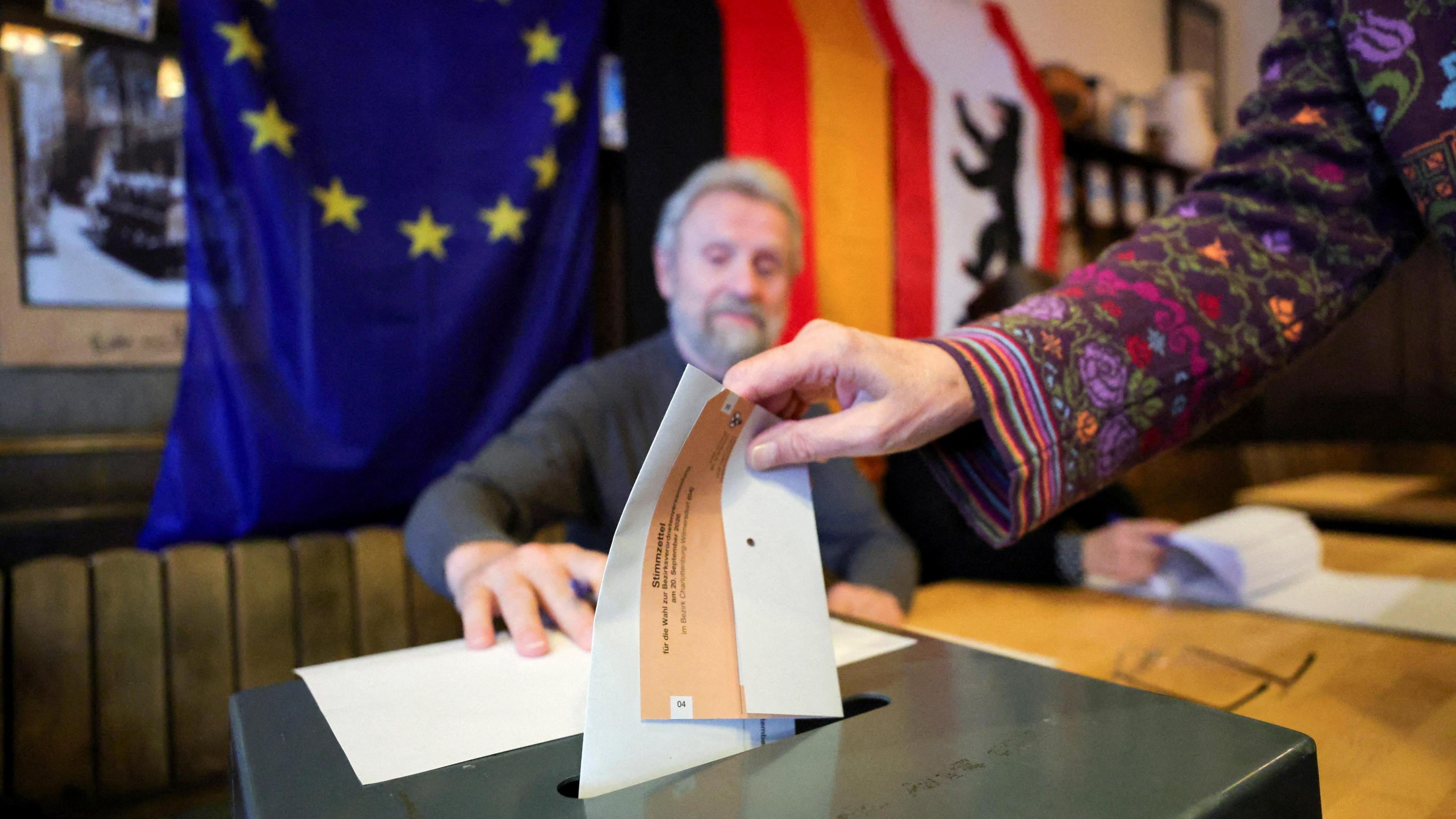
Germany’s final state elections of 2026 produced a major political realignment. In Berlin, the Left became the strongest party for the first time, winning a projected 25.7% of the vote. The CDU placed second with 18.8%, followed by the AfD, Greens and SPD. The result ended the previous CDU-SPD majority and leaves the Left facing difficult coalition negotiations with the SPD and Greens. Both potential partners have made cooperation conditional on the Left taking a firm stance against antisemitism following controversial remarks at a campaign event in Neukölln.
In Mecklenburg-Western Pomerania, the AfD narrowly led the SPD, taking 38.2% compared with the SPD’s 35.5%. The CDU suffered its worst result in the state’s history, receiving only 4.9%. If that figure holds, the CDU would fail to win seats in a state parliament anywhere in Germany for the first time. AfD candidate Leif-Erik Holm claimed the right to form a government, although SPD premier Manuela Schwesig could remain in office if she assembles a coalition.
CDU leader and Chancellor Friedrich Merz described the Mecklenburg-Western Pomerania result as a “disaster” and said his party had been squeezed out by the contest between the SPD and AfD. He used the results to warn that Germany faced economic disruption, declining institutional trust and rising authoritarianism, calling for reforms and a national “new beginning.”
The article also highlights the contrasting political themes behind the results. Schwesig’s campaign focused on opposing the AfD, while Berlin Left candidate Elif Eralp centered her campaign on rent controls, social housing and public ownership of large housing portfolios. Eralp cited New York Mayor Zohran Mamdani’s success as evidence that left-wing politics could also prevail in Berlin. Her potential election as governing mayor would make her the city’s first mayor from a migrant background. The results demonstrate growing polarization, the CDU’s weakening position and the competing appeal of left-wing social policy and far-right nationalism.
Entities: Germany’s 2026 state elections, Berlin, Mecklenburg-Western Pomerania, The Left, Alternative for Germany (AfD) • Tone: analytical • Sentiment: negative • Intent: inform
21-09-2026
The far-right Alternative for Germany (AfD) emerged as the strongest party in elections in Mecklenburg-Western Pomerania, dealing a major political setback to Chancellor Friedrich Merz and his conservative party. According to exit polls broadcast by ARD, the AfD won about 37% of the vote, narrowly ahead of the centre-left Social Democrats at 35.5%. Merz’s conservatives received only 5.5%, barely clearing the threshold required to enter the state parliament. Although the AfD is unlikely to form a government because other major parties refuse to cooperate with it, the result represents the worst performance in a German state election for Merz’s party since 1949.
The result was another first-place finish for the AfD within a month, following its strong showing in Saxony-Anhalt. The party is also leading national opinion polls, intensifying pressure on Merz, whose approval ratings have fallen amid unpopular reforms. Merz described the outcome as “a disaster” but indicated that he would remain chancellor and continue pursuing his reform agenda. He called a party meeting to discuss the political consequences.
Berlin held elections on the same day. The far-left Linke led with 24.5%, followed by Merz’s conservatives at 20%, while the AfD increased its support to 16%. The victories have amplified concerns across Germany and Europe because the AfD seeks tougher deportation policies, renewed energy ties with Russia, and Germany’s withdrawal from the euro. Once a fringe eurosceptic movement, it has become Germany’s most popular party in just over a decade. The party views its recent state-level gains as a potential foundation for winning the 2029 federal election.
Entities: Alternative for Germany (AfD), Friedrich Merz, Merz’s conservative party, Mecklenburg-Western Pomerania, Social Democratic Party • Tone: analytical • Sentiment: negative • Intent: inform