24-09-2026
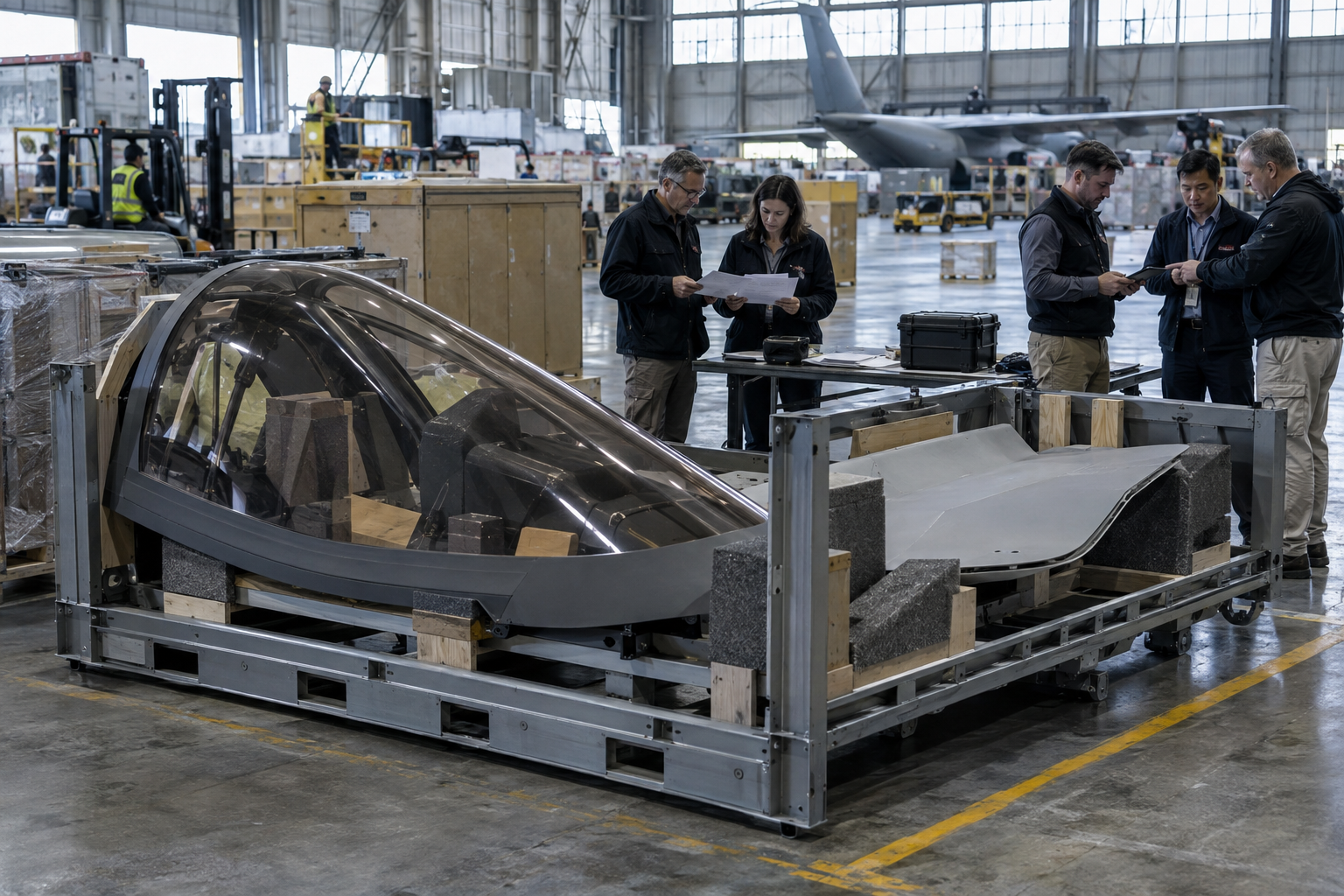
The United States is investigating reports that F-35 fighter-jet components traveling from Australia to the US were unexpectedly rerouted to Hong Kong. The shipment reportedly included a cockpit canopy designed with radar-deflecting technology and a weapons-bay door. The Pentagon’s F-35 Joint Programme Office says it is working with US authorities and industry partners to retrieve the components, investigate the incident and prevent a recurrence. Australia and Lockheed Martin are also assisting, although Australian Defence Minister Richard Marles said responsibility for managing the issue ultimately rests with the US and Lockheed Martin.
Authorities have not explained why the shipment went to Hong Kong, and there is no evidence presented that China caused the diversion or accessed the parts. China’s Foreign Ministry said it was unaware of the incident. Marles characterized the components as not sensitive. Australia hosts a regional F-35 spare-parts warehouse at Williamtown and participates in the international supply network, but Australian officials have said Canberra does not control exports from that facility. The programme’s logistics involve numerous countries and subcontractors, making the supply chain extensive and complex.
The investigation is significant because the F-35 is a sophisticated fifth-generation stealth aircraft, and the reported incident raises questions about whether its technology could be exposed. The article notes previous US allegations of Chinese cyber espionage involving the Joint Strike Fighter programme, as well as other espionage cases. However, Al Jazeera defence editor Alex Gatopoulos cautions that individual, potentially non-essential components may offer China little useful information, particularly given China’s own advanced fighter development. The article therefore presents the diversion as a matter under investigation, while emphasizing that its cause, destination-related access, and potential security impact remain unconfirmed.
Entities: United States, China, Australia, Hong Kong, F-35 Joint Strike Fighter programme • Tone: analytical • Sentiment: neutral • Intent: inform
24-09-2026
The Pentagon is investigating how a shipment of unserviceable F-35 Lightning II components being sent from Australia to the United States was diverted, and is working with U.S. authorities and industry partners to recover the parts. A source briefed on the incident told CBS News that the shipment was diverted to Hong Kong. Bloomberg News reported that the parts are now in China, but the Pentagon has not confirmed that account.
The parts were being transported for replacement or repair and are reportedly associated with the aircraft’s canopy and weapons bay door. They are not believed to include advanced avionics, but could reveal information about F-35 stealth technology. The canopy, for example, is coated with radar-absorbent material that helps reduce the aircraft’s visibility to enemy radar.
The report also places the incident amid U.S.-China tensions over Taiwan. It is unclear whether the missing components were discussed during Chinese President Xi Jinping’s meeting with President Donald Trump. China wants the United States to halt arms sales to Taiwan and oppose Taiwanese independence. The article explains that ending U.S. strategic ambiguity would mean declaring whether America would intervene militarily in the event of a Chinese attack.
The article notes that Trump previously made no commitment on a pending Taiwan arms sale, despite calls from lawmakers in both parties to approve it. Three Republican senators—Mitch McConnell, John Cornyn, and Lisa Murkowski—asked Secretary of State Marco Rubio and Defense Secretary Pete Hegseth why the administration had not released congressionally approved funding for Taiwan or approved a $14 billion arms-sale package. They argued that the funding and sales are important to deterring conflict, and questioned why the administration was withholding purchases it had urged Taiwan to make.
Entities: Pentagon, F-35 Lightning II, F-35 Joint Program Office, Australia, Hong Kong • Tone: analytical • Sentiment: neutral • Intent: inform
24-09-2026
Chinese authorities are reportedly in possession of components from an F-35 stealth fighter after a shipment traveling from Australia to the United States was diverted to Hong Kong in late May. Bloomberg, citing sources, reported that UPS was transporting a cockpit canopy and a weapons bay door. Both components reportedly had radar-absorbing coatings that contribute to the aircraft’s stealth capabilities. The reason for the diversion remains unclear.
Australian Defense Minister Richard Marles said Australia knew about the shipment and was working with the United States and Lockheed Martin to determine how it could assist the investigation. He also said he understood that no sensitive parts were in the missing shipment. Lockheed Martin, UPS and the Pentagon had not immediately responded to CNBC’s requests for comment.
The report has drawn attention because the F-35 is a fifth-generation fighter whose sale the U.S. restricts to close partners and allies. The article cites Turkey’s 2019 exclusion from the F-35 program after it acquired Russia’s S-400 air-defense system, amid concerns the system could help gather intelligence on the aircraft. It also notes U.S. prosecutors’ statements that China has targeted F-35-related U.S. military data in past espionage cases.
The shipment story comes as a $24 billion F-35 sale to Saudi Arabia was approved the previous week. Some U.S. lawmakers have raised concerns that the technology could reach China. Congressman Raja Krishnamoorthi said the intelligence community had warned the sale could place sensitive American military technology within reach of the Chinese Communist Party. Australia, Belgium and the United States are among the aircraft’s users; Japan, Canada and Singapore have ordered it. The article also reports that an F-35 was damaged by enemy fire during the Iran conflict, according to the Department of Defense.
Entities: F-35 stealth fighter, Hong Kong, Australia, United States, UPS • Tone: analytical • Sentiment: neutral • Intent: inform
24-09-2026
China has taken possession of a cockpit canopy and weapons-bay door from an Australian F-35 fighter after the parts were unexpectedly diverted to Hong Kong while being shipped to the United States for inspection and possible repair or disposal. The parts, supplied by Lockheed Martin and coated with radar-absorbing material, were transported by UPS. The aircraft or shipment stopped in South Korea before being routed to Hong Kong; it remains unclear why the route changed or whether the diversion was deliberate. China has not returned the parts.
The incident has prompted concern because the components may reveal information about the F-35’s stealth capabilities, and because it emerged as Chinese President Xi Jinping arrived in the United States for a state visit hosted by President Donald Trump. Senator Elissa Slotkin criticized the contrast between the visit and China’s possession of sensitive military technology, while noting she had not received a briefing on the matter. The article also describes longstanding US concerns about Chinese espionage targeting the F-35 and potential technology exposure through proposed sales to the United Arab Emirates and Saudi Arabia.
The Pentagon says it is working with US authorities and industry partners to retrieve the components, investigate the incident, and establish safeguards against a recurrence. UPS reported the incident to the State Department’s Directorate of Defense Trade Controls. Australia is examining what happened on its end, and Lockheed Martin said the Defense Department selected the transportation parameters and that the company is working with the carrier on preventive measures.
The shipment is under review by multiple congressional bodies, including House committees on Foreign Affairs and Armed Services and a Senate Armed Services subcommittee. Officials had discussed the issue in a closed Senate hearing in June and expressed hope that the parts would be returned. The article places the incident in the wider context of the F-35’s strategic importance, its use by allied countries, and Australia’s role as an Indo-Pacific parts and maintenance hub.
Entities: F-35 stealth fighter, Cockpit canopy and weapons-bay door, China, Hong Kong, South Korea • Tone: analytical • Sentiment: negative • Intent: inform