24-09-2026
Ahead of Israeli Prime Minister Benjamin Netanyahu’s address to the United Nations General Assembly, the article describes continuing hardship in Gaza nearly three years after the war began. A ceasefire brokered a year earlier by U.S. President Donald Trump and Arab allies halted major military operations, secured the release of the remaining hostages and increased humanitarian access. However, the agreement’s broader goals have not been achieved: there is no new Palestinian administration supported by international forces, and Israel continues deadly strikes and control over more than half of the territory.
Israel says progress on these matters depends on Hamas fully disarming. Hamas and the Trump administration, by contrast, maintain that these steps should proceed in parallel. Netanyahu has taken a firmer position ahead of elections and has openly defied Trump, described in the article as his most important ally. The resulting political impasse has left Palestinians in Gaza in precarious conditions, many living in tent camps described as infested with rodents, amid neighborhood rubble or in damaged buildings at risk of collapse.
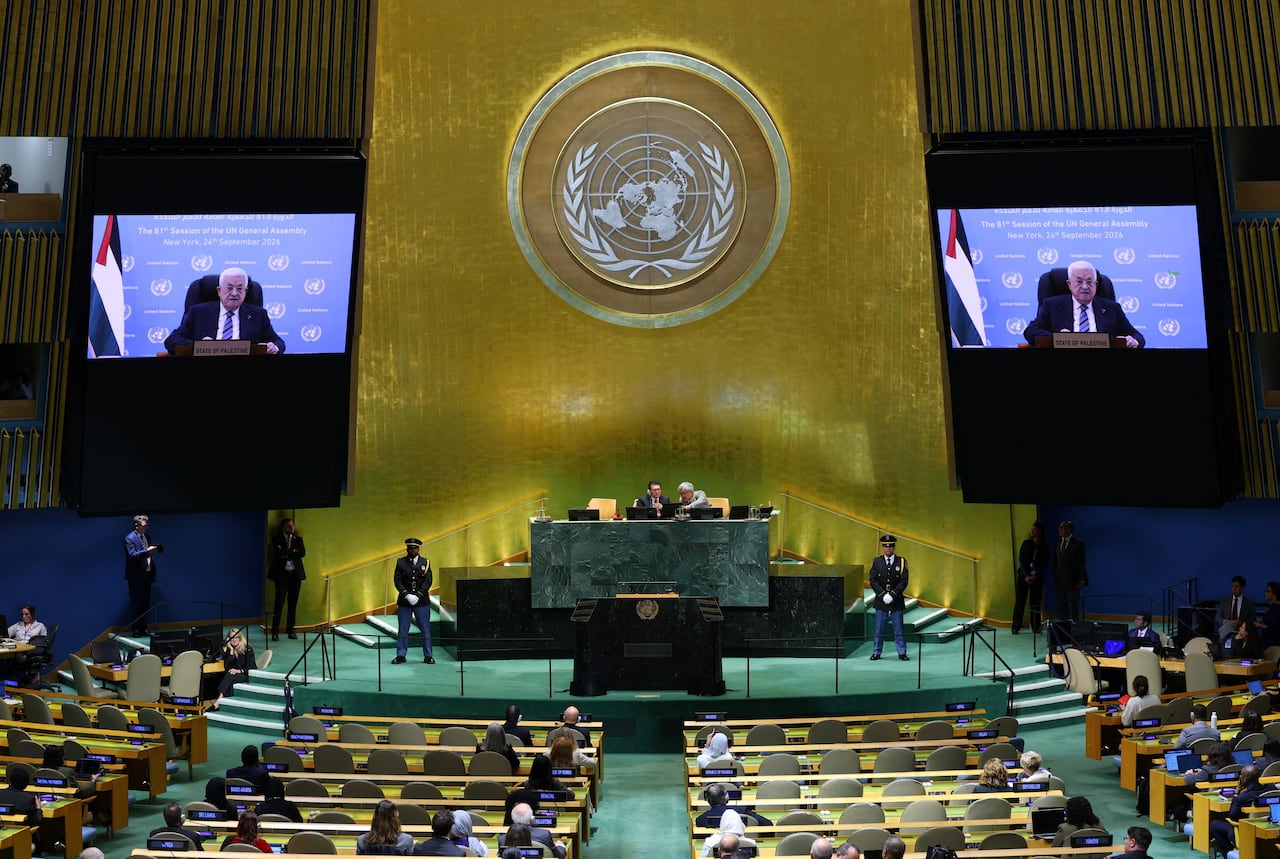
The article reports that Gaza’s Ministry of Health says more than 1,300 Palestinians have been killed since the ceasefire. It also notes that several international non-governmental organizations and a UN commission have found that Israel committed genocide in Gaza. Separately, Palestinian President Mahmoud Abbas will not attend the General Assembly in person for a second year because the United States refused him a visa. He is scheduled to address the assembly by video on the same day as Netanyahu. The article concludes by noting that, as the UN host country, the United States is required under its agreement with the organization to allow diplomats from all member states to attend meetings.
Entities: Gaza Strip, Benjamin Netanyahu, Mahmoud Abbas, Donald Trump, United Nations General Assembly • Tone: analytical • Sentiment: negative • Intent: inform
24-09-2026
The Al Jazeera video item looks back at Benjamin Netanyahu’s appearances before the United Nations General Assembly (UNGA). Its brief description says Netanyahu has indicated that his upcoming address will include “surprises,” then characterizes a recurring purpose of his UN speeches: presenting Israel as under threat, confronting or antagonising regional rivals, and defending policies directed at Palestinians. The item thus frames the speeches not simply as diplomatic remarks, but as a repeated way for the Israeli prime minister to advance a political account of Israel’s security and its regional relationships while justifying his government’s treatment of Palestinians.
The provided text does not include the video transcript, examples from individual speeches, or further detail about the promised surprises. It also does not identify which regional rivals or Palestinian policies are being referenced. Accordingly, the central focus is the pattern asserted in the description, rather than a detailed account or independent assessment of Netanyahu’s remarks over time. The item is titled “Netanyahu at UNGA over the years” and was published on September 24, 2026. Its critical framing is apparent in the choice of language—particularly “antagonise regional rivals” and “defend policies targeting Palestinians”—while the short description supplies no quotations or additional evidence to elaborate on those claims.
Entities: Benjamin Netanyahu, United Nations General Assembly (UNGA), Israel, Palestinians, Israeli prime minister • Tone: analytical • Sentiment: negative • Intent: analyze
24-09-2026
Donald Trump's Board of Peace has announced a $2.45bn Gaza Recovery Programme, intended to fund 66 projects over six months, including housing, diesel power generation and waste removal. The announcement was made during a meeting alongside the UN General Assembly. The board says $18bn has been pledged, but only $280m has been delivered, and estimates that Gaza's full recovery will cost about $71bn over the next decade. It did not announce when reconstruction will begin.
Efforts to implement Trump's Gaza peace plan remain stalled nearly a year after Israel and Hamas agreed to a ceasefire. Disagreement over Hamas's disarmament and the timing of an Israeli troop withdrawal is a central obstacle. Hamas has said it would give up its weapons if Israel withdraws in phases; Israel says Hamas must disarm first. Israeli strikes have continued, and the article reports severe conditions for Gaza's 2.1 million residents, including widespread displacement, damaged infrastructure and limited access to clean water and sanitation.
Board member Jared Kushner acknowledged delays, while US envoy Steve Witkoff described progress, citing the return of hostages, the continuing ceasefire and humanitarian aid. Other challenges include raising funds, removing unexploded ordnance and tunnels, providing security, and reaching agreement on Gaza's governance. The article reports that at least 1,408 Palestinians have been killed in Israeli attacks since the ceasefire began, according to Gaza's Hamas-run health ministry, whose figures the UN considers reliable. Israel's military says five of its soldiers and one contractor have died during the same period.
The report places the recovery plan in the wider context of the war, which began with the Hamas-led 7 October 2023 attack on southern Israel and Israel's subsequent military campaign in Gaza. It also notes that the Board of Peace, initially associated with Gaza, has since broadened its remit to conflicts worldwide.
Entities: Donald Trump, Board of Peace, Gaza Recovery Programme, Gaza, Israel • Tone: analytical • Sentiment: negative • Intent: inform
24-09-2026
Actors Susan Sarandon and Hannah Einbinder were among more than two dozen people detained in New York City during a protest held as Israeli Prime Minister Benjamin Netanyahu addressed the United Nations General Assembly. Photographs showed both actors handcuffed by New York Police Department officers; Sarandon wore a shirt reading “fund people not bombs.” Democratic congressional candidate Darializa Avila Chevalier and New York City Council member Chi Osse were also arrested. CBC said it had contacted the actors’ representatives for comment.
About 200 protesters gathered near the UN headquarters. Dozens blocked traffic and chanted against arms supplies to Israel, while the rally was organized by Jewish Voice for Peace, a Jewish activist group that supports Palestinians. Separately, dozens of delegates walked out of the assembly hall as Netanyahu began speaking. He called the departing delegates “moral cowards,” while supporters in the gallery chanted in Hebrew that the people of Israel live.
The article places the protest amid international criticism of Israel’s actions, particularly in Gaza, and ahead of an Israeli election expected to serve as a referendum on Netanyahu’s responsibility for security failures surrounding the Hamas-led Oct. 7, 2023, attacks and his handling of Israel’s international standing. New York Mayor Zohran Mamdani had said the United States should honour the International Criminal Court’s arrest warrant for Netanyahu, who is wanted over alleged war crimes and crimes against humanity in Gaza. The article notes that the United States is not a member of the court and New York City cannot make such an arrest.
The report also describes Palestinian President Mahmoud Abbas addressing the UN by prerecorded video from Ramallah after the United States denied visas to him and other senior Palestinian officials for the second consecutive year. Abbas said Palestinians faced one of the most dangerous periods in their history and cited the occupation in the West Bank and the war in Gaza.
Entities: Susan Sarandon, Hannah Einbinder, Benjamin Netanyahu, Mahmoud Abbas, Zohran Mamdani • Tone: neutral • Sentiment: negative • Intent: inform
24-09-2026
Israeli Prime Minister Benjamin Netanyahu used his address to the 81st United Nations General Assembly to reject allegations that Israel committed genocide and war crimes in Gaza, calling the genocide accusation “the biggest lie of the century.” Many delegates walked out as he approached the podium, following a call from the Palestinian Mission to the UN for a coordinated protest. Netanyahu denounced those who left as “moral cowards,” argued that Israel’s actions also protect other countries from Iran, and said attacking Iran was an easy decision. He thanked U.S. President Donald Trump for acting against Iran and said Israel would continue fighting because it had no other choice. Netanyahu also recalled the Hamas-led Oct. 7, 2023, attack and Israel’s 2024 pager operation against Hezbollah.
Earlier, Palestinian President Mahmoud Abbas addressed the assembly by pre-recorded video from Ramallah after the United States denied visas to him and other senior Palestinian officials. Abbas described the situation as one of the most dangerous periods in Palestinian history, citing Israel’s occupation of the West Bank and the war in Gaza. He urged countries to stop remaining silent or supplying Israel with weapons, and called for international action to protect Palestinians and advance a two-state solution. Abbas also argued that Gaza, East Jerusalem and the West Bank should ultimately be governed together under one state, government, law and legitimate authority.
The article notes that Netanyahu opposes the establishment of a Palestinian state while he leads Israel and rejects the Palestinian Authority as a peace partner. Abbas has led the Palestinian Authority since 2005, but its public support has declined amid allegations of corruption and Israeli settler expansion. Although Palestine is recognized by a majority of UN member states, that recognition has not ended Israel’s occupation. The Palestinian Authority has also been largely sidelined from discussions about Gaza’s future, which have instead involved a U.S.-backed transition process.
Entities: Benjamin Netanyahu, Mahmoud Abbas, United Nations General Assembly, Gaza war, Genocide allegations • Tone: analytical • Sentiment: neutral • Intent: inform
24-09-2026
Israeli Prime Minister Benjamin Netanyahu addressed the U.N. General Assembly amid mounting international criticism of Israel’s military actions in Gaza and the occupied West Bank. As he began speaking, many delegates left the hall. Netanyahu called those who remained “moral cowards” if they did not also leave, then defended Israel’s response to Hamas’s October 7, 2023, attack, saying Israel had “rose and fought like lions.” He praised U.S. support and President Trump, and vowed that Israel would continue to defend itself.
The article describes the trip as unusually brief, in part because Netanyahu was due to return to Israel for Sukkot. Although he was expected to focus on Iran, he also defended Israel’s military campaigns and addressed criticism from New York City Mayor Zohran Mamdani. Netanyahu called Mamdani antisemitic and accused him of spreading lies about Israel and supporting Hamas. Mamdani had criticized Netanyahu and discussed efforts to have him detained under an International Criminal Court warrant, while acknowledging that New York City could not make the arrest. Protests in New York led to nearly two dozen arrests.
The speech followed criticism from several leaders. British Prime Minister Andy Burnham condemned Hamas’s attack but called Israel’s response unjustified, citing civilian deaths and insufficient aid in Gaza. French President Emmanuel Macron criticized Israeli actions in the West Bank. Netanyahu rejected Macron’s comments and cited the killing of French citizen Netanel Shukrun, which he attributed to a Hamas attacker; Hamas praised the attack but did not claim responsibility. Jordan’s King Abdullah called for sanctions and diplomatic isolation of Israel. Overall, the article reports Netanyahu’s defense of Israel alongside the growing diplomatic criticism and protests surrounding his appearance.
Entities: Benjamin Netanyahu, Zohran Mamdani, Emmanuel Macron, Andy Burnham, King Abdullah • Tone: analytical • Sentiment: neutral • Intent: inform
24-09-2026
Israeli Prime Minister Benjamin Netanyahu used his address to the United Nations General Assembly on September 24, 2026, to reject allegations that Israel committed genocide in Gaza, calling them “the biggest lie of the century.” His combative speech defended Israel’s military actions, including its attack on Iran, which he described as one of the easiest decisions he had made. He argued that Israel’s actions also protected other countries and said some leaders privately thanked Israel for striking Iran’s nuclear facilities. Netanyahu criticized the delegates who walked out as “moral cowards”; many seats were empty as he spoke, following a coordinated walkout urged by the Palestinian Mission to the UN. The Mission said the protest was intended to oppose alleged genocide, war crimes and illegal occupation. Israel rejects those allegations.
Netanyahu also recalled the October 7, 2023, Hamas attack, comparing its death toll of about 1,200 to 40,000 American deaths, and displayed a pager as he referenced Israel’s 2024 operation against Hezbollah in Lebanon, in which thousands were wounded and 12 people, including two children, were killed. He thanked US President Donald Trump for action against Iran and declared that Israel would keep fighting because it had no other choice.
The address came amid international accusations of Israeli war crimes and genocide, and domestic political tensions ahead of Israeli elections. Netanyahu also faced criticism from New York Mayor Zohran Mamdani, who called him a war criminal and urged federal authorities to enforce an International Criminal Court warrant, while acknowledging that New York City could not do so itself.
On the West Bank, Netanyahu characterized settler violence as the work of a “handful” of young delinquents and said he opposed vigilantism, while accusing foreign leaders and the press of exaggerating the problem. The article notes that arrests of settlers involved in attacks have been rare and that settlements are considered illegal under international law by much of the international community. Palestinians seek the West Bank and East Jerusalem for a future state; Netanyahu opposes Palestinian statehood under his leadership and says the Palestinian Authority is not a peace partner.
Entities: Benjamin Netanyahu, Israel, Gaza Strip, United Nations General Assembly, Zohran Mamdani • Tone: analytical • Sentiment: neutral • Intent: inform
24-09-2026
France 24 presents a 39-minute, 34-second replay of Israeli Prime Minister Benjamin Netanyahu speaking at the United Nations General Assembly (UNGA). The page identifies the video as issued on September 24, 2026, and updated later that day. It does not provide a speech transcript or detailed account of the remarks; instead, its short description characterizes Netanyahu’s appearance as a forceful defense of Israel’s actions in the region.
According to the description, Netanyahu spoke as Israel faced growing international isolation and as he approached elections that he could lose. It also notes that dozens of delegates streamed out during the address, indicating visible opposition or disengagement in the assembly hall, though the page gives no further explanation of their reasons or timing. The article therefore frames the speech in the context of both diplomatic pressure and domestic political risk, without detailing the policies or events Netanyahu discussed.
The page’s keywords include Benjamin Netanyahu, Israel, Iran and Donald Trump, but the supplied text does not explain how Iran or Trump featured in the speech. Other material on the page consists of video-player notices, related-story links and website navigation, rather than additional reporting on the address. The available article is thus primarily a video replay accompanied by a brief editorial summary; the linked footage is the main source for the speech itself.
Entities: Benjamin Netanyahu, Israel, United Nations General Assembly (UNGA), United Nations, Iran • Tone: neutral • Sentiment: neutral • Intent: inform
24-09-2026
Hundreds of demonstrators gathered near the United Nations in New York on Thursday to call for Israeli Prime Minister Benjamin Netanyahu’s arrest and protest Israel’s war in Gaza and US arms sales to Israel. Police and organizers said 104 people were arrested as NYPD officers cleared First Avenue before Netanyahu’s address to the UN General Assembly. Those taken into custody included Darializa Avila-Chevalier, a Democratic Socialists of America member and congressional candidate endorsed by Mayor Zohran Mamdani; several progressive City Council members; state Assemblywoman Emily Gallagher; actors Susan Sarandon and Hannah Einbinder; and activist Chelsea Manning. Avila-Chevalier’s campaign said she would not let a person it called a war criminal move through the city unchallenged.
The rally was organized by Jewish Voices for Peace and the DSA. Protesters chanted against arming Israel and accused Netanyahu of genocide, while some displayed an effigy of him in prison clothing. The article notes that the International Criminal Court issued an arrest warrant for Netanyahu over alleged crimes against humanity, while the United States does not recognize the court’s authority. Netanyahu arrived at the UN as scheduled and, during his speech, criticized Mamdani, who had not attended the protest.
The demonstration included tense exchanges between pro-Palestinian protesters and Netanyahu supporters, with police separating the groups. One supporter, Beth Phillips, said Jewish people were at risk under Mamdani’s administration. Later, a separate Palestine Youth Movement rally drew more than 2,000 people, according to police, and marched from Bryant Park toward the UN. The march disrupted traffic near Grand Central Terminal, prompting police to redirect commuters.
Entities: Benjamin Netanyahu, Zohran Mamdani, Darializa Avila-Chevalier, Susan Sarandon, Chelsea Manning • Tone: emotional • Sentiment: negative • Intent: inform
24-09-2026
The article reports on Israeli Prime Minister Benjamin Netanyahu’s speech to the UN General Assembly in New York on September 24, 2026, in which he criticized Mayor Zohran Mamdani over his opposition to Israel and alleged that Jewish residents feel increasingly unsafe in the city. Netanyahu accused Mamdani of repeatedly calling Israel’s actions in Gaza genocide and of trying to prevent him from appearing at the UN. He rejected the genocide allegation, saying Israel had prevented genocide, and invoked the October 7, 2023, Hamas attack to argue that Israel’s actions prevented further killings.
Netanyahu also criticized Mamdani’s associations and past comments, including his friendship with Hasan Piker, whom Netanyahu said had claimed America deserved 9/11, and social-media posts by Mamdani’s wife that Netanyahu said praised the October 7 attack and questioned Tel Aviv’s existence. The article says Mamdani had campaigned on arresting Netanyahu in New York, but later acknowledged his administration could not find a legal route to do so under an International Criminal Court warrant. Mamdani has called Netanyahu a war criminal and previously encouraged anti-Israel demonstrators to protest, but said he would not join protests during the General Assembly. During Netanyahu’s speech, he posted a video of Palestinian families planting an olive tree with him at Gracie Mansion.
Netanyahu further tied Mamdani’s rhetoric to antisemitism and cited threats and attacks against Jews in New York. The article reports NYPD figures showing anti-Jewish hate crimes up 8% so far that year, with 229 reported incidents among 425 total hate crimes through August; 27 anti-Muslim attacks were also recorded. After the speech, Mamdani called Netanyahu’s claims baseless and said they were intended to sanitize Israel’s actions in Gaza, adding that Netanyahu remained subject to an ICC arrest warrant alleging war crimes and crimes against humanity.
Entities: Benjamin Netanyahu, Zohran Mamdani, Hasan Piker, New York City, United Nations General Assembly • Tone: emotional • Sentiment: negative • Intent: inform
24-09-2026
Israeli Prime Minister Benjamin Netanyahu told the UN General Assembly that Iran would lose its war with the United States and Israel, declaring that Israel had “no other choice” but to win. He invoked the words of his late brother Yoni, who served in the 1967 Six-Day War, and cited past Israeli military actions, including the 2024 pager explosions targeting Hezbollah members, as examples of the country’s resolve. He displayed a pager during the speech.
Netanyahu defended Israel’s actions against Iran, saying that its nuclear facilities had to be destroyed to prevent a threat to Israel and the wider world. He argued that Israel’s operations also protected countries whose delegates had walked out of the hall, and criticized those who left as “cowards.” Representatives from Iran, the Palestinian Authority, Qatar and other nations were among those who departed. Iran’s delegation left behind a photograph of Qassem Soleimani, killed in a US airstrike in 2020.
The prime minister praised President Donald Trump’s leadership while acknowledging differences with him, and said the US and Israel had acted together to protect themselves and “save civilization.” He also held up a Starlink device, arguing that Iran’s regime feared its people gaining internet access. Trump had left New York before the address.
Netanyahu’s speech included attacks on Qatar for alleged efforts to spread anti-Israel messaging, on Turkish President Recep Tayyip Erdoğan for what Netanyahu called anti-Semitic rhetoric and authoritarian conduct, and on New York City Mayor Zohran Mamdani. Responding to genocide accusations, Netanyahu denied that Israel had committed genocide and claimed instead that it had prevented one. The address came as Netanyahu faced an uphill effort to remain in power ahead of Israel’s October 27 elections.
Entities: Benjamin Netanyahu, Iran, United Nations General Assembly, United States, Israel • Tone: analytical • Sentiment: neutral • Intent: inform
24-09-2026
The article reports on Israeli Prime Minister Benjamin Netanyahu’s address to the United Nations General Assembly, where he rejected accusations that Israel committed genocide in Gaza, calling them “the biggest lie of the century.” His speech came after several days of remarks by world leaders condemning Israel’s war in Gaza and accusing him of orchestrating genocide against Palestinians. The article says scores of delegates left the assembly hall in protest as Netanyahu took the podium. He called those who walked out “moral cowards” and argued that Israel’s actions, including its war against Iran, were necessary for its defense. Netanyahu said attacking Iran had been “one of the easiest decisions” he had made. He also claimed that Israel was defending countries whose delegates had left the hall, asserting that some of their leaders privately thanked Israel for striking Iran’s nuclear capabilities. The report describes Netanyahu as emotional and indignant at points, noting that he addressed critics including New York’s mayor. It also situates the speech in the context of a difficult re-election race expected the following month. The article’s focus is Netanyahu’s forceful defense of Israeli policy at the UN and the visible protest by delegates, alongside his rejection of the genocide allegations and justification of military action against Iran.
Entities: Benjamin Netanyahu, United Nations General Assembly, Israel, Gaza, Iran • Tone: emotional • Sentiment: negative • Intent: inform
24-09-2026
Israeli Prime Minister Benjamin Netanyahu is expected to spend less than eight hours in New York for an address to the United Nations, a sharp contrast with his week-long US visit in 2025, when he met President Donald Trump. The brief trip, and the absence of any announced meetings with US officials, reflects strained relations between the two countries amid the Gaza war and tensions over West Bank settlements.
Netanyahu’s office said he would meet nine world leaders, most of them from Latin America, as Israel seeks to strengthen ties beyond traditional European partners. Former Israeli ambassador to Washington Michael Oren described the lack of a meeting with the US president, secretary of state or another senior American figure as a diplomatic blow, particularly before Israel’s Oct 27 election. Netanyahu’s office said his schedule was tight and that he needed to return before the Jewish holiday of Sukkot.
Polls suggest Netanyahu could lose the election, though the article notes he remains a formidable political contender. His security credentials have been weakened by the Hamas-led Oct 7, 2023, attacks on Israel. The article also describes disagreements between Trump and Netanyahu over the Iran conflict: after jointly launching a war in February, Trump sought to withdraw from it, while Israel opposed a US interim deal with Tehran in June. That deal later unravelled.
Israel’s international position has also deteriorated since the Gaza war began. US public support for Israel has fallen, especially among Democrats, and Britain, France and Canada recently announced sanctions targeting Israeli settlements in the West Bank. Washington’s response to those measures was muted. The article presents Netanyahu’s limited New York visit as a sign of broader diplomatic difficulties, compounded by domestic political pressure and unresolved regional conflicts.
Entities: Benjamin Netanyahu, Donald Trump, Michael Oren, Israel, United States • Tone: analytical • Sentiment: negative • Intent: analyze
24-09-2026
The provided article excerpt reports on Israeli Prime Minister Benjamin Netanyahu’s speech to the United Nations General Assembly as an election approaches. Netanyahu sharply criticized leaders who had condemned U.S.-Israeli attacks on Iran, accusing them of “mind-blowing hypocrisy.” He also attacked European governments, saying they were “succumbing to antisemitic mobs.” The excerpt describes further pointed remarks aimed at Turkey’s leader, whom Netanyahu called a “tyrant,” and Zohran Mamdani, whom he labeled the “antisemitic mayor of New York” and associated with “Hamas buddies.”
The headline characterizes Netanyahu as “unabashed” and frames the speech in the context of the approaching election. The article’s available text therefore presents the address as a forceful, confrontational defense of his position and an attack on critics, delivered before an international audience. The excerpt does not provide the responses of the leaders or groups Netanyahu criticized, further details about the attacks on Iran, or information about the election. Because only a short portion of the article was supplied, those broader details cannot be established from the provided material.
Entities: Benjamin Netanyahu, Zohran Mamdani, United Nations General Assembly, Israel, United States • Tone: analytical • Sentiment: negative • Intent: inform
24-09-2026
The supplied text is only the headline, byline, dateline, and opening sentence, so it does not contain enough article content to support a reliable 200–400-word summary. Based on the excerpt, Israeli Prime Minister Benjamin Netanyahu is in New York to address the United Nations on Thursday. The visit comes weeks before high-stakes Israeli elections and at a consequential point for both Israel and Netanyahu’s political future. The opening frames the moment around two pressures: Israel is facing intensifying international isolation, and Netanyahu’s relationship with U.S. President Donald Trump is under strain. The article appears set to examine how those circumstances intersect with Netanyahu’s U.N. address and his prospects with Israeli voters. The excerpt does not provide further details about the causes or extent of the isolation, the nature of the disagreement with Trump, or the expected political consequences, so those points cannot be summarized without access to more of the article.
Entities: Benjamin Netanyahu, Susannah George, Lior Soroka, New York, United Nations • Tone: analytical • Sentiment: negative • Intent: inform
24-09-2026
The supplied article text reports that New York Mayor Zohran Mamdani posted a video showing himself planting an olive tree with Palestinian families from Gaza at Gracie Mansion, the mayor’s official residence. The article places the gesture in the context of Israeli Prime Minister Benjamin Netanyahu’s address to the United Nations General Assembly on Thursday. It describes Mamdani’s action as an “apparent rebuke” to Netanyahu, linking the planting to the timing of the prime minister’s speech. The excerpt does not provide further details about the families, the video, Mamdani’s comments, Netanyahu’s address, or reactions to the event. It also does not include the article’s full body: the supplied content consists of a headline, a byline, a brief lead, the publication’s slogan, and a sign-up prompt. Accordingly, the available information supports only a limited account of the event and its apparent political context; it is not possible to summarize the article’s full reporting or any additional perspectives from the text provided.
Entities: Zohran Mamdani, Benjamin Netanyahu, Palestinian families from Gaza, New York City, Gracie Mansion • Tone: analytical • Sentiment: neutral • Intent: inform