28-10-2026
The article examines Hasan Piker’s growing role in Democratic politics ahead of the November 2026 midterm elections. After Donald Trump’s 2024 victory, Democrats sought influential media figures who could reconnect the party with young men. Piker, a popular Twitch political commentator with more than three million subscribers, has since become a prominent ally of left-wing candidates. He has helped them test messages, attract small-donor contributions and reach younger voters, including Minnesota Representative Ilhan Omar and Michigan Senate candidate Abdul El-Sayed.
Piker’s appeal comes from an interactive, unscripted style that combines political commentary with lifestyle and gaming content. His viewers often regard him as a familiar presence who acknowledges their grievances, and his live streams can translate that connection into political engagement. Scholars quoted in the article say this relationship with audiences distinguishes him from other liberal political media figures, though Piker’s audience remains smaller than those of Joe Rogan or Rush Limbaugh at their peaks.
His involvement also carries risks for Democrats. Piker has expressed extreme and controversial views on Israel, Hamas, American foreign policy, China and socialism, including comments he later walked back. Republicans and conservative media have highlighted those statements to portray him and his allies as radical or anti-American. Democratic leaders worry that his association could repel moderate swing voters even as it mobilizes young progressives. El-Sayed has faced calls to disavow Piker but has been reluctant to do so. Piker argues that the party’s underlying problem is its lack of clear policies, rather than the presence of online influencers. The article presents his influence as both a potentially valuable route to voters and a liability for a party trying to broaden its coalition.
Entities: Hasan Piker, Ilhan Omar, Abdul El-Sayed, Donald Trump, Cenk Uygur • Tone: analytical • Sentiment: neutral • Intent: analyze
28-10-2026
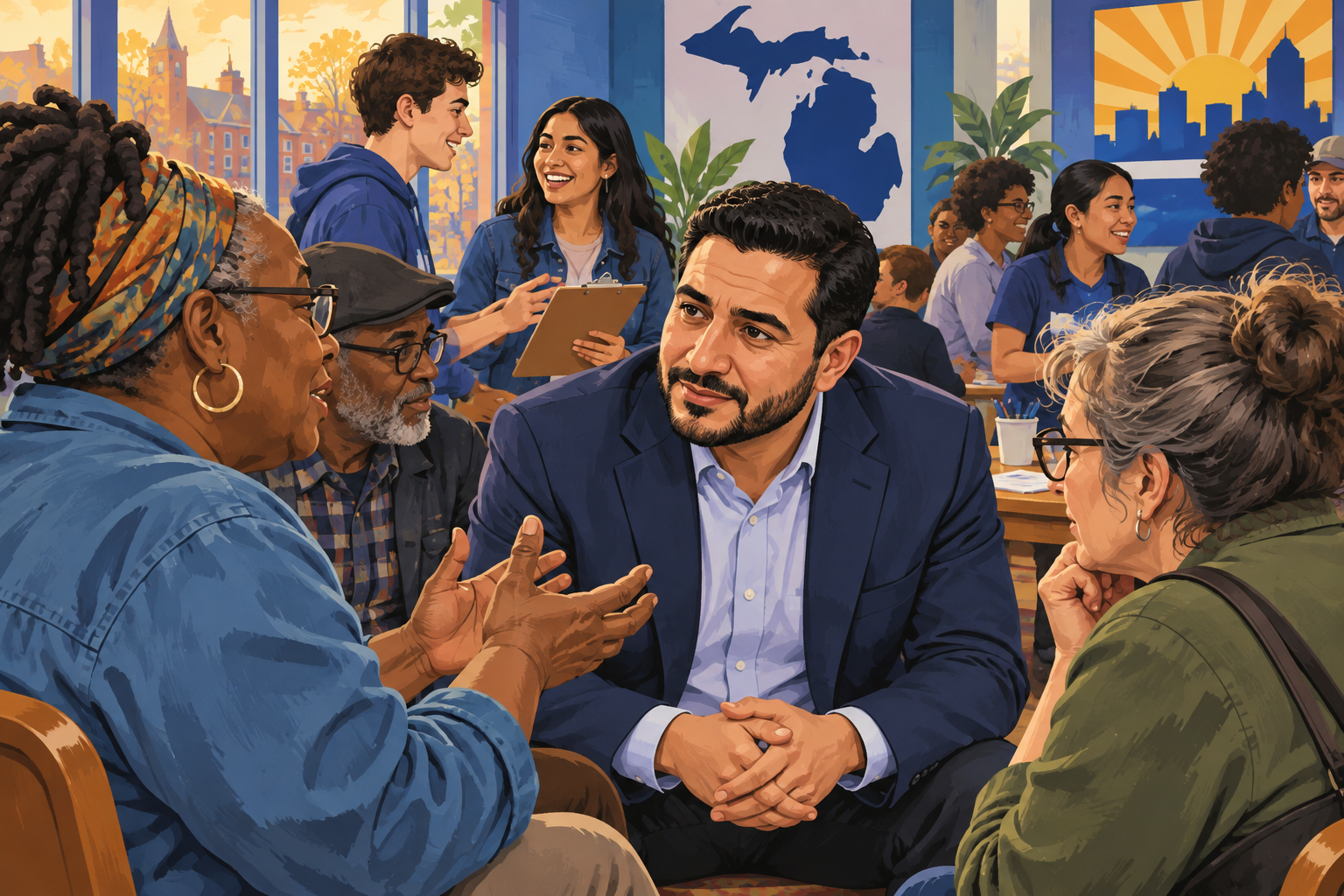
Abdul El-Sayed, an Egyptian American physician and progressive Democrat, is challenging Republican Mike Rogers for a Michigan Senate seat in a race that could affect control of the US Senate. If elected, El-Sayed would be the first Muslim senator. The contest is unfolding amid attacks on his Muslim identity and name, including repeated mockery and accusations by President Donald Trump that El-Sayed has extremist ties—claims El-Sayed denies. Michigan’s large Arab American community is an important constituency, while the state’s closely divided electorate makes the result difficult to predict. Polls cited in the article show the candidates neck and neck, with voters especially concerned about inflation and the cost of living.
The candidates offer contrasting policy priorities. El-Sayed supports universal health care and higher taxes on the wealthiest Americans. He has condemned Israel’s conduct in Gaza as genocide, opposed additional US military aid to Israel, and argued that domestic priorities such as education should come first. He has also said Israel should not be considered a US ally, particularly after its government drew Washington into the war with Iran. Rogers, a former Army officer and FBI agent, emphasizes manufacturing jobs and lower prices, supports Israel and continued US military aid, and is closely aligned with Trump. That association may complicate his economic message.
The article also examines the role of the pro-Israel lobby Aipac. After spending more than $30 million to oppose El-Sayed in the Democratic primary, Aipac’s affiliated United Democracy Project reportedly directed about $9 million to a group supporting Rogers. El-Sayed won the August primary despite Aipac’s effort, a setback for the lobby. Aipac has since said it will stop endorsing candidates or making direct campaign contributions while continuing activity through its affiliated super PAC. The race thus highlights tensions over Israel, campaign spending, Muslim representation, and the intersection of foreign policy with domestic economic concerns.
Entities: Abdul El-Sayed, Mike Rogers, Donald Trump, Michigan, United States Senate • Tone: analytical • Sentiment: neutral • Intent: analyze
28-10-2026
The article reports that US President Donald Trump attacked Abdul El-Sayed, a Democratic candidate for the US Senate in Michigan, during a campaign rally in Port Huron. While campaigning for Republican candidate Mike Rogers ahead of the November 3 midterm elections, Trump alleged that El-Sayed wanted the United States to adopt Sharia law and had links to the Muslim Brotherhood. Trump portrayed the candidate as a national-security threat and questioned whether he should be allowed to serve in Congress, including whether he should have access to sensitive information. He also proposed that, if elected, El-Sayed be subjected to additional security screening, saying he would be the only senator required to pass through a metal detector before entering the chamber.
Trump repeatedly called El-Sayed by variations of the name “Mohammed” and accused him of supporting extremist causes. In one remark, Trump said that if El-Sayed succeeded in bringing about Sharia law, he should be tried, and Trump would be a witness. Rally attendees reportedly shouted “traitor” when El-Sayed’s name was mentioned. Trump also described himself as trying to prevent a “jihadist Muslim Brotherhood member” from becoming a senator.
The article notes that El-Sayed has denied ties to the Muslim Brotherhood and that reports have not presented evidence establishing such an affiliation. It says Trump’s remarks drew criticism from opponents, who accused him of targeting El-Sayed’s Muslim faith and using religious identity as a political weapon during the campaign. The report presents the allegations as Trump’s claims rather than established facts.
Entities: Donald Trump, Abdul El-Sayed, Mike Rogers, Port Huron, Michigan, United States Senate • Tone: analytical • Sentiment: neutral • Intent: inform