02-09-2026
Russian drone and missile attacks on Ukraine killed at least one person and wounded more than a dozen others, while Ukrainian drone strikes inside Russia killed two people and injured 16, according to officials. The latest escalation affected Kyiv, Odesa and the Dnipro region, where a man’s body was recovered from rubble. Odesa suffered damage to a 24-storey residential building, offices and educational facilities, while power outages disrupted electric public transport. Kyiv also came under attack for the seventh consecutive day, with fires reported at a warehouse and an educational facility and damage to a medical practice.
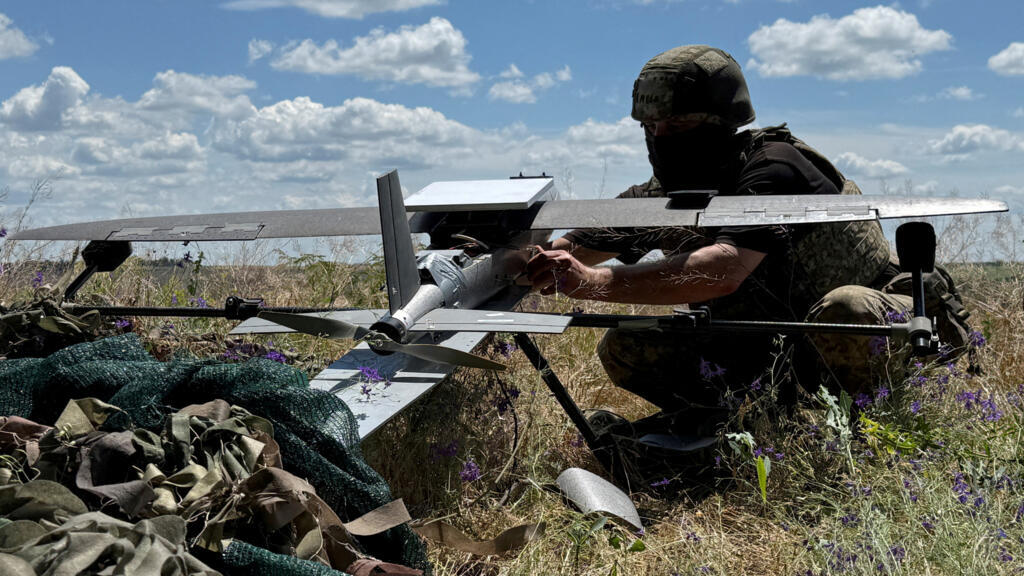
Ukrainian officials said Russia launched 174 attack drones and four missiles overnight, including increasingly difficult-to-intercept jet-powered drones. Russia’s Defence Ministry said its air defences destroyed 130 Ukrainian drones over 11 Russian regions, Crimea and the Black Sea. Ukraine’s long-range drones have repeatedly targeted Russian oil facilities and other economic infrastructure in an effort to impose costs on Moscow and expose Russian civilians to the consequences of the war.
The strikes coincided with increasingly direct threats from the two presidents. Ukrainian President Volodymyr Zelenskyy warned foreign airlines that Russian airspace was becoming unsafe because of Ukrainian drone operations and said military pressure was intended to force Russia into peace negotiations. Russian President Vladimir Putin accused Zelenskyy of “state terrorism”, rejected negotiations with what he called terrorists and refused to rule out attacks on British military facilities if the United Kingdom continues supplying weapons to Ukraine.
The article places the latest attacks in the context of a conflict entering its fifth year, with the front line largely deadlocked and US-led peace efforts failing to produce a settlement. European officials are also considering responses to alleged Russian sabotage, including Germany’s accusation that Russia was behind an attempted drone attack at Leipzig/Halle airport.
Entities: Vladimir Putin, Volodymyr Zelenskyy, Russia-Ukraine war, Ukraine, Russia • Tone: urgent • Sentiment: negative • Intent: inform
02-09-2026
Germany has formally accused Russia of attempting a drone attack at Leipzig-Halle airport in Saxony on August 4. Authorities found an explosives-laden drone near a Ukrainian Antonov Airlines cargo plane, temporarily closed the airport, and used a robot to defuse the device. A second drone was reportedly destroyed after colliding with an aircraft nearby.
German Interior Minister Alexander Dobrindt said investigators identified Russian-style components and technology, along with intelligence indicating Russian responsibility. He said the attack appeared to involve technically sophisticated equipment but relatively low-level agents acting on behalf of Russian state entities. Germany has not publicly released all the evidence linking the incident directly to Moscow.
Berlin responded by announcing the closure of a Russian consulate in Bonn and the planned closure of the Russian House cultural center in Berlin. Germany also intends to advocate adding more Russians to the European Union’s sanctions list, consider tighter entry controls for Russian citizens, and summon Russia’s ambassador. Moscow denied the allegations, called them absurd, and accused Chancellor Friedrich Merz’s government of using Russia as a scapegoat for domestic political problems. Vladimir Putin further alleged that Germany may have planted evidence.
Several NATO members, including Poland, Italy, the United Kingdom, Sweden, and the Czech Republic, supported Germany’s position. EU officials are expected to coordinate a response. Ukraine welcomed Berlin’s actions, which come amid expanding German-Ukrainian security cooperation and increasing reliance on drone warfare.
The article places the incident within a broader pattern of alleged Russian hybrid operations in Europe, including cyberattacks, espionage, sabotage, arson, disinformation, and infrastructure interference. It also highlights the political sensitivity of the accusations, as war fatigue and support for Ukraine are significant issues ahead of elections in Saxony-Anhalt, where the Russia-friendly Alternative for Germany is seeking gains.
Entities: Germany, Russia, Leipzig-Halle Airport, Alexander Dobrindt, Vladimir Putin • Tone: analytical • Sentiment: negative • Intent: inform
02-09-2026
Nato and the European Union have vowed to intensify pressure on Russia after Germany accused Moscow of orchestrating a failed drone attack at Leipzig/Halle airport. European Commission President Ursula von der Leyen described the incident as a “new escalation” on EU territory and said Europe must respond to Russian actions “faster and better.” Nato Secretary General Mark Rutte expressed the alliance’s full solidarity with Germany and warned of a growing threat from drones, missiles and other hostile activities across Europe.
Germany said police investigations and intelligence assessments linked the 4 August incident to Russia. A drone carrying explosives was reportedly defused at the airport, while another may have collided with a cargo plane. A third drone was found 10 days later. German officials said the devices contained components and explosives associated with previous Russian hybrid operations. Two suspects have reportedly been identified, including individuals holding Belarusian, Russian and Latvian passports.
As part of its response, Berlin plans to close Russia’s consulate in Bonn and the Russian House cultural institution, which German officials suspect is used for Kremlin propaganda. Moscow rejected the accusations, threatened reciprocal measures and criticized Germany’s actions as contrary to its interests.
The incident comes amid reports of suspected sabotage in Germany and Poland. Electricity substations and power infrastructure were attacked in several German locations, while fires at factories producing drones and other military equipment in Poland were described as deliberate or potentially deliberate. Authorities are investigating possible foreign-state involvement and domestic extremism.
EU foreign ministers are considering further sanctions, including measures against Russia’s “shadow fleet” and restrictions on Russian visitors. The EU has already agreed to lend Ukraine €90bn, while Kyiv is seeking additional funding for PAC-3 air-defence missiles. Von der Leyen said Europe and Nato would continue increasing pressure until Russia ends its attacks on Ukraine.
Entities: Ursula von der Leyen, Mark Rutte, Vladimir Putin, Alexander Grushko, Jean-Noël Barrot • Tone: urgent • Sentiment: negative • Intent: inform
02-09-2026
Germany has formally accused Russia of carrying out a failed drone attack at Leipzig/Halle Airport on 4 August. A drone carrying an explosive device was found near Ukrainian cargo aircraft, but it failed to detonate, apparently because its detonator was faulty. Investigators also suspect that a second drone collided with a nearby cargo plane, while a third was reportedly discovered near the airport 10 days later. German Interior Minister Alexander Dobrindt said equipment analysis and intelligence findings demonstrated Russian involvement and described the incident as consistent with Russia’s alleged pattern of hybrid operations across Europe.
Russia has denied the accusation. President Vladimir Putin claimed Germany planted evidence to blame Moscow, without providing evidence, while the Russian embassy in Berlin called the allegation absurd. In response to the German government’s announcement, Foreign Minister Johann Wadephul said Germany would close the Russian consulate in Bonn, terminate the contract for the Russian House in Berlin, tighten entry controls for Russian nationals and increase pressure on Russia’s shadow fleet, which is used to evade sanctions. Germany also summoned Russia’s ambassador. Moscow warned it would respond with equivalent measures and called Germany’s actions an unprecedented escalation.
The announcement received support from NATO Secretary General Mark Rutte, European Commission President Ursula von der Leyen, Polish Prime Minister Donald Tusk and British Prime Minister Andy Burnham. Germany and other NATO countries have reported increasing drone activity around airports, military facilities and industrial sites. Berlin has described itself as a daily target of hybrid warfare and is seeking stronger intelligence powers.
The measures come at a politically sensitive time for Chancellor Friedrich Merz. A forthcoming election in Saxony-Anhalt could give the far-right AfD its first state-level government role; the party opposes military support for Ukraine and favors restoring ties with Russia. A CDU lawmaker said Germany’s response remained too weak. Separately, police are investigating explosive and incendiary devices found at a power substation in Brandenburg, although no link to Russia or the airport incident has been established.
Entities: Germany, Russia, Leipzig/Halle Airport, Failed Leipzig airport drone attack, Alexander Dobrindt • Tone: analytical • Sentiment: negative • Intent: inform
02-09-2026
BBC Russia editor Steve Rosenberg analyzes Vladimir Putin’s ambiguous response to a question about whether Russia might strike military facilities in the United Kingdom in retaliation for British arms supplies to Ukraine. Putin’s answer—“That’s a secret. A military secret.”—was neither confirmation nor denial, which Rosenberg interprets as deliberate psychological pressure intended to keep Britain uncertain about Moscow’s intentions and potentially discourage continued support for Ukraine.
The article places the remark within a broader Russian campaign of threatening and confrontational rhetoric toward the UK and the West. Russian newspaper Moskovsky Komsomolets reportedly warned that Prime Minister Andy Burnham should see Russia in his nightmares, while Putin compared Western countries to sharks and warned they could be “punched in the teeth.” Rosenberg also connects these threats to what Germany describes as Russian hybrid operations in Europe, including a drone attack at Leipzig airport that German officials attributed to Moscow.
Rosenberg presents Putin’s press conference in Bishkek as an indication of the Russian leader’s mindset. Putin appeared confident, combative and energized despite Russia’s substantial battlefield losses, economic pressure and the failure to secure a quick victory in Ukraine. Although the Kremlin still officially uses the phrase “special military operation,” Putin referred to the conflict as a war and insisted that Russia’s opponents would eventually collapse.
Putin said he remained open to negotiations but made clear that any settlement would need to reflect Russian terms. He expressed particular enthusiasm about working with Donald Trump’s envoys, Jared Kushner and Steve Witkoff, while there was no comparable acknowledgment of CIA Director John Ratcliffe’s recent visit to Moscow. Rosenberg concludes that any future meeting with Trump’s representatives would involve a Kremlin still determined to shape peace in Ukraine on its own terms.
Entities: Vladimir Putin, Steve Rosenberg, Russia, United Kingdom, Ukraine • Tone: analytical • Sentiment: negative • Intent: analyze
02-09-2026
Ukraine’s President Volodymyr Zelensky has warned airlines, insurers and airports that continued use of Russian airspace could become unsafe as Ukraine expands its drone campaign against targets inside Russia. He said “the Russian sky is becoming completely dangerous” and predicted that the airspace would be “effectively closing,” while stressing that Ukraine did not intend to target civilian aircraft or cause civilian deaths. Ukraine has formally notified the International Civil Aviation Organization of the risks to civilian aviation.
Russian President Vladimir Putin condemned the warning as a “declaration of state terrorism” and said negotiations could not be conducted with “terrorists.” The warning affects airlines from countries including Turkey, China, Qatar and the Gulf states, which continue to use Russian airspace because it reduces flight times and fuel costs on routes between Asia and Europe. Most Western airlines have avoided Russia since the full-scale invasion of Ukraine began in February 2022.
FlightRadar24 showed that many flights were still operating over Russia, although some delays and cancellations were reported. Qatar Airways said it was continuously monitoring airspace security and geopolitical developments. Pegasus cancelled flights to Russia on Tuesday and Wednesday, citing technical and operational reasons, while FlyDubai said it would adjust schedules and routings if necessary.
Ukraine’s drone strikes have already damaged energy facilities and commercial depots deep inside Russia and repeatedly disrupted flights at major airports, especially in Moscow. Russia’s “Kovyor,” or carpet, air-defence procedure requires flights to be suspended when a drone is detected nearby. Aviation risk advisers said attacks deep inside Russia were highly likely to continue and could increase, creating risks of miscalculation or mistaken identification.
The dispute comes amid continuing Russian strikes on Ukrainian cities and infrastructure. The article also recalls earlier aviation disasters linked to the conflict, including the 2014 downing of Malaysia Airlines Flight MH17, for which a UN aviation body held Russia responsible, and a 2024 commercial aircraft crash in Russian airspace that Vladimir Putin attributed to air-defence activity against Ukrainian drones.
Entities: Volodymyr Zelensky, Vladimir Putin, Ukraine, Russia, Russian airspace • Tone: urgent • Sentiment: negative • Intent: inform
02-09-2026
Ukrainian President Volodymyr Zelenskyy has warned airlines, insurers, and airport operators to avoid Russian airspace as Ukraine expands its long-range drone campaign against Russian targets. In an evening address, Zelenskyy said the skies over Russia were becoming “completely unsafe” because Ukrainian drones would increasingly operate near major cities and transportation hubs, including Moscow and St. Petersburg. Although he said civilian aviation itself would not be deliberately targeted, he argued that the scale of drone activity posed a risk airlines must consider.
Most Western commercial airlines have avoided Russian airspace since Russia launched its full-scale invasion of Ukraine in February 2022. However, some Chinese and Gulf carriers, including airlines associated with Qatar and the United Arab Emirates, continue to use the airspace. Ukraine said it would provide international organizations with information about the risks and emphasized that “drone-infested skies are no place for civilian aviation.”
The warning comes as Kyiv increases attacks on Russian oil refineries, energy facilities, and logistics hubs in an effort to raise the economic and military costs of the war for Moscow. Russian President Vladimir Putin condemned Ukraine’s actions as “state terrorism” and said Russia would intensify its attacks on Ukraine. Speaking at a Shanghai Cooperation Organisation summit in Kyrgyzstan, Putin also rejected the prospect of renewed negotiations, saying that terrorists are not negotiated with.
The escalation coincides with warnings from Russia’s Defense Ministry that Moscow is preparing “massive strikes” against Ukraine’s energy infrastructure. Russian missile attacks on Ukrainian cities have reportedly increased while Kyiv faces shortages of air-defense equipment, raising concerns about another severe winter campaign against Ukraine’s power and energy systems.
Entities: Volodymyr Zelenskyy, Vladimir Putin, Ukraine, Russia, Russian airspace • Tone: urgent • Sentiment: negative • Intent: warn
02-09-2026
Germany’s latest punitive measures against Russia are unlikely to fundamentally change President Vladimir Putin’s strategic calculations, according to experts interviewed by DW. Berlin has closed the Russian consulate in Bonn, ended the contract for the Russian House cultural center in Berlin, and tightened entry controls for Russian citizens. It has also publicly blamed Moscow for an attempted drone attack at Leipzig/Halle Airport on August 4, signaling a greater willingness to respond to what it considers hostile Russian activity on German territory.
Russian political scientist Dmitry Oreshkin characterized the measures as largely symbolic and argued that Putin would be deterred only by escalation and much tougher restrictions. Former Russian diplomat Boris Bondarev said the steps could complicate Russian operations but would not stop provocations unless they were coordinated across the European Union. Both experts nevertheless warned that the measures could trigger reciprocal restrictions and a new cycle of confrontation.
Putin called Germany’s response “another mistake, a serious one,” while the Kremlin promised to respond “in kind.” German security expert Wolfgang Richter expects retaliation primarily in diplomatic and cultural areas, potentially including restrictions on the Goethe-Institut or German diplomats in Moscow. Bondarev said the Kremlin’s response is difficult to predict but likely to include high-profile measures.
The dispute also reflects opposing views of cultural institutions, with Moscow suspecting organizations such as the Goethe-Institut of serving intelligence purposes. Experts believe Russia may intensify rhetoric, sabotage, and political interference, but probably will not escalate directly to military strikes. Germany’s planned support for tougher EU action against Russia’s “shadow fleet” could exert greater financial pressure, although maritime law limits some options and interference at sea could create additional risks. Richter stressed that communication is essential to prevent miscalculation and further escalation.
Entities: Germany, Russia, Vladimir Putin, Dmitry Oreshkin, Boris Bondarev • Tone: analytical • Sentiment: negative • Intent: analyze
02-09-2026
The European Union has summoned Russia’s envoy in Brussels over Germany’s allegation that Moscow was responsible for a failed attempted hybrid attack involving an explosives-laden drone at Leipzig/Halle Airport. EU foreign policy chief Kaja Kallas described the incident as bearing “all the hallmarks of state-sponsored terrorism” and said the bloc was considering how to respond. She also indicated that the EU’s next sanctions package related to Russia’s war in Ukraine could be expanded beyond the approximately 1,600 planned listings.
France announced a similar diplomatic response, with Foreign Minister Jean-Noël Barrot saying Paris had summoned Russia’s chargé d’affaires to protest. Barrot argued that any further sanctions should be adopted at the European level, particularly measures targeting Russia’s so-called shadow fleet. Foreign ministers from Ukraine, the United Kingdom, Canada, Norway, Iceland and Switzerland joined EU ministers for informal talks in Ireland.
German Foreign Minister Johann Wadephul said additional sanctions would be developed in the coming weeks and that pressure on Russia was increasing while support for Ukraine remained strong. He defended Berlin’s decision to publicly attribute responsibility for the incident to Russia, calling it a necessary and proportionate response based on a well-founded assessment.
Interior Minister Alexander Dobrindt said police investigations, crime patterns and intelligence findings collectively supported the conclusion that Russia was responsible. Wadephul added that the drone’s configuration, components, explosives and detonation systems resembled those used in other Russian hybrid operations and in the war against Ukraine.
Russian officials, including President Vladimir Putin, have rejected the allegations and accused Germany of fabricating its account. Leipzig/Halle Airport is a major freight hub, and Ukrainian aircraft manufacturer and airline Antonov operates there, frequently moving material to Ukraine through eastern Germany.
Entities: European Union, Kaja Kallas, Russia, Leipzig/Halle Airport, Germany • Tone: analytical • Sentiment: negative • Intent: inform
02-09-2026
The German government has formally blamed Russia for an attempted drone attack at Leipzig/Halle Airport on August 4, describing it as part of a broader campaign of hybrid operations against Europe. Interior Minister Alexander Dobrindt said investigators found a drone carrying explosives and a detonation mechanism inside the airport’s security area, between Ukrainian cargo aircraft. Authorities believe a second drone may have collided with a nearby DHL aircraft, while German media reported that a third explosives-laden drone was also discovered. Federal prosecutors called the incident a serious attack on Germany’s transport and logistics infrastructure.
Foreign Minister Johann Wadephul said the drone’s configuration, components, explosives and detonation systems resembled those used in other Russian hybrid operations and in the war against Ukraine. German officials said they did not regard the incident as isolated and expected further Russian hybrid attacks. Although Dobrindt emphasized that Germany was not at war, he said the country was subjected to hybrid warfare daily and would respond proportionately but firmly.
Germany announced tighter entry controls for Russian nationals, plans to propose additional EU sanctions, the closure of Russia’s consulate in Bonn and the termination of an agreement allowing the Russian House cultural center to operate in Berlin. The Russian ambassador was summoned. Germany also pledged to coordinate its response with the EU and NATO and continue supporting Ukraine.
NATO Secretary General Mark Rutte and European Commission President Ursula von der Leyen expressed solidarity with Germany and condemned Russia’s alleged efforts to undermine European unity. Russia’s President Vladimir Putin rejected the accusations, saying the evidence had been planted. Ukraine welcomed Germany’s response and said it was working with Berlin on infrastructure protection, sanctions and action against Russia’s shadow fleet.
Entities: Germany, Russia, Leipzig/Halle Airport, Alexander Dobrindt, Johann Wadephul • Tone: analytical • Sentiment: negative • Intent: inform
02-09-2026
The article examines Germany’s response to an attempted drone attack near Ukrainian cargo aircraft at Leipzig/Halle Airport and the broader question of whether Russia’s hybrid operations amount to an act of war. The drone, reportedly equipped with explosives and a detonation device, was found on August 4 in a restricted area of the airport, which is an important hub for military aid to Ukraine. German Interior Minister Alexander Dobrindt said the attack showed similarities to other Russian hybrid operations, citing its construction, explosives, components and detonation technology. He described the operation as technically sophisticated and highly organized.
Germany has announced several measures in response, including closing the Russian House cultural institute in Berlin and the Russian Consulate General in Bonn, tightening entry requirements for Russian citizens and taking tougher action against Russia’s so-called shadow fleet. Critics from the Green Party and the CDU argue that these steps are insufficient. They have called for stronger sanctions, measures to disrupt Russian war financing, the delivery of Taurus cruise missiles to Ukraine and consultations under NATO’s Article 4.
The article explores the tension between responding forcefully and avoiding military escalation. Russia denies responsibility, calls Germany’s sanctions a serious mistake and threatens countermeasures. German officials insist that the country is not at war with Russia, although it is allegedly the target of ongoing hybrid warfare involving sabotage, cyberattacks, espionage, infrastructure attacks and disinformation. Legal experts note that Germany has made no declaration of war, no recognized armed conflict exists and NATO’s collective-defense provisions have not been activated.
The issue is also connected to domestic politics. The far-right Alternative for Germany opposes additional military support for Ukraine and favors normalized relations with Russia. With a state election approaching in Saxony-Anhalt, the German government is balancing the need to attribute the attack to Russia with concern that stronger rhetoric could benefit the AfD. The article concludes that this political dilemma may help explain Chancellor Friedrich Merz’s cautious public statements.
Entities: Russia, Germany, Ukraine, Leipzig/Halle Airport, Alexander Dobrindt • Tone: analytical • Sentiment: negative • Intent: analyze
02-09-2026
Ukraine has formally notified the International Civil Aviation Organisation (ICAO) that Russian airspace is unsafe for civilian aviation because of increased military activity linked to the war against Ukraine. Foreign Minister Andrii Sybiha urged airlines, governments and insurers to avoid the airspace, accusing Russia of failing to properly communicate the risks and warning that several aviation incidents have already occurred in recent years.
The notification followed a warning from President Volodymyr Zelenskyy that Russian skies were becoming increasingly dangerous as Ukraine expands its long-range drone operations inside Russia. Zelenskyy said Ukraine does not target civilian aviation, but argued that the growing scale of the operations means the risks to airlines, insurers and major Russian airports can no longer be ignored. He predicted that Russian airspace would effectively begin closing as the consequences of the war increasingly reach Russian territory.
The warnings were followed by overnight disruptions to flights between Turkey and Moscow. Pegasus Airlines cancelled 12 flights to and from Moscow’s Vnukovo Airport, while one flight from Antalya to Moscow was diverted because of security concerns. Turkish Airlines largely maintained its Moscow schedule but cancelled two departures and two arrivals involving Istanbul.
Ukraine’s airspace has been closed to civilian flights since Russia launched its full-scale invasion on 24 February 2022. Russian civilian aviation has continued operating, although drone attacks have increasingly caused temporary airport closures and other disruptions. Despite the risks, Russian airspace still handles substantial international passenger traffic. European and US airlines stopped using it after the invasion, while carriers including Emirates, Turkish Airlines, Air India, Etihad, Qatar Airways and several Chinese airlines continue to fly to or through Russia.
Entities: Ukraine, Russia, Kyiv, International Civil Aviation Organisation (ICAO), Andrii Sybiha • Tone: urgent • Sentiment: negative • Intent: warn
02-09-2026
An explosion at Augsburg’s main train station in southern Germany injured two Ukrainian citizens—a 17-year-old girl and an 18-year-old man—shortly after 3 a.m. Wednesday. Both suffered minor injuries and have not been identified. Police closed the station after discovering a suspicious package near the scene, but officials later determined that the object was harmless. The station reopened and train service resumed at approximately 10 a.m. local time. Authorities said it was too early to determine a motive and that an investigation was ongoing.
The incident occurred amid heightened tensions between Germany and Russia. One day earlier, German officials accused Moscow of orchestrating a failed drone sabotage attempt at Leipzig/Halle Airport. Investigators reportedly found an explosives-carrying drone beside a Ukrainian Antonov cargo aircraft. The device did not detonate because of a faulty detonator, and officials said a second drone may have collided with another cargo aircraft.
German Interior Minister Alexander Dobrindt said forensic evidence and intelligence findings linked Russia to the airport incident, which he described as part of a broader pattern of Russian hybrid operations in Europe. In response, Foreign Minister Johann Wadephul announced the closure of Russia’s consulate in Bonn, termination of the Russian House cultural center’s contract in Berlin, tighter entry restrictions for Russian nationals, and additional measures targeting Russia’s shadow fleet. Germany also summoned Russian Ambassador Sergei Nechayev.
Russia rejected the allegations. Its embassy in Berlin called them “absurd,” while Foreign Ministry spokeswoman Maria Zakharova promised a “mirror-image” response. The embassy characterized Germany’s measures as an “unprecedented escalation” in relations. The article does not establish a connection between the Augsburg explosion and the alleged airport sabotage operation.
Entities: Augsburg train station, Augsburg, Germany, Ukrainian citizens, Timo Küfner, Leipzig/Halle Airport • Tone: neutral • Sentiment: negative • Intent: inform
02-09-2026
Germany has publicly accused Russia of orchestrating a failed drone sabotage operation at Leipzig/Halle Airport and announced a series of diplomatic and security measures in response. German Foreign Minister Johann Wadephul said Russia’s consulate in Bonn would be closed and the contract for the Russian House cultural center in Berlin would be terminated. Germany also announced tighter entry restrictions for Russian nationals, additional measures against Russia’s shadow fleet, and the summoning of Russian Ambassador Sergei Nechayev.
The measures followed an investigation into an Aug. 4 incident in which authorities discovered a drone carrying an explosive device beside a Ukrainian Antonov cargo aircraft at the airport. Officials said the bomb failed to detonate because of a faulty detonator. Germany believes a second drone collided with a nearby cargo aircraft and described the incident as part of what Interior Minister Alexander Dobrindt called Russia’s established pattern of hybrid operations across Europe.
Russia rejected the accusations. Its embassy in Berlin called them absurd, while Foreign Ministry spokeswoman Maria Zakharova threatened a “mirror-image” response and described Germany’s actions as an unprecedented escalation in bilateral relations.
Leipzig/Halle is a major European cargo hub and a logistics center for Germany’s military and NATO allies. It also supports Ukrainian cargo operations, making the airport strategically significant. NATO Secretary-General Mark Rutte endorsed Germany’s findings and expressed solidarity, while European Commission President Ursula von der Leyen said the European Union was preparing further sanctions against Moscow. Polish Prime Minister Donald Tusk also accused Russia of increasing regional tensions.
The dispute comes amid German warnings of a broader campaign of hybrid threats against military facilities, transportation networks and critical infrastructure. Separately, police are investigating improvised explosive and incendiary devices found at a power substation in Brandenburg after a damaged power line caused a temporary outage. Authorities have not attributed that incident to any specific actor.
Entities: Germany, Russia, Leipzig/Halle Airport, Russian consulate in Bonn, Russian House cultural center in Berlin • Tone: urgent • Sentiment: negative • Intent: inform
02-09-2026
Ukrainian President Volodymyr Zelensky warned international airlines that Russian airspace would become “completely unsafe” because of Ukrainian drone operations for as long as Russia’s war against Ukraine continues. His remarks were directed particularly at carriers from the Middle East, Southeast Asia and China that continue to operate flights to Moscow.
The warning was presented as part of the broader information and psychological dimensions of the conflict. Speaking to FRANCE 24, former British military intelligence officer Philip Ingram said Zelensky’s message was intended not only for airlines but also for the Russian public. Ingram argued that highlighting the risks to Russian airspace could help communicate the consequences of the war to people inside Russia and increase pressure on the country’s leadership.
The article also reports that Russian President Vladimir Putin accused Ukraine of “state terrorism” in response to the drone threat. The competing statements reflect the escalating rhetoric surrounding the use of drones and the vulnerability of aviation infrastructure and airspace during the conflict.
The report does not provide details about a specific drone attack on an airline or airport. Instead, it focuses on Zelensky’s warning, Russia’s reaction and the strategic interpretation of the remarks by Ingram. The warning carries implications for airlines that continue flying to Moscow, potentially raising concerns about flight safety, route planning and the wider commercial effects of the war. The article places these developments within the European and international dimensions of the Russia-Ukraine conflict.
Entities: Volodymyr Zelensky, Vladimir Putin, Philip Ingram, Mark Owen, Ukraine • Tone: urgent • Sentiment: negative • Intent: inform
02-09-2026
The German government has accused Russia of responsibility for an attempted drone attack at Leipzig/Halle Airport on Aug. 4, in which a drone carrying explosives was found near a Ukrainian aircraft. The device was defused, but German officials described the incident as a serious escalation because the airport supports Ukrainian transport operations and NATO logistics.
Interior Minister Alexander Dobrindt said investigators identified features of the drone, explosives and detonator that resembled equipment used in other Russian hybrid operations and in Russia’s war against Ukraine. Intelligence reportedly indicated that individuals acting on behalf of Russian state entities were involved, although German officials did not identify the specific Russian agencies or provide the evidence publicly.
In response, Foreign Minister Johann Wadephul announced that Germany would close Russia’s consulate in Bonn and the Russian House cultural center in Berlin. Germany also plans to seek additional European Union sanctions against Russian individuals connected to hybrid attacks, tighten entry controls for Russian citizens and increase pressure on Russia’s so-called shadow fleet of oil tankers. Russia’s ambassador was summoned, while Russian officials rejected the accusation. Foreign Ministry spokesperson Maria Zakharova called it a contrived pretext for escalation, and President Vladimir Putin claimed evidence had been planted.
The report places the airport incident within a broader pattern of alleged Russian sabotage and malign activity across Europe. The Associated Press has tracked approximately 200 such incidents since Russia’s invasion of Ukraine, including arson, cyberattacks, drone activity and plots against individuals. NATO Secretary-General Mark Rutte expressed solidarity with Germany. The article also notes recent Polish warnings about suspected sabotage, including a fire at a major drone manufacturer. Germany is separately pursuing legislation to expand intelligence agencies’ powers to disrupt sabotage and cyberattacks.
Entities: Germany, Russia, Leipzig/Halle Airport, Alexander Dobrindt, Johann Wadephul • Tone: analytical • Sentiment: negative • Intent: inform
02-09-2026
Ukrainian President Volodymyr Zelensky has warned airlines, insurers and other aviation-industry users to avoid Russian airspace, arguing that intensified Ukrainian drone operations will make the country’s skies increasingly dangerous for civilian aircraft. In a nightly address, Zelensky said Ukraine would not deliberately target civilian aviation, but that the number of drones operating over Russia would rise to a level that airlines and insurers would need to consider. He described Russian airspace as becoming “completely unsafe” for the duration of the war and said that “drone-infested skies are no place for civilian aviation.”
The warning follows repeated disruptions to air traffic at Russian airports as Ukrainian drones have approached or entered Russian airspace. Both Russia and Ukraine have increased long-range attacks in recent months, broadening the risks associated with commercial aviation and airport operations. Zelensky’s comments amount to a threat to continue crowding Russian skies with drones in response to what he described as Moscow’s escalating aerial barrages.
Russian President Vladimir Putin responded by accusing Ukraine of “state terrorism.” The exchange highlights the continuing escalation of aerial attacks more than four years after Russia’s full-scale invasion of Ukraine. Diplomatic efforts led by the United States remain stalled, leaving military action and retaliatory threats as the dominant features of the conflict. The article presents Zelensky’s warning as both a security alert for airlines and insurers and a broader signal that Ukraine intends to maintain or intensify drone operations against Russia while the war continues.
Entities: Volodymyr Zelensky, Vladimir Putin, Ukraine, Russia, United States • Tone: urgent • Sentiment: negative • Intent: inform
02-09-2026
The European Union is preparing to increase pressure on Russia after Germany reported an attempted drone attack at Leipzig/Halle Airport, while German authorities investigate two further suspected sabotage incidents. European Commission President Ursula von der Leyen said the discovery of an explosives-laden drone at the airport demonstrated Moscow’s growing “recklessness” and vowed that Europe and NATO would intensify sanctions and other measures until Russia ends its war in Ukraine.
Leipzig/Halle is a major civilian freight and NATO logistics hub and hosts Ukrainian Antonov An-124 cargo aircraft. Germany has blamed Russia for the incident, describing it as part of hybrid warfare designed to intimidate Western societies and create divisions over support for Ukraine. Moscow denies involvement and has warned that it will respond to what it describes as anti-Russian actions.
The EU’s specific new sanctions had not yet been finalized. EU foreign policy chief Kaja Kallas said measures targeting Russia’s military-industrial complex were being considered, while France called for action against Russia’s “shadow fleet,” which is accused of helping circumvent energy sanctions. NATO Secretary General Mark Rutte said drones and missiles had increasingly entered NATO airspace and that other malign activities were also rising.
Germany simultaneously investigated damage to critical infrastructure. Vandalism at a substation in North Rhine-Westphalia caused power-generation units with a combined capacity of 4,200 megawatts to shut down. In Brandenburg, conductive devices damaged power lines at a major high-voltage node. Authorities had not identified suspects, and officials said foreign powers and left-wing extremists could not be ruled out.
The incidents occurred shortly before a state election in which the Russia-friendly far-right Alternative for Germany was leading polls. German lawmaker Alexander Throm said the timing appeared intended to unsettle the public, while acknowledging that Russia and other extremist groups could share such a goal.
Entities: European Union (EU), Russia, Germany, Ursula von der Leyen, Mark Rutte • Tone: urgent • Sentiment: negative • Intent: inform
02-09-2026
Russia has pledged to prevent major disruption to civil aviation after Ukrainian President Volodymyr Zelenskiy warned that Ukrainian drone activity was making Russian airspace increasingly dangerous. Zelenskiy said Ukraine was responding to Russian attacks and that “the war started by Russia is closing its own skies,” while stressing that civil aviation was not being targeted. Ukrainian Foreign Minister Andrii Sybiha said Kyiv had formally notified the International Civil Aviation Organization that Russian airspace was unsafe.
Although European and US airlines generally avoid Russian airspace because of the war that began with Russia’s invasion of Ukraine in February 2022, airlines from China, Turkey, the United Arab Emirates and other Gulf countries continue to use the routes. Russia’s Transport Minister Andrei Nikitin said authorities were improving aviation and airport security in coordination with the Defence Ministry and National Guard, and would not allow significant disruption to civilian flights.
Despite those assurances, flight data showed disruption at Moscow’s main airports on Wednesday. Sheremetyevo recorded 21 cancellations and 235 delays, while Vnukovo recorded 22 cancellations and 94 delays. Pegasus Airlines cancelled several flights to Russia, citing technical and operational reasons, while flydubai said it was monitoring the situation and adjusting schedules and routes as necessary. Other major carriers, including Turkish Airlines, Qatar Airways, Etihad and Emirates, did not respond to requests for comment.
Aviation risk advisory firm Osprey Flight Solutions warned that although most Ukrainian drone and missile strikes would likely remain within 300 kilometres of the border, deeper attacks inside Russia—including near Moscow and St Petersburg—were likely to continue through 2026. The disruptions come as Russia intensifies air attacks on Kyiv and other Ukrainian cities, while Ukraine conducts frequent drone strikes against Russian targets, including oil-industry facilities and retail sites.
Entities: Volodymyr Zelenskiy, Andrii Sybiha, Andrei Nikitin, Russia, Ukraine • Tone: analytical • Sentiment: negative • Intent: inform
02-09-2026
The article reports that German officials have publicly attributed an attempted drone attack at Leipzig/Halle Airport to Russia. The incident allegedly occurred the previous month, but German authorities waited several weeks before assigning responsibility, indicating an initially cautious or reticent response. On Tuesday, officials announced that Germany would take diplomatic and other retaliatory steps against Moscow. The measures include summoning Russia’s ambassador to Berlin and closing a Russian consulate in Germany, along with additional unspecified actions.
The report presents the developments as a significant escalation in tensions between Germany and Russia. By linking the airport incident to Moscow and announcing concrete countermeasures, Berlin is moving beyond investigation or private diplomatic concern toward a public response. The decision to summon the ambassador represents a formal diplomatic protest, while the planned consulate closure signals a more substantial deterioration in bilateral relations.
The available text does not provide details about the drone, the precise circumstances of the attempted attack, whether the device reached or damaged airport facilities, or the evidence supporting Germany’s attribution to Russia. It also does not identify which Russian consulate would be closed or describe the additional measures under consideration. The article’s central focus is therefore Germany’s decision to blame Russia and respond diplomatically after a period of hesitation. The report frames the announcement as part of a broader confrontation involving alleged attacks on critical infrastructure and the use of state countermeasures, while avoiding further conclusions beyond the statements attributed to German officials.
Entities: Germany, Russia, Catherine Belton, Leipzig/Halle Airport, Berlin • Tone: urgent • Sentiment: negative • Intent: inform
02-09-2026
German authorities are investigating two separate attacks on electricity substations as possible sabotage, with the first incident also being treated as a potential terrorism case. In eastern Brandenburg, improvised explosives were fired at a substation in Preilack early Tuesday, damaging power cables and briefly disrupting electricity supplies. The facility distributes power from the nearby Jaenschwalde plant. Police are investigating suspected disruption of public services and destruction of essential equipment, alongside the terrorism inquiry.
A second incident occurred at a substation in Bergheim, North Rhine-Westphalia, where unknown perpetrators allegedly placed conductive material on overhead power lines, causing a deliberate short-circuit. The disruption affected five generating units at two coal-fired power stations operated by RWE, although it did not cause widespread outages for customers. Three units were expected to return to service on Wednesday and the remaining two by the weekend.
North Rhine-Westphalia Interior Minister Herbert Reul said investigators were examining whether the Bergheim attack was directed by a foreign state or linked to left-wing extremism. Authorities were also working to determine whether the two incidents were connected. Reul warned that sabotage and other hybrid attacks were occurring inside Germany and represented an attempt to harm the country, not merely its infrastructure.
The incidents came as tensions between Germany and Russia intensified. Berlin formally accused Moscow of involvement in an attempted explosive-drone attack on Leipzig airport the previous month and announced diplomatic countermeasures, including closing Russia’s consulate in Bonn and cancelling a contract for a Russian cultural centre in Berlin. Russia rejected the allegations as unsubstantiated and absurd, summoned Germany’s charge d’affaires, and protested what it called anti-Russian actions. German media also reported that investigators had identified two suspects in the Leipzig incident, although they were unlikely to be detained. The report said their backgrounds supported the government’s allegation of Russian involvement.
Entities: Germany, Russia, Brandenburg, Bergheim, North Rhine-Westphalia, Preilack substation • Tone: urgent • Sentiment: negative • Intent: inform
02-09-2026
The provided excerpt describes a significant change in Russia’s campaign of aerial attacks against Ukraine. Russia is reportedly deploying jet-propelled drones that can fly nearly twice as fast as earlier drone models. These weapons are also being launched in large numbers, with the apparent objective of saturating and overwhelming Ukraine’s air-defense systems. The combination of greater speed and mass deployment creates a more difficult defensive challenge for Kyiv, potentially reducing the time available to detect, track, and intercept incoming drones.
The passage presents the conflict as an evolving technological competition. Ukraine has repeatedly been forced to modify its defensive methods as Russia introduces new weapons and tactics, and the latest drones represent another stage in that continuing adaptation. Rather than portraying the attacks as isolated incidents, the article frames them as part of a broader high-tech arms race increasingly shaping the war.
The excerpt emphasizes pressure on Ukraine’s military infrastructure and the persistent nature of Russia’s bombardment, using the phrase “pounding Ukraine” to convey the intensity of the attacks. It also suggests that Russia’s strategy is not simply to improve individual drone performance, but to combine speed with large-scale launches so that Ukraine’s defenses become overloaded.
Because the supplied content includes only the article’s headline, byline, and opening paragraph, it does not provide further details about the drones’ design, the number of attacks, casualties, damage, Ukrainian countermeasures, or expert assessments. The summary therefore reflects only the claims and framing contained in the available excerpt.
Entities: Russia, Ukraine, Kyiv, Mary Ilyushina, The Washington Post • Tone: urgent • Sentiment: negative • Intent: inform