02-09-2026
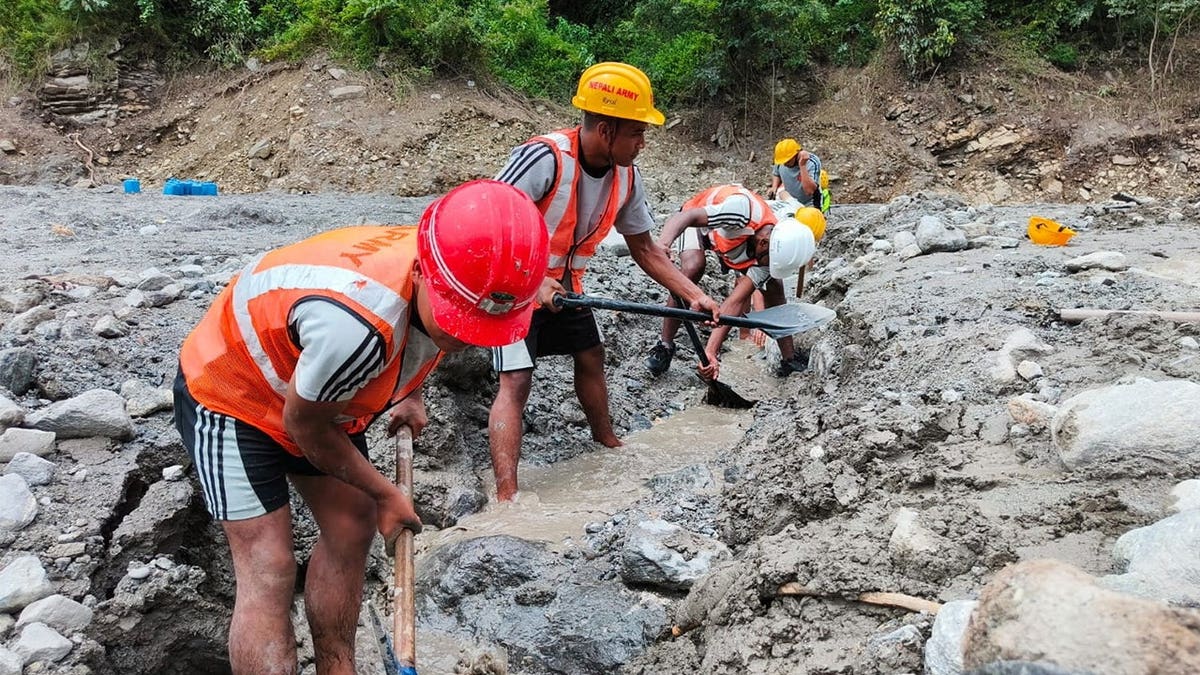
The article reports on the recovery and forensic examination of bodies in Nepal’s Rusawa district, an area described as the worst affected by a devastating glacial flood. The disaster occurred approximately one week before the report was published and has killed more than 1,100 people. Recovery teams are excavating bodies from deep mud left behind by the flooding, while forensic efforts are taking place near the Nepal-China border.
Al Jazeera correspondent Jessica Washington reports from the affected region, documenting the ongoing work to locate and recover victims. The report highlights the difficult conditions facing those involved in the recovery operation, with bodies buried in mud after the flood. It also indicates that forensic teams are working to process and identify the victims, an important step for families and authorities after a large-scale disaster.
The short video news report focuses primarily on the immediate aftermath of the flood rather than explaining its broader causes or detailing the full humanitarian response. It provides a concise account of continuing recovery operations in Rusawa and emphasizes the scale of the loss of life. The proximity of the affected district to the Nepal-China border situates the disaster in a remote and strategically significant area. Published on September 2, 2026, the report presents the excavations as an ongoing effort, suggesting that recovery work remains incomplete a week after the flood.
Entities: Nepal, Rusawa district, Nepal-China border, Jessica Washington, Al Jazeera • Tone: urgent • Sentiment: negative • Intent: inform
02-09-2026
Nepal is intensifying rescue, relief and recovery operations after catastrophic flash floods struck the Nepal-Tibet border a week ago, according to the United Nations. Nepal’s disaster agency reports that at least 1,114 people have died and nearly 4,000 remain missing. On the Tibetan side, Chinese state media report 21 deaths and more than 540 people unaccounted for. Rescuers are also searching for potentially hundreds of workers trapped in hydropower tunnels in Nepal.
The flood, believed to have been triggered by a glacial collapse, destroyed villages in a Himalayan valley. Nearly 12,000 people have been rescued, but thousands remain missing, including foreign nationals from several countries. Difficult terrain and extensive infrastructure damage are slowing the response. More than 40 bridges have been destroyed, remote communities depend on army helicopters for supplies, and many villages lack fuel and electricity. Rescue teams from China and India are helping build temporary bridges, while drones and heavy machinery are being used to search inaccessible areas.
In Nepal, about 3,500 people have been displaced to 27 sites, mainly schools. Overcrowded shelters, contaminated water, damaged medical facilities and the ongoing monsoon are increasing the risk of disease. Prime Minister Balendra Shah said the government is prioritizing the protection and treatment of survivors, including psychological support, and has declared a disaster in 15 areas for three months.
Shah defended the timing of official warnings, saying the event exceeded predictable forecasts, although experts say growing instability around the glacier had been detected and improved early-warning systems might have saved lives. Scientists have repeatedly warned that climate change is melting Himalayan ice and permafrost. Nepal plans to make the climate-related risks facing the region a central issue internationally. The government and the UN are preparing a four-month humanitarian appeal.
Entities: Nepal, Tibet, Balendra Shah, United Nations (UN), UN Office for the Coordination of Humanitarian Affairs (OCHA) • Tone: urgent • Sentiment: negative • Intent: inform
02-09-2026
A week after a glacier collapse in the Himalayas triggered catastrophic flash floods in Nepal, officials say the prospects of finding survivors are rapidly declining. At least 1,114 people have died in Nepal and nearly 4,000 remain unaccounted for. Across the border in Tibet, China’s official toll remains 16 dead and 546 missing. Many missing people are believed to be buried beneath the enormous volume of debris swept through towns and valleys near the Chinese border.
Rescue operations are continuing at several hydroelectric facilities, where people may have survived inside tunnels and underground rooms. Authorities say 279 people have been rescued from hydropower projects, but at least 639 remain missing. Specialized teams from India, China and the United States are using helicopters, high-technology listening equipment and safety teams to search for signs of life. Officials warn, however, that the passage of time and the scale of the destruction are reducing the likelihood of survivors.
Nepal’s Prime Minister Balendra Shah said the government would begin shifting its focus from search and rescue toward rehabilitation and reconstruction, while continuing medical care and psychological support. The floods left an estimated 2.2 million tons of debris, including destroyed buildings, rocks and sediment. Survivors in affected communities are attempting to recover possessions from the remains of their homes and businesses.
The disaster has also created a growing public-health emergency. The United Nations warned that overcrowded shelters, contaminated water, damaged health facilities and the ongoing monsoon season pose particular risks to women and children. Approximately 3,500 people are living in 27 displacement sites in the hardest-hit districts of Nuwakot and Rasuwa. Nepal has increased disease surveillance and response efforts to prevent outbreaks as recovery begins.
Entities: Nepal, Tibet, Himalayas, Glacier collapse, Catastrophic flash floods • Tone: urgent • Sentiment: negative • Intent: inform
02-09-2026
Nepal’s devastating floods along its border with Tibet have raised serious concerns about the future of the country’s adventure tourism industry just weeks before its peak travel season. Authorities said the disaster, which began on Aug. 26 after a massive glacial collapse triggered an ice, rock and meltwater landslide, had killed 987 people and left nearly 4,250 missing. Entire communities were swept away or cut off, while roads, bridges and hydropower facilities were damaged.
The disaster is expected to impose a rebuilding bill of $4 billion to $5 billion, nearly one-tenth of Nepal’s economy. Tourism is a major source of foreign exchange and revenue for the country, which attracts visitors for trekking, mountaineering and spiritual travel. However, tour operators and accommodation providers report that tourists have begun cancelling reservations ahead of the main season, which runs from Sept. 15 to Nov. 15. One Kathmandu hostel owner expects occupancy to reach only 60%, compared with full occupancy the previous year, with many cancellations coming from European travelers.
Tourism officials describe the floods as a warning rather than the end of Nepal’s adventure tourism sector. They argue that routes, infrastructure and destinations must be redesigned to withstand floods, landslides and other extreme events. The disaster has also heightened concerns about the effects of climate change in the Himalayas, where melting glaciers, thawing permafrost and unstable natural dams can increase the risk of sudden catastrophic floods.
United Nations officials and climate researchers warn that millions of people across the Himalayan region may be vulnerable to glacial floods. They emphasize the need for satellite monitoring, early-warning systems and improved risk planning. China has pledged additional emergency aid, while Nepal continues rescue and reconstruction efforts. The article concludes that Nepal’s tourism industry will need to become safer, more resilient and better prepared for a changing climate.
Entities: Nepal, Tibet and China, Himalayas, Adventure tourism, Glacial collapse and glacial floods • Tone: analytical • Sentiment: negative • Intent: analyze
02-09-2026
Rescue workers in Nepal are using improvised cable cars and ziplines to transport people across rivers after deadly floods and mudslides destroyed bridges in several areas. Video from Nuwakot shows workers pulling stranded residents across a flooded river in a small box attached to a wire, allowing them to reach safety from an embankment isolated by the disaster.
The rescue effort follows the Aug. 26 mudslide and flooding that affected Nepal’s Trishuli River Valley and China’s Gyirong Valley in Tibet. The disaster has caused extensive damage to roads, buildings, bridges and hydropower infrastructure. As of Wednesday, Nepalese authorities reported at least 1,114 deaths and nearly 4,000 missing people. Chinese authorities reported 16 deaths and at least 541 missing on the Chinese side of the border.
Nepal Army personnel continue searching for survivors, including people believed to be trapped inside a hydropower tunnel in Rasuwa district. Amshu Kiran Shahi, a Nepal Electricity Authority board member, said rescuers believe 46 people may be trapped in a room-like structure inside the tunnel at Rasuwagadhi.
The article also reports that dozens of Americans remain unaccounted for in Nepal. A senior Trump administration official told Fox News that two additional Americans had reached safety, bringing the number of Americans confirmed safe to 16. Seventy-five Americans reportedly remain unaccounted for, although no American deaths have been reported. Fox News said it contacted the U.S. State Department and Nepal’s Foreign Ministry for further comment. The report was produced with contributions from Reuters and Fox News correspondent Gillian Turner.
Entities: Nepal, China, Nuwakot, Rasuwa district, Tibet’s Gyirong Valley • Tone: urgent • Sentiment: negative • Intent: inform
02-09-2026
FRANCE 24 reports from Nepal, where the search for people missing after a major natural disaster is becoming increasingly distressing for their families. As time passes, relatives are losing hope that survivors will be found, while the number of bodies arriving at morgues continues to grow. Storage facilities are reportedly nearing capacity, adding to the logistical pressure faced by authorities and hospitals.
The report focuses on the painful process experienced by families trying to determine the fate of their loved ones. They travel between hospitals, check official lists of survivors, and examine photographs of unidentified bodies. This prolonged uncertainty leaves them unable to confirm whether relatives are alive, dead, or still missing. FRANCE 24 special correspondents met several families at the morgue of Kathmandu University Hospital, documenting their anguish and the difficult effort to identify victims.
The video is part of FRANCE 24’s coverage of catastrophic flooding and its aftermath in Nepal and the wider Asia-Pacific region. The surrounding coverage refers to mass burials, unidentified bodies, rescue operations, and people trapped in hydropower tunnels, although this report itself concentrates primarily on grieving and waiting families rather than rescue statistics or official casualty figures. Its central message is that the disaster’s human consequences extend beyond the immediate emergency: survivors and relatives must endure an unbearable period of uncertainty while hospitals and morgues struggle to manage the dead. The two-minute, 21-second report was issued on September 2, 2026, and was produced by FRANCE 24 correspondent Shahzaib WAHLAH.
Entities: Nepal, Kathmandu University Hospital, Kathmandu, FRANCE 24, Shahzaib WAHLAH • Tone: emotional • Sentiment: negative • Intent: inform
02-09-2026
This France 24 video report examines the aftermath of devastating floods in Nepal, focusing on the large number of bodies arriving at hospitals and morgues in Kathmandu. Reporter Shahzaib Wahlah visited facilities that are struggling to manage the influx of dead following flooding that struck the country approximately a week earlier. Many of the bodies remain unidentified, leaving families uncertain about the fate of relatives who are still missing.
As the search for survivors becomes less hopeful, authorities have begun collecting DNA samples from relatives of missing people. The samples are intended to help identify the bodies and return information to families affected by the disaster. The report highlights the logistical and humanitarian challenges facing Nepalese authorities as they deal with deaths, missing persons, overwhelmed medical facilities, and the need for proper identification and burial procedures.
The central focus is the transition from rescue operations toward recovery and victim identification. The presence of hundreds of unidentified bodies underscores the scale of the flooding’s human impact, while the DNA-collection effort represents an attempt to bring clarity to families amid uncertainty. The report presents the situation from Kathmandu and conveys the increasingly grim outlook for finding additional survivors.
Entities: Nepal floods, Unidentified bodies, Nepal, Kathmandu, Shahzaib Wahlah • Tone: urgent • Sentiment: negative • Intent: inform
02-09-2026
Canadian families are still searching for answers nearly a week after devastating flash floods struck a Himalayan border region between Nepal and China. Among those missing are four members of one family: Ishan Patel, his wife Akanksha Patel, his mother Shilpa Patel and his father-in-law Umesh Patel. Ishan and Akanksha are dual Canadian-U.S. citizens, while Shilpa and Umesh are Canadian citizens. The group had travelled to the region on a long-planned pilgrimage to Mount Kailash, shortly before Ishan was due to begin a new job as an orthopedic surgeon.
Neeral Patel, who lives in Toronto, said she sent Ishan birthday wishes on Aug. 26 but never received a response. His phone later pinged near Hotel Kailash, where the group had eaten breakfast, giving relatives a possible area to search. Family members have travelled to Kathmandu and have been checking police websites, hospitals and missing-person databases, but landslides and destroyed roads have blocked access to the affected region.
The disaster followed the collapse of a glacier and killed more than 900 people, according to an early report cited in the article; later figures put the death toll above 1,100, with approximately 4,400 people missing. Authorities have buried unidentified victims in mass graves because of the scale of the disaster. Rescue teams are also trying to reach hydropower workers trapped in tunnels.
Foreign Affairs Minister Anita Anand said 30 Canadians and permanent residents are among those missing, although that number could change. Ottawa has deployed 10 officials to Nepal to support affected Canadians and assist with the search. Patel’s family welcomed the effort but said a broader international response is urgently needed, emphasizing that every passing day reduces the chances of finding survivors.
Entities: Neeral Patel, Ishan Patel, Akanksha Patel, Shilpa Patel, Umesh Patel • Tone: urgent • Sentiment: negative • Intent: inform
02-09-2026
Nearly a week after catastrophic flash floods struck Nepal and Tibet, rescue teams are searching for workers believed to be trapped inside roughly a dozen hydropower plants buried by mud, rocks, and debris. The disaster killed more than 1,000 people and left about 4,000 missing, according to Nepal’s Foreign Affairs Ministry. The floods followed the collapse of part of a glacier, sending huge quantities of ice, mud, and water into a river valley and destroying or burying infrastructure, especially along the Trishuli River.
Rescuers face an unusual preliminary challenge: locating the hydropower tunnels and turbine houses, many of which have been completely erased from the surface or buried under newly deposited earth. Tunneling expert Arnold Dix described the landscape as resembling a “moonscape,” with the ground rising as much as 50 feet and the river changing course. At the Trishuli 3A plant, teams found massive boulders and mud blocking the tunnel entrance, which is now beneath the river. The army used explosives to clear the rocks and constructed a drainage route to keep water from flooding the tunnel.
Some workers have survived. Prime Minister Balen Shah said nearly 300 people had been rescued from hydropower projects, most from the Upper Trishuli-1 plant. Worker Janak Thapaliya described escaping on a floating water tanker while many of his colleagues were unable to flee.
The rescue operation involves approximately 21,000 Nepali security personnel and rescuers. The government has faced criticism over reports that it initially hesitated to accept foreign assistance, though officials deny refusing help. India and China have sent specialized tunnel-rescue teams, and a Korean team is also expected. The article presents the continuing rescue as a complex humanitarian emergency intensified by difficult terrain, missing infrastructure, and the scale of the flooding.
Entities: Nepal, Tibet, Kathmandu, Trishuli River, Trishuli Hydropower Plant • Tone: urgent • Sentiment: negative • Intent: inform
02-09-2026
The editorial argues that the catastrophic floods and landslides in Nepal and Tibet, which have killed more than 1,000 people and left thousands missing, should prompt governments worldwide to strengthen climate-disaster preparedness rather than rely primarily on emergency relief. It acknowledges the international response to Nepal, including tunnel-rescue teams, forensic experts, drones and other equipment, as well as more than $42 million in rescue support. The UAE contributed 45 tonnes of essential supplies through a $10 million humanitarian aid package.
However, the article says that assistance after a disaster must be accompanied by preparation before one occurs. Governments cannot prevent every flood, landslide, drought, typhoon, or heatwave, but they can reduce the resulting damage through effective adaptation measures. Although more than 170 countries have adopted climate-adaptation strategies, the responses to recent extreme-weather events indicate that many societies remain inadequately prepared.
A major obstacle, particularly for developing countries, is financing. The UN Environment Programme estimates that emerging economies will need more than $300 billion annually by 2035 for adequate adaptation, a target that has not been met. The editorial identifies early-warning systems as one of the most affordable and effective defenses. These systems depend on four elements: knowledge of risks and community vulnerabilities; real-time monitoring and forecasting; rapid communication through tools such as mobile phones, sirens and radio; and preparedness training for communities and emergency services. The UN says timely alerts are associated with six times fewer disaster-related deaths, while 24 hours of warning can reduce damage by 30 per cent.
The article also calls for climate-resilient roads, bridges, hospitals and power networks. It concludes that adaptation must complement emissions reductions, because mitigation will take time while climate-related disruptions are already occurring.
Entities: Nepal, Tibet, United Arab Emirates (UAE), The National, United Nations Environment Programme • Tone: urgent • Sentiment: negative • Intent: persuade