05-11-2026
South Korea plans to expand its anti-piracy patrols from the Gulf of Aden to waters near Oman, responding to an increase in reported piracy off Somalia. The Defence Ministry said 36 incidents had been reported so far in 2026, compared with 11 during all of 2025, and that pirates had moved farther toward Oman as international naval forces shifted their focus to the Red Sea and Strait of Hormuz.
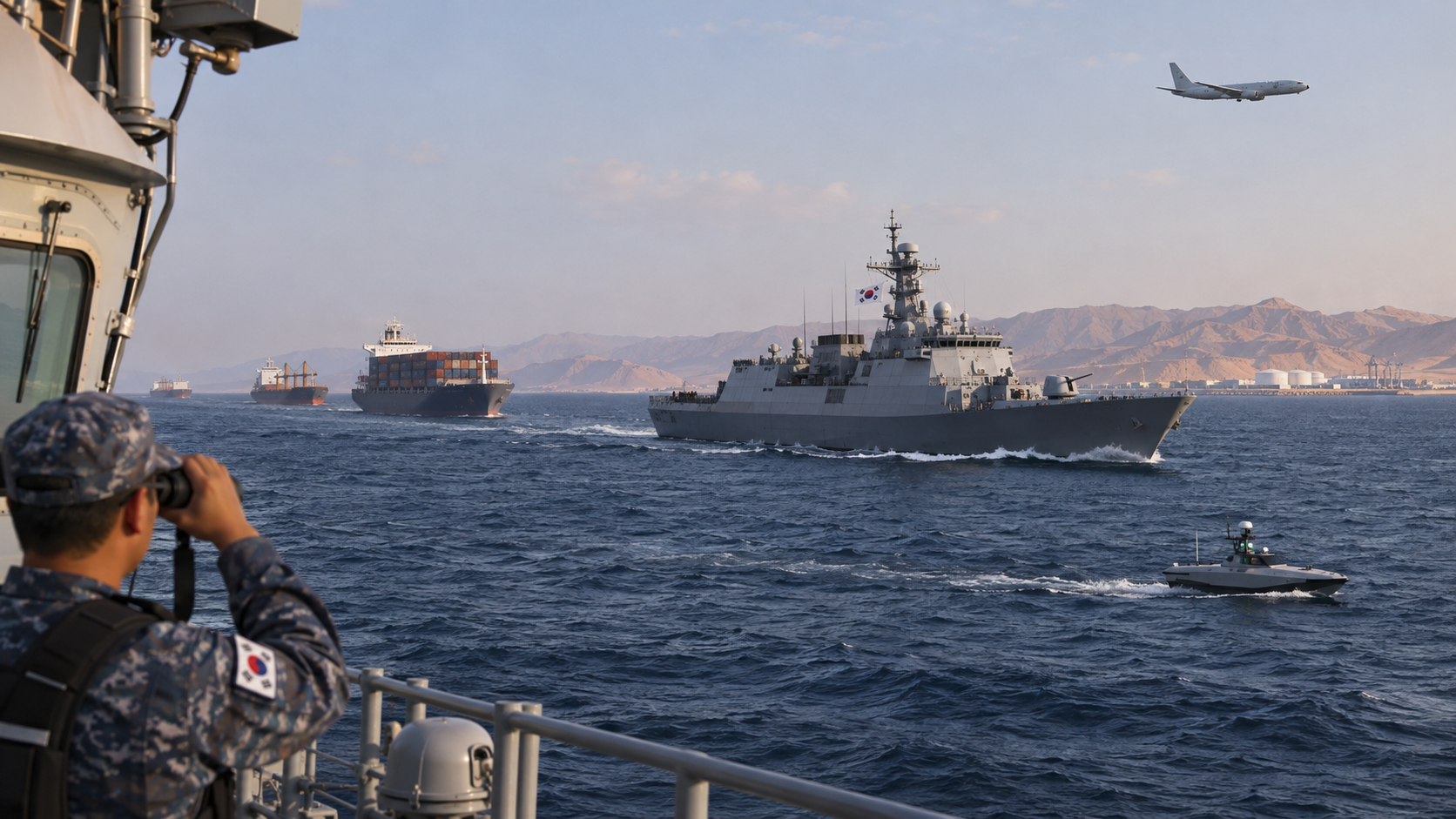
The Cheonghae Unit, which has escorted merchant ships off Somalia since 2009, would patrol near Duqm, an Omani port about 650 kilometres from the Strait of Hormuz. The proposed patrols would remain outside the strait, and the unit would stay under South Korean command. The plan includes sending a P-8A Poseidon patrol aircraft, a bomb-disposal team and uncrewed craft to clear sea mines. It would also increase the unit’s personnel ceiling from 320 to 395.
Deputy ministers backed the proposal, which is due for cabinet review. If the cabinet and President Lee Jae-myung approve it, the National Assembly will vote on expanding the patrol area and extending the mission through 31 December 2027. The current mandate expires on 31 December.
The proposal comes as South Korea weighs the security of merchant shipping and energy supplies against the risk of becoming involved in the Iran war. About 70% of South Korea’s oil came from the Middle East in 2025, with most of it passing through the Strait of Hormuz. President Donald Trump has criticised Seoul for providing what he considers insufficient support for the war. Lee has said South Korea should protect its people, ships and oil shipments, while ruling out a deployment that could draw the country into the conflict. Seoul supports a British- and French-led plan to protect shipping and clear mines in the strait when conditions permit. Any South Korean deployment inside the strait would require parliamentary approval.
Entities: South Korea, Cheonghae Unit, Gulf of Aden, Oman, Duqm • Tone: analytical • Sentiment: neutral • Intent: inform
05-11-2026
South Korea plans to expand the mission of its Cheonghae anti-piracy naval unit to waters near the Strait of Hormuz, deploying maritime and underwater capabilities to help protect commercial shipping and energy supplies. The Defence Ministry said the mission would include a destroyer, a P-8 maritime patrol aircraft, an explosive ordnance disposal team, unmanned surface and underwater vessels, and remotely operated vehicles. The move comes amid disruption to shipping caused by the US-Iran war, which began on February 28. The Strait of Hormuz is a major global energy chokepoint and normally carries about one-fifth of the world’s oil.
Seoul maintains that the deployment would not constitute military intervention in the war. A Defence Ministry official said the mission is intended to protect South Korean citizens and economic interests, would be limited to non-combat purposes, and would operate independently of allied forces. Operations would be confined to open waters south of Oman. The patrol aircraft would not target or monitor Iranian territory, Iranian territorial waters, or the interior of the Strait of Hormuz.
The Cheonghae unit currently operates in the Gulf of Aden off Somalia, and its mandate is authorised only through the end of the year. Extending that authorisation would require approval from South Korea’s parliament, according to Yonhap News Agency. President Lee Jae Myung reiterated in September that South Korea would maintain its policy of non-involvement and non-intervention in the war. Tehran has warned Seoul against a deployment after South Korea said it was considering contributing to the waterway’s security.
Entities: South Korea, Seoul, Strait of Hormuz, US-Iran war, Cheonghae anti-piracy naval unit • Tone: neutral • Sentiment: neutral • Intent: inform
05-11-2026
South Korea plans to expand the operating area of its Cheonghae anti-piracy unit toward the Strait of Hormuz, following pressure from US President Donald Trump for Seoul to support the US war in Iran. The government intends to ask parliament to approve operations near Duqm, Oman, about 650km from the strait. The proposal also requires approval from President Lee Jae Myung and the cabinet, and would extend the unit’s Middle East deployment, currently due to expire at the end of 2026.
South Korean officials stress that the expansion is intended to protect citizens and economic interests, not to support combat operations. The unit would act independently of allied forces, patrol only open waters south of Oman, and refrain from targeting or monitoring Iranian territory, territorial waters, or the interior of the strait. Seoul has previously said it would not deploy military assets in a way that could pull the country into conflict, while considering a greater role in protecting maritime navigation.
The planned expansion comes amid dangerous incidents in the strait. Iran’s Revolutionary Guard reported that two oil tankers and a tugboat caught fire in separate incidents after attempting to use unauthorized routes. One tanker reportedly struck a mine; a second supertanker caught fire, as did a tugboat that came to assist it.
Based in the Gulf of Aden since 2009, the Cheonghae unit currently includes a destroyer, helicopter, up to three rigid-hull inflatable boats, and about 300 personnel. Reports say South Korea may also send a P-8A maritime patrol aircraft and add 75 personnel. The move has broader economic significance: South Korea relies heavily on imported oil and obtained 70% of its supplies from the Middle East in 2025, most of it shipped through the Strait of Hormuz. Trump has criticized Seoul’s support for the Iran war and previously reduced major joint military drills, unsettling the US ally.
Entities: South Korea, Cheonghae unit, Strait of Hormuz, Donald Trump, Lee Jae Myung • Tone: analytical • Sentiment: neutral • Intent: inform