21-10-2026
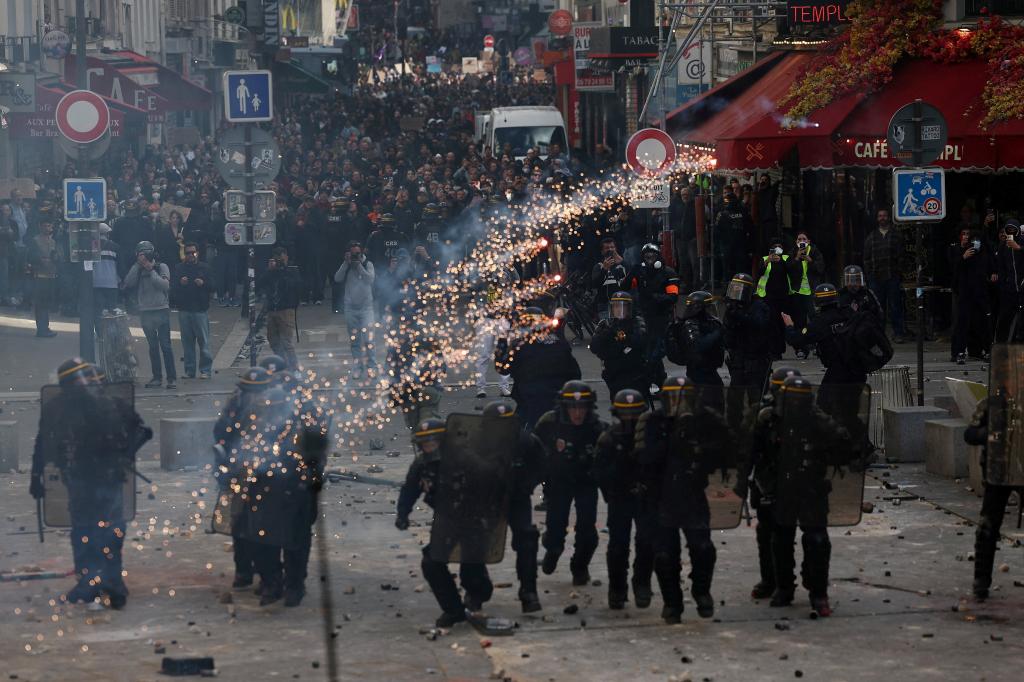
France’s tourism sector is concerned about the potential effects of further protests expected over the weekend. Images of unrest have circulated internationally after demonstrations that began peacefully as student protests escalated into wider disturbances, including clashes and looting. School blockades this month were followed by broader upheaval and episodes of youth violence, with protesters raising issues including the rising cost of living.
Tourists in Paris have reacted differently to the events. Eliana Chanez, visiting from Louisiana, said the unrest had not prevented her from enjoying the city. She urged caution in interpreting news coverage and described protest as part of France’s culture, adding that visitors should listen to different voices. Australian visitor Chris Summers found the violence confronting and said she had felt somewhat scared, though she believed demonstrators were targeting the government rather than tourists.
Some visitors are taking precautions without changing their plans, while others are becoming hesitant. Tourism researchers report weakening hotel reservations in major cities, an indication that unrest may affect travel demand. The article also describes the scale of the disorder: more than 2,000 people were arrested after rioters across France set cars alight, entered public buildings and looted shops. The protests are unfolding amid economic strain, with France’s public debt reported at nearly 119 per cent of gross domestic product at the end of June and the government facing pressure to reduce spending.
Entities: France, Paris, Louisiana, Perth, Eliana Chanez • Tone: analytical • Sentiment: negative • Intent: inform
21-10-2026
French President Emmanuel Macron said protesters planning to “cause chaos” during demonstrations over the cost of living would not be allowed to do so. Speaking to reporters in Doha after meeting Qatar’s Emir, Sheikh Tamim bin Hamad Al Thani, Macron said he would consult French intelligence services ahead of protests planned for Saturday. He said there had been no visible foreign interference in the events, while warning that information had been manipulated from abroad afterward.
More than half a million people had gathered across France on Saturday to demand better conditions in schools and protest high living costs. Riots in some areas led to looting and at least 2,500 arrests. Macron said he would take all necessary measures to restore calm, security and order. He also condemned comments by foreign leaders that he described as unacceptable and stupid, saying they appeared intended to rally political supporters. His remarks seemed to refer to US President Donald Trump, who attributed the protests to immigration, and Israeli Prime Minister Benjamin Netanyahu, who said France had been engulfed by an “invasion of extremist Islam.” The article notes neither leader provided evidence for those claims.
The Yellow Vest movement filed plans on Wednesday for a large protest in Paris over the weekend, following a second consecutive night of curfews without major incidents. Macron said a state of emergency was not currently necessary. Prime Minister Sebastien Lecornu nevertheless pledged a major security presence at future demonstrations, with a massive deployment of police supported by the military.
Entities: Emmanuel Macron, Sheikh Tamim bin Hamad Al Thani, Donald Trump, Benjamin Netanyahu, Sebastien Lecornu • Tone: analytical • Sentiment: neutral • Intent: inform
21-10-2026
The article examines the competing explanations and political consequences of riots that broke out during student protests in France on 17 October. In Paris, resident Elisabeth rejects the idea that the violence represents France as a whole, while acknowledging uncertainty about who organised it and why. Reports describe widespread looting—more than 3,000 shops and businesses were said to have been targeted—which appears largely opportunistic, alongside violence that looked more planned. Police are reviewing CCTV and social-media footage, and online sales platforms say they will help authorities identify looters. President Emmanuel Macron has promised justice, while the government faces criticism for failing to anticipate the unrest and for having too few officers deployed.
French officials, including Prime Minister Sébastien Lecornu and Interior Minister Laurent Nuñez, have blamed far-left and ultra-left groups for helping organise or inflame the violence. A leaked intelligence report cited by Le Figaro alleged that radical-left groups and student organisations were manipulating demonstrations, and suggested La France Insoumise (LFI) might use violence as an electoral strategy. LFI, its leader Jean-Luc Mélenchon, and student activists reject such claims. Students say their protests arose from grassroots anger over public education, and critics warn that politicians are seeking scapegoats instead of addressing the causes of discontent.
The unrest has intensified already heated political competition ahead of France’s presidential election, due in six months. Mélenchon accused the centrist government of incompetence or exploiting disorder to present itself as the party of order. Marine Le Pen, whose National Rally leads opinion polls, blamed Mélenchon and the government in a polished address, presenting her law-and-order politics as an alternative. The article notes that French authorities have not implicated migrants, despite claims by Le Pen’s party. It also places France’s unrest in a wider context of violent demonstrations in Belgium and concerns about social media spreading riot footage and encouraging further violence. Overall, it portrays a country divided over responsibility, with unresolved questions about organisation, policing failures, and the underlying student grievances.
Entities: Elisabeth, Emmanuel Macron, Sébastien Lecornu, Jean-Luc Mélenchon, Marine Le Pen • Tone: analytical • Sentiment: negative • Intent: analyze
21-10-2026
French President Emmanuel Macron accused unnamed foreign leaders of using riots in France to advance their own electoral agendas, while distinguishing that political commentary from direct foreign involvement in the unrest. Speaking in Doha, he said there was no visible foreign interference in the events themselves, but that foreign manipulation of information afterwards had encouraged false claims. He appeared to be referring to Israeli Prime Minister Benjamin Netanyahu and US President Donald Trump, both of whom made comments linking the violence to immigration or Islamist extremism. Macron rejected those claims as false and said the riots began on the fringe of cost-of-living protests, after weeks of student demonstrations over high-school conditions. Nearly 150 people have been jailed and more than 800 brought before the courts. The government acknowledged police had lost control during the violence, and Macron said authorities would take a firm line against agitators he associated with ultra-left groups.
The article also examines online disinformation surrounding the unrest. The Financial Times reported that EU regulators were investigating possible foreign interference, citing security officials who said pro-Russian and far-right accounts had circulated violent footage. Iran and Algeria were also suspected of involvement in some messaging. A French disinformation researcher said pro-Kremlin influencers associated with the Russian operation Storm-1516 amplified events and false narratives. BBC Verify reviewed examples of fabricated videos that researchers linked to another Russian operation, Matryoshka; the videos imitated French news outlets, although their individual reach appeared limited.
BBC Verify also traced a widely shared AI-generated image, allegedly depicting an elderly couple robbed in Paris, to a website whose director said it had been made with ChatGPT. The alleged robbery remains unconfirmed, and the image later circulated widely without its AI label, attracting more than six million views on X. Its creator said she regretted that it had been taken out of context and blamed users who reshared it without disclosure.
Entities: Emmanuel Macron, Donald Trump, Benjamin Netanyahu, France, Paris • Tone: analytical • Sentiment: neutral • Intent: inform
21-10-2026
France is extending overnight curfews and deploying more police after demonstrations over rising living costs and deteriorating public services escalated into widespread looting and arson. Prime Minister Sébastien Lecornu announced a “massive” police presence ahead of further protests scheduled for October 24. Interior Minister Laurent Nuñez acknowledged that officials had underestimated the unrest, while authorities reported more than 2,500 people in custody by Monday evening. The violence included the burning of a historic town hall in Limoges. Curfews have been imposed in parts of Paris, Lyon and other cities; Paris and Lyon reported no major incidents on Monday night.
The protests began in mid-September with students and teachers raising concerns about overcrowded classrooms, deteriorating school buildings and teacher shortages. Trade unions and Yellow Vest activists later joined, broadening the movement into a challenge over living costs and declining public services. The government has promised additional police and offered some education concessions, including more than 3,000 substitute teachers and several hundred additional hires. President Emmanuel Macron has said the government will hear peaceful protesters’ demands while holding rioters accountable, and blamed radical far-left groups and criminals for the violence.
The article describes significant barriers to broader reforms: France’s public debt was nearly 3.6 trillion euros, or 119% of annual economic output, at the end of June, and the government expects a 5.4% deficit this year. Rising interest costs are expected to further constrain public spending. Macron’s allies also lack a parliamentary majority, and the current budget passed only after the government advanced it without a final vote, surviving two no-confidence motions. With Macron’s approval rating at 15% and a presidential election due in April, polls show far-right leader Marine Le Pen ahead of other potential candidates. Macron cannot seek a third term.
Entities: Emmanuel Macron, Sébastien Lecornu, Laurent Nuñez, Gérald Darmanin, Paris • Tone: analytical • Sentiment: negative • Intent: inform
21-10-2026
French trade union leaders said they were disappointed after meeting Prime Minister Sébastien Lecornu at Matignon, where they felt the government offered no measures addressing protesters’ demands. Unions are calling for a major mobilisation on 5 November, with CGT leader Sophie Binet urging workers to escalate the movement and make strike action central. The CGT also plans to join a Saturday cost-of-living demonstration associated with a “yellow vest” coordination. CFDT leader Marylise Léon said she expected the government to provide social responses to workers’ concerns, while CFTC president Cyril Chabanier said officials had opened discussions about raising the minimum wage. Unions also objected that secondary school and student representatives were excluded from the meeting. Education Minister Édouard Geffray is due to meet them and has promised initial measures addressing demands that include more education funding, better-maintained school buildings, substitutes for absent teachers and abolition of Parcoursup.
President Emmanuel Macron, speaking during a Gulf tour, called for firmness toward those responsible for violence and convened an intelligence meeting to examine security failures during the 17 October protests. He announced no response to protesters’ wider concerns, including purchasing power and education funding. Political figures from several parties criticised the government or Macron’s decision to continue his trip. Authorities renewed curfews and restrictions on gatherings in parts of Paris and Lyon. Justice Minister Gérald Darmanin reported about 2,500 people taken into custody after violence and looting, with hundreds brought before prosecutors or magistrates. Although the government blamed the “ultra-left” for much of the violence, Paris prosecutor Laure Beccuau said those appearing in court had not cited a political motive. Scrutiny of the policing response continues: the Defender of Rights received 46 complaints linked to the student movement, and the police oversight body IGPN is conducting at least six investigations into incidents from the weekend.
Entities: Sophie Binet, Sébastien Lecornu, Emmanuel Macron, Marylise Léon, Gérald Darmanin • Tone: analytical • Sentiment: negative • Intent: inform
21-10-2026
French President Emmanuel Macron criticised foreign leaders for using unrest in France to advance their own political agendas, in remarks made during a visit to Doha. Without naming them directly, he appeared to target US President Donald Trump and Israeli Prime Minister Benjamin Netanyahu, accusing leaders on both sides of the Atlantic and in the region of making “unacceptable and even stupid comments” about the protests. Macron also condemned the circulation of fake, AI-generated videos and claims that France had been overwhelmed by migrants and Islamists, while denying that foreign interference had caused the unrest.
The protests over the weekend included many peaceful demonstrations organised by trade unions, the Yellow Vest movement and students. However, looting and clashes with police overshadowed them, particularly after violence erupted on 17 October. Trump portrayed the events as evidence of threats from immigration and the decline of Western civilisation, claiming France was “under siege” and linking the unrest to a warning about what could happen in the United States if Democrats win the midterms. Macron said France already faced domestic challenges and did not need the situation inflamed further.
Macron announced an emergency meeting with ministers and intelligence officials for Thursday to obtain a detailed account of the events. The government had acknowledged losing control of the situation on 17 October. Curfews and restrictions on mass gatherings were to remain in place ahead of further protests planned for 24 October. Macron said those seeking disorder would be prevented from causing it, called for dialogue with unions and political forces, and rejected any justification for violence in a democracy.
His three-day Gulf trip was also intended to secure French energy supplies amid a cost-of-living crisis that has contributed to unrest. France said the United Arab Emirates and Bahrain had pledged an additional combined 200,000 tonnes of diesel per month.
Entities: Emmanuel Macron, Donald Trump, Benjamin Netanyahu, France, Doha • Tone: analytical • Sentiment: neutral • Intent: inform
21-10-2026
Images of riots in France are beginning to affect hotel bookings, and tourism industry representatives fear that continued unrest could deter foreign visitors. Christelle Cassagne, head of ADN Tourisme, says violence in city centres including Nice, Paris and Lyon is damaging for tourism, since visitors do not travel to spend their holidays confined to their hotel rooms. The Louvre’s temporary closure after a student gathering at its entrance also frustrated some visitors to Paris, while the tense atmosphere has prompted some travellers to reconsider their plans.
MKG Consulting reports that Paris hotels have seen booking momentum slow for the next six weeks. Between 19 and 20 October, the lead over bookings for the corresponding period in 2025 narrowed for stays scheduled from 20 to 29 October, and also for the shorter period from 20 to 25 October. Protourisme director Didier Arino estimates that one day of riots in Paris may have led to cancellations of roughly 1% of bookings for the month, a limited impact so far. He says the effect is likely to be greater for travellers coming from farther away because they are more sensitive to security risks.
The United States, China and Germany have issued travel warnings for people planning to visit France. Such advisories could particularly affect American and Asian arrivals, whose visitors typically spend more than European tourists. The longer-term impact remains uncertain and depends on whether violence continues. Laurent Abitbol, chairman of the Selectour travel agency network, says unrest lasting a couple of weeks would not be very serious, but a months-long crisis could be catastrophic for tourism. The article therefore describes early signs of booking weakness while emphasizing that the scale of damage will hinge on the duration and spread of the unrest.
Entities: France, Paris, Nice, Lyon, Christelle Cassagne • Tone: analytical • Sentiment: negative • Intent: inform
21-10-2026
France 24 reports that Prime Minister Sébastien Lecornu has promised a “massive” police deployment for demonstrations planned for Saturday by the Yellow Vest movement. The announcement came as Lecornu faced angry lawmakers during a session at the French National Assembly in Paris. He acknowledged that the security response to the preceding unrest had fallen short and said the government would take a stronger approach ahead of the new protests.
The report presents the deployment pledge as a response to renewed protest activity and criticism of how authorities handled earlier demonstrations. Its focus is on the prime minister’s commitment and his admission about the shortcomings of the prior security response; the supplied article text does not give details about the number of officers, locations of deployment, or specific operational measures. It also does not include reactions from demonstrators, police representatives, or other officials beyond the lawmakers’ anger described in the report.
The accompanying image caption identifies Lecornu at a government question session in the National Assembly on October 20, 2026. The item was issued the following day. Overall, the report is a brief news update about the government’s planned response to another wave of protests, rather than a detailed account of the demonstrations or a broader analysis of the Yellow Vest movement.
Entities: Sébastien Lecornu, Yellow Vest movement, France, Paris, French National Assembly • Tone: neutral • Sentiment: neutral • Intent: inform
21-10-2026
France 24’s liveblog preview reported that French Prime Minister Sébastien Lecornu was preparing to meet trade union organisations on Wednesday, October 21, 2026. The meeting was expected to address security at protests and responses to the high school students who started demonstrations that had since spread nationwide. The protests were linked to the cost of living, while violence and looting over the preceding weekend had prompted curfews in cities across France.
The article’s recap of the previous day’s developments said Lecornu accused ultra-left radical groups of pursuing an “insurrectionary plan” that led to violent rioting alongside the protests. It also reported that fresh curfews had been imposed in central Paris and Lyon after the first quiet night following some of France’s most destructive rioting in years. Looking ahead, Lecornu said a “massive” security operation would be deployed for protests planned for Saturday, with the military reinforcing police.
The supplied page contains only a brief liveblog introduction and a summary of prior developments; it does not include subsequent live updates. The article credits FRANCE 24 and cites Reuters, the Associated Press and Agence France-Presse as sources for the recap.
Entities: Sébastien Lecornu, France, Paris, Lyon, French government • Tone: analytical • Sentiment: neutral • Intent: inform
21-10-2026
French President Emmanuel Macron criticised foreign leaders for comments about rioting and looting that occurred alongside peaceful demonstrations in France on Saturday. Speaking to reporters in Doha on October 21, he said foreign information manipulation had contributed to “unacceptable” and “stupid” remarks, and said some leaders had repeated AI-generated material, sometimes credulously. Macron did not name US President Donald Trump or Israeli Prime Minister Benjamin Netanyahu, but the article connects his remarks to statements they had made about France. Netanyahu described France as facing an “invasion of extremist Islam,” while Trump linked events to immigration and praised far-right politician Marine Le Pen as a conservative voice. Both leaders face elections in the coming months, and Macron suggested their comments were shaped by domestic political campaigns.
Macron said fake AI-generated images depicted scenes that had not occurred in France, including claims that the country had been invaded by migrants and Islamists. He distinguished this foreign manipulation from the events themselves, saying he did not consider the weekend’s unrest to be foreign interference. The riots and looting were described as the worst France had experienced in years, but they took place on the sidelines of peaceful nationwide demonstrations against the rising cost of living, attended by more than half a million people. Those rallies followed weeks of student protests that had shut many schools.
With another cost-of-living protest planned for Saturday, the government has warned against further violence. Paris and other cities imposed nighttime curfews in areas considered vulnerable to protest or looting. Macron said he would meet intelligence officials, Prime Minister Sébastien Lecornu and other ministers to receive a detailed account of the unrest. Ministers promised a substantially reinforced security operation, including additional police and expected troop deployments, after acknowledging weaknesses in the initial response. Macron, who faced criticism for travelling to the Middle East and for a Sunday address seen by some as lacking a clear plan, insisted he remained in control and was fulfilling his duties.
Entities: Emmanuel Macron, Donald Trump, Benjamin Netanyahu, Marine Le Pen, Sébastien Lecornu • Tone: analytical • Sentiment: neutral • Intent: inform
21-10-2026
France 24 reports that Donald Trump and members of his political circle are using unrest in France to advance claims that immigration caused the violence, despite no available evidence establishing such a connection. At a campaign rally in Kansas, Trump showed footage of French protests and warned that the United States could become “like France” if Democrats win the midterm elections. He described France as having been “conquered, looted, and burned to the ground” by migrants, jihadists and communists, and claimed Paris would soon become a Muslim city. Vice President JD Vance and other Republicans have echoed the immigration-focused claims.
The article notes that France does not collect official statistics on the racial or ethnic backgrounds of people arrested, so the demographic makeup of detained protesters cannot be established on that basis. It also says there is no evidence that documented or undocumented immigrants were responsible for the violence. The demonstrations began as student protests seeking more teachers and better school conditions, then broadened to include people frustrated by the cost of living and high fuel prices. Images showing people of colour do not, the article stresses, prove a link between immigration and violence; France’s diversity is shaped in part by its colonial history.
French President Emmanuel Macron criticized foreign leaders for making “stupid comments” for political purposes and rejected claims that France had been invaded by migrants and Islamists. He also said AI-generated images had depicted events that never occurred. Trump’s focus on France comes as Republicans face pressure before the midterms and a Reuters/Ipsos poll puts his approval rating at 31%, described as a reported record low. The article says it is unclear whether his approach will persuade voters, whose concerns reportedly include the cost of living and the war in Iran. It concludes that Trump is presenting France as a warning to rally his supporters, while the claims tying the unrest to immigration are unsupported by available evidence.
Entities: Donald Trump, Emmanuel Macron, JD Vance, France, United States • Tone: analytical • Sentiment: negative • Intent: analyze
21-10-2026
France imposed renewed nighttime curfews in parts of Paris and Lyon after a comparatively quiet night following some of the country’s most destructive rioting in years. Paris police said a curfew covering two designated areas—around Place de la République and the Les Halles shopping district—had restored “public peace” and would remain in force “for as long as necessary.” The restrictions do not cover every area affected by Saturday’s violence, including the Champs-Elysées, Saint-Lazare station area and parts of Rue de Turbigo. Lyon also renewed a city-centre curfew from 9 p.m. to 6 a.m.; Marseille introduced a nighttime curfew for unaccompanied minors.
Prime Minister Sébastien Lecornu said the curfews helped keep the night calm and announced a “massive” security deployment for protests expected Saturday. Student unions and groups associated with the “yellow vest” movement have called for another day of demonstrations. Sentinelle soldiers, who have patrolled French cities since the 2015 Islamic State attacks, are to guard sensitive sites so police and gendarmes can focus on crowd control.
The article also reports the arrest of a suspect in the arson attack that badly damaged Limoges’ historic city hall. Justice Minister Gérald Darmanin said the suspect was in custody and might not have acted alone. French media described the person as linked to radical environmentalist movements and as being on a national-security watchlist, though Darmanin declined to discuss the suspect’s profile. He said far-left groups appeared to have organized attacks on state symbols.
The unrest has become the subject of competing political explanations. U.S. Vice President JD Vance and President Donald Trump shared footage of the burning city hall and blamed immigration, while French officials attributed the violence to far-left groups and opportunistic looters. At least 2,400 people were arrested after Saturday’s nationwide protests against rising living costs and poor school conditions, during which rioters clashed with police, burned cars and stormed public buildings. Smaller groups subsequently set fires and looted businesses in several cities.
Entities: France, Paris, Lyon, Marseille, Limoges • Tone: analytical • Sentiment: negative • Intent: inform
21-10-2026
France extended overnight curfews in parts of Paris and Lyon after a comparatively calm night following several days of violent unrest. Paris police said curfews around Place de la République and the Les Halles shopping district had restored public peace and would continue “for as long as necessary.” Lyon also renewed its city-center curfew, while Marseille restricted unaccompanied minors from being out at night. The measures follow nationwide protests over rising living costs and poor school conditions that escalated into rioting, looting, arson and clashes with police. Authorities reported about 2,400 arrests since Saturday, with hundreds of cases referred to prosecutors and 149 people jailed by Tuesday afternoon.
Prime Minister Sébastien Lecornu said a “massive” security operation was planned for protests expected Saturday. Soldiers from the Sentinelle anti-terrorism operation will guard sensitive locations, freeing police and gendarmes to manage crowds. Student organizations and groups associated with the Yellow Vest movement have called for another day of demonstrations.
Police arrested a suspect in the arson attack that damaged Limoges’ historic city hall. Justice Minister Gérald Darmanin said the suspect might not have acted alone and accused far-left groups of organizing attacks on state symbols. U.S. officials JD Vance and Donald Trump attributed the unrest to immigration, while French officials blamed far-left groups and opportunistic looters.
Darmanin promised a firm judicial response, citing prison sentences for three men convicted of looting in Lille. Parliament will investigate both the violence and the authorities’ policing strategy, with findings expected by year’s end. Smaller demonstrations continued Tuesday in Rennes and Lyon. Residents and volunteers also worked to clean damaged public spaces in Paris, where a curfew and police patrols kept the night calm.
Entities: France, Paris, Lyon, Marseille, Limoges • Tone: neutral • Sentiment: negative • Intent: inform
21-10-2026
French left-wing groups, including the Yellow Vests movement, are planning a large march in central Paris on Saturday, while student groups are also calling for demonstrations demanding increased education spending. The plans follow a weekend of severe unrest that began with protests over school conditions and escalated into widespread looting and vandalism. Nearly 2,500 people were arrested, and thousands of stores were damaged or looted.
President Emmanuel Macron, speaking from Qatar during a Middle East trip, said authorities would prevent disorder in city centers and insisted there must be no wavering at the top of the state. He also criticized foreign leaders, including President Trump, for spreading misinformation about the unrest. Trump had blamed the riots on radical Islam and mass migration. Macron’s absence from France and his initial response to the violence have drawn criticism, including from far-right leader Marine Le Pen, who said the government had lost control.
The French government plans a significantly reinforced security operation, deploying the army alongside additional police. Prime Minister Sebastien Lecornu met with labor union leaders to try to reduce tensions. He said the government would protect the right to demonstrate, while CGT union head Sophie Binet argued that the response should be political rather than repressive. Binet said no new measures were announced at the meeting, though youth organizations would be invited to talks. France’s main unions have also called a nationwide strike for November 5.
After curfews and tougher penalties were introduced, France experienced several more peaceful nights. The article reports that protests have also spread to Albania and Italy, where the government approved new security measures and tougher penalties for rioters. The unrest is unfolding as far-right and far-left political forces gain support ahead of France’s next presidential election, and has contributed to rising French government borrowing costs.
Entities: Emmanuel Macron, Sebastien Lecornu, Sophie Binet, Marine Le Pen, Yellow Vests movement • Tone: urgent • Sentiment: negative • Intent: inform
21-10-2026
France is experiencing a major wave of anti-government unrest that began in September as largely peaceful, student-led protests over public education. By the weekend described in the article, demonstrations had escalated into widespread clashes, fires, looting and damage to public buildings. The French Interior Ministry reported more than 2,000 arrests and nearly 1,000 injured police officers. Authorities imposed curfews and restrictions on public gatherings in parts of several cities, including Paris, Nice, Lille and Lyon, while additional demonstrations were planned for October 24, October 31 and November 5.
Paris was a central focus of the violence, with clashes around Place de la Republique, Les Halles, Place de la Bastille and Place de la Concorde. Marseille, Lyon and other cities also experienced unrest and damage. Despite this, many areas of Paris had returned to a calmer routine by October 20: streets had been cleared, parks were peaceful, and cafes, tourists and guides were active. A local guide recommended staying on the Left Bank, which is generally quieter during protests, and said tour schedules were being adjusted around demonstrations.
Most major Paris attractions, including the Eiffel Tower and Arc de Triomphe, remained open, though authorities could close sites at short notice. The Louvre had shut after protesters blocked its entrance, and its reopening date was not announced. Visitors were advised to check attraction and local updates before travelling. Demonstration days could bring closed metro stations and roads, reduced bus and tram services, and a possible nationwide transport strike on November 5. The article recommends avoiding protest areas, following local media and official updates, and anticipating disruption. It also notes that standard travel insurance often excludes civil unrest; reimbursement may depend on policy terms or having “cancel for any reason” coverage.
Entities: France, Paris, Marseille, Lyon, French Interior Ministry • Tone: analytical • Sentiment: negative • Intent: inform
21-10-2026
French Prime Minister Sebastien Lecornu is due to meet representatives of five trade unions on Oct 21, as the government responds to a wave of riots and prepares for further demonstrations over rising living costs. He has acknowledged that the security response to the recent unrest fell short and promised a “massive” police deployment for protests planned on Oct 24. Another demonstration has been called for Nov 5 by labour unions. High school students, who are also planning protests, were not invited to the meeting.
The unrest included looting, arson and clashes in several cities. Authorities imposed partial curfews and restrictions on gatherings in Paris and elsewhere, while police temporarily prohibited people from carrying cans or bottles of petrol or gas. Nearly 150 people had been jailed and more than 800 brought before the courts. An arrest was made in connection with the burning of a historic town hall in Limoges, an incident that became a symbol of the violence.
The government has faced criticism across the political spectrum. Interior Minister Laurent Nunez offered to resign after saying police had lost control, but President Emmanuel Macron rejected the resignation. Lawmakers agreed to launch an inquiry into the unrest, examining possible intelligence failures, policing tactics and government preparedness. Lecornu has blamed ultra-left radical groups for what he described as an “insurrectionary plan,” while Marine Le Pen called the disorder a warning of a broader crisis of authority.
The unrest has also raised concern beyond France. The United States, China and Germany issued travel advisories, and investors have sold French debt amid doubts about the government’s ability to control spending. Demonstrations over prices have also occurred elsewhere in Europe. US President Donald Trump blamed migrants, jihadists and communists for France’s violence, but analysts cited in the article said immigration was not a driving force behind the unrest.
Entities: Sebastien Lecornu, Emmanuel Macron, Marine Le Pen, Jean-Luc Melenchon, Laurent Nunez • Tone: analytical • Sentiment: negative • Intent: inform
21-10-2026
The article examines claims by European politicians that foreign powers caused or helped spark recent riots and protests in France, Italy and other countries. It finds no conclusive evidence that foreign actors drove the unrest through social media, although there is evidence that some foreign-linked networks exploited the events afterward to spread their own narratives. French President Emmanuel Macron explicitly distinguishes foreign interference in causing the events from manipulation of information after they began. Other officials have made stronger claims: Italy’s Defence Minister Guido Crosetto described the Milan riots as part of a “hybrid war,” while French Foreign Minister Jean-Noël Barrot said protests had been exploited by narratives associated with Russia, China, Iran and the MAGA community.
The European Commission has resisted calls to open a formal investigation, saying it lacks definitive evidence that foreign information manipulation was behind the unrest. National regulators, including France’s Arcom and Italy’s AGCOM, have powers under the Digital Services Act and have urged Commission action. The Commission says it is ready to support national authorities, but wants French authorities to carry out their work first. Although the DSA includes an emergency mechanism that could give the Commission powers over online platforms during a serious public-security threat, it has not been activated.
Authorities are separately asking platforms for assistance identifying people involved in vandalism and looting. In France, police sought help from Vinted after stolen goods were reportedly offered for sale there. The article notes that Russia-linked disinformation networks, including Operation Overload and Doppelgänger, have amplified the violence online. It contrasts the current unrest with the Ceuta migration crisis, where evidence showed that false online information mobilised thousands of people. The available evidence so far instead suggests foreign actors seized on existing unrest rather than caused it.
Entities: Luca Bertuzzi, Emmanuel Macron, Guido Crosetto, Jean-Noël Barrot, Thomas Regnier • Tone: analytical • Sentiment: neutral • Intent: analyze
21-10-2026
The article reports that French President Emmanuel Macron, speaking during a visit to Qatar, defended his government’s handling of protests taking place across France. He also accused foreign political figures—including US President Donald Trump—of spreading misleading narratives about the unrest. The headline characterizes Macron’s accusation as a claim that Trump spread rumours about the protests. The supplied article text does not provide further details about the protests, the specific narratives Macron disputed, Trump’s response, or the substance of Macron’s defence of his government. It is presented as an Al Jazeera Newsfeed video, published on 21 October 2026. Based on the available description, the central issue is the political dispute over how protests in France are being portrayed, and Macron’s response to commentary from figures outside France. The brief text establishes the participants, setting, and broad subject, but does not give enough information to assess the scale or causes of the protests or to verify the competing claims.
Entities: Emmanuel Macron, Donald Trump, France, Qatar, Al Jazeera • Tone: neutral • Sentiment: neutral • Intent: inform
21-10-2026
French student protests over education conditions and the rising cost of living have popularized the nonsensical chant “Bismillah, c’est les ténèbres”. Literally, it means “In the name of God, it’s the darkness”: “Bismillah” is an Arabic expression meaning “in the name of God” that is also used in French slang as something like “let’s do it”, while “c’est les ténèbres” describes a bleak or hopeless situation. The slogan’s importance lies less in its literal meaning than in its use as satire directed at police and racial stereotyping.
The chant reportedly originated in a Snapchat message that circulated in early October. A user named Mamadou asked to join a protest coordination group and used the phrase alongside Arabic slang and Algerian flag emojis. Students say the message was sent by undercover police trying to infiltrate their chats, but that claim has not been verified, and French authorities have not commented on it. The article says France’s police inspectorate, the IGPN, has opened dozens of investigations into alleged police violence since protests began.
The protests have brought together students seeking better educational conditions and people opposing the high cost of living. Their grievances include overcrowded classrooms, teacher shortages, systemic inequality and a lack of opportunity. Hundreds of thousands joined demonstrations over the weekend, the largest mobilisation since protests began the previous month. The slogan has appeared on placards and spread to Italy and Belgium, where similar demonstrations have taken place.
Youssef El Chazli, an associate professor of Arab and Mediterranean sociology at Paris 8 University, says the phrase mocks an image of police officers relying on stereotypes about young people of Arab and African descent. He describes memes and online trends as creative ways for young people to express political grievances. The article also places the slogan amid growing public debate about Islamophobia, citing a reported 72 percent increase in incidents in France during January–March 2025 compared with the same period in 2024. It notes that far-right figures blamed Muslim youths for violence and that US President Donald Trump portrayed the unrest as “Islam wanting to take over”.
Entities: Bismillah, c’est les ténèbres, French protests, France, Youssef El Chazli, Paris 8 University Vincennes – Saint-Denis • Tone: analytical • Sentiment: neutral • Intent: inform
21-10-2026
France’s hardline CGT union leader Sophie Binet called for strikes on Wednesday after talks between Prime Minister Sébastien Lecornu and union leaders failed to resolve disagreements over fresh protests. Speaking to reporters after the meeting, Binet said the government had offered “no measure or an acknowledgement of our demands.” The report presents the failed talks against the backdrop of unrest in France, which it says was still reeling from riots the previous weekend. It does not specify the union’s demands, the government’s proposals, or the scope and timing of any strikes. The headline and article indicate that the meeting concerned the protests and that union leaders were urging industrial action following the lack of agreement. The page also links to related coverage about planned demonstrations, police deployments, curfews, and legal action against people accused of ransacking city centres, but those items are not part of the article itself. The report’s central point is the breakdown in discussions between the government and union leaders, and the resulting call for strikes from the CGT’s leader. It offers a brief account rather than a detailed explanation of the dispute or a broader analysis of the unrest.
Entities: Sophie Binet, Sébastien Lecornu, CGT, France, French government • Tone: urgent • Sentiment: negative • Intent: inform
21-10-2026
France 24’s Wednesday press review surveys French coverage of the weekend’s riots, the political dispute over who was responsible, a new North Sea gas project, climate projections and the trend of “hate-reading.” In Paris, Le Parisien and Libération report that about 300 people accused of taking part in looting and vandalism were brought before an overwhelmed courthouse on Tuesday. Proceedings were marked by delays and procedural problems, while parents watched in shock as their children faced accusations. The government blamed the radical-left France Unbowed party for the protests’ degeneration. Mediapart, however, reported allegations that territorial intelligence services had been told to state that the party was behind the movement, even though that was false. Interior Minister Gérald Darmanin—identified in the source only by his office—denied issuing such an instruction, and France Unbowed’s national coordinator promised legal action. A Le Figaro poll suggests the unrest has benefited far-right presidential candidate Marine Le Pen, with elections six months away.
The review then turns to climate and energy. The UK government approved a new gas field off Scotland, despite Labour’s 2024 commitment to issue no further North Sea oil and gas licences. The decision coincided with a United Nations report projecting 2.6°C of warming above pre-industrial levels by the end of the century, nearly twice the intended 1.5°C limit. Finally, The Washington Post examines “hate-reading”: choosing a book one expects not to enjoy. A writer and librarian in Petersburg, Virginia, describes the practice as a “win-win,” since readers either have their dislike confirmed or discover they were mistaken and learn something. Overall, the piece is a concise roundup of stories and perspectives reported by several newspapers and publications.
Entities: France 24, Paris, Le Parisien, Libération, France Unbowed (La France insoumise) • Tone: analytical • Sentiment: neutral • Intent: inform
21-10-2026
The France 24 A propos segment reports on research by the NGO Alliance4Europe into online activity ahead of large protests and subsequent unrest in France. The organisation says pro-Russian networks amplified information online in ways that could intensify public anger before the events. Its analysis covered more than half a million posts across several social media platforms, and Alliance4Europe says it traced the campaign back to the beginning of September. France 24 journalist Sharon Gaffney discusses the findings with Omri Preiss, the organisation’s managing director. The supplied article text does not include the interview transcript, specific examples of posts, details of the methods used to identify the networks, or a response from the accounts or parties implicated. It also does not establish that online activity caused the protests or unrest; the claim presented is that the networks sought to exacerbate anger. The item is therefore a short introduction to a video report rather than a full account of the research. Its central subject is the alleged use of coordinated, pro-Russian online influence activity to amplify existing tensions in France in the period before mass demonstrations and unrest.
Entities: France, Alliance4Europe, Sharon Gaffney, Omri Preiss, FRANCE 24 • Tone: analytical • Sentiment: neutral • Intent: inform
21-10-2026
France 24 reports on research by Alliance4Europe, an NGO, which found that pro-Russian online networks amplified existing anger in France ahead of large protests and subsequent unrest the previous weekend. The group analyzed more than half a million posts across several social media platforms and says it traced the activity to the beginning of September. Its findings suggest a coordinated effort to manipulate online information and intensify public anger during a period of political and social tension. The article presents the findings through an interview with Omri Preiss, Alliance4Europe’s managing director, conducted by France 24 journalist Sharon Gaffney. The supplied article text does not include further details about the networks, the specific posts or platforms examined, the methods used to attribute the activity to pro-Russian actors, or the NGO’s evidence beyond the stated analysis and timeline. It also does not provide a response from the accounts or parties implicated. Accordingly, the report’s central focus is the NGO’s assessment that online amplification contributed to an atmosphere surrounding the protests and riots, rather than a detailed account of the unrest itself. The publication date shown is October 21, 2026.
Entities: Alliance4Europe, Omri Preiss, Sharon Gaffney, France 24, France • Tone: analytical • Sentiment: neutral • Intent: inform
21-10-2026
Thieves who looted the Apple Store in Lille, France, during riots reportedly found that the stolen iPhones and other products had been disabled and were being tracked. Video from the aftermath of the Oct. 17 looting showed a warning on a stolen iPhone asking that it be returned to Apple Lille and stating that local authorities would be alerted. The article notes that Apple devices can display such messages when they are identified as stolen from stores. Social media users mocked the looters and remarked that the devices would be blocked and their locations identified.
The Lille store was one of several high-end retailers targeted during protests across France. In Bordeaux, a masked crowd broke into a Louis Vuitton store while protesters carrying red flags with hammer-and-sickle symbols marched nearby. In Marseille, looters targeted Hermes and shops selling jewelry, makeup and clothing.
The demonstrations began over education and the cost-of-living crisis but escalated into disorder. The article reports that about 1,800 people were arrested and more than 500 police officers were injured. Citing investment firm Morningstar, it estimates insured losses from the riots at $1.3 billion to $1.6 billion—nearly twice the cost attributed to the 2023 riots that followed the police shooting of Nahel Merzouk.
Entities: Lille, France, Apple Store Lille, Apple, iPhone theft tracking alerts, French riots and mass protests • Tone: analytical • Sentiment: negative • Intent: inform