21-10-2026
Russian President Vladimir Putin announced that Stephen Hubbard, a 74-year-old American citizen imprisoned in Russia since 2022, had been freed and was at Pulkovo Airport in St Petersburg. Hubbard, a retired teacher from Michigan, had been sentenced to nearly seven years after a closed-door trial on charges of mercenary activity. Russian authorities alleged he served with Ukrainian forces; his US-based lawyer said Hubbard denied being part of a combat or military unit. Washington had designated him “wrongfully detained.”
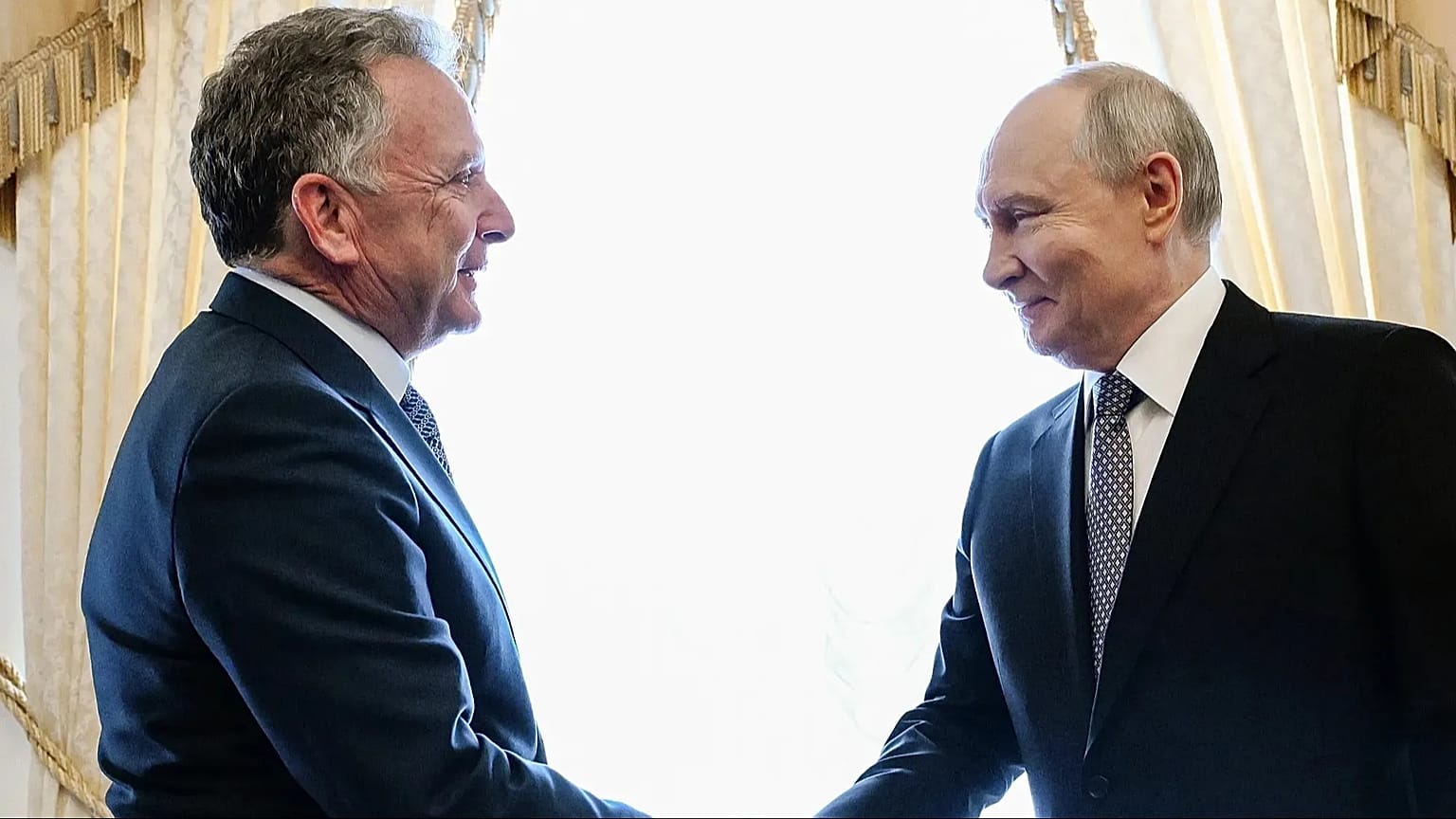
The release was announced during Putin’s meeting in St Petersburg with US special envoy Steve Witkoff, who thanked Putin and described the release as a gesture of goodwill. Witkoff urged Putin to consider resuming US-mediated talks involving Russia and Ukraine, saying that even discussion of possible next steps would matter. The visit was his ninth in-person meeting with Putin and followed talks in Oslo with Ukrainian President Volodymyr Zelenskyy and European and NATO representatives.
The article places the meeting amid strained US-Ukraine relations and uncertainty over Washington’s support for Kyiv. It reports that Ukraine had raised concerns about interruptions to intelligence-sharing and access to the Starshield satellite system. A Wall Street Journal report, not independently verified by Reuters, said Elon Musk had ordered a slowdown of a military-grade Starlink service used by Ukraine. Musk, Donald Trump and US officials disputed or qualified claims of US responsibility, with Defense Secretary Pete Hegseth pointing to service terms. Secretary of State Marco Rubio said Witkoff would convey ideas from the Oslo discussions to Russia and reiterated that Washington had not withdrawn Ukraine’s access to Starlink. The broader diplomatic context includes Trump’s pressure on Ukraine to end the war and a recent US-Russia diesel export deal.
Entities: Stephen Hubbard, Vladimir Putin, Steve Witkoff, Donald Trump, Volodymyr Zelenskyy • Tone: analytical • Sentiment: neutral • Intent: inform
21-10-2026
Russia has released Stephen Hubbard, a retired American teacher from Michigan who had been imprisoned after being accused of fighting as a mercenary in Ukraine. Hubbard was captured in Ukraine in 2022 and sentenced to nearly seven years in prison after a closed trial in 2024. The article describes his release as a significant development in US-Russia relations.
The announcement came as Steve Witkoff, a US envoy, met Russian President Vladimir Putin in St. Petersburg. Their discussions focused on the war in Ukraine and efforts to secure a peace deal. The article also reports that US President Donald Trump had urged Putin to release Hubbard, though it provides no further details about the circumstances or terms of the release.
The development unfolds amid growing tensions between Washington and Kyiv, as Trump presses to end the war. However, the article cautions against interpreting the release and renewed diplomatic activity as a turning point: fighting continues, and a major breakthrough remains elusive. Peace therefore remains uncertain despite the latest engagement between US and Russian officials.
Entities: Stephen Hubbard, Steve Witkoff, Vladimir Putin, Donald Trump, Russia • Tone: analytical • Sentiment: neutral • Intent: inform
21-10-2026
Russia has released Stephen Hubbard, a retired American teacher from Michigan who had been imprisoned after Russian authorities accused him of fighting as a mercenary in Ukraine. Hubbard was captured in Ukraine in 2022 and, after a closed trial in 2024, sentenced to nearly seven years in prison. The article does not provide details about the circumstances of his release or his current whereabouts.
The announcement coincided with a meeting in St. Petersburg between US envoy Steve Witkoff and Russian President Vladimir Putin. Their discussions focused on the war in Ukraine and efforts to reach a peace agreement. The article also reports that US President Donald Trump had urged Putin to release Hubbard, though it does not describe the timing or form of that appeal.
Hubbard’s release is presented as a significant development in US-Russia relations, taking place amid renewed diplomatic activity and broader tensions between Washington and Kyiv. Trump is pressing to end the war, but the article emphasizes that diplomacy has not yet produced a major breakthrough. Fighting continues, and the prospects for peace remain uncertain. Overall, the account links an individual’s release to high-level discussions about the conflict while making clear that the wider war and peace negotiations remain unresolved.
Entities: Stephen Hubbard, Steve Witkoff, Vladimir Putin, Donald Trump, Russia • Tone: analytical • Sentiment: neutral • Intent: inform
21-10-2026
Kyiv was hit by Russian missiles on Wednesday night, injuring six people and damaging several houses, according to Mayor Vitaliy Klitschko. The attack came hours after Moscow said it was “ready in principle” to resume peace talks and US President Donald Trump suggested that efforts to end the war were closer to success than before. Trump’s envoys Steve Witkoff and Jared Kushner have been leading a renewed diplomatic push. Witkoff met Russian President Vladimir Putin in St Petersburg after talks with Ukrainian President Volodymyr Zelensky and meetings with Nordic leaders. The parties have held several rounds of negotiations, paused since February, and a new round may take place around 10 November in Abu Dhabi. Russia says negotiations should address postwar security for both countries; its aide Yuri Ushakov said some Ukrainian proposals were not useful. Zelensky said Ukraine would accept a ceasefire freezing the conflict along the current front line, while arguing that security guarantees are essential. Russia claims its forces have the initiative, but Ukraine and European allies describe the front as close to a stalemate. The diplomatic effort is unfolding amid worsening tensions between Kyiv and Washington. Trump has urged Ukraine to change its president and criticized Ukrainian strikes on Russian oil refineries. His decision to lift some sanctions on Russia drew criticism from Zelensky, European allies, and US lawmakers. Kyiv has also accused Washington of withholding intelligence about Russian missile launches, an allegation Secretary of State Marco Rubio rejected; Zelensky later said intelligence sharing was functioning. Ukrainian forces have separately complained that restrictions on Starlink affected drone operations, prompting calls for an investigation by US senators. Before the Putin-Witkoff meeting, Russia released American Stephen Hubbard, imprisoned for allegedly fighting for Ukraine. Witkoff praised Putin for the release, while Vice-President JD Vance defended the envoy’s diplomatic approach. Despite optimistic statements from US officials, the article highlights continued Russian attacks, disagreements over the terms of peace, and uncertainty about whether negotiations can produce an agreement.
Entities: Kyiv, Russia, Ukraine, Vladimir Putin, Volodymyr Zelensky • Tone: analytical • Sentiment: negative • Intent: inform
21-10-2026
Russia released Stephen Hubbard, a 74-year-old US citizen who had been imprisoned after being accused of fighting for Ukraine, while President Vladimir Putin met US envoy Steve Witkoff in St Petersburg. Hubbard, a former teacher from Michigan, was sentenced in 2024 to almost seven years in a penal colony. He had been accused of serving in a Ukrainian defence unit near Izyum and was captured by Russian forces in 2022. President Donald Trump said Hubbard was returning home and that no prisoner swap was needed, attributing the release to a request he made directly to Putin. The US State Department had classified Hubbard as wrongfully detained, and reports said he was in poor health and would travel to Texas for treatment.
At the meeting, Witkoff praised Putin for releasing Hubbard and discussed proposals from talks with Ukrainian President Volodymyr Zelensky in Oslo. Those proposals included restarting trilateral peace talks, but Putin has not publicly accepted them and has rejected earlier calls from Ukraine and its European allies to freeze the front line and begin negotiations. Witkoff also thanked Putin for an agreement to import Russian diesel to the United States; Putin said the first shipment would leave within days.
The article places the release and meeting amid strained US-Ukraine relations. Trump had suspended some sanctions on Russia and criticized Ukraine’s leadership, while also blaming Ukrainian strikes on Russian energy infrastructure for rising fuel prices. Kyiv accused Washington of stopping intelligence sharing and deliberately restricting Starshield service, allegations Washington rejected in part. Zelensky said intelligence sharing had resumed after the Oslo talks, which a US official described as constructive. Russian state media said the St Petersburg discussions also covered Iran, a possible meeting in China, economic cooperation and Russian fertilizer supplies to the US. The talks lasted more than three hours.
Entities: Stephen Hubbard, Donald Trump, Vladimir Putin, Steve Witkoff, Volodymyr Zelensky • Tone: analytical • Sentiment: neutral • Intent: inform
21-10-2026
US special envoy Steve Witkoff is due to meet Russian President Vladimir Putin in St Petersburg to discuss proposals for ending the war in Ukraine. The meeting follows talks in Oslo between Witkoff, Ukrainian President Volodymyr Zelensky and European leaders, which US officials described as productive and constructive. Jared Kushner joined the Oslo meeting remotely and is expected to participate virtually in the Putin meeting as well.
Zelensky said US intelligence sharing on Russian missile attacks now works, after Kyiv had previously accused Washington of withholding important intelligence. He also said Ukraine remains ready to negotiate, while emphasizing the loss of civilian lives to Russian attacks. The Oslo discussions included security guarantees for Ukraine, possible energy ceasefires, missile defence and access to SpaceX’s Starlink network. Zelensky said he hoped for progress on Starlink after Ukraine reported speed restrictions affecting the service, which its military uses for drone operations.
Finnish President Alexander Stubb said there had been genuine progress, though he warned patience would be necessary. Norwegian Prime Minister Jonas Gahr Støre argued that Europe must be involved in any settlement discussions. Ukraine’s allies continue to seek clarity on military support: reports said additional US-made Patriot interceptors had not been approved, while Secretary of State Marco Rubio said nothing had been intentionally withheld.
The negotiations are taking place amid strained US-Ukraine relations. President Donald Trump has urged Kyiv to make a deal and criticized Ukraine’s leadership, while blaming Ukrainian attacks on Russian oil facilities for rising fuel prices. Vice-President JD Vance said Ukraine is a partner but not a formal US ally and cited disagreements over attacks on Russian energy infrastructure. Meanwhile, Russia has not publicly responded to the latest proposals, and Foreign Minister Sergei Lavrov ruled out political concessions. Russian attacks continued, with Ukrainian officials reporting at least 12 deaths in strikes across several regions on Tuesday and overnight Wednesday.
Entities: Steve Witkoff, Vladimir Putin, Volodymyr Zelensky, Jared Kushner, Donald Trump • Tone: analytical • Sentiment: negative • Intent: inform
21-10-2026
U.S. special envoy Steve Witkoff met Russian President Vladimir Putin for three hours at the Constantine Palace in St. Petersburg, their ninth in-person meeting, to discuss possible ideas for ending the war in Ukraine. Kremlin aide Yuri Ushakov said Putin was willing in principle to resume talks with Ukraine and the United States next month, though negotiations have not taken place since February. Russia also released Stephen Hubbard, a 74-year-old American who had been imprisoned after being accused of serving at a military checkpoint in Ukraine; Hubbard denied the allegations. During the meeting, Witkoff praised Putin as a “humanitarian,” despite the Russian president being subject to an International Criminal Court arrest warrant over alleged unlawful deportations and transfers from Ukraine.
The meeting follows Witkoff’s talks in Oslo with Ukrainian President Volodymyr Zelenskyy, Nordic leaders, and European and NATO representatives. It comes amid concern that the Trump administration is distancing itself from Kyiv, including reported disruptions to intelligence sharing and Ukraine’s access to satellite systems. The Wall Street Journal reported that Elon Musk ordered Starshield, a military-grade satellite service developed for the Pentagon, to be slowed. Ukrainian officials say reduced service impairs attacks on Russian targets and defenses against drones; Reuters said it could not verify the report. Senator Adam Schiff called for Musk to testify, while Musk, President Donald Trump, and Defence Secretary Pete Hegseth offered differing explanations or attributed the issue to service terms.
The article describes further strains in U.S.-Ukraine relations, including Trump’s criticism of Zelenskyy and a U.S.-Russia diesel deal that Ukraine says has coincided with disruptions to support. Russia has maintained its central demands, including control of all Donetsk and no NATO membership for Ukraine. Ukraine resumed strikes on Russian oil refineries after a pause requested by Trump, while both sides have also attacked data centres. The report concludes with renewed Russian attacks: four people, including two Ukrainians over 80, were killed, and energy facilities in four regions were hit.
Entities: Steve Witkoff, Vladimir Putin, Volodymyr Zelenskyy, Donald Trump, Elon Musk • Tone: analytical • Sentiment: negative • Intent: inform
21-10-2026
U.S. special envoy Steve Witkoff met Russian President Vladimir Putin in St. Petersburg as Kremlin officials said a negotiated resolution to the war in Ukraine was theoretically possible, but would require Ukraine to make “necessary decisions.” Russian officials warned that Ukraine’s position could worsen if it did not do so. Kremlin spokesman Dmitry Peskov said Moscow would consider proposals Witkoff brought, although talks would take time. A senior Putin aide said Russia was prepared in principle to resume U.S.-Russia-Ukraine talks in early November, but dismissed the proposals attributed to Ukraine and the European Union as offering little useful for resolving the conflict. A U.S. official later said the parties had agreed to resume trilateral talks at the technical level.
The meeting also confirmed the release of Stephen Hubbard, a U.S. citizen imprisoned in Russia for more than four years. President Donald Trump said the release required no prisoner swap and linked it to his administration’s decision to prevent new sanctions on Moscow. Witkoff’s description of Putin as a “humanitarian” prompted backlash in the United States. Russian officials also raised the possibility of a meeting among Trump, Putin and Chinese President Xi Jinping, an idea Ukrainian officials oppose if it excludes Ukraine from decisions about its future.
Ukrainian President Volodymyr Zelenskyy said trilateral talks involving himself, Trump and Putin offered the best route to resolve the war, but insisted Ukraine must be included and that any settlement be approved by its Parliament. Secretary of State Marco Rubio said Witkoff had held positive discussions with Zelenskyy in Oslo and would take ideas to Moscow. Zelenskyy welcomed restored U.S. intelligence sharing on Russian strikes, while saying Ukraine’s access to the Starshield satellite network remained limited.
The diplomatic efforts unfold amid strained U.S.-Ukraine relations and continued Russian attacks on Ukrainian infrastructure. Trump’s announced energy ceasefire was never confirmed by either side, and Russian strikes followed shortly after its announcement. Zelenskyy criticized a separate U.S.-Russia fuel arrangement as a sign of weakness.
Entities: Steve Witkoff, Vladimir Putin, Volodymyr Zelenskyy, Donald Trump, Stephen Hubbard • Tone: analytical • Sentiment: neutral • Intent: inform
21-10-2026
Stephen Hubbard, a 74-year-old U.S. citizen imprisoned in Russia after being accused of fighting for Ukraine, was released after more than four years in custody. President Donald Trump confirmed the release, which was announced during U.S. special envoy Steve Witkoff’s meeting with Russian President Vladimir Putin in St. Petersburg. Hubbard had been designated wrongfully detained by the U.S. government and was expected to travel to Texas for treatment at a military hospital because of his poor health. His family had little contact with him during his detention and has maintained his innocence.
Trump initially said Putin released Hubbard at his request and that no exchange was required. He later argued that the release depended on his administration’s decision to delay or waive new sanctions against Russia, saying sanctions imposed during negotiations would have stopped the effort. The sanctions waiver, announced five days before Hubbard’s release, drew praise from Putin and sharp criticism from members of Congress, including Republicans. Trump said people who had urged the sanctions to proceed later apologized because they had not known he was negotiating for Hubbard’s release.
During the meeting, Witkoff thanked Putin and praised him as a “humanitarian,” remarks that accompanied the announcement. The article places Hubbard’s release in the context of other Americans detained in Russia: up to 10 Americans, including dual nationals, remain in custody; Robert Gilman was released in August after his health became critical; and Marc Fogel, Evan Gershkovich, and Paul Whelan were also released in prior cases, including through a complex prisoner swap. The State Department advises Americans not to travel to Russia, citing risks of wrongful detention and limited consular help. Although the U.S. has created a designation that can enable sanctions against countries using detainees as political leverage, Russia has not received it. The article also notes disagreement over whether another detained U.S. citizen, Aleksandr Antonov, should be formally declared wrongfully detained.
Entities: Stephen Hubbard, Donald Trump, Steve Witkoff, Vladimir Putin, Russia • Tone: analytical • Sentiment: neutral • Intent: inform
21-10-2026
U.S. special envoy Steve Witkoff drew sharp criticism from lawmakers and a former U.S. ambassador after calling Russian President Vladimir Putin a “humanitarian.” Witkoff made the remark during a meeting in St. Petersburg, thanking Putin for releasing Stephen Hubbard, a 74-year-old American who had spent four years imprisoned in Russia and was determined to have been wrongfully detained. Witkoff also praised President Donald Trump as a humanitarian in his comments to Putin.
Trump later gave a qualified response when asked whether he would use the same description, saying it applied to the purpose of freeing Hubbard, while declining to characterize Putin more generally. Republican lawmakers from both chambers rejected Witkoff’s praise. Senators Thom Tillis, John Cornyn, Susan Collins and Joni Ernst, as well as Representative Don Bacon, described Putin as a killer, thug, warmonger or aggressor, and criticized the envoy’s remark. Former U.S. Ambassador to Ukraine William Taylor welcomed Hubbard’s return but said Russia should not be credited for releasing someone who should never have been jailed; he called Witkoff’s description of Putin “cringeworthy.”
The controversy comes amid Russia’s intensified attacks on Ukrainian civilian and energy infrastructure ahead of winter, and continuing efforts to resolve the war. The article also places Witkoff’s comments in the context of Trump’s recent decisions to waive new sanctions on Russia and ease restrictions on Russian diesel, as well as his increasingly frustrated remarks about Ukrainian President Volodymyr Zelenskyy. Before traveling to Russia, Witkoff met Zelenskyy in Oslo; Secretary of State Marco Rubio described that meeting as positive.
Entities: Steve Witkoff, Vladimir Putin, Donald Trump, Stephen Hubbard, Volodymyr Zelenskyy • Tone: analytical • Sentiment: negative • Intent: inform
21-10-2026
U.S. special envoy Steve Witkoff praised Russian President Vladimir Putin as a “humanitarian” during talks in St. Petersburg focused on ending Russia’s war in Ukraine. Witkoff said he appreciated Putin’s description of President Donald Trump in similar terms, then addressed Putin directly with praise. Vice President JD Vance defended the remarks, saying the priority was that an American detainee was being brought home.
Russia announced it would release Stephen Hubbard, a retired American teacher whom the U.S. State Department had designated as wrongfully detained. Russia had accused Hubbard of being a Ukrainian mercenary. Witkoff thanked Putin for the release.
The talks followed Ukrainian President Volodymyr Zelenskyy’s insistence that Ukraine must participate in any negotiations about its future. After meeting with the leaders of Finland and Norway in Oslo, Zelenskyy said discussions with U.S. officials had been constructive and that Washington had reaffirmed its commitment to security guarantees. He said an agreement would be acceptable only if Ukraine had a place at the negotiating table, and referred to a reported proposal for a meeting involving the U.S., China and Russia.
Zelenskyy said the Oslo discussions included NATO’s Article 5 and other possible security guarantees, which Witkoff was to discuss with Russian officials. The developments unfolded amid strained U.S.-Ukraine relations: Trump had accused Zelenskyy of not wanting peace, while Zelenskyy criticized U.S. easing of sanctions on Russia, including a diesel deal, as potentially prolonging the conflict.
The article also reports that Russian strikes hit energy and civilian targets in Ukraine overnight, causing at least one reported casualty. This followed a claimed energy ceasefire announced by Trump on October 11. Ukraine paused attacks on energy infrastructure for three days before resuming them, citing continued Russian strikes. Zelenskyy also said U.S. intelligence had resumed sharing early warnings of Russian attacks, while discussions continued about Starlink connectivity and Patriot air defense systems.
Entities: Steve Witkoff, Vladimir Putin, Volodymyr Zelenskyy, Donald Trump, JD Vance • Tone: analytical • Sentiment: neutral • Intent: inform
21-10-2026
The Wall Street Journal reported that Elon Musk ordered a slowdown of a military-grade version of SpaceX’s Starlink satellite service used by Ukraine. The report, which cited US officials and other unnamed sources, said Ukraine depends on Starlink for battlefield communications and drone operations, so limiting the service could affect both offensive and defensive missions against Russia. A speed cap imposed the previous week reportedly left some Ukrainian attack drones and interceptor drones virtually useless.
Accounts differ over how the decision was made. Some US officials reportedly believed Musk acted on his own and that President Donald Trump did not specifically direct retaliation against Ukraine. However, one person familiar with the matter said Musk spoke with several senior administration officials, including Trump, before imposing the cap. Two people also told the Journal that Musk and Trump discussed the decision in a call after the slowdown became public.
The report comes amid tensions over Ukrainian attacks on Russian diesel refineries. Trump has blamed those attacks for high energy prices, and both he and Musk have expressed anger about them. Trump said the previous week that he did not believe he or Musk was responsible for Ukraine losing Starlink access. Musk, meanwhile, had said that decisions about speed or usage limits were made by the US military or the president. SpaceX, Musk, and the White House had not responded to the report at the time of publication.
The article also notes diplomatic activity: US envoy Steve Witkoff was due to meet Russian President Vladimir Putin, following what a US official described as constructive talks with Ukrainian President Volodymyr Zelenskyy in Norway. Trump said it was time for Ukraine to end the war.
Entities: Elon Musk, SpaceX, Starlink, Ukraine, Russia • Tone: analytical • Sentiment: neutral • Intent: inform
21-10-2026
Russian President Vladimir Putin announced that Stephen Hubbard, a US citizen imprisoned in Russia, would be released while meeting US special envoy Steve Witkoff in St. Petersburg. Hubbard was captured by Russian forces, convicted of acting as a mercenary in a closed 2024 trial, and sentenced to seven years; he denies the charge. Witkoff said Hubbard was going home to his family. US President Donald Trump said he had personally asked Putin to release Hubbard in a phone call the previous week, and claimed the United States gave nothing in return and that no prisoner swap was involved. Trump also defended his decision to suspend a new round of sanctions, arguing that imposing them would have halted negotiations.
The release took place amid renewed diplomatic efforts to end Russia’s war in Ukraine. Witkoff presented Putin with ideas for a possible peace deal, but the Kremlin said the proposals lacked substance. Putin nevertheless agreed in principle to resume talks involving Russian, Ukrainian and US delegates after November 10. His foreign affairs adviser, Yuri Ushakov, said discussions should address a future security system for Russia and Ukraine. Putin also proposed that Witkoff discuss restoring US-Russia relations and raised the possibility of a first trilateral meeting with Trump and Chinese President Xi Jinping in Beijing.
The meeting was Witkoff and Putin’s ninth in-person discussion and came a day after Witkoff met Ukrainian President Volodymyr Zelenskyy in Norway. Zelenskyy called for freezing the front line as a first step toward ceasefire talks. European leaders said they hoped for productive negotiations and expected Washington to brief them. German Chancellor Friedrich Merz said Germany supported ending the war quickly, while warning that Ukraine’s capitulation would amount to a capitulation by its supporters. Norwegian Prime Minister Jonas Gahr Store said Witkoff planned to return to Oslo for further consultations and suggested Russia might now be open to diplomacy.
Entities: Stephen Hubbard, Vladimir Putin, Steve Witkoff, Donald Trump, Volodymyr Zelenskyy • Tone: analytical • Sentiment: neutral • Intent: inform
21-10-2026
Russia released retired American teacher Stephen Hubbard on Wednesday, according to US envoy Steve Witkoff, who announced the release during a meeting with Russian President Vladimir Putin in St. Petersburg. Hubbard had been imprisoned since 2022 after Russian prosecutors accused him of joining Ukraine’s military and fighting alongside its forces. He was sentenced to nearly seven years in prison after a closed-door trial in 2024. Hostage Aid Worldwide has described the charges as bogus, and the Biden administration had classified Hubbard as wrongfully detained.
The release followed a day after US President Donald Trump said he had spoken at length with Putin and urged him to free Hubbard. The White House said the United States did not have to release anyone in exchange. Witkoff thanked Putin, saying Hubbard would be going home to his family. The article notes that Witkoff had previously made unsuccessful trips to Russia in pursuit of a settlement to the war in Ukraine.
Hubbard is the second American released by Russia in roughly two months. In August, Russia freed former US Marine Robert Gilman, who was seriously ill and had been jailed on contested charges of assaulting a police officer. The article places Hubbard’s release amid rising tensions between Washington and Kyiv and says it coincided with several steps by Trump that were favourable to Moscow. It also reports that Hubbard’s sister, Patricia Hubbard Fox, praised Trump in an open letter published by Hostage Aid Worldwide in August, while alleging that her brother had suffered beatings, torture and starvation in detention. The Foley Foundation says around two dozen Americans remain in Russian prisons for various reasons.
Entities: Stephen Hubbard, Steve Witkoff, Vladimir Putin, Donald Trump, Patricia Hubbard Fox • Tone: neutral • Sentiment: neutral • Intent: inform
21-10-2026
The article reports that Stephen Hubbard, a retired Michigan teacher who had been imprisoned in Russia, was released and was traveling home to his family. President Donald Trump claimed credit for the release, saying in a Truth Social post that he had asked Russian President Vladimir Putin to free Hubbard during a telephone conversation the previous week. Trump said the United States did not provide anything in return and characterized the release as an unprecedented deal without a prisoner swap. He also criticized the Biden administration, arguing that Hubbard’s release should have been achieved earlier, and said people who had urged sanctions on Russia later apologized because sanctions could have disrupted negotiations.
Hubbard was sentenced in 2024 to nearly seven years in prison after Russian prosecutors accused him of fighting as a mercenary for Ukraine. Prosecutors said he signed a contract with Ukraine’s military after Russia launched its full-scale invasion in February 2022, fought alongside Ukrainian forces, and was captured about two months later. The article identifies him as a U.S. citizen from Michigan and notes that he was 72 when his trial verdict was announced in October 2024.
U.S. special envoy Steve Witkoff referred to Hubbard during a meeting with Putin, telling the Russian leader that Hubbard was going home to his family “because of you.” Witkoff described Hubbard as 75, while the article states he was actually 74, highlighting a discrepancy in the ages cited. Trump had also said the day before the announcement that he was speaking with Putin and had asked him to release Hubbard. The Associated Press contributed to the report.
Entities: Stephen Hubbard, Donald Trump, Vladimir Putin, Steve Witkoff, Fox News • Tone: neutral • Sentiment: neutral • Intent: inform
21-10-2026
Ukrainian President Volodymyr Zelenskyy said he is willing to freeze the current front lines as a first step toward ending the war with Russia. In an interview on Fox & Friends with Brian Kilmeade, Zelenskyy described a ceasefire—or a “stop killing” arrangement—as a realistic way to halt the fighting. He said Ukraine would then seek security guarantees from the United States and European countries, and characterized a freeze as the minimum it needs from Russia at present. He also emphasized the importance of enabling millions of Ukrainians who have lost their homes and are living abroad to return and rebuild their country.
The article notes that Moscow has repeatedly opposed ceasefire proposals, arguing that a pause would allow Ukraine to rearm. Russian Foreign Minister Sergey Lavrov was quoted as rejecting a ceasefire intended to let Ukraine replenish its weapons. Zelenskyy, meanwhile, said Russia was striking Ukraine frequently and that, although Ukraine was not losing the war, it was losing people and time. He described the toll on children and other civilians and urged the United States and Europe to help end the conflict quickly.
The comments came as President Donald Trump secured the release of Stephen Hubbard, a retired American teacher imprisoned in Russia on charges of fighting as a mercenary in Ukraine. The article also reports that Russian President Vladimir Putin agreed “in principle” to resume trilateral negotiations involving Russia, Ukraine and the United States after Nov. 10, according to Putin adviser Yuri Ushakov. The report presents Zelenskyy’s willingness to freeze the front lines alongside Russia’s stated objections and the prospect of renewed negotiations, while underscoring the human cost of continued attacks.
Entities: Volodymyr Zelenskyy, Russia, Ukraine, Brian Kilmeade, Fox & Friends • Tone: analytical • Sentiment: negative • Intent: inform
21-10-2026
The article reports that US special envoy Steve Witkoff met Russian President Vladimir Putin in St. Petersburg on Wednesday, October 21, 2026, for talks concerning Russia’s full-scale invasion of Ukraine. The meeting came as US President Donald Trump was pressing Kyiv to reach an agreement that would stop the fighting. The article places Witkoff’s visit to Russia in the context of his preceding diplomatic engagement with Ukraine: the day before, he had met Ukrainian President Volodymyr Zelensky in Oslo, Norway.
The report identifies the meetings and their timing but provides no detailed account of what was discussed in St. Petersburg, whether the talks produced progress, or how either side responded. It is presented as a short video news segment, with France 24 international affairs editor Philip Turle providing the details. The accompanying image caption identifies the setting as the Constantine Palace and says Witkoff was speaking during his meeting with Putin. Overall, the article frames the meetings as part of ongoing diplomatic efforts around the war, amid pressure from Washington for Kyiv to make a deal. It does not provide enough information to assess the substance or likely outcome of the discussions.
Entities: Steve Witkoff, Vladimir Putin, Donald Trump, Volodymyr Zelensky, France 24 • Tone: neutral • Sentiment: neutral • Intent: inform
21-10-2026
The France 24 report concerns US special envoy Steve Witkoff’s meeting with Russian President Vladimir Putin in Saint Petersburg on October 21, 2026, as part of Washington’s efforts to revive US-led diplomacy aimed at ending the war in Ukraine. The face-to-face talks followed Witkoff’s meeting in Oslo with Ukrainian President Volodymyr Zelensky and other European leaders. Witkoff was expected to return to the Norwegian capital after his visit to Russia, suggesting the meetings formed part of a wider round of discussions involving the United States, Ukraine and European partners.
The headline says Witkoff thanked Putin for a diesel deal, but the supplied article text does not explain the deal’s terms, its significance, or how it relates to the Ukraine negotiations. Nor does the text report specific outcomes from the meeting with Putin or describe whether the talks produced progress toward ending the war. Instead, it presents the trip’s diplomatic context and identifies the broader goal of breathing new life into US-led efforts to end the conflict. France 24 international affairs editor Kethevane Gorjestani is credited with providing details and analysis in the video report. The accompanying caption identifies the location as the Constantine Palace in Saint Petersburg and dates the meeting to October 21, 2026.
Entities: Steve Witkoff, Vladimir Putin, Volodymyr Zelensky, Kethevane Gorjestani, Saint Petersburg • Tone: analytical • Sentiment: neutral • Intent: inform
21-10-2026
Russian President Vladimir Putin has agreed in principle to resume three-way negotiations with Ukraine and the United States after November 10, according to Kremlin foreign affairs adviser Yuri Ushakov. The talks would focus on establishing a postwar security system for Russia and Ukraine. Ushakov announced the development after Putin met in St. Petersburg with U.S. President Donald Trump’s envoy Steve Witkoff. Trump has been pressing Kyiv to reach an agreement to stop the fighting, while Ukrainian President Volodymyr Zelenskyy has said that a summit of national leaders may be needed to break the impasse.
The armies remain engaged on the battlefield, with both countries carrying out daily long-range strikes. Three rounds of negotiations earlier this year—in Abu Dhabi and Geneva—reportedly produced little progress beyond prisoner exchanges, as Moscow and Kyiv maintained their core demands. Ushakov described proposals discussed at a recent meeting in Oslo as having little real value, though he later called them a step in the right direction. Zelenskyy said freezing the conflict was the minimum necessary for ending the war.
Witkoff said peace efforts showed “some degree of momentum.” His meeting with Putin also covered potential U.S.-Russia economic cooperation, including large joint projects, and Putin’s offer to send diesel to the United States. The Kremlin said some proposed economic projects were nearing implementation. Putin also said he was prepared to discuss the U.S.-led conflict with Iran and suggested Moscow could use its ties with Tehran to support peace.
Other developments included Russia’s release of retired American teacher Stephen Hubbard, whom Witkoff characterized as a possible goodwill gesture following a request from Trump. Putin also met Chinese Premier Li Qiang. Ushakov said Putin and Witkoff discussed a possible meeting next month among the Russian, Chinese and U.S. leaders at an economic summit in China.
Entities: Vladimir Putin, Volodymyr Zelenskyy, Steve Witkoff, Yuri Ushakov, Donald Trump • Tone: analytical • Sentiment: neutral • Intent: inform
21-10-2026
Russia released Stephen Hubbard, a 74-year-old American who had been imprisoned for more than four years after being accused of fighting as a mercenary for Ukraine. The release took place on Wednesday during a visit to St. Petersburg by U.S. envoy Steve Witkoff. Hubbard, a former teacher from Michigan, had been sentenced in 2024 to nearly seven years in prison after a closed trial. Russian prosecutors said he signed a contract with Ukraine’s military after Russia’s full-scale invasion began in February 2022 and was captured two months later. The Biden administration had designated him wrongfully detained.
President Donald Trump said he had asked Russian President Vladimir Putin to release Hubbard during a phone call the previous week. Trump said the release did not require the United States to free anyone in return. Kremlin spokesman Dmitry Peskov said the request had been raised by the American side and Putin approved the release on humanitarian grounds. Witkoff thanked Putin and described him as a humanitarian.
The release occurred amid shifting U.S.-Russia-Ukraine relations and efforts to end the war. Witkoff had also discussed Russia’s invasion of Ukraine with Putin and met Ukrainian President Volodymyr Zelenskyy in Norway. Meanwhile, the article notes that Trump had waived sanctions on Russia imposed through legislation intended to support Ukraine and announced a deal to import Russian diesel fuel, reportedly seeking to reduce U.S. fuel prices ahead of midterm elections.
Hubbard was the second American released by Russia in roughly two months, after Marine veteran Robert Gilman in August. Other Americans remain jailed, including people with serious illnesses. Advocacy group Global Reach welcomed Hubbard’s return but said five other families it represents would be concerned that their relatives were not included. The article’s final sentence is cut off in the supplied text.
Entities: Stephen Hubbard, Donald Trump, Vladimir Putin, Steve Witkoff, Dmitry Peskov • Tone: analytical • Sentiment: neutral • Intent: inform
21-10-2026
On NPR’s Morning Edition, host Steve Inskeep interviews John Herbst, a former U.S. ambassador to Ukraine and current senior director of the Atlantic Council’s Eurasia Center, about President Donald Trump’s approach to Russia and Ukraine. The discussion follows a meeting between U.S. envoy Steve Witkoff and Ukrainian President Volodymyr Zelenskyy, as Witkoff heads to Moscow.
Herbst disputes Trump’s characterization of Ukraine as weak and unwilling to end the war. He describes the conflict as a long-running stalemate, arguing that Russia has failed to achieve its objective of seizing most of Ukraine or key territory in western Donbas. He cites substantial Russian military casualties and Ukrainian drone strikes that, he says, have damaged roughly 40% of Russia’s refining capacity. In Herbst’s assessment, Russia could win only if Western assistance to Ukraine stopped.
Herbst says Trump’s policy has shifted between pressuring Ukraine and applying lesser pressure to the Kremlin. He attributes this inconsistency partly to what he calls Trump’s “peculiar fascination with Putin” and reluctance to confront him. The interview also examines the release of American citizen Stephen Hubbard. Herbst argues that the release was part of a prisoner exchange: the United States had secured the release of Mikhail Zvinchuk, whom Herbst describes as a Russian “bad guy,” in return. He says such exchanges bring Americans home but can carry a national-security cost, and rejects presenting the Russian action as a purely generous gesture. He also recalls an earlier exchange involving an American released by Russia and a notorious Russian arms dealer freed by the United States.
Herbst says Zelenskyy is doing his best to repair relations with Washington after publicly criticizing a diesel deal. He points to polling indicating that most Americans regard Putin as a villain and that a majority of Congress supports stronger assistance to Ukraine. Herbst adds that Trump has faced criticism, including from Republicans, for his recent approach. The interview presents Herbst’s analysis and claims; it does not independently verify them.
Entities: John Herbst, Steve Inskeep, Donald Trump, Volodymyr Zelenskyy, Vladimir Putin • Tone: analytical • Sentiment: negative • Intent: analyze
21-10-2026
Russia released Stephen Hubbard, a 74-year-old American who had been imprisoned after Russian forces detained him in eastern Ukraine in 2022. Following a closed trial in 2024, he was sentenced to nearly seven years for allegedly fighting as a mercenary for Ukraine. Russia’s President Vladimir Putin said Hubbard’s release followed a request from President Donald Trump. The announcement came as Putin met White House envoy Steve Witkoff in Saint Petersburg to discuss U.S. efforts to end the war in Ukraine. Witkoff thanked Putin for arranging the release, prompting criticism from Ukrainians after he described the Russian leader as a humanitarian. Ukrainian lawmaker Oleksandr Merezhko called the comment a disgrace and argued Witkoff should no longer represent the United States. Hubbard had been formally designated wrongfully detained by the U.S. government under President Joe Biden. Trump welcomed his return and said no exchange was required, while Hubbard’s son, Orthodox priest Joseph Coleman, thanked both Trump and Putin and said the family had been gravely concerned about Hubbard’s safety and health. The release took place amid broader tensions over the Trump administration’s approach to Russia and Ukraine. Trump had lifted some sanctions on Moscow, including permitting purchases of sanctioned Russian diesel, a move criticized by Ukraine and European allies as helping fund Russia’s war. Putin said Russian diesel tankers carrying 60,000 tons would depart for the United States within days. A Kremlin aide also said Putin had agreed to restart three-way peace negotiations involving Russia, Ukraine and the United States in mid-November. Before traveling to Russia, Witkoff met Ukrainian President Volodymyr Zelenskyy and Nordic leaders in Oslo. The article also describes worsening friction between Trump and Zelenskyy over Ukrainian strikes on Russian oil facilities, which Kyiv says weaken Russia’s war effort and Trump says contribute to rising U.S. gas prices.
Entities: Stephen Hubbard, Donald Trump, Vladimir Putin, Steve Witkoff, Russia-Ukraine war • Tone: analytical • Sentiment: neutral • Intent: inform
21-10-2026
Ukrainian President Volodymyr Zelenskyy says Ukraine has resumed receiving early warnings from partners about incoming Russian ballistic missiles after a week in which Kyiv lacked such notice. He said the warnings help alert civilians and give Ukrainian forces time to attempt interceptions. Zelenskyy credited discussions with U.S. officials, including a call with Secretary of State Marco Rubio. Rubio acknowledged strains over intelligence sharing and weapons but denied that U.S. policy or support had changed, saying Patriot interceptors are in short supply globally rather than being withheld for political reasons.
The announcement came as Russia launched another wave of attacks on Ukrainian civilian areas. Officials reported at least nine deaths in attacks across the country, with casualties in the Kyiv region, near Dnipro, and on the Kyiv-Odesa highway. Attacks also damaged buildings and warehouses and caused power outages in 12 regions. Russia said its forces struck logistics and port targets, while also claiming that its air defenses intercepted 136 Ukrainian drones over Russian regions.
Zelenskyy met in Oslo with U.S. envoy Steve Witkoff, Norwegian Prime Minister Jonas Gahr Støre, and Finnish President Alexander Stubb. Støre said Witkoff planned to travel to St. Petersburg to meet Russian leaders and convey proposals discussed with European and American colleagues. Russia’s foreign minister said Moscow would hear new U.S. proposals but did not expect a “miracle.”
The article describes broader friction between Kyiv and Washington. Zelenskyy has warned U.S. support may be slowing, cited shortages of Patriot interceptors and delays in deliveries purchased by other countries, and said restrictions on Ukraine’s use of Starshield hamper battlefield operations. President Donald Trump publicly urged Zelenskyy to make a deal with Russia. European countries are seeking to compensate for any decline in U.S. assistance; Germany’s Kiel Institute estimates European support allocations at 237 billion euros, compared with 115 billion euros from the United States. EU foreign policy chief Kaja Kallas questioned the U.S. role in peace efforts and said European backing has helped Ukraine resist pressure to surrender territory.
Entities: Volodymyr Zelenskyy, Marco Rubio, Donald Trump, Steve Witkoff, Jonas Gahr Støre • Tone: analytical • Sentiment: negative • Intent: inform
21-10-2026
Stephen Hubbard, a 74-year-old retired American teacher and former Air Force and National Guard member, was released from Russian captivity after more than four years. US envoy Steve Witkoff announced the release Wednesday while meeting with Russian President Vladimir Putin in St. Petersburg. Hubbard was awaiting transport at an airport and was expected to fly to Texas for medical treatment at a military hospital. President Donald Trump said he had discussed Hubbard’s case with Putin and asked for his release.
Russian authorities had accused Hubbard of fighting as a mercenary for Ukraine and sentenced him to six years and 10 months in prison after a closed trial in October 2024. He had been detained in April 2022, after Russian forces took him from his home in Izyum, Ukraine. Hubbard had lived in the city since 2014. His family denied that he had joined a Ukrainian territorial defense unit, arguing that he was too old and non-military, and that he had expressed pro-Russian views. His sister described him as a pacifist who had never owned or used a gun.
Hubbard was reportedly moved among several prisons before being held at a detention complex in Mordovia, east of Moscow. The US State Department designated his detention wrongful in January 2025, enabling officials to pursue negotiations for his release. His release came as Witkoff and the Kremlin were discussing renewed trade talks between the two countries, alongside efforts related to ending the war in Ukraine. The article reports that Hubbard was the last American officially designated as wrongfully detained to be released from Russian custody.
Entities: Stephen Hubbard, Steve Witkoff, Donald Trump, Vladimir Putin, Patricia Hubbard Fox • Tone: neutral • Sentiment: positive • Intent: inform
21-10-2026
The article reports that U.S. special envoy Steve Witkoff praised Russian President Vladimir Putin as a “humanitarian” during a meeting in St. Petersburg on Wednesday, even as President Donald Trump seeks to bring Russia back to negotiations over the war in Ukraine. In a video shared by Russian state media, Witkoff also thanked and commended Putin, referring to Trump’s own humanitarian reputation.
The remarks followed the release of Stephen Hubbard, a 74-year-old retired American teacher who had spent more than four years in a Russian prison after being accused of fighting for Ukraine as a mercenary. Witkoff said Hubbard would travel home with him after the meeting.
The article contrasts Witkoff’s praise with the human cost of Russia’s military campaign. On Monday, a Russian drone strike in Kharkiv killed Ukrainian teacher Inna Mariukhna and her one-year-old daughter, Angelina, as well as four other people. The article notes that graphic images showed the child dead in her stroller. It also cites a United Nations report that Russian attacks killed 328 civilians in September while striking major cities and energy infrastructure.
Witkoff’s visit was intended to address trade and ways to end the conflict, which began with Russia’s full-scale invasion in February 2022 and is now in its fifth year. The previous day, Witkoff met Ukrainian President Volodymyr Zelensky in Oslo. Zelensky has said he is open to freezing the front lines as part of a ceasefire while the sides pursue a diplomatic resolution. According to Politico, Witkoff is expected to propose talks involving Putin, Zelensky, and Trump.
Entities: Steve Witkoff, Vladimir Putin, Donald Trump, Stephen Hubbard, Volodymyr Zelensky • Tone: urgent • Sentiment: negative • Intent: inform
21-10-2026
Ukrainian President Volodymyr Zelenskiy said he hoped for a positive result from US envoy Steve Witkoff’s meeting in Russia and expressed support for direct talks involving Ukraine, the United States and Russia. Speaking to Fox News, Zelenskiy described his meeting with Witkoff in Oslo the previous day as productive and said Ukraine was ready to pursue diplomacy. He also thanked the United States for restoring intelligence sharing and said he hoped restrictions on Starlink and Starshield satellite services would soon be lifted.
Zelenskiy emphasized the importance of freezing the fighting and shifting toward diplomacy and an agreement that includes security guarantees. He praised US President Donald Trump’s calls for ceasefires and said trilateral negotiations among himself, Trump and Russian President Vladimir Putin were important. He added that involving European countries would be preferable. The article reports Zelenskiy’s statements and hopes but does not describe the outcome of Witkoff’s Russia meeting or provide details of any agreed ceasefire or negotiations.
Entities: Volodymyr Zelenskiy, Steve Witkoff, Donald Trump, Vladimir Putin, Ukraine • Tone: neutral • Sentiment: neutral • Intent: inform
21-10-2026
Russian President Vladimir Putin met US special envoy Steve Witkoff in St Petersburg as the United States pursued a diplomatic settlement to the war in Ukraine. The meeting followed Witkoff’s discussions with Ukrainian President Volodymyr Zelenskyy in Norway, where US and Ukrainian officials said they had made meaningful progress on a potential peace framework. Witkoff presented proposals to Putin and urged a return to trilateral talks among Russia, Ukraine and the United States. The proposed framework reportedly addresses Ukraine’s long-term security guarantees, post-war economic recovery and European security arrangements.
The discussions also covered the release of Stephen Hubbard, a 74-year-old American retired teacher from Michigan who had been imprisoned in Russia after being accused of fighting as a mercenary for Ukraine. Russia released him, and Witkoff thanked Putin for the decision. Hubbard had been sentenced after a closed trial; the Biden administration had designated him wrongfully detained.
Putin reportedly proposed meeting US President Donald Trump in China, potentially alongside Chinese President Xi Jinping during the upcoming APEC summit, though no meeting was confirmed. The leaders also discussed renewed economic cooperation. Russia planned to send 40,000 metric tons of diesel to the United States, with further shipments expected, following an agreement between Putin and Trump. Other topics included Russian fertiliser exports and Russia’s stated willingness to help resolve the war in Iran.
The negotiations face major obstacles. Ukraine says a settlement must include credible protection against future Russian aggression and cannot require it to surrender territory. Moscow demands control of the entire Donbas region, a reduction in Ukraine’s military strength and assurances that Ukraine will not join NATO. The meeting took place amid tensions between Washington and Kyiv, including over the US decision to waive sanctions on Russia in connection with the diesel arrangement. Russian Foreign Minister Sergey Lavrov said Moscow would make no political concessions and did not expect a “miracle” from Witkoff’s visit.
Entities: Vladimir Putin, Steve Witkoff, Donald Trump, Volodymyr Zelenskyy, Stephen Hubbard • Tone: analytical • Sentiment: neutral • Intent: inform