21-10-2026
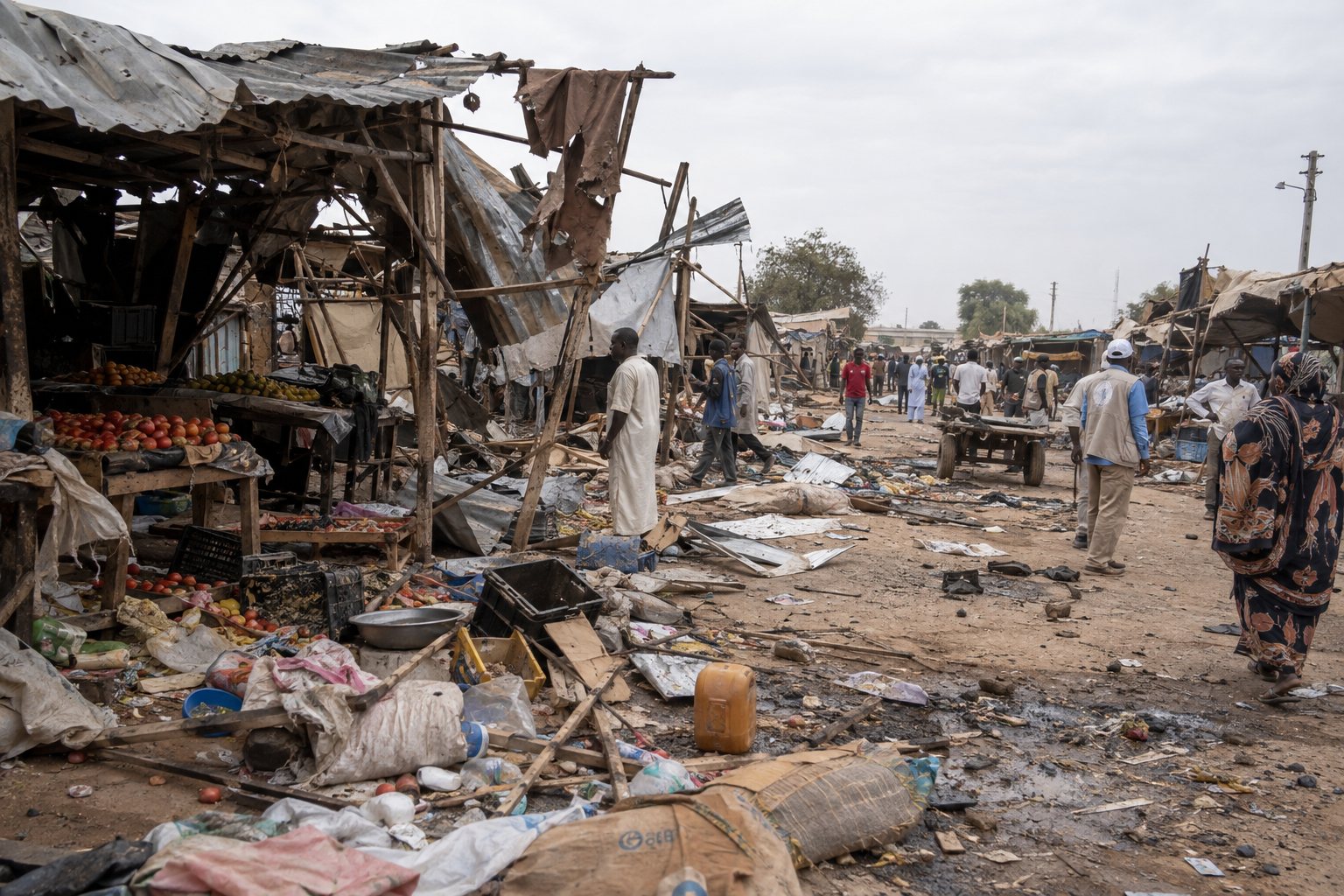
The United Nations has condemned a series of drone attacks on civilians and critical infrastructure in Sudan, warning that the strikes are worsening conditions for communities already suffering through more than three years of conflict. The condemnation follows reports that more than 150 people were killed in a Tuesday strike on a market in the disputed Abyei border region. South Sudanese officials attributed the attack to Sudan’s military, while a local official said a nearby fuel depot was hit and caught fire. The blaze was still burning Tuesday, and the death toll was expected to rise. The motive was not known, and journalists could not independently verify who carried out the strike.
UN spokesperson Stephane Dujarric also condemned reports that dozens of civilians were killed in a Sunday drone strike on a market in Al Dibab, West Kordofan State. He described the attacks as part of a deeply concerning pattern of relentless drone strikes and damage to critical infrastructure. Other reported incidents include the deaths of three young children and their father in a drone strike on a residential area in Khartoum, and civilian deaths and injuries, including among women and children, after a strike hit a home in Nyala, South Darfur. Drones reportedly also struck the main power station in Tendalti, White Nile State.
Dujarric stressed that international humanitarian law requires the protection of civilians and civilian infrastructure, which must never be targeted. The attacks come amid Sudan’s war between the military and the paramilitary Rapid Support Forces, which began in April 2023. The conflict has devastated large parts of the country and threatens stability across its borders.
Entities: United Nations, Stephane Dujarric, Sudan, South Sudan, Abyei border region • Tone: urgent • Sentiment: negative • Intent: inform
21-10-2026
Al Jazeera reports that a drone strike near a market in Abyei killed at least 150 people. Abyei is described as being near the border between Sudan and South Sudan, and the headline identifies the incident as a strike on the market area. The report places the attack amid intensified fighting between Sudan’s forces and the paramilitary Rapid Support Forces (RSF). It adds that Khartoum has accused the RSF of hiding in the disputed region near South Sudan. The article therefore connects the deadly strike to a worsening conflict and to competing claims about the RSF’s presence in Abyei. However, the brief report provides no further details about when the strike occurred, who carried it out, the identities of the victims, the extent of damage to the market, or the evidence behind Khartoum’s accusation. It also does not say whether the RSF or other parties responded to the allegation. The text gives a toll of at least 150, rather than a confirmed final count. Overall, it is a short news update conveying the reported scale of civilian deaths and the regional context of escalating hostilities, without offering a detailed account of responsibility or the wider consequences.
Entities: Abyei, Sudan, South Sudan, Khartoum, Rapid Support Forces (RSF) • Tone: urgent • Sentiment: negative • Intent: inform
21-10-2026
France 24 reports on a deadly drone strike on the Amiet market in Abyei, an area disputed between Sudan and South Sudan. The strike occurred on Monday, and by Wednesday the reported death toll had risen to 153. A local official told AFP that the toll was likely to climb further. Authorities in Abyei district said multiple munitions were used and attributed the attack to the Sudanese army.
In an interview with France 24’s Mark Owen, Jan Pospisil, a Sudan Affairs Analyst at the Peace and Conflict Resolution Evidence Platform, discusses how the attack challenges the Sudanese army’s efforts to present itself internationally as more humane than the Rapid Support Forces (RSF). Pospisil says the army has long sought to portray the RSF as the side committing atrocities, but argues that the market strike shows little difference between the two forces in their regard for civilian life. The headline similarly emphasizes the lack of acknowledgement of human life by both the Sudanese military and the RSF.
The article’s focus is the civilian cost of the war and the difficulty of distinguishing the two warring sides on humanitarian grounds. It gives the reported casualty figure and the local authorities’ attribution of responsibility, while presenting Pospisil’s assessment as an expert interpretation. The excerpt does not provide further details about the circumstances of the strike, independent verification of responsibility, or responses from either the Sudanese army or the RSF.
Entities: Sudanese military, Rapid Support Forces (RSF), Sudan, South Sudan, Abyei district • Tone: analytical • Sentiment: negative • Intent: inform