22-10-2026
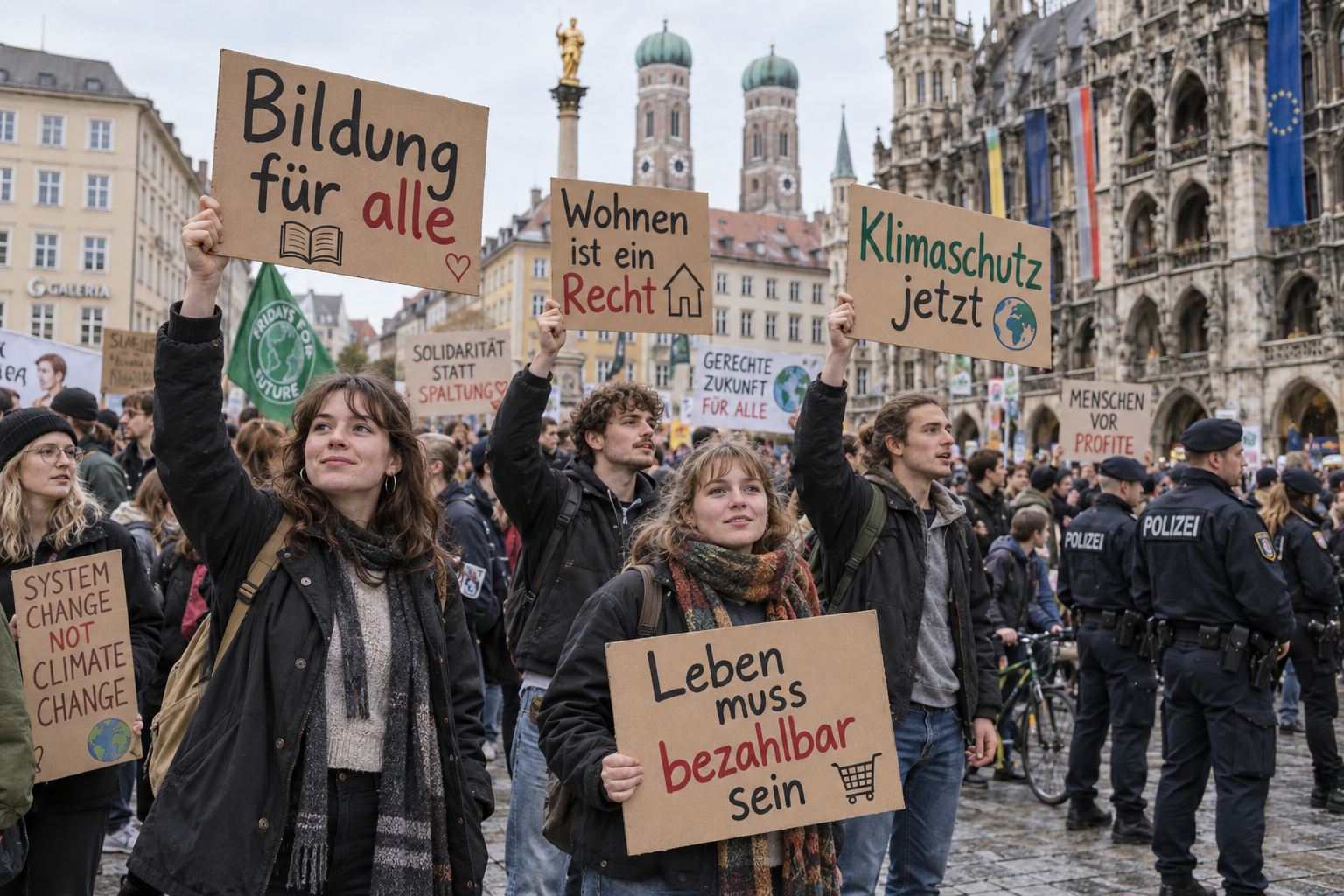
The youth initiative “Gen Z regelt” (“Gen Z’s Got It”) has called for demonstrations in 21 German cities on Saturday, October 31, with thousands expected to take part. Planned locations include Berlin, Cologne, Hamburg and Munich. The protests are intended to highlight a range of grievances, including what organizers describe as broken schools and austerity, alongside the cost of living, social injustice, military conscription and climate change.
The demonstrations come after violent protests in France, where student frustration with the national school system broadened into a wider expression of anger involving unions, groups and individuals. The French unrest included extensive damage to public and private property. Similar images of violence and destruction from France, Italy and Spain have prompted concern among German policymakers and police that demonstrations in Germany could also be taken over by extremists.
Gen Z regelt’s website says the initiative opposes violence against both people and property. Police have described themselves as “vigilant and relaxed,” while saying they will protect the right to assemble and express opinions. Andreas Roßkopf, head of the German Federal Police’s GdP union, warned that officers would respond firmly to riots or other trouble. He also cautioned that radicals or extremists might join demonstrations to attack police or cause destruction. The article therefore presents the planned protests as a response to broad social and political concerns, while emphasizing official efforts to safeguard peaceful assembly and prevent violence.
Entities: Gen Z regelt (Gen Z’s Got It), Germany, Berlin, Cologne, Hamburg • Tone: analytical • Sentiment: neutral • Intent: inform
22-10-2026
The France 24 programme description examines a wave of youth-led protests emerging across Europe, including in Belgium, Italy, Spain, Portugal, Albania, Serbia and Greece. It presents the unrest as driven by different but overlapping pressures. In France, the immediate spark was worsening conditions in high schools and universities, especially for students from underprivileged backgrounds. Across the region, wages have failed to keep pace with inflation, while housing shortages and affordability are prominent concerns in Spain and Portugal. In Albania and Serbia, corruption and democratic backsliding have fuelled public anger.
The description also points to recent violence in France and a smaller-scale parallel in Milan, Italy’s financial capital. Authorities on both sides of the Alps responded with a show of firmness and troop deployments intended to prevent looting. The programme notes that far-right voices have portrayed looters as foreigners, raising questions about how political forces such as those associated with Giorgia Meloni and Marine Le Pen may benefit from the unrest.
Rather than offering conclusions, the item frames these developments as questions for debate: whether the protests will create political gains for the continent’s right-wing leaders, and whether the movement represents a turning point for Europe. Overall, it links youth mobilisation to economic hardship, education, housing, corruption and democratic concerns, while highlighting the political consequences of public disorder and government responses.
Entities: France 24, François Picard, Elisa Amiri, Rebecca Gnignati, Belgium • Tone: analytical • Sentiment: negative • Intent: analyze
22-10-2026
France 24’s video segment examines growing popular dissatisfaction across Europe and the political pressures behind it. Host Oliver Farry welcomes Steven Erlanger, The New York Times’ chief diplomatic correspondent in Europe, who is based in Berlin. The discussion describes a crisis that goes beyond short-term electoral volatility: economic frustration, inequality between generations, and declining trust in established political leaders are reshaping Europe’s democratic landscape.
Erlanger’s central explanation is that expectations of stronger economic growth have not been fulfilled. He characterizes the resulting public mood as one of “general disgust” and “a sense of drift.” The article frames these feelings as widespread across several major European countries, naming France, Germany, Italy and Spain, rather than as a problem confined to one national election or political system.
The segment’s framing also points to the broader political consequences of that discontent. When people experience economic stagnation or unmet promises and lose confidence in traditional leadership, the established political centre faces a deeper challenge. The article’s keywords additionally place the discussion in the context of the far right, immigration and political crises, though it provides no detailed country-by-country analysis or specific policy proposals in the supplied text.
Overall, the video presents an analytical account of mounting European frustration and its implications for democracy. It attributes the mood principally to unmet economic expectations, generational inequality and weakened confidence in political leadership, while suggesting that these pressures are changing the continent’s political landscape.
Entities: Steven Erlanger, Oliver Farry, France 24, The New York Times, Europe • Tone: analytical • Sentiment: negative • Intent: analyze