22-10-2026
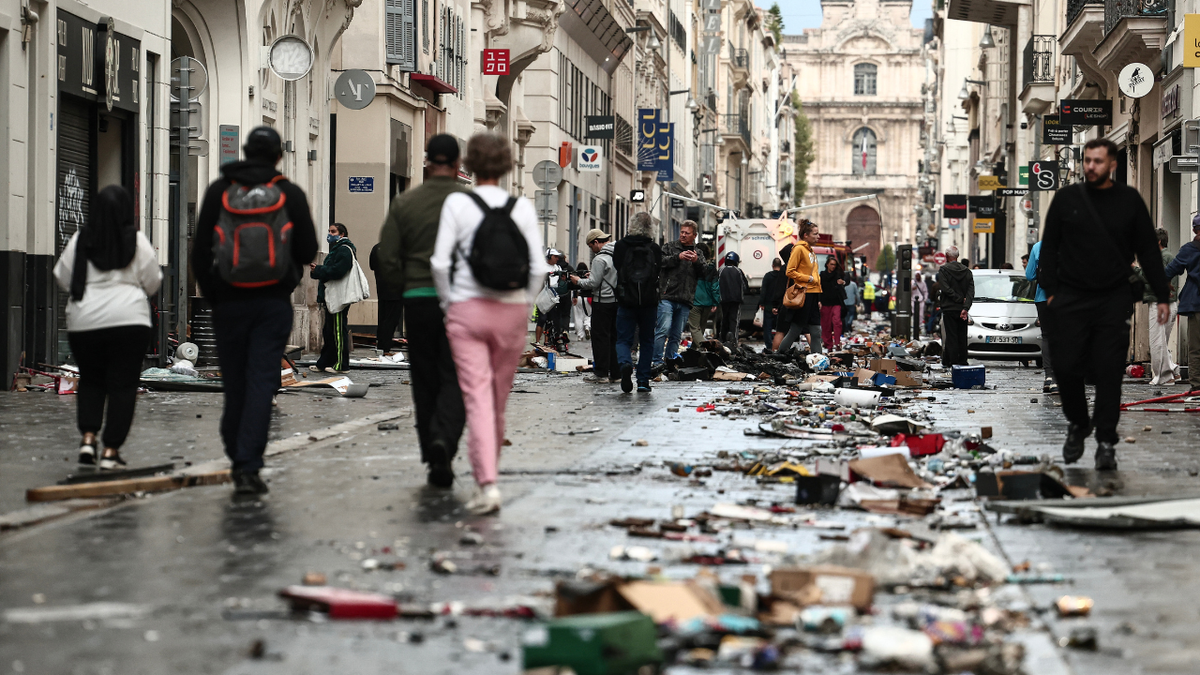
French authorities have banned demonstrations in designated areas of Paris and prohibited planned protests in Lyon, Lille and Grenoble after violence and looting during weekend demonstrations. The Paris restrictions apply until 8pm on Thursday and cover sensitive locations including areas near the presidential Elysee Palace, parliament, major train stations and parts of downtown where looting occurred. A police source said the ban was needed because organisers had been unable to prevent violence and vandalism.
More than 500,000 people took part in Saturday’s protests, which brought together students seeking better school conditions and people protesting high living costs. At least 2,500 people were arrested after riots broke out in several areas and shops were looted. President Emmanuel Macron blamed what he called “seditious acts” by “ultra-left” groups, accusing them of trying to bring down the Republic. He said France would prohibit protests deemed illegitimate in the coming days, while approved demonstrations by organised groups such as unions would have to follow routes outside city centres. Macron also planned to convene the defence council and met with intelligence officials and ministers to review the weekend’s security failures and preparations.
The government is preparing for a large demonstration on Saturday, when activists from the Yellow Vest movement are expected to join. Prime Minister Sebastien Lecornu said a massive security operation was planned to prevent a repeat of the violence. Union representatives said their meeting with Lecornu produced no concrete proposals and are instead focusing on a further day of action scheduled for November 5.
The protests began last month with high school students in Creteil, southeast of Paris, demonstrating over staff shortages. School strikes, blockades and demonstrations spread across the country. Students have raised concerns about underfunding, deteriorating facilities and insufficient staff, particularly in lower-income neighbourhoods. These school protests have since broadened into demonstrations over the rising cost of living.
Entities: Emmanuel Macron, Sebastien Lecornu, Paris, Creteil, Lyon • Tone: analytical • Sentiment: neutral • Intent: inform
22-10-2026
French President Emmanuel Macron condemned foreign leaders’ remarks about France’s recent unrest, calling them “unacceptable” and “stupid.” He said foreign disinformation had helped prompt the comments and identified U.S. President Donald Trump among those he was criticizing. Trump had blamed the unrest on migrants, jihadists and Communists and urged Europe to close its borders. Other Republican leaders have cited the turmoil in arguments that Democratic immigration policies could produce similar tensions in the United States. The dispute also played out on social media, where U.S. Immigration and Customs Enforcement posted footage of the French unrest, prompting France’s foreign ministry to respond with a comparison of U.S. firearm homicide rates.
France’s unrest began amid student demonstrations over public services and has included peaceful protests as well as looting and arson. Student union UNEF and the yellow vest movement have called for more rallies over the coming weekend. Macron has promised there will be no repeat of the violence, while Interior Minister Laurent Nuñez said some military forces would be deployed to help maintain order. Demonstrations or solidarity marches have also taken place in several other European countries.
The political crisis is unfolding alongside worsening concerns about France’s public finances. The yield on 10-year French government bonds rose to 5.113%, its highest level in 24 years and above the comparable U.S. Treasury yield for the first time since 2013. Investors doubt that a government without a parliamentary majority can pass measures to reduce the deficit. Resorting to special powers could offer short-term budget certainty but risk further political instability. Rising debt-servicing costs could also raise the prospect of European Central Bank intervention if the gap between French and German borrowing costs widens.
The protests are adding financial pressure on businesses and insurers. Morningstar estimated insured losses could reach 1.2 billion euros, assuming no further significant damage. The agency said the direct economic impact may be limited, but prolonged unrest could weaken household and business confidence, dampen activity and worsen fiscal pressures. France has also cut its 2026 growth forecast to 0.5% from 1%.
Entities: Emmanuel Macron, Donald Trump, JD Vance, Mike Johnson, Abbas Araghchi • Tone: analytical • Sentiment: negative • Intent: inform
22-10-2026
Paris police have prohibited gatherings on Thursday near several major sites, including the presidential palace, the Bastille, parliament buildings, the Louvre and the Champs-Elysees. The restrictions apply from 8 a.m. to 8 p.m. local time, as France prepares for further demonstrations following violent unrest the previous weekend. The protests began with students objecting to high prices and calling for education reform, but escalated when masked rioters looted shops and clashed with police. Interior Minister Laurent Nunez acknowledged that authorities had “lost control” and had not anticipated the scale of the violence. More demonstrations are expected in Paris over the weekend, and Prime Minister Sebastien Lecornu has promised a large security deployment.
The unrest has become a subject of political dispute in France and abroad. US President Donald Trump blamed “migrants, jihadists, and communists” and said they had devastated the country. He also claimed he had warned French President Emmanuel Macron about immigration, but that Macron had refused to close France’s borders. Macron, speaking during a visit to Qatar, accused unnamed leaders of campaigning at France’s expense and suggested that Trump and possibly Israeli Prime Minister Benjamin Netanyahu were seeking political advantage from the crisis. Macron also said information about the unrest had been manipulated, including through AI-generated images showing events that never occurred. He rejected claims that France had been invaded by migrants and Islamists, calling those claims false and criticizing comments by foreign leaders as unacceptable and “stupid.”
Marine Le Pen, Macron’s far-right rival, rejected his explanation as conspiratorial. She argued that images of the protests showed the “sad reality” of France after ten years of Macron’s rule. Le Pen is described as the favorite for the 2027 presidential election, with far-left candidate Jean-Luc Melenchon following her.
Entities: Emmanuel Macron, Donald Trump, Marine Le Pen, Jean-Luc Melenchon, Sebastien Lecornu • Tone: analytical • Sentiment: neutral • Intent: inform
22-10-2026
French business owner Michèle Teboul says looters wrecked five of the 15 stores run by her family during protests last week, and warns that another round of unrest could determine whether France can protect its businesses and residents. In an interview with Fox News Digital, she called the coming Saturday a “last chance to save France,” addressing President Emmanuel Macron and Interior Minister Laurent Nunez. She said the family’s stores were left with substantial damage after attackers used axes to break through boarding, and that the destruction has shaken her confidence in the government’s ability to keep businesses safe.
Teboul said her family must pay for extra security and carry out repairs to meet insurance requirements before reopening. She expects the process to take at least two months and fears the lost time will wipe out the winter retail season. She said the government has promised help, but remains uncertain whether it will arrive. Her sons have hired security guards with dogs; Teboul also reported that some other shopkeepers have bought weapons or tear gas, while stressing that her sons have not acquired weapons.
The family operates stores in Paris, Bordeaux, Lyon, Marseille and Montpellier. Teboul said police were overwhelmed as crowds gathered in city centers, particularly in Marseille and Lyon, and accused authorities of not providing enough protection. She also described anxiety among French Jews, saying some are considering leaving the country and that it is becoming difficult to imagine a future there if conditions do not improve. A former director of CRIF, the umbrella organization representing French Jewish institutions, she emphasized that the violence is a national concern, not solely a Jewish one. The supplied article ends mid-sentence while referring to an estimate of young people arriving in city centers.
Entities: Michèle Teboul, Emmanuel Macron, Laurent Nunez, France, Paris • Tone: urgent • Sentiment: negative • Intent: warn
22-10-2026
French President Emmanuel Macron said on Thursday that the government would ban protests it considers “illegitimate” in the coming days. He said marches organized by recognized groups, including unions, would be offered alternative routes intended to protect businesses. The announcement comes as France faces continued unrest following a weekend in which rioting and looting occurred on the fringes of large, mostly peaceful demonstrations. The government has also said it will deploy French soldiers on the streets.
The article reports that another weekend of demonstrations is expected, involving high school students and the Yellow Vest movement. In Paris, police banned a student protest planned for Thursday. A police source told AFP that the decision was based on the organiser’s “inability to prevent violence and vandalism.” The report does not provide further details about the proposed demonstration or the criteria for determining which protests would be considered illegitimate.
Prime Minister Sébastien Lecornu was due to meet on Thursday with mayors from cities badly affected by the weekend’s riots, including Paris, Marseille and Lyon. The article presents these developments as part of the government’s response to the unrest and its efforts to manage upcoming protests while limiting violence and damage to businesses. It is a live-news page, but the supplied text contains only the opening report and a short list of developments from the previous day; the page also indicates that additional requested content is unavailable.
Entities: Emmanuel Macron, Sébastien Lecornu, France, Paris, Marseille • Tone: urgent • Sentiment: neutral • Intent: inform
22-10-2026
France 24 reports that French President Emmanuel Macron spoke to the press on Thursday after meeting with security chiefs, as protests were expected in France in the coming days. Macron said demonstrations he considers “illegitimate” would be banned. For marches organized by groups such as trade unions, authorities would instead offer alternative routes, with the stated aim of protecting businesses. The report presents this as a measure to manage demonstrations and prevent violence while distinguishing between protests authorities would prohibit and organized marches that could proceed under adjusted arrangements.
The article is a short video replay item, issued on October 22, 2026, and modified later that day. Its accompanying image shows Macron at a crisis meeting at the Élysée Palace in Paris on October 18. The supplied text does not identify the protests’ specific causes, name the security officials at the meeting, describe how a protest would be judged “illegitimate,” or provide reactions from unions, protesters, or businesses. It therefore offers only a brief account of Macron’s remarks rather than a detailed explanation of the broader unrest or the government’s plans. The central point is the announced distinction between banned demonstrations and union-organized marches that may be redirected to protect businesses.
Entities: Emmanuel Macron, France, Paris, Élysée Palace, AFP • Tone: neutral • Sentiment: neutral • Intent: inform
22-10-2026
French President Emmanuel Macron said the government would ban what he called “illegitimate” protests in the coming days, while allowing demonstrations organized by groups such as trade unions to proceed, potentially on alternative routes to protect businesses. After meeting intelligence chiefs and senior ministers, Macron blamed ultra-left groups and vandals for the previous weekend’s riots and looting, describing their actions as political and seditious.
Authorities are preparing for more demonstrations and possible violence. Officials in Lyon banned all protests planned there for Saturday. France’s main student union, UNEF, has called for rallies, and the Yellow Vest movement has filed plans for a march through central Paris. Businesses in Paris have begun boarding up windows, and luxury-goods company Hermes has increased security at its French stores. In Orleans, authorities are bracing for unrest as the far-right National Rally holds its annual meeting and unions and left-wing groups plan demonstrations. A student protest scheduled for Thursday in Paris was banned; transit authorities also closed central metro stations in anticipation of unauthorized gatherings.
The country was rocked on October 17 by some of its worst urban unrest in years, occurring alongside nationwide protests and raising concerns about public anger and the security services’ ability to maintain order. Two people have been arrested over an arson attack on Limoges city hall. A third consecutive night of local curfews passed without major incidents, giving the government temporary relief before the weekend.
The article links the unrest to broader frustrations, including rising energy costs, household budget pressures and concerns about declining public services, particularly among workers and younger people. It also describes a bitter political blame game, with the government accusing far-left groups of fueling unrest. Investor concern was reflected in French 10-year government bond yields rising above comparable US Treasury yields for the first time since 2013.
Entities: Emmanuel Macron, France, Paris, Lyon, Orleans • Tone: analytical • Sentiment: negative • Intent: inform
22-10-2026
French President Emmanuel Macron said the government would prohibit protests it considers unauthorised or not organised by recognised groups such as trade unions, as France prepares for more demonstrations after a weekend of riots and looting. He announced that a defence council would meet on Friday to review security, and said recognised groups would be offered alternative routes intended to protect businesses. Macron blamed “seditious” ultra-left groups and vandals for violence in which masked protesters clashed with police, looted shops and set vehicles alight.
Authorities had already banned Thursday demonstrations in Paris, Lyon, Lille and Grenoble, citing the risk of renewed violence. In Paris, restrictions covered sensitive sites, including the presidential palace, parliament buildings and major railway stations, as well as central areas damaged during the riots. The measures have prompted concerns about the right to protest, while the government argues that stronger controls are needed to prevent further destruction.
Officials are preparing a large security operation for Saturday, when activists associated with the Yellow Vest movement are expected to join demonstrations. The movement previously led protests over fuel prices in 2018 and 2019. Prime Minister Sébastien Lecornu said security would be “massive.” Trade union representatives, who met Lecornu, said the talks produced no concrete proposals addressing their concerns. They are planning a nationwide day of action on November 5 and urging public- and private-sector workers to take part.
The unrest began last month with student protests at a high school in Créteil over staff shortages, then spread to other Paris suburbs and across France. Students have protested inadequate school funding, deteriorating facilities and teacher shortages, particularly in poorer neighbourhoods; some also oppose the university admissions system. The student movement has broadened into grievances over the cost of living and the government’s handling of social and economic issues. With a presidential election approaching, the unrest is increasing political pressure on Macron’s administration as it seeks to contain protests and respond to calls for reform.
Entities: Emmanuel Macron, Sébastien Lecornu, France, Paris, Créteil • Tone: analytical • Sentiment: neutral • Intent: inform
22-10-2026
The France 24 page introduces a video report titled “What is happening in France? Unpacking the recent waves of protests,” issued on 22 October 2026. The report is described as an analysis of recent French mobilisations and the government’s response by Laura D. Keesman, an assistant professor of sociology based in Amsterdam. The page’s description says that, following a weekend of unrest and riots, the government acknowledged that its security response had fallen short and promised a stronger approach ahead of another wave of protests.
The supplied page content does not include the video’s transcript or a fuller account of Keesman’s analysis. It therefore does not establish the protests’ causes, the groups involved, the scale of the mobilisations, or the details of the police response. Those specifics should not be inferred from the headline or related-story links. The surrounding links indicate that the protests were part of a broader period of political and social tension in France: related coverage mentions preparations for demonstrations, proposed strikes, a planned large police deployment, violence, and claims that pro-Russian accounts amplified public anger. These links provide context but are not part of the report’s substantive description.
Overall, the available article text frames the video as an examination of recent protests and the state’s handling of unrest. Its central reported development is the government’s recognition that its prior security response was inadequate, followed by a promise to take a stronger approach before further demonstrations. Because the main video content is unavailable in the supplied material, this summary is limited to the page description and does not attribute additional claims or conclusions to the speaker.
Entities: France, Laura D. Keesman, Amsterdam, France 24, French mobilisations • Tone: analytical • Sentiment: negative • Intent: analyze