02-11-2026
Iliana Iotova has won Bulgaria’s presidential runoff, making her the country’s first woman to be elected president, according to the article. The report presents the result as politically significant beyond the historic nature of Iotova’s election: it says her victory reinforces Prime Minister Rumen Radev’s political direction. That direction is characterized by calls for dialogue with Moscow and opposition to military aid for Ukraine. The article does not provide vote totals, details about the other candidate, or further information about the campaign or the election process. It also does not explain what role Iotova may play in advancing the positions described, or how the result could affect Bulgaria’s domestic politics and foreign policy. Published on November 2, 2026, the brief news item focuses on the election outcome and its stated political implications. Its framing links the first election of a female Bulgarian president with continuity or reinforcement of Radev’s approach to relations with Moscow and assistance to Ukraine. The report offers no quotations or additional context, so its claims are limited to the result and that concise interpretation of its significance.
Entities: Bulgaria, Iliana Iotova, Rumen Radev, Bulgaria’s presidential runoff, First elected female president • Tone: analytical • Sentiment: neutral • Intent: inform
02-11-2026
Iliana Yotova won Bulgaria’s presidential runoff with 57.6% of the vote, defeating former caretaker Prime Minister Andrey Gyurov, who received 39.5%. The contest became a proxy debate over Bulgaria’s foreign policy and its position on Russia’s war in Ukraine. Prime Minister Rumen Radev framed the choice as one between “war and peace,” a characterization that Yotova echoed by presenting herself as a “president of peace” and opposing military aid to Ukraine. The article cautions that this framing simplifies a divided electorate and a complex campaign.
Although Yotova had led pre-election polls, the first round was unexpectedly close: she won 34.8%, compared with Gyurov’s 31.95%. The runoff exposed a generational and geographical split. Younger voters and Sofia tended to favor Gyurov, while voters over 40 and residents of smaller towns and villages leaned toward Yotova. Her victory was also aided by support from voters for the nationalist, pro-Russian Revival party; an estimated 70% of its voters backed her in the runoff. Turnout was below 30%, with several major opposition parties not fielding candidates.
The campaign focused heavily on Ukraine, peace, and security. Yotova and Radev opposed military assistance to Ukraine and criticized European leaders’ approach to Russia, while Gyurov condemned Russian aggression and had signed a security cooperation agreement with Ukraine. Drone attacks on ships in the Black Sea heightened those tensions, but Radev and Yotova did not explicitly blame Russia. Yotova also warned against “foreign flags” in Bulgaria and voiced the view that Russia was not an enemy.
The article presents competing assessments of what Yotova’s presidency means for Bulgaria’s place in the EU and NATO. Former Defense Minister Todor Tagarev warned that the country could be weakened within both institutions, while political scientist Dimitar Ganev argued that Bulgaria’s geopolitical alignment is not seriously threatened, noting that most Bulgarians support EU membership. The election, the article concludes, mobilized both pro-European and Eurosceptic voters.
Entities: Iliana Yotova, Andrey Gyurov, Rumen Radev, Bulgaria, Sofia • Tone: analytical • Sentiment: neutral • Intent: analyze
02-11-2026
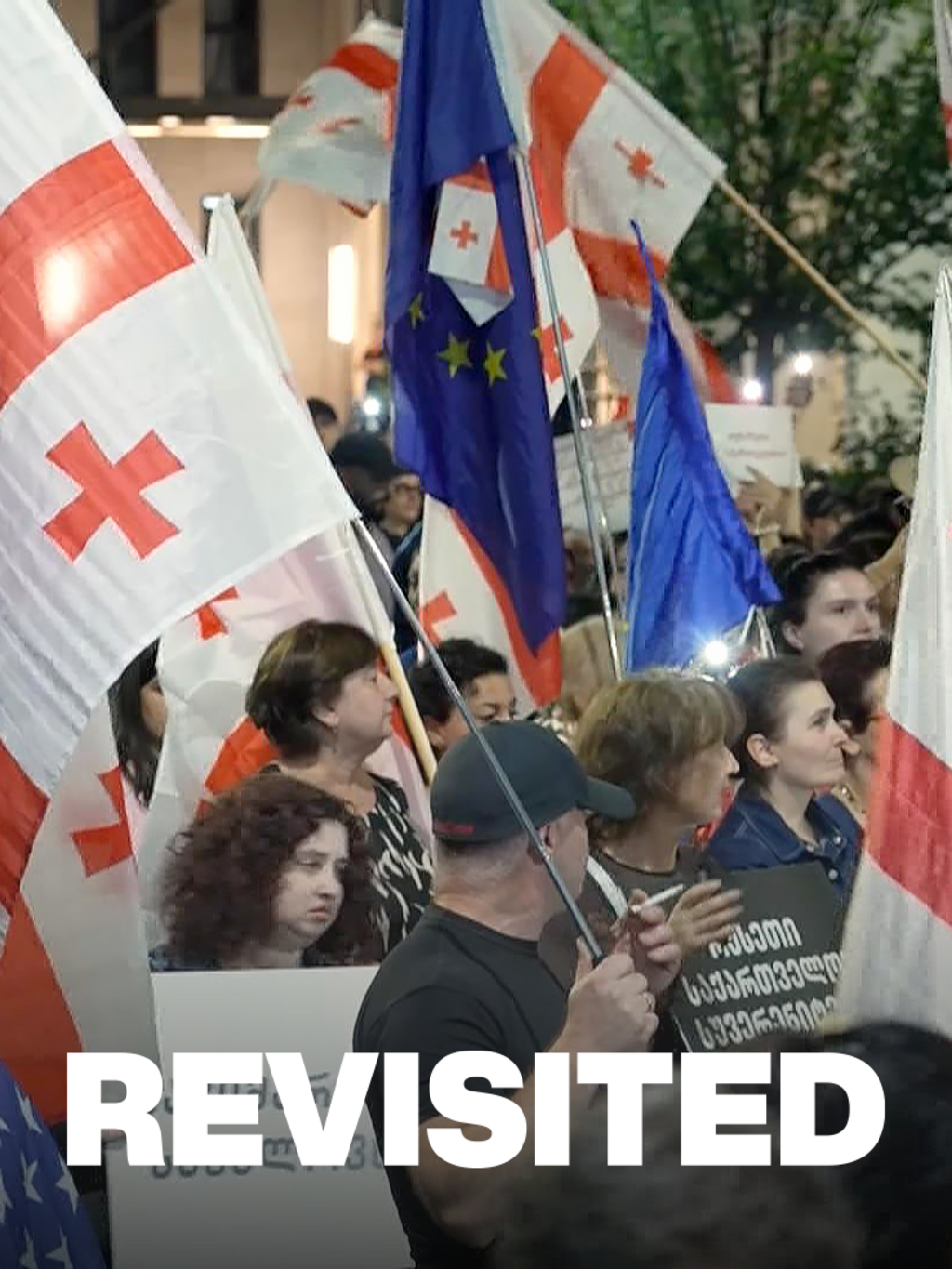
The France 24 video report says that Bulgaria’s President Iliana Iotova won a presidential runoff vote held on Sunday. It describes Iotova as favoring dialogue with Moscow and opposing military aid to Ukraine. The election took place amid heightened concern about security in the Black Sea, following a series of drone attacks on commercial vessels in the region. The report connects these developments as the political and security context surrounding the runoff, but the supplied text does not provide the vote totals, details about Iotova’s opponent or campaign, or information about the attacks’ perpetrators, locations, or consequences. It also characterizes Bulgaria’s presidency as largely ceremonial, a qualification that places the result in the context of the office’s limited political role. The page identifies the video as issued on November 2, 2026, and gives its duration as 1 minute and 37 seconds. Because the available article text consists only of a short description, it does not offer further analysis of how the election may affect Bulgarian policy, relations with Moscow or Kyiv, or Black Sea security. In brief, the report presents Iotova’s reported runoff victory alongside her stated foreign-policy positions and regional security concerns, without supplying additional election or incident details.
Entities: Iliana Iotova, Bulgaria, Moscow, Ukraine, Black Sea • Tone: analytical • Sentiment: neutral • Intent: inform
02-11-2026
Iliana Yotova won Bulgaria’s presidential runoff, becoming the country’s first elected female head of state. With all votes counted, the Central Election Commission reported that she received 57.6% of the vote, compared with 39.5% for Andrey Gyurov, the liberal, pro-Western opposition candidate. Gyurov conceded and said voters’ decision should be accepted. Yotova said she would seek national consensus through dialogue and work for effective institutions, a strong state, and a strong Europe. European Commission President Ursula von der Leyen congratulated her and expressed interest in continued cooperation on security, defense, competitiveness, and energy independence.
Yotova was endorsed by Prime Minister Rumen Radev’s Moscow-friendly Progressive Bulgaria party, which won an outright parliamentary majority in April. Observers say her victory keeps the presidency aligned with the governing majority and could weaken institutional checks and balances. Bulgaria’s president has no executive powers, and major policies require parliamentary approval, but direct election gives the office political authority. The president leads the armed forces, can veto legislation, signs treaties, and appoints ambassadors.
On Ukraine, Yotova and Radev have called for a diplomatic end to the war while avoiding firm statements about possible Russian involvement in Black Sea drone attacks. Yotova opposes additional Bulgarian military assistance to Ukraine and advocates a “coalition for peace.” She is expected to continue Radev’s approach of keeping Bulgaria on its European path while improving relations with Russia and supporting the lifting of sanctions.
Yotova, 62, became acting president in January after Radev resigned to run for parliament. A former television journalist, she later served in Bulgaria’s national Parliament and the European Parliament as a Socialist Party politician, and was elected vice president alongside Radev in 2016 and 2021. She shared her victory with her vice-presidential pick, Kiril Valchev, a lawyer and journalist who has led the Bulgarian News Agency since 2021. Yotova is expected to be inaugurated on January 22. The article notes that Bulgaria’s EU and NATO membership coexists with domestic divisions over Russia, shaped by historical and cultural ties.
Entities: Iliana Yotova, Andrey Gyurov, Rumen Radev, Kiril Valchev, Ursula von der Leyen • Tone: analytical • Sentiment: neutral • Intent: inform
02-11-2026
France 24’s Press Review surveys newspaper coverage of several stories on Monday, November 2. The main focus is Bulgaria, where Iliana Iotova was elected the country’s first woman president. Iotova, previously vice president for nine years and already serving as acting president, ran as an independent with support from the Bulgarian Socialist Party and Prime Minister Rumen Radev’s Progressive Bulgaria party. She defeated Andrey Gyurov, who was backed by pro-Western parties. The newspaper Capital argues that the result seals a new political status quo: Radev and his governing party now hold influence over parliament, the government and the presidency, leaving the justice system as the remaining institutional counterbalance. The election has also sharpened divisions about Bulgaria’s post-Communist direction and its relationship with Russia and Western allies. Dnevnik recounts Iotova’s political career, from her work with the Socialist Party after the 1996 fall of a prominent Communist leader to positions as an MEP, vice president and president.
The review then reports that at least 22 political prisoners in Belarus are being held in psychiatric hospitals rather than conventional prisons. Human rights groups, doctors and Radio Free Europe describe compulsory psychiatric treatment without a fixed end date, a practice associated with Soviet-era repression that has resurfaced in Belarus. Placement outside the prison system can also prevent prisoners from accessing amnesties and other basic rights.
In Germany, a suspected arson attack last month destroyed the Eagle’s Nest, a structure associated with Adolf Hitler’s dictatorship. The Guardian reports disagreement over whether it should be rebuilt or left as a ruin. The site’s imposing architecture and history have made it a major tourist attraction, but its reconstruction could risk turning it into a shrine for neo-Nazis amid a far-right resurgence. Finally, the review notes that Heidi Klum’s Halloween costume, depicting a severed hand, drew attention after Vogue France called it her most disgusting costume yet.
Entities: Iliana Iotova, Bulgaria, Rumen Radev, Progressive Bulgaria, Bulgarian Socialist Party • Tone: analytical • Sentiment: neutral • Intent: inform