06-11-2026
The article examines the possibility of an unprecedented meeting among US President Donald Trump, Chinese President Xi Jinping and Russian President Vladimir Putin on the sidelines of the APEC summit in Shenzhen, reportedly pencilled in for November 18–19. Chinese and Russian officials say discussions are under way, while Trump has said he would participate in talks focused on nuclear weapons. The leaders have met in pairs but never held formal three-way talks.
For Putin, simply attending could be valuable. Analyst Alexander Bratersky says the summit would give Russia a prominent photo opportunity and let Moscow portray Putin as a participant in decisions about Europe’s postwar security, potentially pushing Ukraine’s interests to the margins. A meeting alone could be presented as a success at home. Whether it yields concrete results—or becomes only a photo opportunity—might become apparent within weeks, with another meeting possibly following at the G20 summit in Miami.
Trump, according to political scholar Inderjeet Parmar, could use the encounter to project himself as a deal-maker and claim a foreign-policy win after Democrats gained control of both chambers of Congress in the midterm elections. The political image could matter even if the talks achieve little. Parmar says Trump’s domestic audience, including an eroding MAGA base, is a major consideration.
China appears reluctant to make Ukraine or nuclear disarmament the focus. German President Frank-Walter Steinmeier said Xi indicated that Ukraine is a European conflict and that Europeans should be included in discussions. Beijing has also rejected, for now, calls for China to join trilateral nuclear-disarmament negotiations.
The article warns that a leader-only summit could sideline US allies and normalize personalized great-power diplomacy. Yet fears of a durable “G3” arrangement may be overstated because the three countries’ interests diverge on Ukraine, Taiwan, technology and international economic rules. The central risk, Parmar argues, is deals made without consulting the people and countries most affected—an approach that history suggests rarely creates stable order.
Entities: Donald Trump, Xi Jinping, Vladimir Putin, Nils Adler, Alexander Bratersky • Tone: analytical • Sentiment: neutral • Intent: analyze
06-11-2026
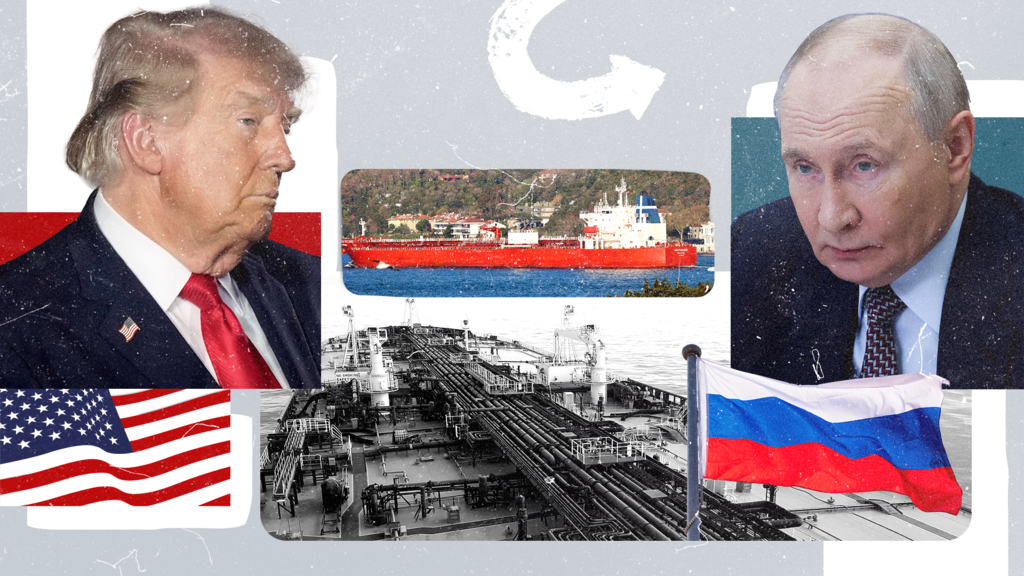
Several tankers carrying Russian diesel that had declared destinations on the US East Coast appear to have changed course, according to data from marine-data company Kpler and vessel-tracking site MarineTraffic.com. The vessels reportedly left the Baltic port of Primorsk last month. One is now headed toward Brazil, another into the Mediterranean, while a third remains in the North Atlantic but changed its destination listing from New York to the nonspecific “for orders.” The reported diversions cast uncertainty on a deal under which President Donald Trump eased sanctions on Russian oil to secure a large diesel shipment for the United States amid sharply rising fuel prices. The arrangement drew criticism in Ukraine and Europe and raised logistical and legal questions because other sanctions on Russia remain in place. Reports also noted that the promised quantity was small compared with US daily diesel demand.
Russian officials disputed the reports. Envoy and negotiator Kirill Dmitriev called the Financial Times account “fake,” saying the tankers remained on course for the US. Kremlin spokesperson Dmitry Peskov said shipment details were commercial and could not be made public, adding that the diesel would find buyers.
US officials and lawmakers have also challenged the imports. New Jersey Governor Mikie Sherrill urged port and terminal operators to reject Russian fuel, warning of “harsh penalties” for profiting from what she called illegal trade. She argued that the Trump administration could not override Congress’s import ban and said the state would prevent its facilities and companies from handling the fuel. Connecticut Senator Richard Blumenthal separately warned shipping companies that a presidential license would not remove their legal or moral accountability for violating sanctions. The article reports the conflicting claims and official warnings but does not resolve the tankers’ final destinations or the legality of the shipments.
Entities: Russian diesel shipments, Donald Trump, Vladimir Putin, Kirill Dmitriev, Dmitry Peskov • Tone: analytical • Sentiment: neutral • Intent: inform
06-11-2026
France 24 interviews political scientist Ian Bremmer about what he sees as a sharp decline in Donald Trump’s ability to shape US politics and international affairs. Bremmer argues that although Trump retains the formal powers of the presidency and considerable public visibility, his practical political influence is increasingly limited. He points to a major electoral setback for the governing party, congressional opposition, Republican discontent, unpopular foreign-policy decisions, economic disappointment and unfulfilled campaign promises as factors weakening the coalition that brought Trump back to office.
Bremmer describes the political reversal as historically striking: Trump made what he calls the biggest political comeback in US history in 2024, only to face the largest loss for a governing party in more than 50 years two years later. He characterizes the current period as “peak Trump” having passed—not because the president has become powerless, but because he is less able to turn presidential authority into political outcomes.
The effects may reach beyond Washington. In relation to the war in Iran, the conflict in Ukraine and transatlantic relations, Bremmer says foreign governments are beginning to account for the possibility of a post-Trump administration. Some leaders may increasingly engage with the United States they expect to deal with after Trump leaves office. He also questions whether the president’s attention to monumental projects and personal legacy is compatible with the demands of governing.
Bremmer’s central conclusion is that Trump has two years remaining but is unlikely to cause disruption on the global scale he did at the start of his term. The interview frames this as a broader question about whether a president can retain the constitutional authority of the office while losing the political influence needed to direct the country’s future; Bremmer believes that process is already underway.
Entities: Donald Trump, Ian Bremmer, France 24, Eurasia Group, GZERO Media • Tone: analytical • Sentiment: neutral • Intent: analyze
06-11-2026
France 24’s Spotlight program examines the uncertainty surrounding Donald Trump’s presidency after the US midterm elections. Guest Craig Copetas, a Greek-American author and international affairs columnist, argues that Trump is politically weakened at home but may have considerable freedom to act overseas. Copetas warns that domestic electoral setbacks should not be mistaken for a return to predictable US foreign policy: a president with less control domestically could still make consequential decisions internationally.
A central concern is that Trump’s desire for historical significance could prompt a major geopolitical bargain with Chinese President Xi Jinping. Copetas raises the speculative possibility that Taiwan could become a bargaining chip, calling such a deal a “Faustian bargain.” The discussion presents this prospect as part of a wider concern that long-standing security commitments could be exposed to personalized diplomacy.
The conversation also considers the influence of corporate power and economic dependence. Copetas anticipates growing scrutiny of Elon Musk’s relationship and dealings with the US government, while noting that European companies could find opportunities in satellite communications, artificial intelligence and aerospace. French Senator Hélène Conway-Mouret stresses Europe’s strategic and economic importance and cautions against allowing the continent to become “the playground of three major countries.”
The analysis ultimately connects international uncertainty to domestic economic pressures. Copetas points to industrial decline in Pennsylvania, the rising cost of living and the effects of tariffs as concerns that matter more directly to voters than Washington’s strategic calculations. The program argues that political constraints at home do not necessarily limit presidential ambition abroad. Copetas closes by warning that the situation is far from settled, challenging the assumption that election losses will automatically make Trump more restrained internationally.
Entities: Donald Trump, Craig Copetas, Hélène Conway-Mouret, François Picard, Elon Musk • Tone: analytical • Sentiment: negative • Intent: analyze
06-11-2026
The article reports that a controversial agreement allowing Russian diesel sales to the United States appears to be collapsing. Announced by Donald Trump and Vladimir Putin in October, shortly before the US midterm elections, the deal was presented as a way to ease rising fuel prices. It authorized US companies to buy and import Russian diesel despite existing sanctions, while Moscow lifted its own export ban. The agreement did not prevent a major Republican defeat in the elections, and the three tankers initially associated with deliveries have diverted or changed their destinations: the Talisman is in the Mediterranean, the Leruo is headed toward Brazil, and the Agioi Fanendes—the remaining possible delivery—has a destination listed as awaiting orders.
Russian officials dispute reports that the shipments have been redirected, although Putin’s spokesman described the matter as commercial and declined to provide details. Maritime analysts quoted by the article expect the remaining cargoes to find buyers elsewhere and say that little Russian diesel is likely to reach the US soon.
The article explores several reasons for the apparent reversal. US buyers may fear legal and political risks despite Trump’s exemption: New Jersey Governor Mikie Sherrill threatened legal action and fines against ports accepting Russian diesel, and opponents argue the exemption may conflict with a law requiring congressional approval. UK and EU sanctions could also expose European insurers, banks, or other intermediaries to penalties, making US buyers unwilling to handle the cargo. Analysts further suggest that Trump’s weakened political position after the midterms increased the perceived risk that ships could be seized in US ports. The article characterizes the deal as politically controversial, economically inadequate to meet US needs, and possibly a setback for Moscow’s effort to circumvent sanctions. The supplied text ends mid-sentence while discussing the political risks.
Entities: Donald Trump, Vladimir Putin, Agioi Fanendes, Talisman, Leruo • Tone: analytical • Sentiment: negative • Intent: analyze