10-09-2026
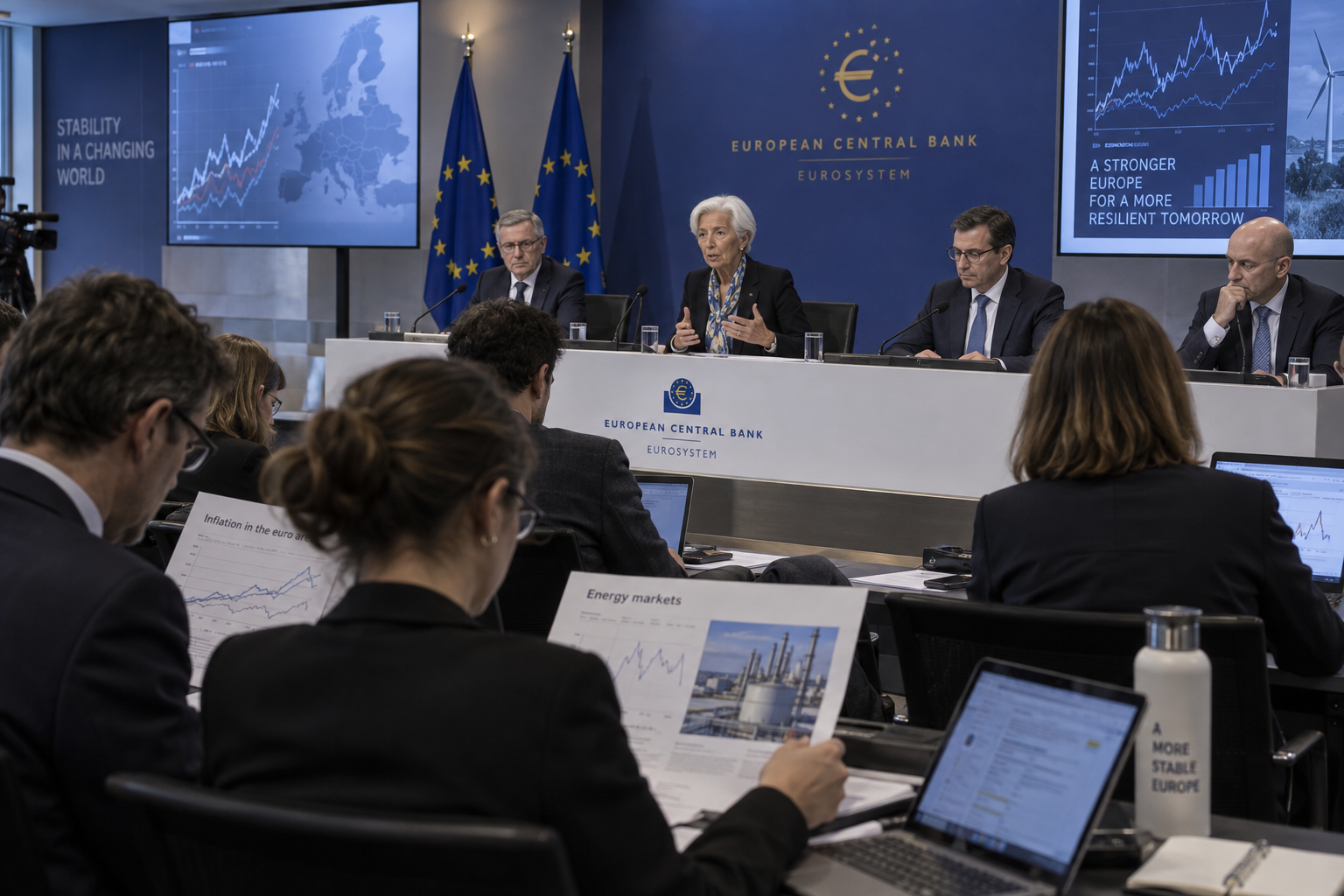
The European Central Bank raised its key deposit rate by 25 basis points, from 2.25% to 2.5%, as investors had widely anticipated. The decision comes as eurozone inflation accelerated to 3.3% in August, while energy inflation surged to 14.3%. As a net energy importer, the eurozone has been affected by higher and volatile oil prices after conflict in the Middle East disrupted concerns about commodity shipments through the Strait of Hormuz.
ECB President Christine Lagarde said the U.S.-Iran war and developments in Russia’s war on Ukraine could keep headline inflation well above the ECB’s 2% target for an extended period. The Governing Council described the outlook as highly uncertain, with risks that inflation could rise further while economic growth weakens. It also cited the energy shock, global trade tensions and possible second-round effects on prices and wages.
The ECB has adopted a meeting-by-meeting approach since the conflict began. Analysts broadly interpreted the latest decision and accompanying guidance as leaving the door open to additional rate increases. Aviva Investors’ Ed Hutchings said more than one further hike could be necessary, although he cautioned that markets may already have priced in too much tightening. JPMorgan Private Bank’s Patrick Ernst said one hike should not be viewed as a ceiling, while Aberdeen economist Felix Feather expects another increase in December.
Higher inflation expectations and the prospect of additional hikes have pushed European government bond yields to multi-decade highs, increasing borrowing costs. At the same time, the eurozone economy has shown greater-than-expected resilience, prompting policymakers to revise growth expectations higher. Investors remain divided over the eventual peak rate: a Deutsche Bank survey found support for a 2.75% peak, a 2.5% terminal rate, and a 3% peak, with no clear consensus.
Entities: European Central Bank (ECB), Christine Lagarde, Eurozone inflation, U.S.-Iran war, Russia’s war on Ukraine • Tone: analytical • Sentiment: negative • Intent: analyze
10-09-2026
The European Central Bank (ECB) has raised interest rates for the second time this year in response to accelerating inflation across the eurozone. The article attributes the increase primarily to higher oil and natural gas prices, which have risen amid the conflict between the United States and Iran and broader instability in the Middle East. Eurozone inflation has climbed above 3%, exceeding the ECB’s 2% target.
Following its annual meeting in Berlin, the ECB warned that the economic outlook remains highly uncertain. It identified continuing risks of higher inflation and weaker economic growth, particularly because energy prices remain elevated and gas storage levels are below historical averages ahead of the winter heating season. The bank projected eurozone economic growth of 0.9% in 2026, slightly higher than its previous forecast of 0.8%. It expects inflation to average 3.0% this year and 2.5% in 2027.
Higher interest rates will increase the cost of mortgages, consumer credit, and business loans throughout the eurozone. However, the article notes that there is not yet much evidence that inflation has spread broadly through the economy via higher prices for food, goods, and services.
The ECB is concerned that delaying action could allow inflation to become more entrenched. The article compares the current pace of policy tightening with the measures taken in 2022 after Russia’s full-scale invasion of Ukraine. Sylvain Broyer, chief economist for Europe, the Middle East, and Africa at S&P, said the inflation outlook had worsened over the summer. He argued that supply shocks were increasing and that demand was increasingly contributing to inflation, creating additional pressure for the ECB to act.
Entities: European Central Bank (ECB), Eurozone, Interest-rate hike, Inflation, Oil and natural gas prices • Tone: analytical • Sentiment: negative • Intent: inform
10-09-2026
The European Central Bank (ECB) raised its deposit facility rate by 25 basis points to 2.5%, marking its second increase in three months. The main refinancing rate rose to 2.65%, while the marginal lending facility increased to 2.9%. The decision reflects rising eurozone inflation caused primarily by an energy supply shock linked to the conflict involving Iran and broader fighting in the Middle East.
Eurozone headline inflation reached 3.3% in August, up from 2.9% in July and its highest level since September 2023. Energy inflation rose sharply to 14.3% from 10.3%, as disruptions around the Strait of Hormuz constrained crude supplies and pushed Brent crude above $100 per barrel. The ECB warned that the conflict would keep inflation above its target for an extended period.
However, the article emphasizes that underlying inflationary pressures remain comparatively contained. Core inflation fell to 2.4% from 2.5%, while services inflation declined to 3% from 3.3%. ECB economists estimate that energy supply factors accounted for about 90% of the increase in energy inflation between January and May, contrasting the current shock with the demand-driven inflation surge of 2021–22.
The decision is complicated by significant differences among eurozone economies. August inflation was 4.5% in Spain, 2.9% in Germany, and 2.7% in France. Although eurozone growth has been more resilient than expected, the ECB must decide whether further rate increases would unnecessarily restrain economic activity. At 2.5%, the deposit rate remains within the ECB’s estimated neutral range.
The latest projections put average headline inflation at 3% this year, with forecasts for 2027 and 2028 revised upward to 2.5% and 2.1%. The projections do not reflect the latest oil-price increase or a rise in European government bond yields to 15-year highs. Markets will next focus on rate decisions by the Federal Reserve, Bank of Japan, and Bank of England in mid-September.
Entities: European Central Bank (ECB), Eurozone, Christine Lagarde, Iran and the Middle East conflict, Strait of Hormuz • Tone: analytical • Sentiment: neutral • Intent: analyze