10-09-2026
US wholesale inflation accelerated more than expected in August, with the Producer Price Index (PPI) rising 5.4% from a year earlier. That was up from July’s 4.8% increase and exceeded the 5.3% rise economists had forecast. On a monthly basis, producer prices increased 0.4%, matching expectations.
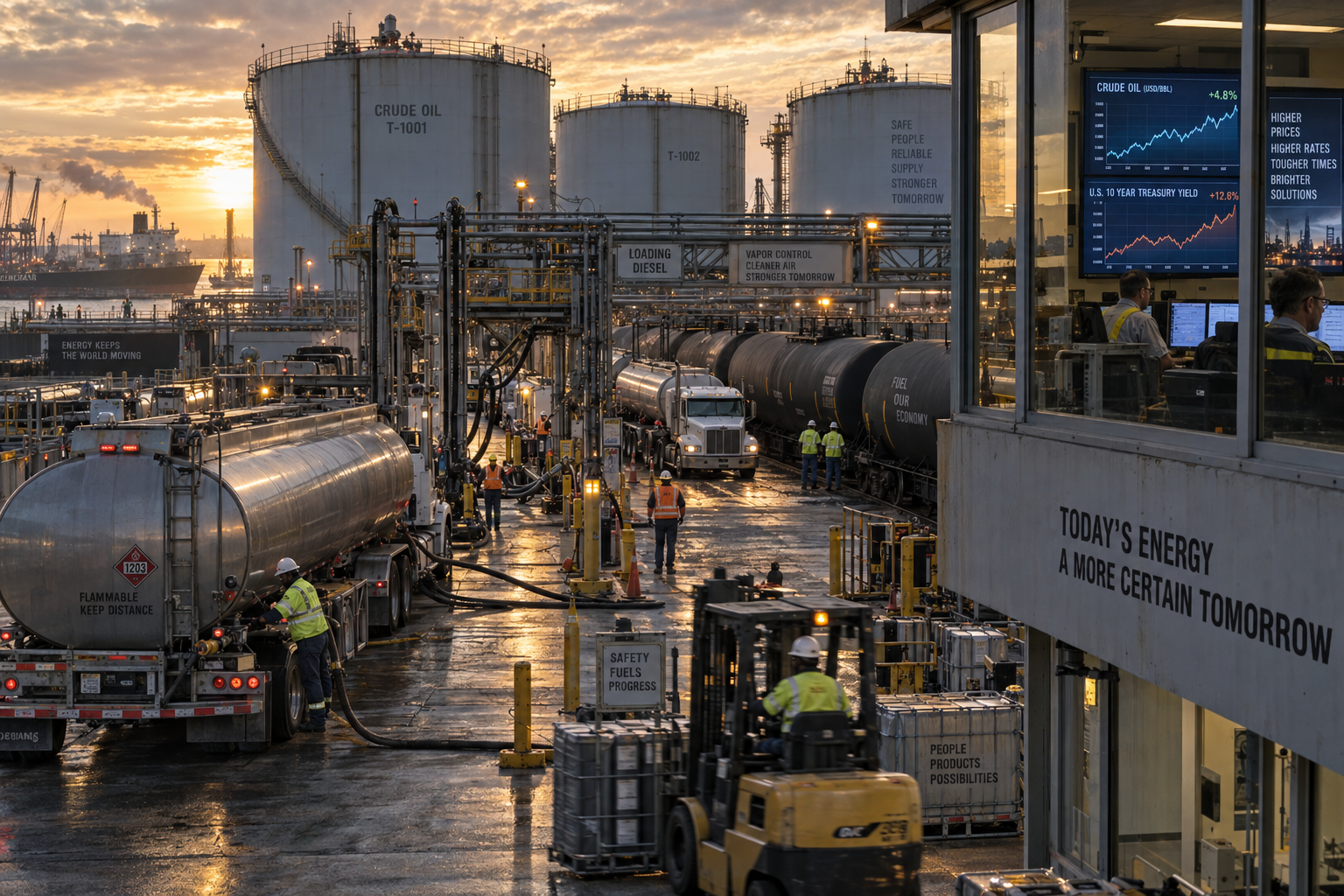
The main driver was a sharp increase in energy costs, which rose 4.2% during the month. Diesel prices surged 24.1%, pushing the national average to a record US$5.98 per gallon, compared with US$3.71 a year earlier, according to AAA. Diesel is widely used in road transport and agriculture, raising costs for businesses, farmers and households during the fall harvest season. Prices for petrol, jet fuel, home heating oil, candy and nuts also increased.
The article links the energy shock to the ongoing US conflict with Iran. US-Israeli strikes on Iran reportedly prompted Tehran to restrict traffic through the Strait of Hormuz, a major global energy transit route. The conflict has continued for more than six months without a resolution, despite President Donald Trump’s promise that oil prices would fall after an American victory. Rising fuel costs are adding political pressure on his administration ahead of the November midterm elections, particularly among farmers and other supporters.
The inflation data also increased uncertainty over the Federal Reserve’s next policy decision. The yield on the 30-year Treasury bond reached 5.35%, its highest level since 2007. Investors were awaiting the Consumer Price Index, due the following day, for further clues about consumer inflation. The CME Group’s FedWatch tool indicated an almost 70% probability of a 25-basis-point rate increase at the Federal Open Market Committee’s meeting the following week. Nationwide economist Ben Ayers described the decision as likely to be a close call, citing both higher diesel prices and broader supply-chain disruptions caused by the Iran conflict.
Entities: US Producer Price Index (PPI), US Department of Labor, Diesel fuel prices, US-Iran conflict, Strait of Hormuz • Tone: analytical • Sentiment: negative • Intent: inform
10-09-2026
The U.S. producer price index (PPI) increased 0.4% in August 2026, matching economists’ expectations and signaling continued wholesale price pressures ahead of the Federal Reserve’s next interest-rate decision. On an annual basis, headline PPI rose 5.4%, slightly exceeding the forecast and remaining well above the Fed’s 2% inflation target. July’s reading was revised upward to a 0.1% increase.
Underlying inflation measures were somewhat less intense. Core PPI, which excludes food and energy, rose 0.2%, below the projected 0.3% gain. Core PPI excluding trade services increased 0.3%, in line with expectations. Energy was the main driver of the monthly increase, with final-demand energy prices rising 4.2%, including a 24.1% surge in diesel prices. Overall goods prices climbed 1.1%, while services prices rose 0.1%, driven partly by a 2.3% increase in transportation and warehousing costs. Portfolio management fees declined 1.6% during the month but remained 18.8% above year-ago levels.
The report also showed additional pipeline inflation pressure, as processed goods prices rose 1.8% and unprocessed goods prices increased 1.1%. Financial markets reacted negatively: stock futures fell, Treasury yields rose sharply, and the 10-year note reached its highest level since November 2023. Traders modestly increased the probability of a quarter-point Federal Reserve rate hike to nearly 66%, according to CME Group’s FedWatch gauge.
The PPI report arrived shortly before the consumer price index and the Fed’s policy meeting. Officials remain divided between acting to restrain inflation and taking a more patient approach. The article attributes persistent inflation partly to tariffs and the war in the Middle East, while noting that the data could reinforce concerns among inflation-focused policymakers.
Entities: Producer Price Index (PPI), Core PPI, Bureau of Labor Statistics, Federal Reserve, Dow Jones consensus • Tone: analytical • Sentiment: negative • Intent: inform
10-09-2026
The market-implied probability of a Federal Reserve interest-rate increase at next week’s meeting rose sharply to about 70%, according to CME Group’s FedWatch gauge. Investors also placed nearly 60% odds on another increase in December, reflecting growing concern that inflation is becoming more persistent and may prompt a more aggressive central-bank response.
The shift followed two developments. First, the August producer price index increased 0.4% month over month, matching expectations but following an upwardly revised July gain. That lifted annual producer-price inflation to 5.4%, slightly above forecasts and suggesting continuing pressure across the supply chain. Second, U.S. crude oil prices rose 4% to more than $100 per barrel as intensified conflict in the Middle East, including the continuing conflict involving Iran, unsettled commodity markets. Higher oil and refined-product prices could add to inflation after the August data was collected.
The European Central Bank’s decision to raise rates by 0.25 percentage point and increase its inflation forecast further reinforced concerns about the economic effects of the conflict. Analysts cited in the article argued that elevated energy prices, inflationary supply pressures and low jobless claims make it difficult for the Fed to delay a hike.
Policymakers will receive one final major inflation report before the meeting when the Bureau of Labor Statistics releases August’s consumer price index. Economists expect headline CPI inflation of 3.4% annually and core CPI inflation of 2.4%. However, the Fed officially emphasizes the Commerce Department’s personal consumption expenditures index, which showed core inflation at 3.3% and headline inflation at 3.7% in July.
Bank of America economist Stephen Juneau estimated that core PCE was tracking at a 0.26% monthly pace after incorporating the PPI data, potentially rounding to 0.3%. He said a similar CPI result could support a rate increase. Other analysts warned that even a soft consumer-price reading might not fully reflect companies’ difficulty absorbing higher costs, arguing that wholesale and supply-chain data point to a broader inflation problem.
Entities: Federal Reserve (Fed), Federal funds interest-rate hike, CME Group FedWatch gauge, Producer Price Index (PPI), Consumer Price Index (CPI) • Tone: analytical • Sentiment: negative • Intent: analyze