22-10-2026
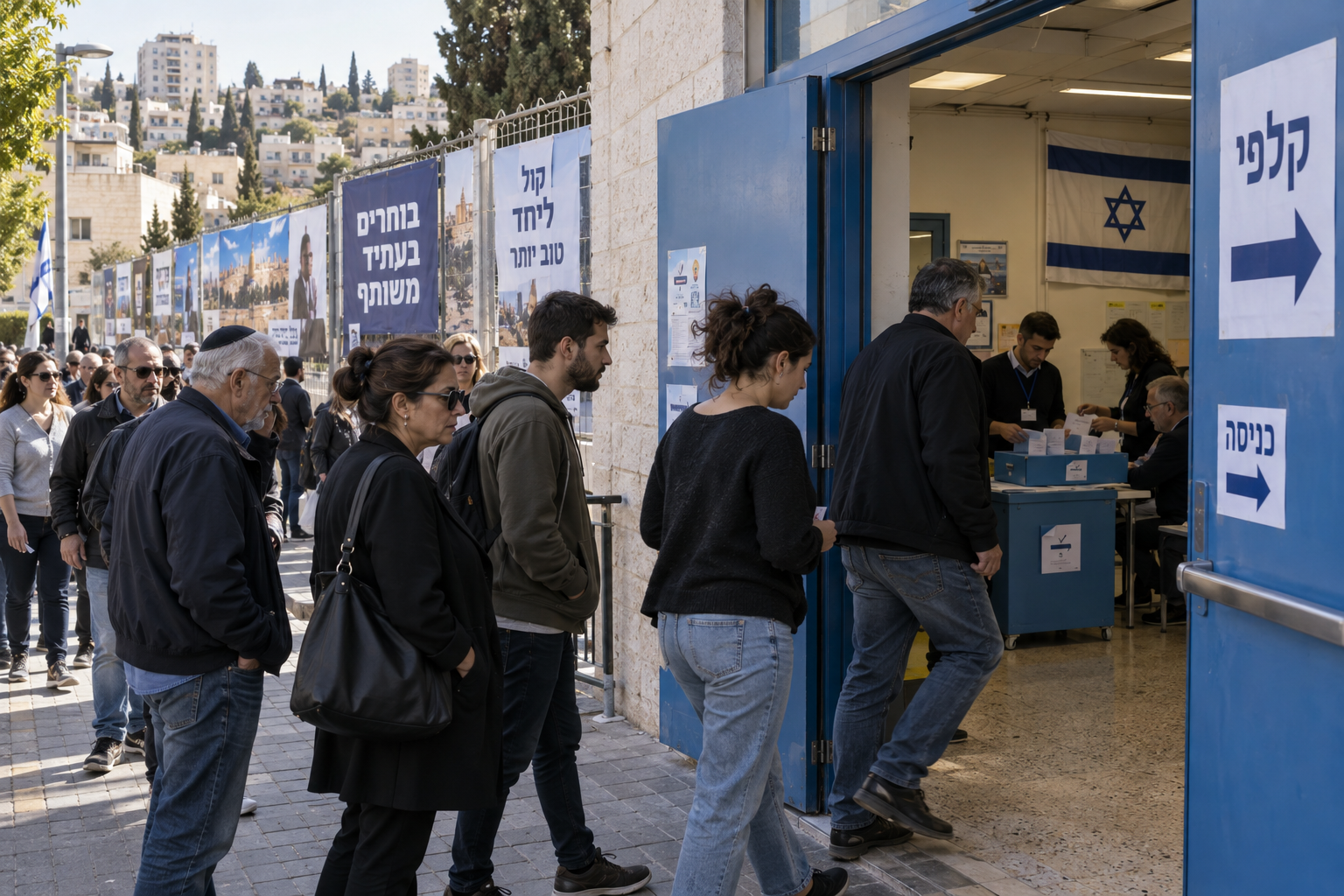
The article explains the stakes, contenders, electoral system and major policy issues in Israel’s upcoming general election, described as the first since the Hamas-led attacks of 7 October 2023 and the ensuing conflicts. Polling indicates a close contest between incumbent Prime Minister Benjamin Netanyahu and Gadi Eisenkot, a former Israel Defense Forces chief who entered politics recently and has made accountability for the security failures preceding the attacks central to his campaign. Other opposition figures include Naftali Bennett and Avigdor Lieberman, both right-wing and hardline on security, and left-wing Yair Golan. Netanyahu may depend on far-right coalition partners, some of whom advocate annexing the West Bank or encouraging Palestinians to leave Gaza. Arab party blocs could theoretically influence government formation, although most leading Jewish parties have ruled out cooperating with them.
Israel’s 120-seat Knesset is elected by proportional representation, so parties must form coalitions capable of commanding at least 61 seats. Negotiations could take weeks or months, and repeated failures to form governments have previously led to new elections. The campaign’s central issues include security, military-service exemptions for ultra-Orthodox men, proposed judicial reforms, and rising food and housing costs.
The election also matters directly to Palestinians. Israel continues strikes in Gaza and controls more than half the territory; the article cites more than 74,000 deaths in Israeli attacks since October 2023, according to Gaza’s Hamas-run health ministry, whose figures the UN considers reliable. In the West Bank, settler attacks and settlement expansion are increasing. Netanyahu and Eisenkot broadly support the same US-backed Gaza peace plan, though Eisenkot has pledged to end Hamas rule within 18 months. They differ on aspects of West Bank policy, but neither leading camp is campaigning for a two-state solution. Exit polls are expected on election night, preliminary results the following day, and official results on 4 November. President Isaac Herzog will then ask a leader to try to form a government.
Entities: Benjamin Netanyahu, Gadi Eisenkot, Naftali Bennett, Avigdor Lieberman, Yair Golan • Tone: analytical • Sentiment: neutral • Intent: inform
22-10-2026
FRANCE 24’s Truth or Fake reports on Israeli far-right National Security Minister Itamar Ben-Gvir’s use of AI-generated videos during the run-up to Israel’s general election. The videos mock Palestinians in Gaza and promote political messages associated with Ben-Gvir’s “voluntary emigration” proposal. One depicts Gaza as a destroyed ghost town and calls people who remain “donkeys”; another shows an elderly Palestinian man using a magic lamp to travel to Paris with Ben-Gvir’s help.
The Paris video prompted a public exchange with France’s Foreign Ministry. The ministry replied on X that Ben-Gvir had wasted a magical wish and noted that France had barred him from entering the country the previous May, following his treatment of activists on a Gaza-bound aid flotilla. Ben-Gvir answered with another AI-made video, speaking French and depicting a devastated Paris marked by Palestinian flags. The article also places these images alongside Prime Minister Benjamin Netanyahu’s claims connecting Muslim migrants to unrest in France, noting that those claims have no substantiated evidence and had previously been examined by FRANCE 24’s fact-checking team.
The report situates Ben-Gvir’s videos within a broader rise in AI use in Israeli election campaigning. Deutsche Welle’s fact-checking analysis found that major parties used AI-generated content, including in a quarter of the Likud posts it examined. Israeli rules require AI-generated or modified campaign content to be labelled, but regulation beyond that requirement is limited. The article also describes AI-powered robocalls, bot networks and fake accounts amplifying political campaigns. It raises concerns about AI’s potential influence on voters, citing reporting that around a quarter of Israelis say they may use AI to help decide how to vote. DW also found that Israeli government promotional material had been published online with the stated aim of influencing chatbot responses.
Entities: Itamar Ben-Gvir, Benjamin Netanyahu, Gaza, Paris, France • Tone: analytical • Sentiment: neutral • Intent: inform
22-10-2026
The article examines why Benjamin Netanyahu retains strong support among some Israeli voters despite a close re-election contest with former army chief Gadi Eisenkot. In the southern town of Dimona, supporter Daniela Hermon says Netanyahu’s decades of political experience, security credentials and ability to work with world leaders make him uniquely qualified. Hundreds of people welcomed him at a campaign stop, where he promoted Israel’s military campaign against Iran, promised to topple its regime and invoked the endorsement of US President Donald Trump. Dimona has been a stronghold for Netanyahu’s Likud party, which won 51% of the vote there in 2022.
Supporters in Dimona and Ramla describe Netanyahu as the only leader capable of protecting the country. At a Ramla shopping mall, voters voiced loyalty to him and confidence that he would win decisively. Some supporters also dismissed polls showing Eisenkot running close to Netanyahu, calling them media manipulation, and portrayed Eisenkot as a proxy for left-wing elites. One invoked a conspiracy theory that former prime minister Ehud Barak was directing Eisenkot behind the scenes.
The article contrasts that loyalty with criticism of Netanyahu over the multi-front conflict following Hamas’s October 7, 2023 attack. Critics argue that the attack occurred on his watch and that he has divided the country. Aaron Meguira, a voter supporting Eisenkot, says it is time for Netanyahu to leave office. The story presents a polarized electorate: supporters see Netanyahu’s forceful approach and ongoing conflicts as evidence of resolve, while opponents view his leadership as responsible for national failures and division. It also notes that the possibility of renewed hostilities with Iran remains a concern and that Israeli forces continue to occupy parts of Gaza, Lebanon and Syria.
Entities: Benjamin Netanyahu, Gadi Eisenkot, Daniela Hermon, Dimona, Ramla • Tone: neutral • Sentiment: neutral • Intent: inform