22-10-2026
Italy’s Council of Ministers has approved an emergency decree providing support to road haulage, agriculture and fisheries after truckers protested soaring fuel prices and the cost-of-living crisis. The demonstrations have disrupted essential services and supply chains, including food deliveries, and have spread across southern Italy. Before the decree was approved, truckers in Sicily and Calabria suspended operations. Officials said the stoppage halted buffalo mozzarella production, causing an estimated €3 million in losses in 24 hours because milk could not reach dairies near Naples and finished cheese could not be delivered. Some food deliveries resumed after the decree was signed, but protests continued at ports, where vessels remained out of service over diesel costs.
The decree allocates €60 million to help cover fuel costs for agriculture. Agriculture Minister Francesco Lollobrigida said the money would support the purchase of about 121 million litres of fuel, with contributions of up to 45 cents. The measure compensates agricultural businesses that purchased fuel and runs through 15 October. The Agriculture Ministry is to publish application procedures and deadlines; payments are expected within 30 days of receiving the required documents.
Prime Minister Giorgia Meloni said the government had reached an agreement with road-haulage associations and approved new measures for farmers and fishermen. She also said she had asked Interior Minister Piantedosi to respond to requests from haulage, farming and retail associations by safeguarding the movement of goods and preventing price speculation.
However, tensions remained high, and protesters continued to press their demands. Deputy Transport Minister Edoardo Rixi said authorities had been asked to impose a back-to-work order to restore essential services. He cited risks including remote schooling and fuel shortages in Campania. Rixi said dialogue remained important but warned that authorities could dismantle blockades in the South if talks failed, arguing that disruptions could not leave supermarkets empty or motorists without fuel indefinitely.
Entities: Giorgia Meloni, Francesco Lollobrigida, Edoardo Rixi, Piantedosi, Italian Council of Ministers • Tone: analytical • Sentiment: negative • Intent: inform
22-10-2026
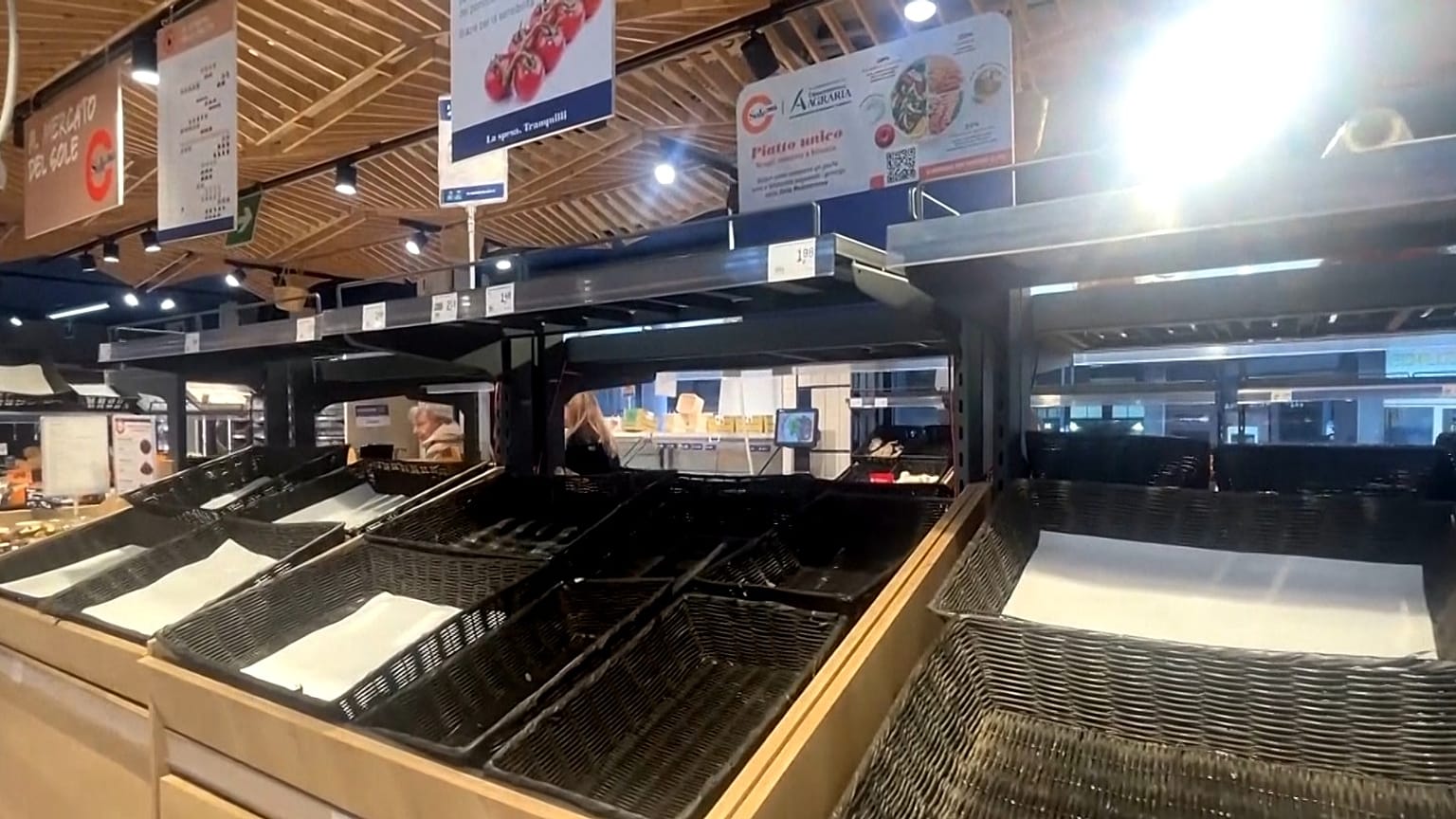
Truck drivers’ protests over soaring fuel prices are disrupting food and essential-goods deliveries in southern Italy, leaving some supermarket shelves empty. In Naples, trucks parked near the port on Monday, while protesters blocked the loading and unloading of goods at supermarket distribution centres. The stoppages halted deliveries, especially fresh food. Sicily has reported shortages of fresh pasta, packaged cheeses, meat, and fruit and vegetables. Panic buying by shoppers has added pressure to already constrained supplies. Partially empty shelves have also been reported in Calabria and Puglia. Transport operators are demanding support to manage rising diesel prices, which are increasing their operating costs. The article links those demands and the resulting delivery disruption to the visible shortages in shops, without describing a resolution or specifying how long the protests are expected to last. The report is a brief update, published on 22 October 2026, focused on the effects of the protests on supermarket supply and shoppers in affected parts of the country.
Entities: Southern Italy, Naples, Sicily, Calabria, Puglia • Tone: neutral • Sentiment: negative • Intent: inform
22-10-2026
A weeklong truckers’ strike in southern Italy, prompted by soaring diesel prices linked to the Iran war, has disrupted transport and halted production of the region’s famed buffalo mozzarella. The blockage has prevented raw milk from reaching dairies and finished cheese from reaching customers. Pier Maria Saccani, director of the Consortium for the Protection of Mozzarella di Bufala Campana DOP, estimated that roughly 1 million liters of milk produced Wednesday could not be processed, resulting in an estimated 3 million-euro loss in 24 hours. He said no mozzarella was produced that day and described the situation as a complete production blockade.
The cheese is especially vulnerable to transport delays because its protected production rules require buffalo milk to be made into mozzarella within 60 hours. Farmers have limited capacity to store fresh milk, while dairies cannot safely stockpile a highly perishable product when deliveries are stalled. Some farmers have begun feeding unused milk to their animals. The disruption also threatens deliveries of animal feed and diesel needed to keep farms running, while the wider strike has blocked other basic goods from reaching supermarkets and left many gas stations in southern Italy without fuel.
Italy’s government, led by Premier Giorgia Meloni, approved additional assistance for truckers and farmers, increasing combined tax-credit support from 434 million to 540 million euros. It remained unclear whether the measures would persuade drivers to end the protest. The crisis adds to existing pressure on producers: the consortium estimates that production costs have risen about 30% because of higher prices for feed, fuel, energy, packaging and transport. Since those costs have not been fully passed on to consumers, producers are absorbing much of the increase and losing profitability.
Buffalo mozzarella is a significant industry in Campania and neighboring areas. In 2025, production of Mozzarella di Bufala Campana DOP totaled just under 58,000 metric tons, with about 37% exported; France is the largest foreign market.
Entities: Pier Maria Saccani, Giorgia Meloni, Naples, Campania, Southern Italy • Tone: analytical • Sentiment: negative • Intent: inform
22-10-2026
France 24’s Business programme reports that protests over diesel prices by truckers in Italy disrupted the buffalo mozzarella supply chain. Milk could not reach dairies, and finished cheese could not be delivered to customers. Producers estimated that the interruption caused €3 million in losses in just 24 hours. The report then gives two additional business and technology headlines: Barclays said it would cut about 5,000 jobs, approximately 5% of its workforce, as it turns to artificial intelligence to reduce costs; and Nvidia chief executive Jensen Huang called for “responsible optimism” about AI during an appearance in Berlin, while stocks exposed to AI were falling. The item is presented as a brief daily update on business and economic news, rather than an extended investigation. It identifies Charlotte Lam as both the reporter and video producer and was issued on 22 October 2026. The supplied page text includes video-player notices, navigation labels, sharing and related-keyword elements, and an unavailable-content message; these are not part of the substantive news report. The article offers no additional detail about the protests’ organizers, duration beyond the reported 24-hour loss estimate, or the specific AI-related stocks that declined. Its central focus is the immediate economic impact of the trucker action on mozzarella producers, with the banking and AI items serving as brief companion headlines.
Entities: Italy, buffalo mozzarella, Italian trucker protests, diesel prices, €3 million in producer losses • Tone: analytical • Sentiment: negative • Intent: inform