22-10-2026
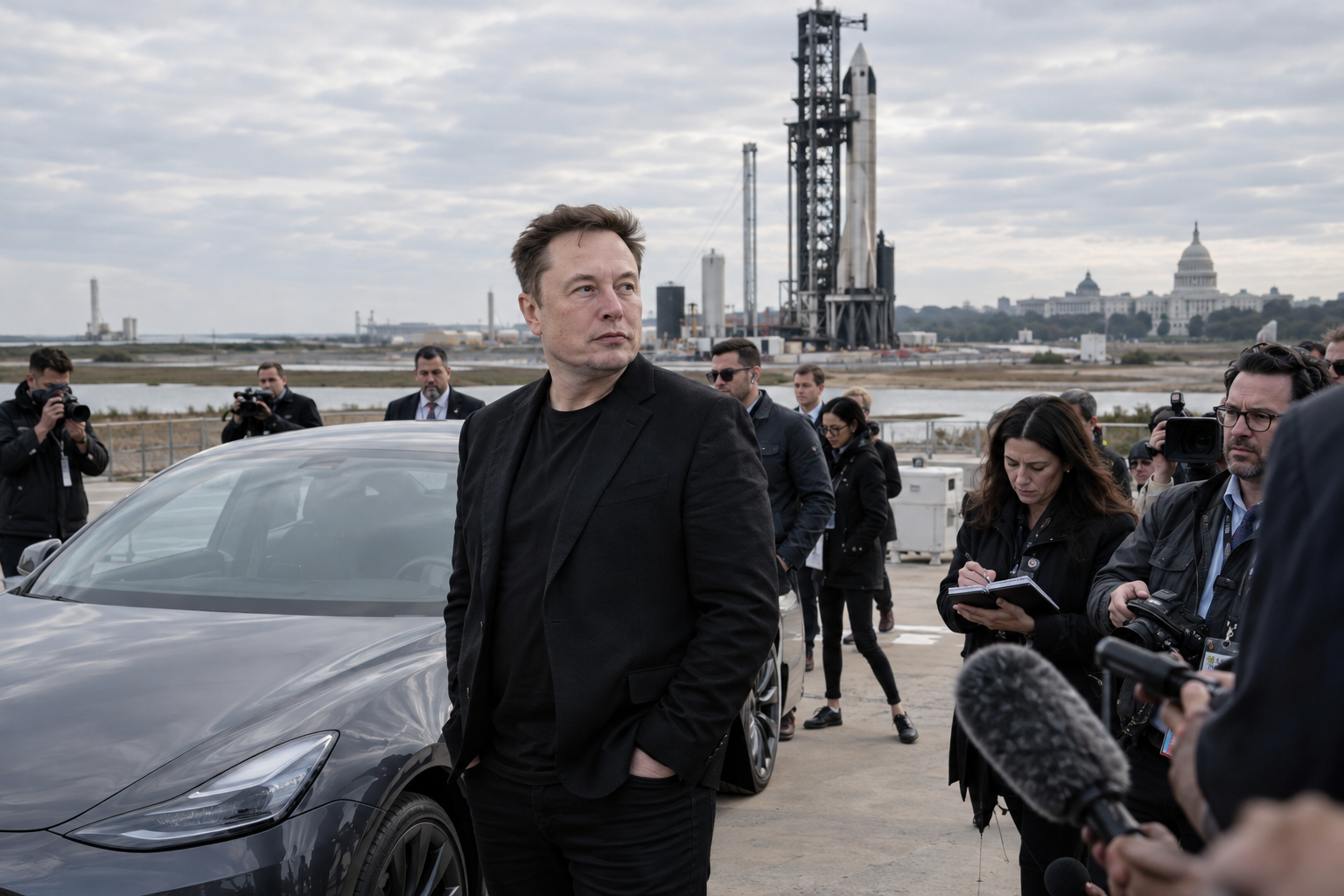
The article examines how Elon Musk’s substantial spending in the 2026 midterm elections intersects with the growing importance of government decisions to his businesses. Musk has committed roughly $366 million across at least 40 races, with at least $276 million going to Republican groups and America PAC. The article says Republican victories could preserve a favorable environment for his companies, while Democratic control of either chamber could lead to investigations into Musk’s businesses, federal contracts and his role in the Trump administration’s Department of Government Efficiency. Musk has publicly criticized the prospect of Democratic-led investigations and traded attacks with Texas Democratic Senate candidate James Talarico.
Texas is a particularly clear example of the overlap. Tesla is headquartered in Austin, SpaceX operates Starbase in South Texas, and The Boring Co. is based in Pflugerville. Musk has directed at least $189.6 million toward efforts to elect Republican Ken Paxton, Talarico’s opponent, and has also contributed to Texas candidates and political groups. Tesla and SpaceX are planning a major AI chip factory with Intel in Grimes County, where Musk-affiliated lawyer Chris Gober is running for Congress.
SpaceX’s federal business is another central concern. FedScout data cited in the article puts the company’s federal work at more than $30.7 billion since 2008, including $6.78 billion in 2026 through October 1. Recent awards include billions for military communications and threat-detection satellites. Although Congress does not award these contracts directly, it funds and oversees the agencies that do. The article also recounts Musk’s earlier alliance with Donald Trump, their 2025 public rupture over a tax-and-spending bill, and Musk’s recent return to Trump’s circle and appointment to advise the Pentagon. The supplied article ends while beginning to describe America PAC spending in six other battleground states.
Entities: Elon Musk, SpaceX, Tesla, America PAC, 2026 U.S. midterm election • Tone: analytical • Sentiment: neutral • Intent: analyze
22-10-2026
James Talarico, the Democratic nominee for a U.S. Senate seat in Texas, publicly challenged Elon Musk after the billionaire posted on X, “There is something deeply wrong with Talarico.” Talarico replied that the problem was a political system in which a trillionaire could effectively buy a senator. Earlier Wednesday, during a campaign speech at the University of Houston, Talarico accused Musk of funding attack ads and messages against him and argued that Musk wanted Texas land, water, taxpayer money, and political influence. He urged voters to reject those efforts in the Nov. 3 election, declaring that “Texas is not for sale.”
The exchange followed reports that Musk donated $158 million in September to the Senate Leadership Fund, a Republican super PAC. The funds went to Texas PAC, which supports Republican nominee Ken Paxton, the state’s attorney general. Musk also contributed $10 million to Lone Star Liberty PAC, another group backing Paxton. The article notes that polls showed Paxton trailing Talarico when Musk made the donations.
Talarico’s campaign reported raising $64 million in the third quarter, which it described as a record third-quarter total for a Senate candidate. Paxton’s campaign raised $18 million during the same period. Paxton defeated incumbent Republican Sen. John Cornyn in the party primary earlier in the year. Paxton’s campaign did not immediately respond to a request for comment. The article presents the dispute as part of a closely watched Texas Senate contest shaped by prominent outside spending and sharp personal attacks.
Entities: James Talarico, Elon Musk, Ken Paxton, John Cornyn, Texas • Tone: analytical • Sentiment: neutral • Intent: inform
22-10-2026
Tesla reported third-quarter 2026 adjusted earnings of 48 cents per share and revenue of $28.05 billion, exceeding LSEG analyst estimates of 43 cents and $27.9 billion. Despite the beat, its shares fell more than 3% in extended trading; the stock was down 14% for the year and lagging other megacap technology stocks. Revenue was roughly flat year over year. Automotive revenue declined 3% to $20.56 billion, while energy revenue fell 16% to $2.88 billion. Services and other revenue rose 33% to $4.61 billion. Tesla attributed pressure on automotive revenue and profits to lower average selling prices and difficulty obtaining enough batteries to meet orders.
Net income attributable to common shareholders fell 29% to $787 million. Tesla connected the weaker profitability and cash flow to increased investment in Optimus humanoid robots and other AI projects: capital expenditures more than doubled to $3.73 billion, while free cash flow dropped 62% to $1.53 billion.
The report also covered Tesla’s autonomous-driving and robotaxi plans. Active FSD subscriptions rose 67% year over year to 1.74 million, and the company said FSD was helping drive demand where available. Tesla expects to give some customer cars access to FSD (Unsupervised) around the second quarter of next year. Its driverless Robotaxi fleet includes Model Y vehicles and Cybercabs authorized for driverless operations in Texas; Elon Musk expects the business to begin affecting company finances in 2027 and become more significant later that year.
Musk offered no new details about a possible Tesla-SpaceX merger, after saying the companies’ boards had formed special committees to consider a tie-up. Tesla also described progress and remaining technical challenges with Optimus, and cited record auto sales in several markets. Its competitive position faces pressure from Chinese EV makers, while deliveries were about 2% below the year-earlier level.
Entities: Tesla, Elon Musk, Ashok Elluswamy, SpaceX, Intel • Tone: analytical • Sentiment: neutral • Intent: inform
22-10-2026
NPR’s Morning Edition interviews longtime technology journalist Kara Swisher about Elon Musk’s expanding business empire, political influence and role in decisions affecting the war in Ukraine. The conversation follows news that Tesla and SpaceX are exploring a possible merger. Swisher questions the business rationale for combining an electric-vehicle maker with a space and artificial-intelligence company, and argues that Musk needs to respond to Tesla’s decline and growing competition from Chinese manufacturers such as BYD. She says Musk missed an opportunity to develop an affordable electric car and notes that data, AI and connectivity are increasingly important across his businesses, while questioning whether demand for computing power will last if the AI boom slows.
The discussion also considers Musk’s political activity, including his spending of hundreds of millions of dollars to support Republican candidates. Swisher says that if Democrats regain control of Congress, they could investigate the Department of Government Efficiency (DOGE) and earlier matters involving Tesla crashes.
The article then describes a Wall Street Journal report that Musk ordered a slowdown of military-grade Starlink service used by Ukrainian forces, disrupting drone operations and air defenses. The report said Ukrainian officials and some Trump administration officials were surprised. It also reported that Musk said decisions about restrictions on Starlink were made by the U.S. military and ultimately the president. President Trump said he did not know who was responsible, while Secretary of State Marco Rubio said the administration had neither requested nor known about the slowdown in advance.
Swisher argues that a single unelected, unaccountable billionaire should not make decisions affecting national defense or wartime operations, especially when those decisions may put lives at risk. NPR says it sought comment from Musk and SpaceX and notes that the interview’s digital version was edited by Treye Green.
Entities: Elon Musk, Kara Swisher, Tesla, SpaceX, Starlink • Tone: analytical • Sentiment: neutral • Intent: analyze